
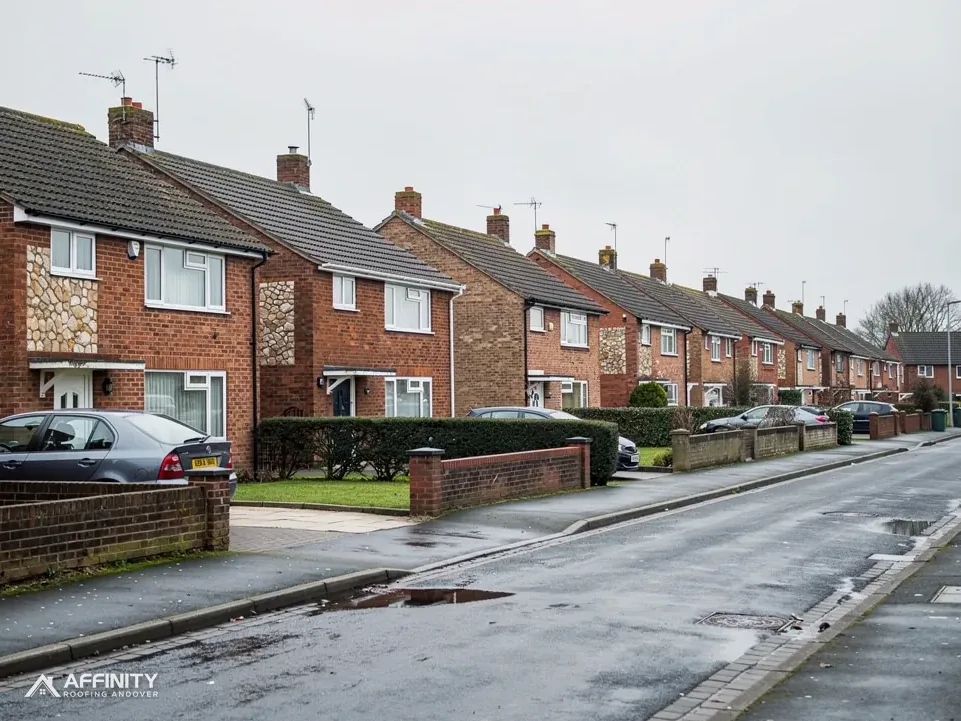
Roofers in King's Somborne
Roof work in King's Somborne, beside a palace site and a church
King's Somborne has a scheduled monument, John of Gaunt's Palace, within about 500 metres of its centre, and 46 listed buildings nearby. We survey each roof and take photographs before any price is given.
King's Somborne roofs, vicarage to farmhouse
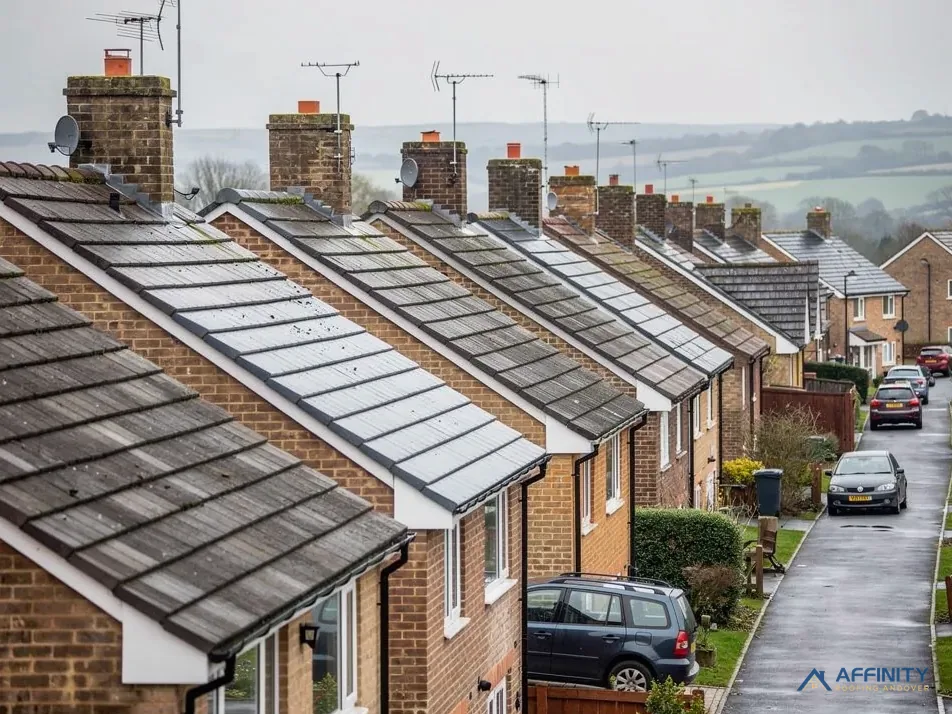
Church and Old Vicarage
The Church of St Peter and St Paul and The Old Vicarage, both listed Grade II* on 29 May 1957.
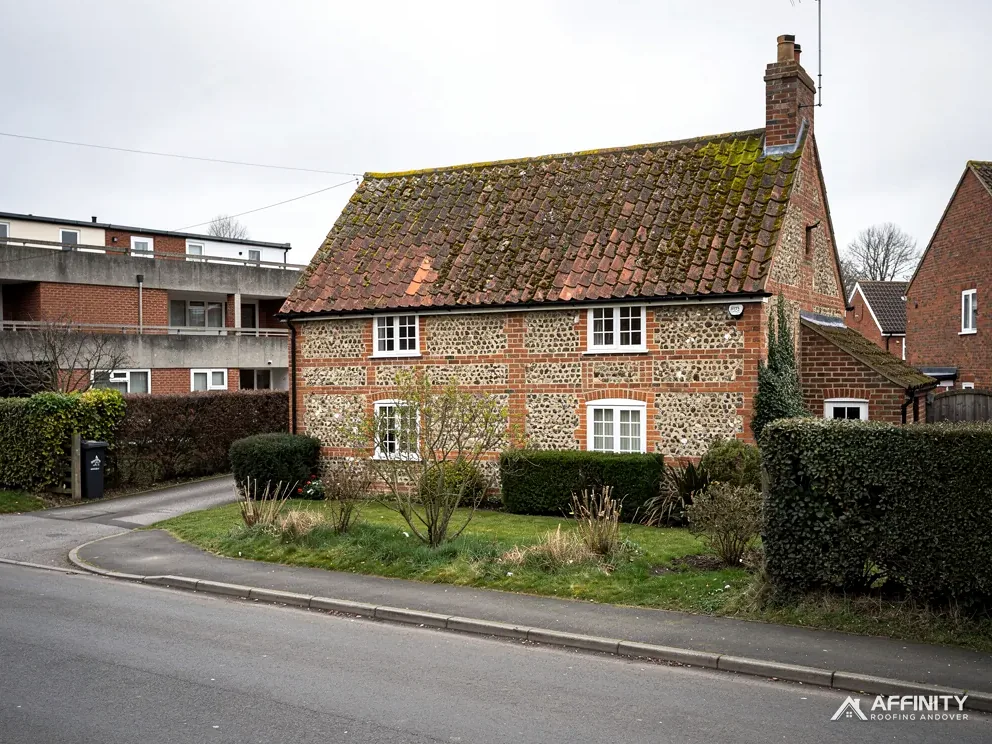
Cottages and farmhouses
Austin Cross Cottage and Frohams Farmhouse, each listed Grade II, where repairs are chosen to match the old covering.
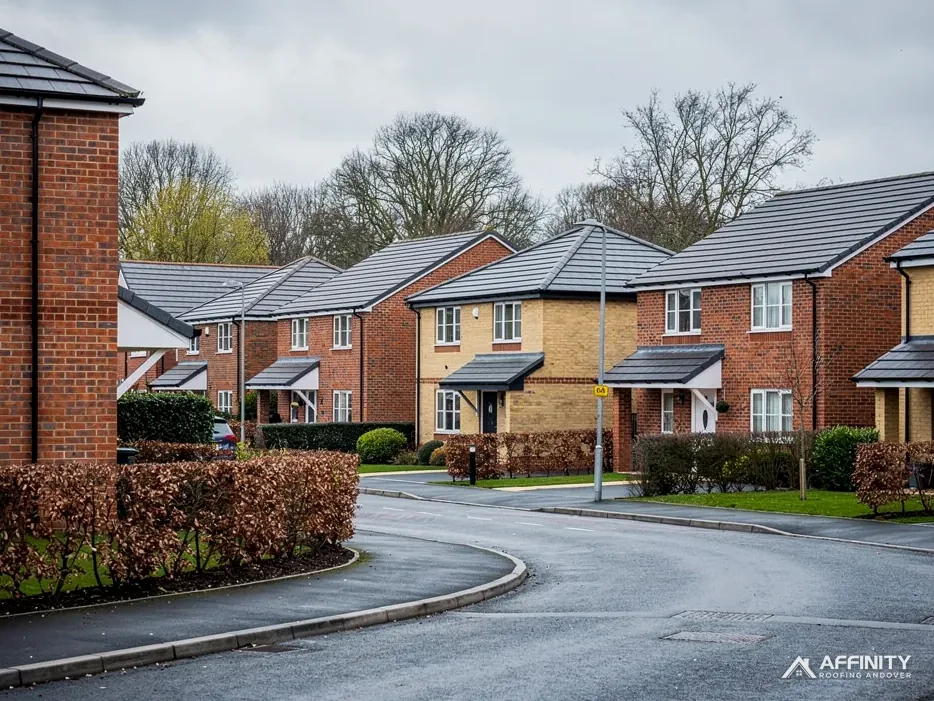
Near John of Gaunt's Palace
Homes close to a scheduled monument, where consent for the monument itself is separate from a house roof.
King's Somborne south of Stockbridge
Stockbridge and Longstock lie to the north, Broughton west, Sparsholt east and Michelmersh and Timsbury south. Roofing work in all of these villages is open to us.
- Distance
- 10.2 road miles south of Andover
- Planning
- Test Valley Borough Council
- Council
- Test Valley Borough Council and Hampshire County Council
The King's Somborne roof report
Local editionKing's Somborne, HampshireA scheduled palace site and 46 listings
King's Somborne roofs: three consent systems in one village and who answers to which
King's Somborne has 1,561 residents, a Grade II* church and vicarage, 46 listed buildings near the centre and a scheduled monument. This report sorts out which consent system covers which building, and how scaffold is licensed.
A palace site among 46 listed buildings
Historic England's list records 46 listed buildings within about 500 metres of the centre of King's Somborne. At the 2021 Census the parish had 1,561 usual residents, so the village has a long list for its size. Anyone repairing a roof here is almost certainly next to something protected, and we survey on that assumption.
John of Gaunt's Palace is a scheduled monument within about 500 metres of the village centre (list entry 1001875). Scheduled monument consent is a separate system from listed building consent, decided at national level by the Secretary of State. It protects the monument itself. A house roof near it is judged under the ordinary rules, though any ground works for scaffold close to the site deserve a conversation first.
The Church of St Peter and St Paul is listed Grade II* (1339113), and so is The Old Vicarage (1296888), both first listed on 29 May 1957. Austin Cross Cottage (1093800) and Frohams Farmhouse (1093816) are Grade II. These entries are not the whole picture, but they show the range, from a church and a vicarage down to cottages and farm buildings.
Listed building consent applies where work affects a listed building's character, and Test Valley Borough Council receives the application. That consent is added to normal planning and building control, not substituted for them. The supporting pack combines slope-by-slope photographs, a note of the covering as it stands and a brief account of the repair, which shows the officer what would change.
The Kings Somborne conservation area, on a boundary the council draws, lies within about 0.75 km of the middle of the village. A change to the visible look of a roof inside it is something to put to the council before pricing. Whether an Article 4 direction touches your house is for the council to answer.
The church follows its own path. St Peter and St Paul serves as an Anglican parish church, so its roof works go through the faculty system, not through the council. A faculty from the diocese's consistory court, Kings Somborne's route for the church, covers that. A neighbour's roof is outside it.
The Old Vicarage, as a Grade II* house, is a good example of how we treat an important roof. The survey is slow, every junction and flashing is photographed, and the smallest repair that does the job is proposed.
For an owner weighing a purchase, the record is worth reading before the survey. The listing, the monument and the conservation area boundary are the first facts a council will ask about, so we gather them at the outset and keep them with the photographs.
Three consent systems, three decision-makers
A village like this can confuse an owner, because three different consent systems meet in it. Listed building consent covers listed houses and is decided by Test Valley Borough Council. The faculty system covers the parish church and is run by the Church of England. Scheduled monument consent covers John of Gaunt's Palace and is decided nationally, by the Secretary of State. A roof job touches at most one of them.
Most house roofs touch none. An unlisted house outside the conservation area is dealt with under the ordinary planning rules, plus building control where the job calls for it. The survey establishes which category your roof falls into, usually in a few minutes, from the listing records and the conservation area boundary.
Test Valley Borough Council is the planning authority, with Hampshire County Council above it as county council and highway authority. For building control the right phrase is your building control body. Owners may use local authority building control or appoint a registered building control approver, a private route that has been regulated since 6 April 2024.
The Planning Portal sets the national bar for re-covering. Work below 25 per cent of the building envelope and below 50 per cent of the roof is not normally the subject of an application. Each slope is measured against both tests. A new covering 15% or more heavier than the old needs Building Regulations approval and a structural check.
The national position is on our planning permission for roof work page, and the smaller jobs that fill most days are on our roof repairs page. Mending a roof in its present form should need no consent at all, though that is confirmed before work starts.
When consent is needed, the order matters. We do not order scaffold, materials or labour until the decision is in. If the council asks for changes, the plan is revised and you see the revised version on paper before anything is booked.
The finished file includes the survey pictures, the council's reply and the written price. Keep it with the deeds. If you sell, the file shows a buyer's surveyor how a roof beside a Grade II* house was dealt with.
Questions from owners are welcome at any stage. A short email with the address and a photograph is enough to start, and the first reply tells you which of the three systems, if any, is likely to matter for your roof.
“King's Somborne has three consent systems in one village, and a house roof usually meets none of them.”
Getting access right before the first tile moves
A King's Somborne house that fronts a public road may need scaffold on the carriageway or pavement, and section 169 of the Highways Act 1980 makes that a matter for a licence from Hampshire County Council. The borough, being a district council, issues no scaffold licences. Under Hampshire County Council's scheme it is the scaffolding company that submits the application for the customer, so no form lands on your mat.
Hampshire County Council's fee is £211.90 on application for the first 2 weeks and £72 for each further 2-week period, and the county wants ten clear working days between lodging and starting. It offers no extensions. While listed building consent is pending, the licence request is held back, so its clock cannot expire before the work begins.
Private ground avoids the question altogether. Private roads fall outside Hampshire's licence, and a yard, a drive or a paddock gives much the same latitude. Where a house sits back from the lane, we can scaffold from the plot itself. The first visit settles access, and you are told straight away which case applies.
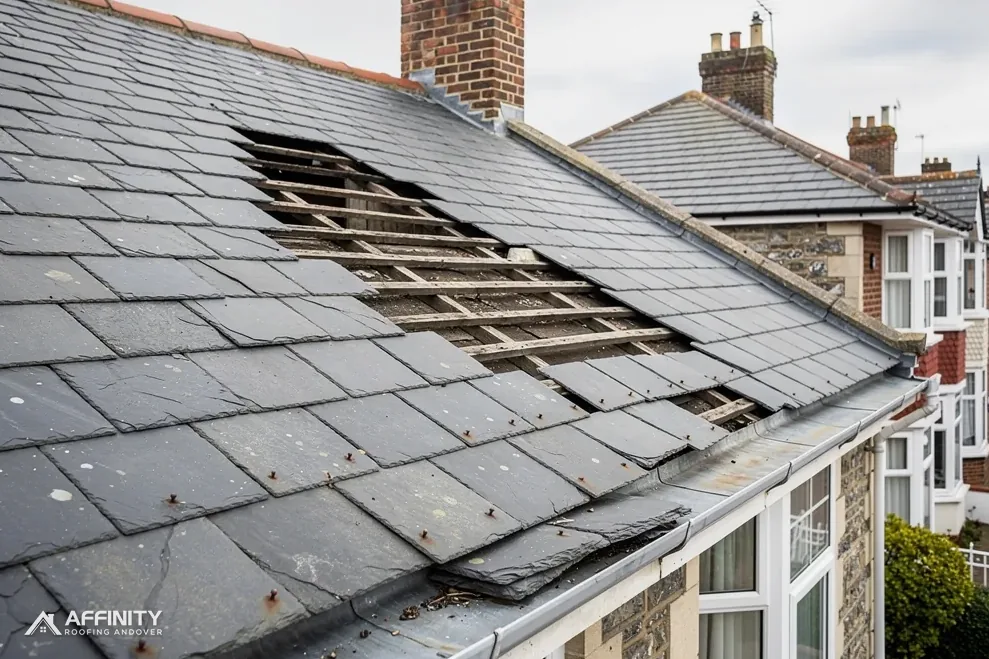
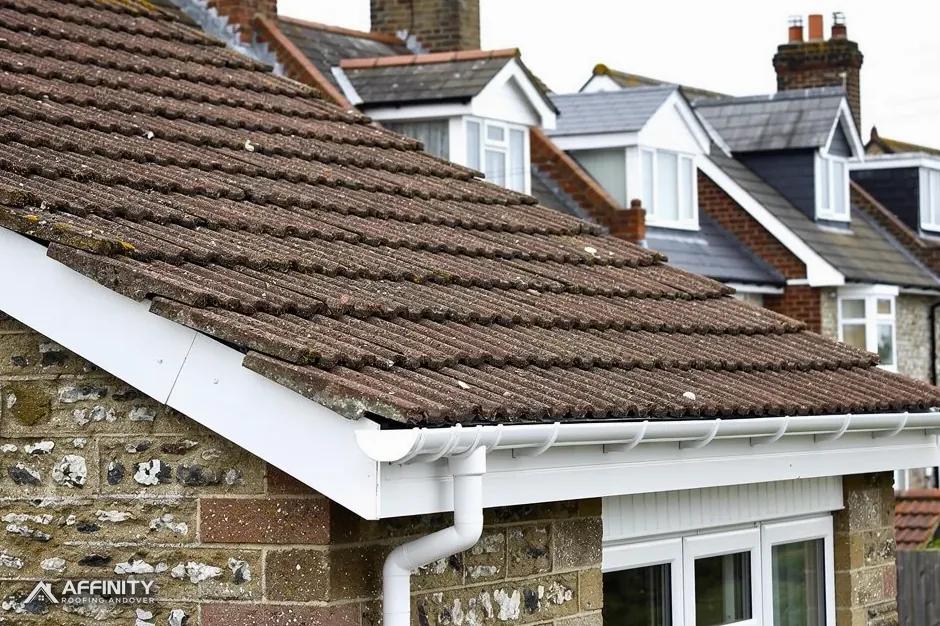
The work itself is everyday work. Slate roofing suits older roofs where individual slates have slipped or cracked and nail fixings have corroded. Chimney repairs cover stacks, flashings and pointing. We look at the gutter line too, because water that spills at the eaves defeats a good roof.
On older roofs the nails fail before the slates do. When a nail rusts through, a sound slate can drop out of place; fitting a new one is a small job beside re-covering the whole slope. We photograph every slipped slate and every sound neighbour, so the extent of the problem is plain.
Reclaimed stock is the other consideration. Matching an old slate or clay tile in size, thickness and tone can take weeks, so the search begins at survey. If nothing close exists, we tell you before anything is ordered and discuss the nearest alternative.
One written total follows the survey. It covers scaffold, licence, repair and waste removal, and it names the consent route so nothing is left unsaid.
Tidiness matters in a village. Neighbours learn the dates for the scaffold, the lane stays open for deliveries and the school run, and mortar, broken tile and offcuts are cleared away as work proceeds.
Birds and bats can be part of a roof job. Birds nesting in a roof stop work in that spot, and if bats seem to be present in the loft or beneath a ridge you are told immediately, because disturbing them is tightly regulated. We photograph what we see and explain the next step.
Repairs and re-roofs across King's Somborne
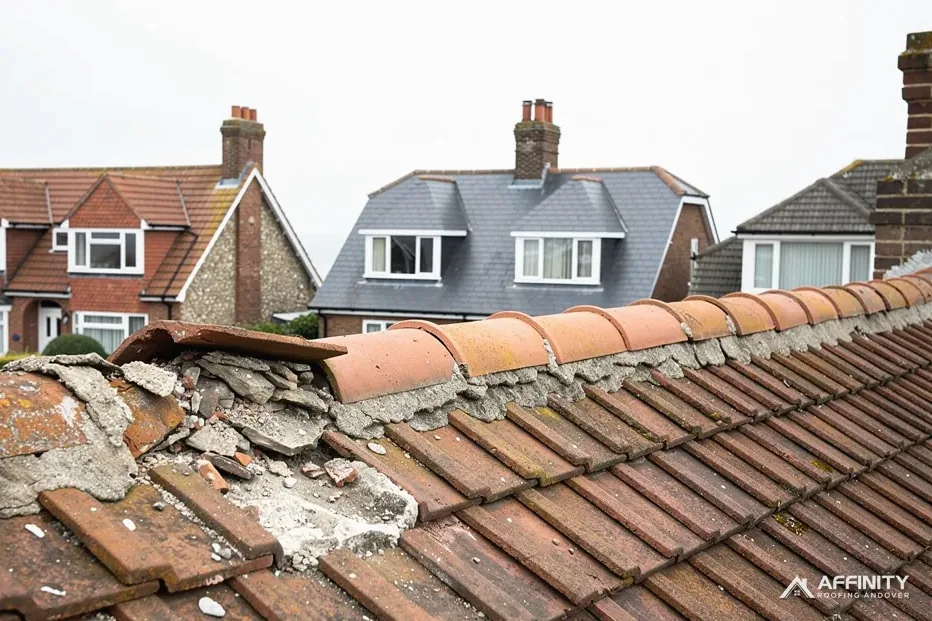
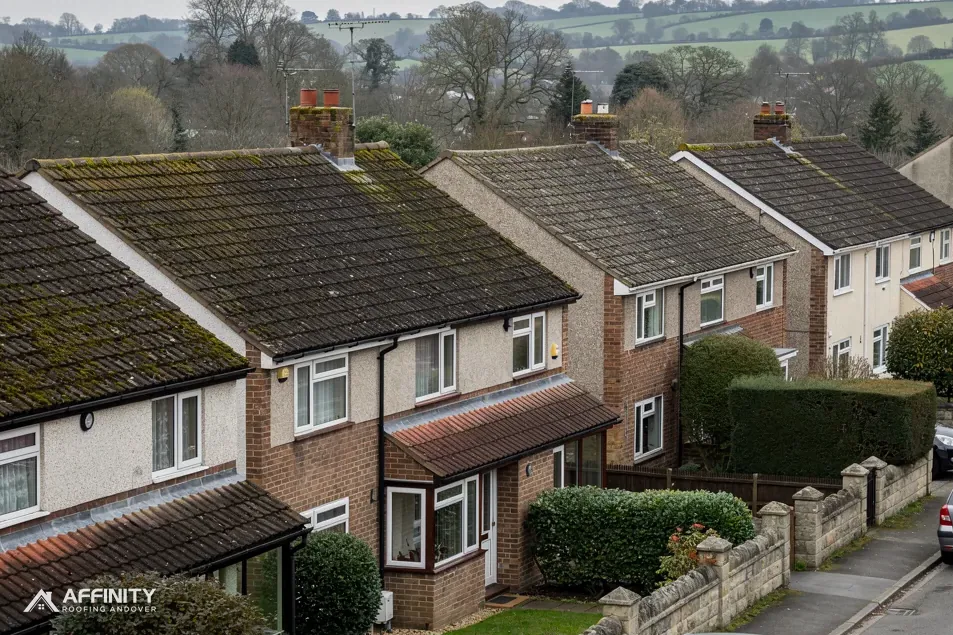
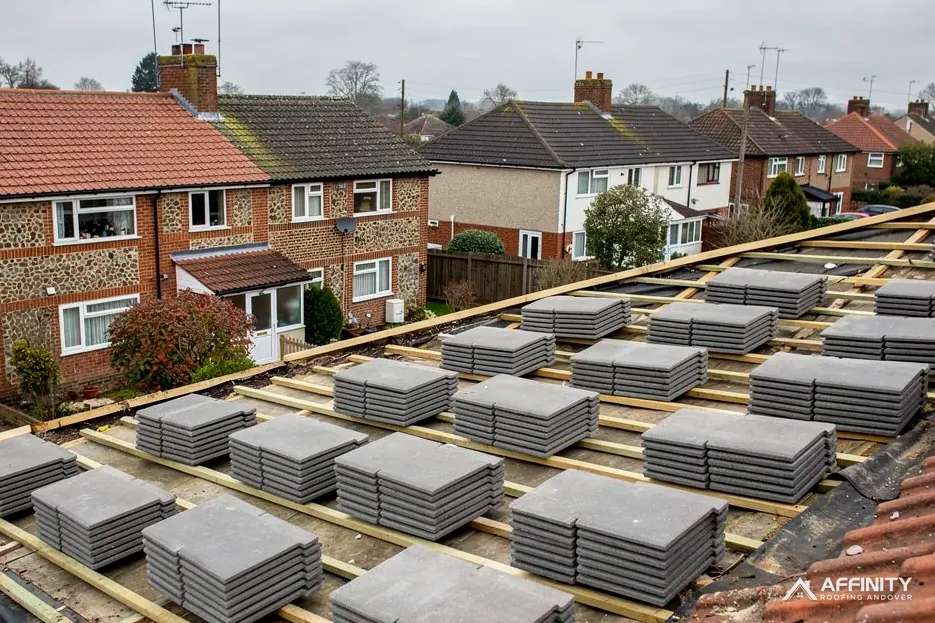
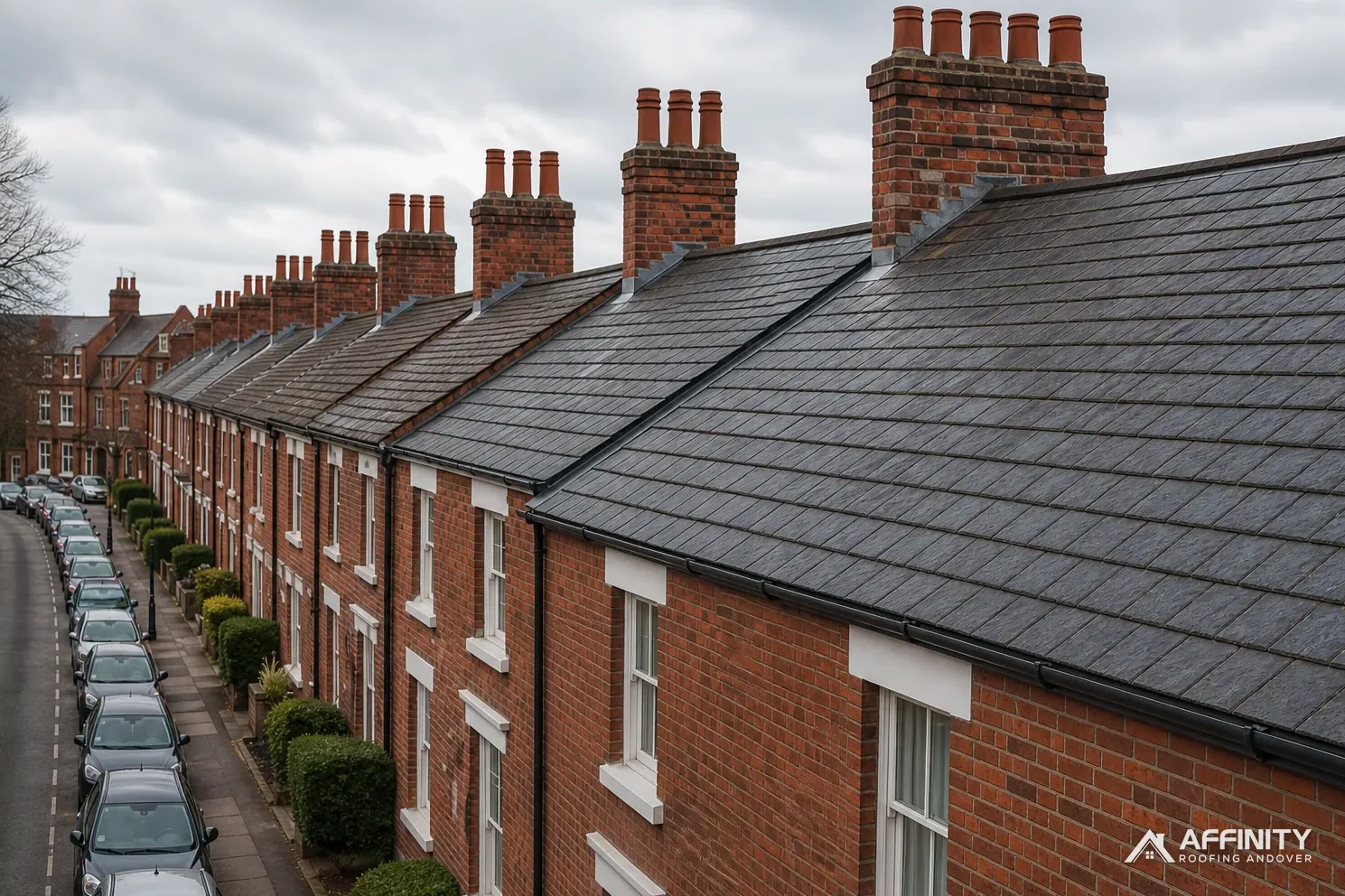
King's Somborne roofs: palace, vicarage and consent
Do I need consent to repair the roof of The Old Vicarage in King's Somborne?
The Old Vicarage is listed Grade II*, so Test Valley Borough Council's listed building consent is needed for anything touching its character. We would aim for repair in matching material, with photographs of every slope as evidence. A repair that leaves the roof's present form alone is an easy case to put, but the council is asked first.
How near John of Gaunt's Palace can scaffold go up?
John of Gaunt's Palace is a scheduled monument, protected by its own consent system decided by the Secretary of State. Nearby house roofs follow the ordinary rules, but scaffold needing ground works close to the site is checked against the monument's mapped boundary before it is booked. We check the position at the first visit and report it.
What does a Hampshire scaffold licence cost for a King's Somborne roof?
Hampshire County Council charges £211.90 on application for the first 2 weeks and £72 for each additional 2-week period, with ten clear working days between lodging and starting and no extensions. Hampshire County Council leaves the lodging to the scaffolding firm. Scaffold kept to private ground needs none, and any fee that does arise is folded into your single written price.
Is the church roof dealt with by the same route as nearby houses?
No. The Church of St Peter and St Paul is Grade II* and serves Anglican worship, which sends its roof works through the faculty system. Nearby houses follow the council's ordinary rules, with listed building consent added where the house itself is listed. We confirm the route for each owner before surveying, and write it down.
Start with a King's Somborne roof survey
Send the address with one clear photograph. We survey the roof and write back with one price and the route.
10-year workmanship guarantee, in writing.