
Roofers in Southampton
Grade I churches, merchant houses and 154 listed neighbours
Southampton has 154 listed buildings within 900 metres of its centre. Whether the building is a house, a flat or a unit, we look and photograph before we advise.
Southampton roofs, from the Old Town to the city streets
Grade I churches
The churches of St Michael and St Julien are both Grade I, first listed on 14 July 1953.
Merchant houses
The Medieval Merchant's House and The Wool House are both listed Grade I.
Old Town conservation areas
Canute Road, three Old Town areas and Oxford Street are conservation areas near the centre.
Southampton between Totton and Eastleigh
Totton and Marchwood are to the west, with Dibden to the south, Chilworth to the north and Eastleigh to the north-east.
- Distance
- 26.2 road miles south of Andover
- Planning
- Southampton City Council
The Southampton roof report
Local editionSouthampton, HampshireA city, its listings and its landlords
A city of 154 listings in 900 metres: how roof work is cleared in Southampton
Southampton lies 26.2 road miles south of Andover, under Southampton City Council. This report covers its Grade I churches and merchant houses, the conservation areas and scheduled vault, the HMO area, and the rules for landlords, flats and commercial roofs.
Grade I churches and merchant houses
Southampton is a city, and its centre is crowded with listings. Historic England's list holds 154 listed buildings within 900 metres of the city centre point, a wider radius than we use for villages because the city is larger. Four of them are Grade I. The Church of St Michael (list entry 1179142) and the Church of St Julien (1091959) were both first listed on 14 July 1953, and the Medieval Merchant's House (1092048) and The Wool House (1092060) are Grade I as well.
St Michael's is shown on the map as a place of Anglican worship still in use, which sends repairs to the Church's own faculty process and not to the council. Another building may differ. A closed church, or one of another denomination, takes a different path, and any church roof belongs first to its custodians. The merchant houses are different again. A listed building in other hands needs listed building consent from Southampton City Council for any work that changes its character, and the covering of a roof can be part of that character.
In a city with this many listings, a roof job often has a listed neighbour even when the building itself is not listed. That affects scaffold positions, shared gutters and chimney work on party walls. The survey therefore records the neighbours as well as the roof, and anything touching a boundary is put to you before dates are fixed. A listed house keeps the permitted development rights any house has. A flat, as we explain in the next chapter, does not. That difference matters in a city of terraces, conversions and blocks, where one street can hold houses and flats under the same slates, and a repair that suits one may be wrong for the other.
The first photographs of any city survey are of the whole elevation, then the ridge and valleys, then flashings, then the fault itself. Taken in that order they show a planning officer, a building control inspector or a landlord's agent exactly the same thing we saw. Terraced and flat-roofed buildings in a city share walls, so a chimney breast cut away or a parapet raised can fall under the Party Wall etc. Act 1996, which calls for notice at least two months before such work begins. GOV.UK warns that you cannot assume silence means a neighbour agrees. Those questions go to a party wall surveyor, not to building control. For a city terrace, a flat roof or a commercial unit the set differs, but the principle does not: what we found, in pictures, before any price is given.
Conservation areas, a scheduled vault and the HMO area
On boundaries it draws itself, Southampton City Council has five conservation areas near the city centre: Canute Road, Old Town North, Old Town South, Old Town West and Oxford Street. The Canute Road area lies within about 0.75 km of the city centre point. Inside a conservation area a dormer is a planning matter, and the council is the body to ask when a roof's appearance is about to change, which is why we ask early. The planning permission for roof work guide explains what applies.
A scheduled monument is recorded within about 500 metres of the centre: the Vault Under Head Post Office (list entry 1001831). Scheduled monuments are consented separately, and the Secretary of State decides. It is a vault, not a roof, but it shows how many layers of protection a city centre carries, and why we look at the list before we plan access. Nothing in that layering stops ordinary maintenance, and a blocked gutter or a slipped tile is mended without ceremony.
Southampton City Council also publishes an Article 4 area for HMOs, which are houses in multiple occupation, and it reaches the area around the city centre. That direction concerns change of use. Which rights it removes, and where, is for the council to say. For a landlord with an HMO the sensible step is to ask the council's planning team whether any direction touches roof alterations. Its answer is filed alongside the photographs.
Flats raise a separate planning point. In the General Permitted Development Order the word dwellinghouse leaves out blocks of flats and individual flats, so a flat does not have the householder permitted development rights that a house has. Renewing a covering to match is generally not development at all, because works that leave the external appearance materially unchanged fall outside the definition, whereas a change of shape or material can need planning permission. We tell you which side of that line your building falls.
Building control for a re-cover that needs approval is Southampton and Eastleigh Building Control, which is a joint service between the city council and Eastleigh, which also offers its services outside both boundaries. The Planning Portal's limits, 25 per cent of the building envelope and 50 per cent of the roof, apply to a block as to a house, though the envelope of a block is large, so the share a single roof represents may be small. A covering at least 15 per cent heavier than the old needs approval wherever the building stands.
“In Southampton a roof may answer to a landlord, an agent and a listed neighbour.”
Landlords, flats and commercial roofs
City roof jobs often involve more than one party. A landlord instructs the work, a managing agent chases it, tenants live under it, and a freeholder may own the roof. The first question we ask is who owns the part that has failed. The second is who pays, which is not ours to decide, though a clear photograph of the fault usually settles an argument faster than a letter does. The photographs and written account are made for sharing, so every party sees the same evidence and nobody relies on hearsay about the fault.
The Construction (Design and Management) Regulations 2015 treat clients differently. For the Health and Safety Executive, a domestic client is a person having work done to their own home, or a relative's, that sits outside any business. Landlords, managing agents and shop owners usually act in the course of a business, so the label does not simply fit them, and they should ask the contractor who carries which duties. A lone contractor on a project carries the construction phase plan. Several contractors on one project means appointing a designer to lead the design and a contractor to lead the site. We explain which situation applies when we quote.
Scaffold on a city street is licensed by the highway authority, which for Southampton is Southampton City Council. Who applies differs between councils, so we confirm it at the survey, and the scaffolder then handles the licence for us. You settle dates first, and the licence cost is counted in your one total. Where a flat roof sits behind a parapet, a low scaffold or tower on private land may avoid the street altogether.
Older garages, workshops and units add a safety point. HSE advises assuming asbestos is present wherever work or building took place before 2000, and treating asbestos cement roofs as always fragile. Taking sheets off whole is a different job from breaking them up, and the waste has to be double-wrapped and labelled and carried by a registered waste carrier. Nobody should be sent onto such a roof. Flat roofs and commercial units are the staple of city work. BS 6229:2025 sets 1:80 as the finished minimum for membrane flat roofs, and IKO advises designing for 1:40 so water still clears after settlement. Our flat roofing and commercial roofing pages explain how those are surveyed. A re-cover that needs approval goes to Southampton and Eastleigh Building Control, the service Southampton City Council and Eastleigh Borough Council operate together, so the same office answers for a house, a flat or a unit.
From ridge to gutter in Southampton
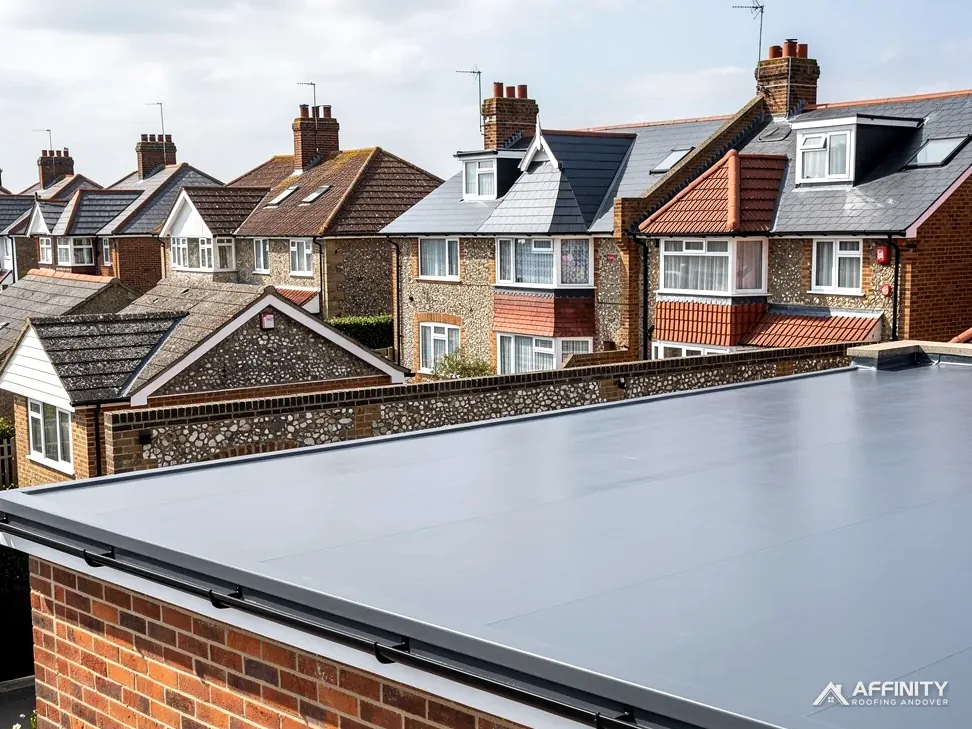
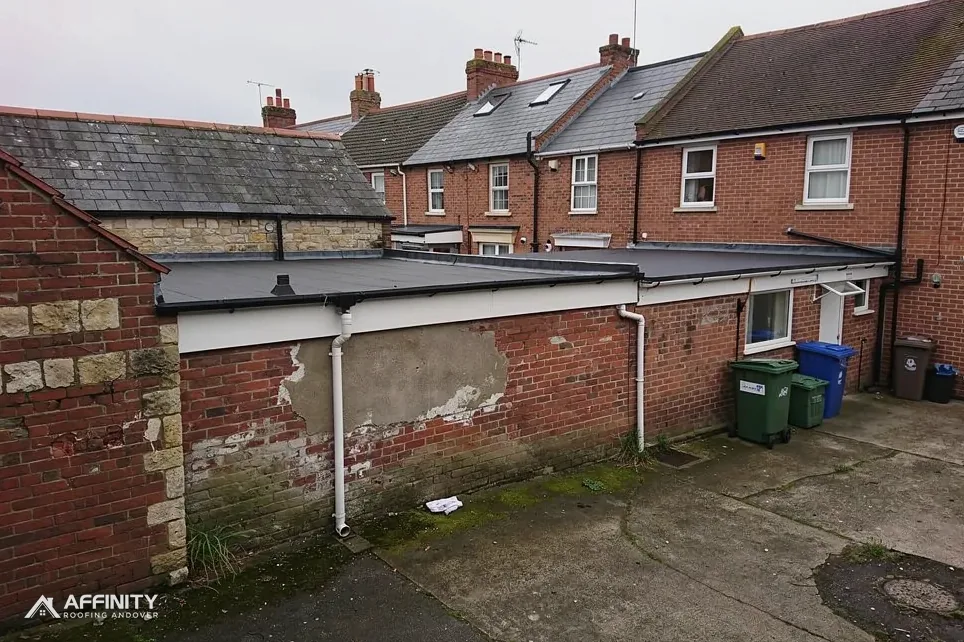
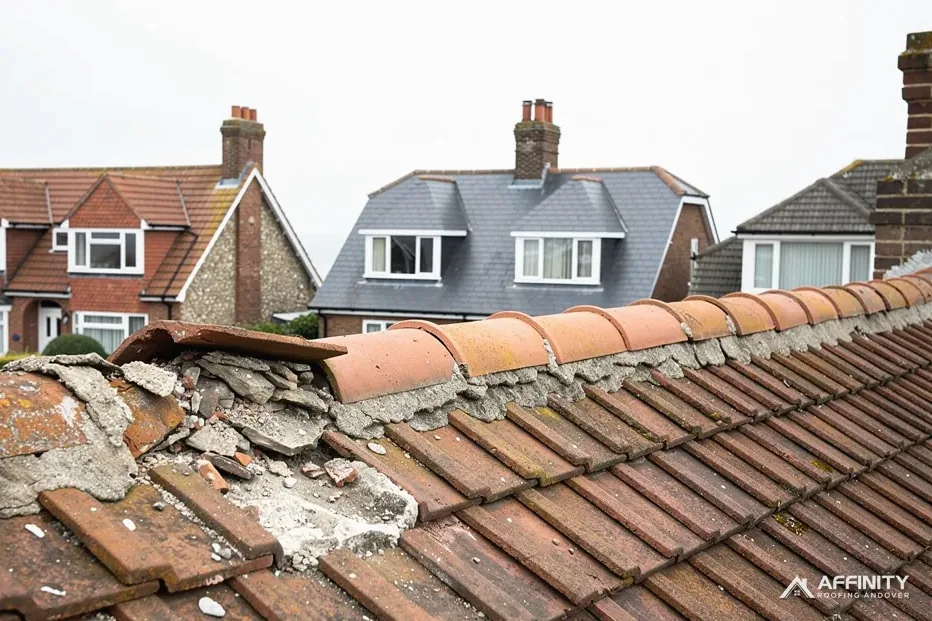
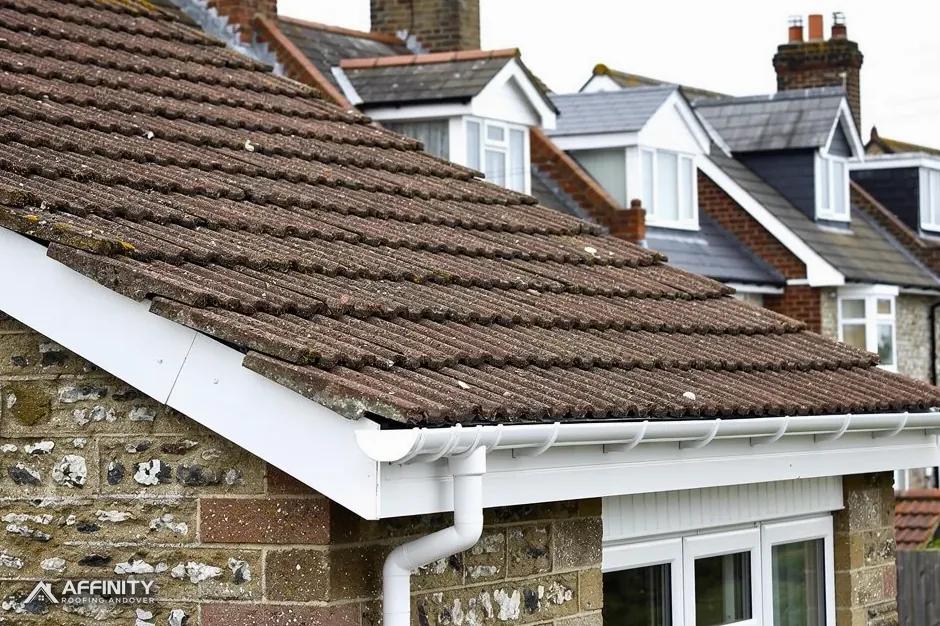
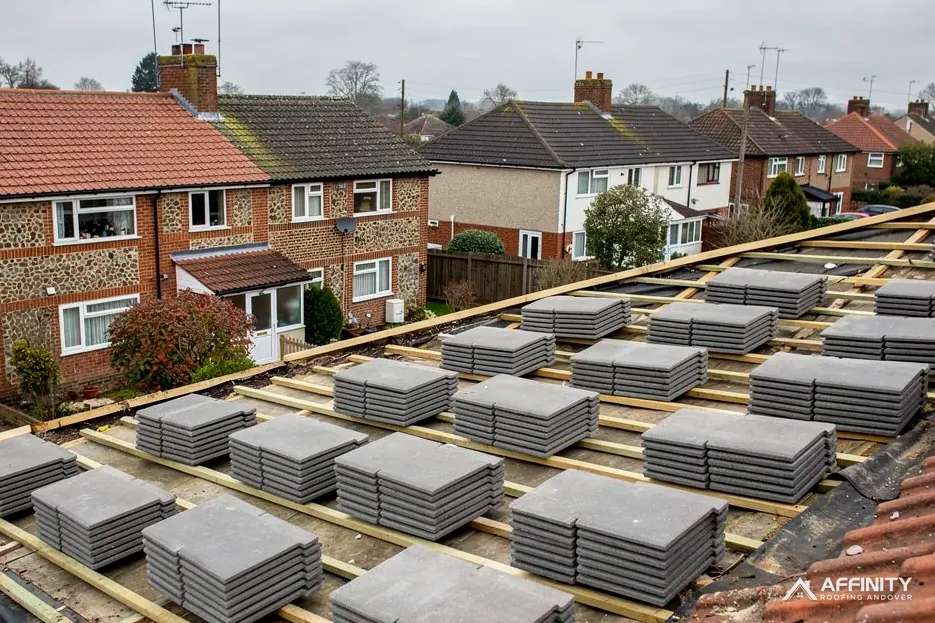
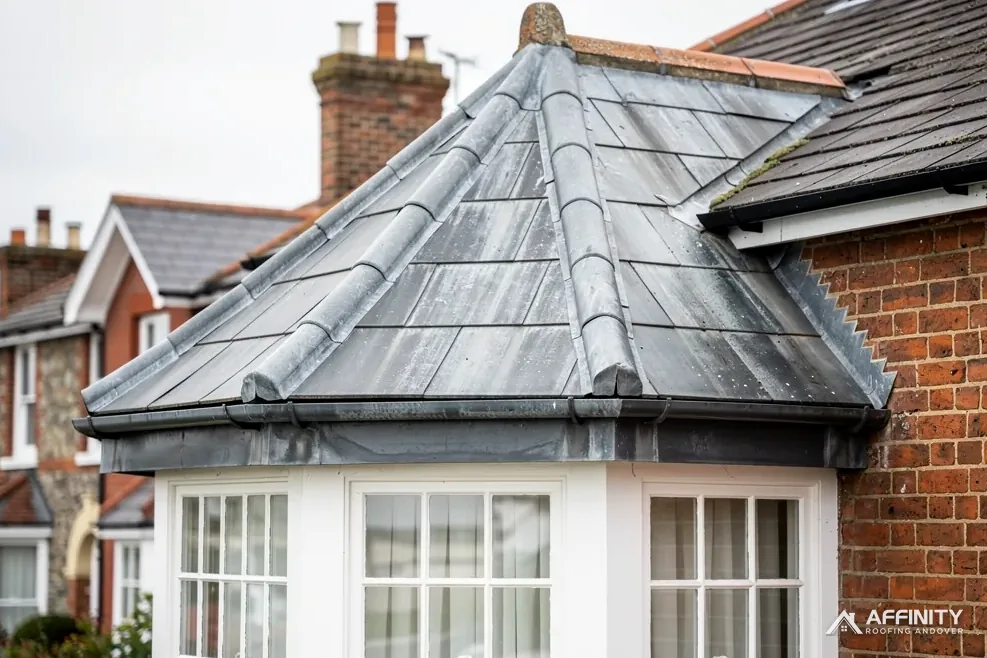
Southampton roofs: listings, flats, landlords and licences
Does a flat in Southampton have permitted development rights for roof work?
No. In the General Permitted Development Order a dwellinghouse leaves out flats and blocks of them, so the householder rights for roof work do not apply. Works that do not materially alter the outside are not development, whereas a change of shape or material can need planning permission. The survey tells you which side of that line your building is on.
Which consent route covers the roof at St Michael's church in Southampton?
St Michael's serves as an Anglican place of worship, so repairs are decided under the Church's faculty system and not by listed building consent from the council. Another church may follow a different route. A church roof waits for its custodians, and we ask first, because the building and its worshippers come before any programme of ours.
Is a Southampton landlord a domestic client under CDM?
The Health and Safety Executive treats a domestic client as someone having work done on their own or a relative's home, outside any business. Work on a let property is part of a business, so the definition does not simply fit. With only one contractor, the plan for the construction phase is that contractor's to write.
Who licenses scaffold on a Southampton street?
Southampton City Council, as the highway authority. Who applies differs between councils, so we confirm it at the survey and have the licence arranged through the scaffolder. Dates are agreed with you first, and a tower on private land may avoid the street. The licence cost sits inside your one total price.
Get a Southampton roof surveyed
Send the address and a photo, and tell us who owns the roof. We survey and quote one written price.
10-year workmanship guarantee, in writing.