
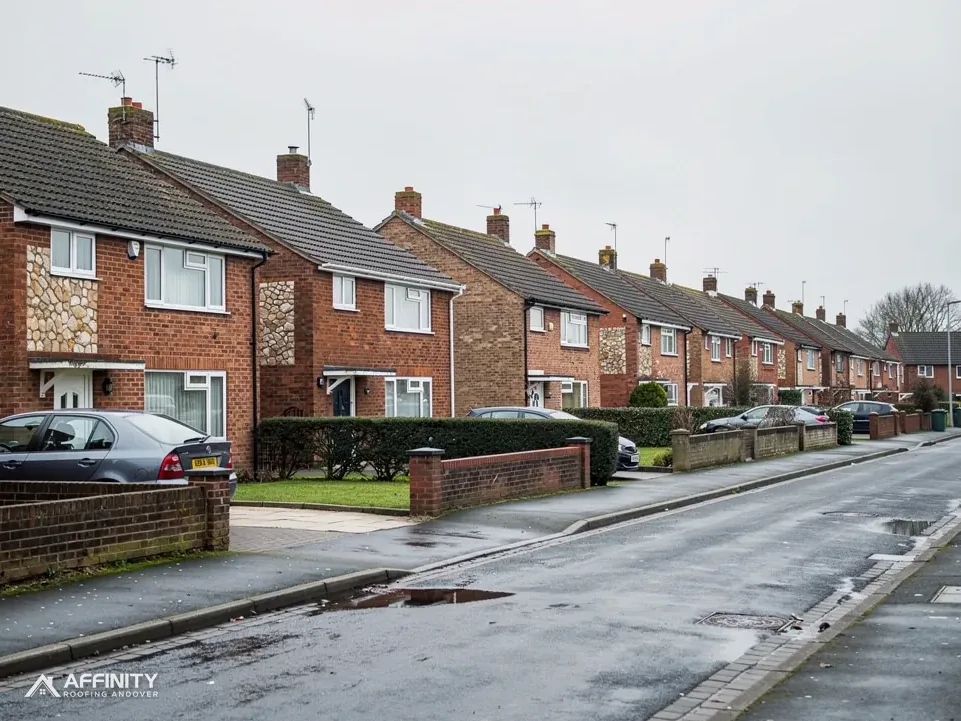
Roofers in Nursling
A village beside the Test, with a farm described in 1908
In 1908 the Victoria County History described Nursling as a scattered village on the left bank of the Test. Each roof is climbed, photographed and explained before a price.
Nursling roofs, from the farm to the lane
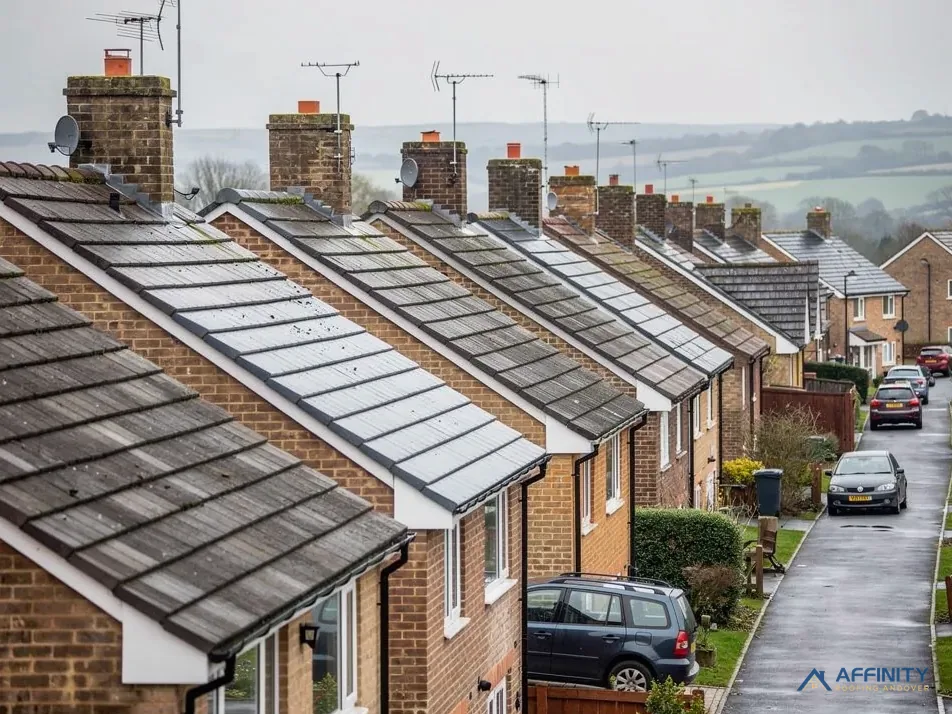
Farmhouse and outbuildings
Nursling Farm, with its square farm-house and low thatched outbuildings, as the 1908 Victoria County History described it.
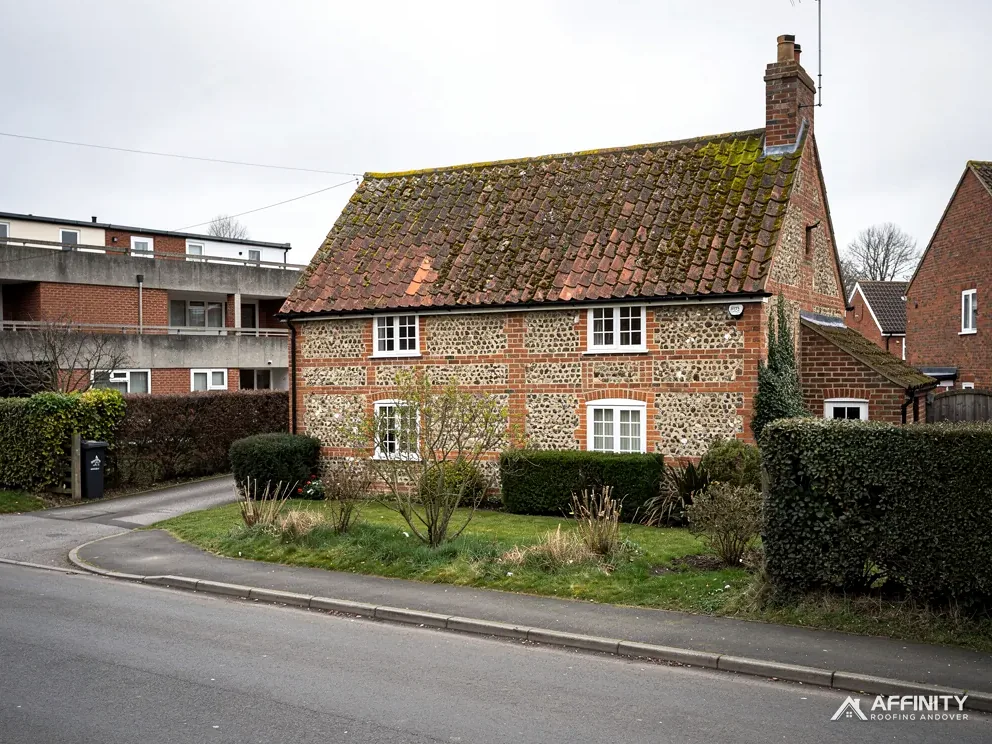
Victorian school buildings
A school built in 1871 and enlarged in 1894, according to the 1908 Victoria County History.
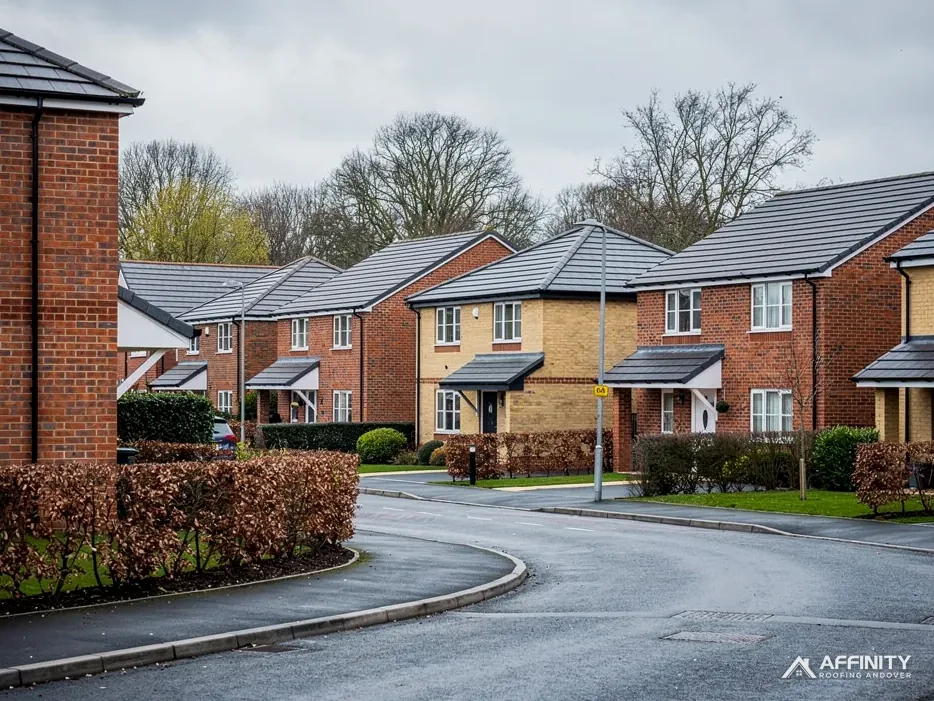
Homes along the lanes
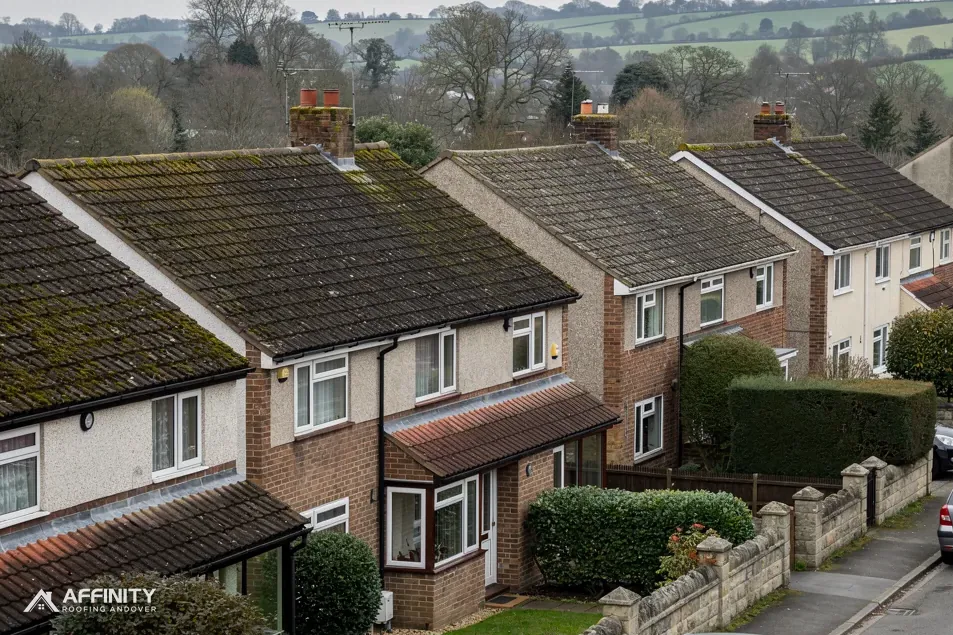
Houses along the village lanes, where the approach shapes every plan.
Nursling among the villages south of Romsey
Romsey lies to the north-west. Rownhams is just to the north-east, with Totton south-west, Netley Marsh beyond it and Marchwood to the south.
- Distance
- 21.5 road miles south of Andover
- Planning
- Test Valley Borough Council
- Council
- Test Valley Borough Council and Hampshire County Council
The Nursling roof report
Local editionNursling, HampshireFarm roofs and a village beside the Test
On the left bank of the Test: who decides a Nursling roof, and what old farm roofs ask
Nursling is 21.5 road miles south of Andover, a scattered village beside the Test. Below: who decides on a roof, how old outbuildings and thatched history change a survey, and how Hampshire's fee works for a short job.
Test Valley's southern edge, on the Test itself
Nursling lies in the far south of Test Valley Borough, and Test Valley Borough Council decides planning for a roof here. Highway matters on the lanes and verges rest with Hampshire County Council as highway authority. The village is 21.5 road miles from Andover, but the offices are the same ones that serve the town, and a homeowner writes to the same addresses. The 2021 Census counts Nursling and Rownhams together as one parish, with 5,968 usual residents.
For building control we write your building control body, and the team that deals with a Nursling address is confirmed as soon as a re-roof is mooted. Your roof is put to that team, and its reply comes back to you on paper with the survey findings. A registered building control approver is the other option, a private route regulated since 6 April 2024.
The Planning Portal draws its line for re-roofing at 25 per cent of the building envelope and 50 per cent of the roof, below which no building control application is usually required. Weight is a separate test: a covering that raises the roof's load by 15 per cent or more requires approval, after a check of the structure by someone qualified.
Planning is a different question again. On a house, putting back the same covering is normally outside planning, whereas a new roof shape can be another matter, and Test Valley Borough Council is the office to ask. Only the council can say whether an Article 4 direction reaches your address. The question goes to it, with the address, before a figure is written.
Whether a conservation area reaches your Nursling street is a question for the council, and Test Valley's own map is the check, and tighter rules apply to how a roof looks wherever a conservation area runs. Nothing in the survey is closed until the council's map has been read.
A scattered village needs a plan for access. A lorry that cannot turn in a narrow lane costs a day. We walk the approach, note where the skip and the scaffold can stand, and settle the delivery before anything else.
Neighbours matter on a scattered lane. A scaffold on one property can brush the boundary of the next, and a skip on a verge can block a drive. We tell the neighbours what is coming and how long it will stay, which costs a note through the door. Where a roof meets a neighbour's wall, the party wall questions belong to a party wall surveyor, who is neither the roofer nor the council.
A farm, a school and some thatched outbuildings
In 1908 the Victoria County History described Nursling as a scattered village on the left bank of the Test, which divided into two main branches as it entered the parish. It recorded a school built in 1871 and enlarged in 1894, and Nursling Farm, with its square farm-house and low thatched outbuildings, on high ground south of the road. Those are early twentieth-century descriptions, not a guide to what stands today, but they show the village has long mixed farms, public buildings and homes.
Thatched roofs are specialist work and belong with a thatcher. The tiled farmhouse beside the thatched barn, the slate roof on the store, the flat roof on the garage and the guttering on all of them are work we can survey and repair. If you own a mixed group of buildings, tell us which roofs are thatch and which are not, and the survey notes will keep the two apart.
Farm and outbuilding roofs have their own habits. Long runs of corrugated sheeting, timber purlins that have been wet and dry many times, and valley gutters that nobody has cleared for years are common finds. Where the sheets might be asbestos cement, we check before anything is touched. Lifting asbestos cement with care needs no licence, yet smashing it changes the rules, and the waste leaves site double-wrapped on a consignment note instead of in an open skip.
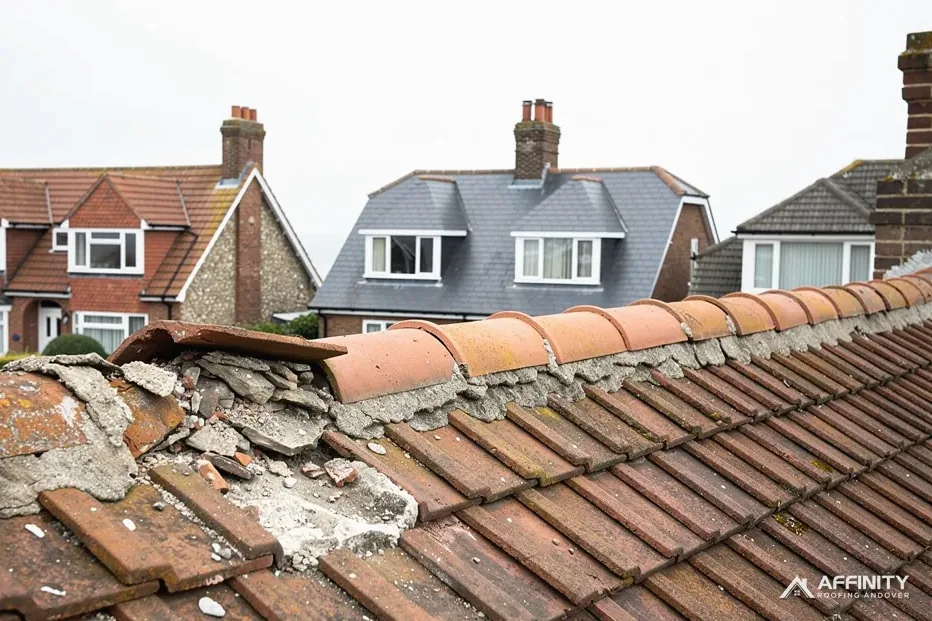
Brick outbuildings with clay tiles need a different eye. The tiles may be sound but the pointing on a gable or the flashing at a lean-to may be the cause of a damp wall. We trace the water from the stain back up the building, instead of fixing the nearest tile and hoping.
Larger roofs also change what scaffolding does. A high farm barn needs an edge protection plan, and a low shed may need nothing but a tower. The survey says which, and the price follows the answer.
Old farm buildings that have been converted into homes bring their own wrinkles. A barn roof built as one open span may now cover bedrooms, so the insulation, ventilation and fire performance of the covering all matter, and Building Regulations come into the picture. We raise conversions at the survey, because a roof that was plain agricultural cover when built may be expected to do a house's work today.
Before a roof of any age is stripped, we look at the timbers. Rafters, purlins and wall plates carry the building, and rot or beetle damage found early costs less than damage found when the covering is half off.
“Nursling's farm roofs and village roofs need the same first step: a proper look from above.”
Hampshire's fee for short jobs, and what we price
When a Nursling job needs scaffolding on a road or pavement, the licence is Hampshire County Council's to give, under section 169 of the Highways Act 1980. Hampshire County Council charges £211.90 on application for the first 2 weeks and £72 for each additional 2-week period, so a short repair that finishes inside a fortnight pays the first figure and no more.
The scaffolding firm lodges the application with Hampshire County Council, and the licence cannot begin until 10 clear working days have passed. No extension is possible. Where a barn or house stands behind a private track, the scaffold stands on private ground and no licence is needed.
A short job is worth planning as a single visit. If the survey shows that one slope needs new battens and tiles, and the gutter on the same side has dropped, we would rather quote both together and use one scaffold. That saves a second set-up and keeps the licence period short. It also means the gutter is refixed to boards that have just been checked, not to a fascia nobody has looked at.
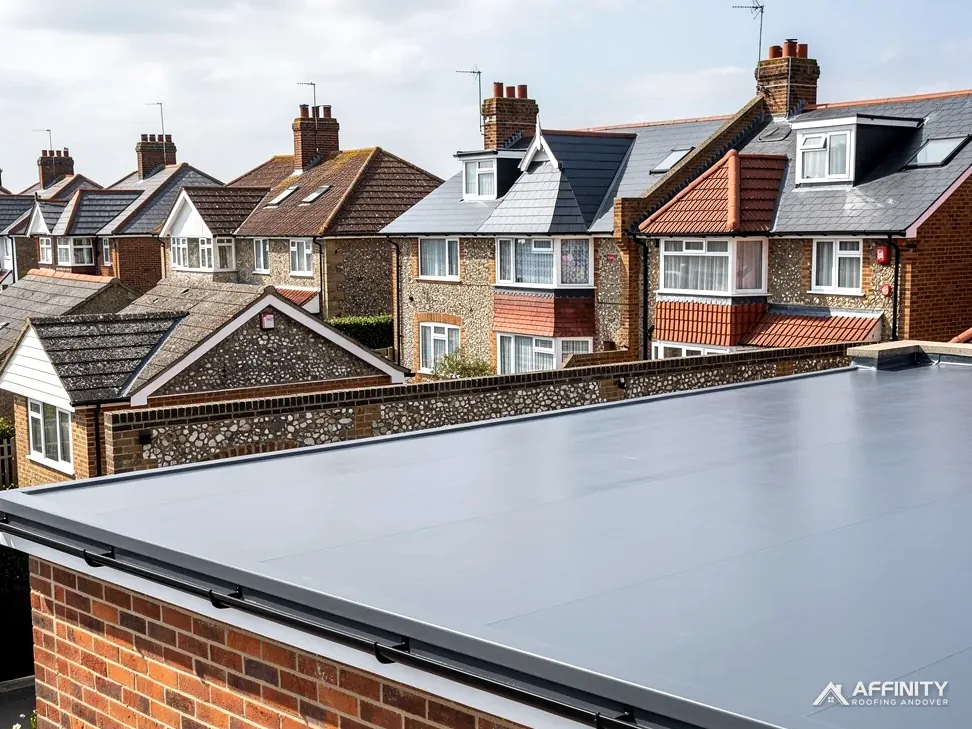
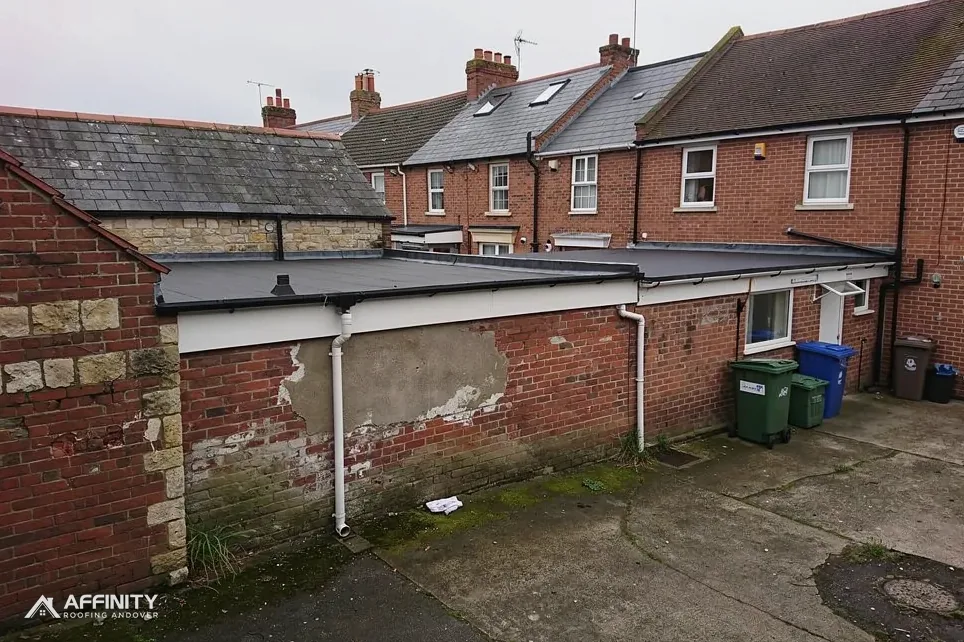
What we price here ranges widely. Roof repairs cover slipped tiles, failed flashings and blocked valleys. Flat roofing covers garages, porches and extension roofs where the membrane has split or a seam has lifted. Commercial roofing covers units, stores and farm buildings with larger areas and different access.
Commercial and agricultural roofs come with their own conversation. A large building needs the area measured, the access planned, and the sheeting or membrane identified before a price makes sense. We look at those first and work out what moves the figure.
The choice between patching and replacing is the main judgement on an older building. A roof with two or three local faults, such as a split sheet, a slipped tile or a failed flashing, can be repaired and left to run. Where fixings or battens have failed across a whole slope, patching spends money on a covering at the end of its life. The photographs let you see which of the two you have, and the written total follows the answer.
Gutters on outbuildings get the same scrutiny. They fill with leaves and stop working, and the wall below stays damp until someone looks up. Clearing, re-seating or replacing a run of gutter is a modest job beside a re-roof.
If water is coming in now, we cover the opening and keep the building dry while the proper work is organised. A temporary sheet over a barn roof buys weeks, and the photographs from that visit become the basis of the repair specification.
Work we carry out around Nursling
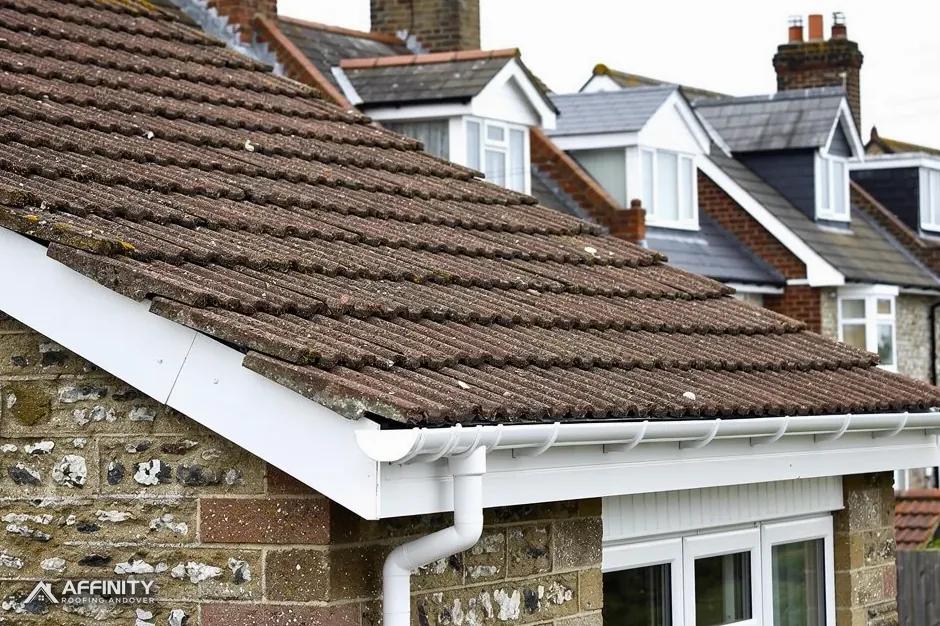
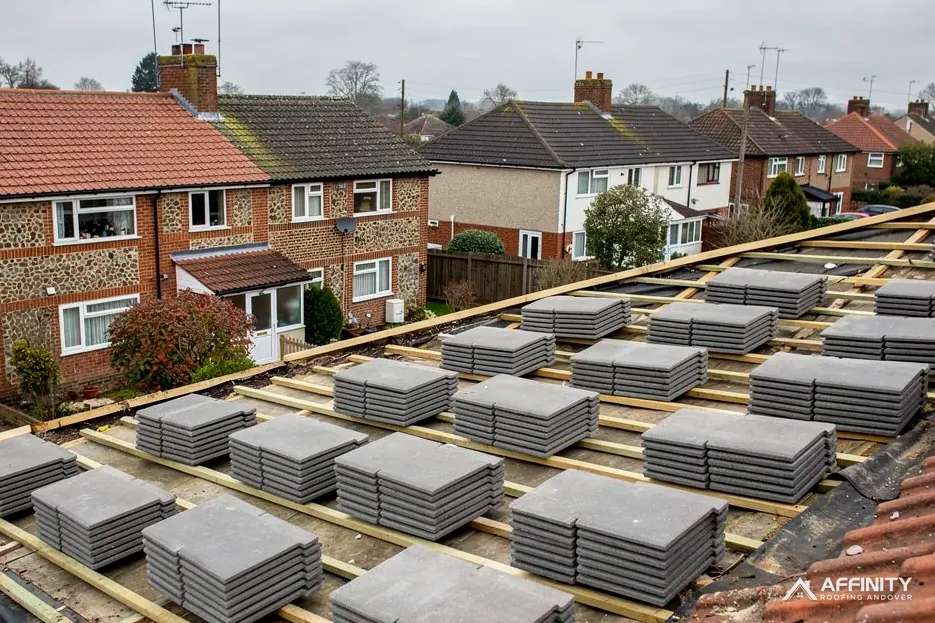
Nursling roofs: outbuildings, asbestos and the county fee
Can the corrugated roof on a Nursling outbuilding be replaced without a test?
Older corrugated sheets might be asbestos cement, so check before anything is cut or lifted. Lifting asbestos cement with care is non-licensed work; smashing it substantially turns the job into notifiable work. The waste is double-wrapped and travels on a consignment note, never in an open skip. We identify the sheeting at the survey and plan the job around the answer, so nobody is guessing.
Who repairs the tiled roofs on a Nursling farm with thatched outbuildings?
A thatcher handles the thatch, and our work is the other roofs on the site: tiled, slate, flat and sheeted. Tell us which buildings carry which covering when you book. The 1908 Victoria County History recorded Nursling Farm with a square farm-house and low thatched outbuildings, an early record of mixed roofs on one site.
How does Hampshire's scaffold fee affect a short roof repair near Nursling?
Hampshire County Council charges £211.90 on application for the first 2 weeks and £72 for each further 2-week period, so a repair that finishes inside the first fortnight pays only the first fee. The firm putting up the scaffold applies to Hampshire County Council, 10 clear working days ahead. A private track or drive needs no licence.
Is the Nursling and Rownhams parish figure the same as Nursling's population?
No. The 2021 Census counted 5,968 usual residents for the combined parish of Nursling and Rownhams, so it covers both villages. For roof work the figure matters little. What matters is Test Valley Borough Council as planning authority and your building control body for the technical checks, and we confirm both.
Nursling's neighbours along the Test
Get a Nursling roof looked at properly
Share the address and a roof photo. We check the council route, then send one total price in writing.
10-year workmanship guarantee, in writing.