
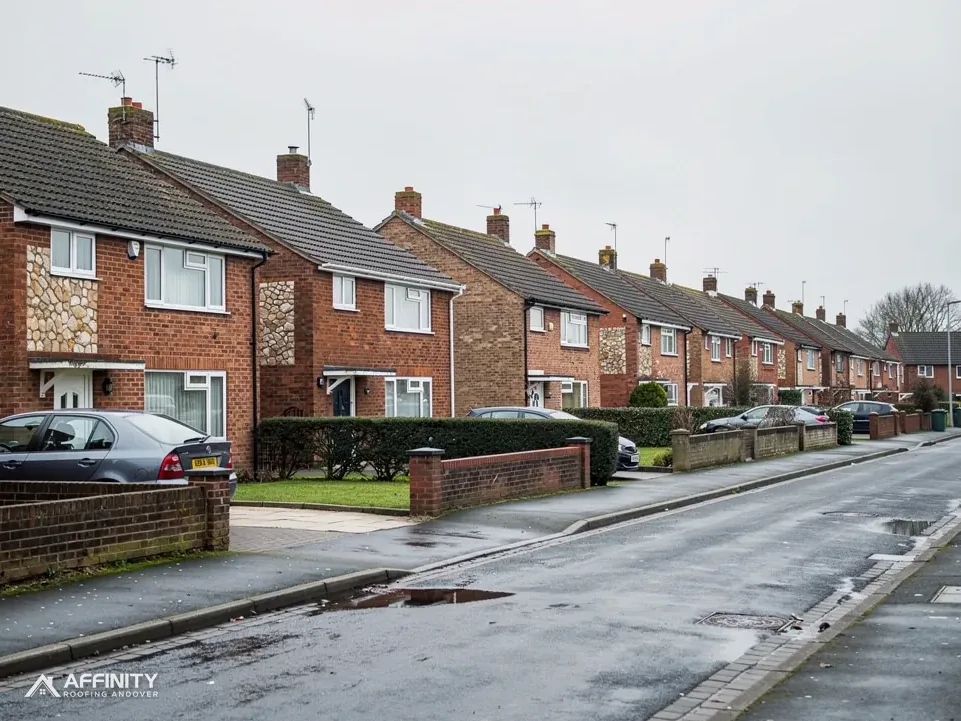
Roofers in Totton
Eling's conservation area, Rumbridge Street and a Grade II church
Totton takes its planning from the district council, not the Park, unlike its Forest neighbours to the west. A survey and photographs come first, then a price.
Totton roofs from Eling to Rumbridge Street

Eling conservation area
The Eling conservation area lies within about 0.75 km of the centre, so roof changes there go to the council.

Rumbridge Street listings
90 and 92 Rumbridge Street are listed Grade II, as are Elingfield House and the Farmhouse Rest Home.

Church of St Winfrid
Grade II since 10 June 1987 and an active Anglican church, so its roof repairs run through the faculty system.
Totton between Netley Marsh and Marchwood
Netley Marsh and Copythorne lie west, Nursling and Rownhams north-east, Ashurst south-west and Marchwood south-east. All lie within reach of a survey.
- Distance
- 23.9 road miles south of Andover
- Planning
- New Forest District Council
- Council
- New Forest District Council and Hampshire County Council
The Totton roof report
Local editionTotton, HampshireA district council and an Eling conservation area
Totton's roofs outside the Forest Park: one district council, an Article 4 reference and eight listings
Totton is a Hampshire town of 28,653 people just outside the New Forest National Park. This report covers how the district council both plans and inspects here, what Eling and the listed buildings change, and the county scaffold licence.
One district council for planning and inspection
The parish of Totton and Eling counted 28,653 usual residents at the 2021 Census, a large population for a single parish. It also sits a short distance from the New Forest National Park without being inside it. That small fact matters, because the villages to the west answer to the Park for planning, while Totton answers to New Forest District Council. The district decides planning applications and employs its own building control team at Appletree Court, Lyndhurst (023 8028 5245), while Hampshire County Council looks after the roads.
A homeowner here therefore has an easier time of it than one in Netley Marsh, because a single council holds the planning and Building Regulations files. We still treat them as different questions and write both answers down. Planning asks what a roof will look like and whether permission is needed. Building control asks whether the work is safe, weathertight and properly fixed.
The order of work never varies, whatever the size of the job: address checks first (heritage list, conservation area, Article 4 reference), then the survey, then the written report, then one price. Putting the checks first means nobody is quoted for a roof that needs a consent they have not yet sought, and nobody finds out mid-job that a decision is missing. A leaking roof is covered temporarily before anything else is decided.
For a re-roof the Planning Portal draws the line at 25 per cent of the building envelope and 50 per cent of the roof. Work below both is not usually a building control application, and we use those figures for a Totton address. Bigger jobs, or any that approach a number, go to the district's team before booking. Anyone who prefers may appoint a registered building control approver instead of the district team, and the choice is entirely yours to make.
A heavier covering is its own test. Where a replacement is 15 per cent or more heavier, Building Regulations approval comes in, with a structural opinion recommended beforehand. Rafter sizes and spacing are measured and noted so the question can be answered on paper.
On a flat roof the survey asks whether water drains. Ponds after rain, split seams and lifted edges are photographed, and the report separates a surface fault from a problem in the deck underneath. The fall, which is the gentle slope towards the outlets, is checked first.
A pitched roof is read from the gutters up to the ridge, then across the stacks. Each finding is linked to a photograph, and the whole set reaches you before a price does.
Eling, St Winfrid's and the Rumbridge Street listings
Historic England's list holds 8 listed buildings within about 900 metres of the Totton town point. The Church of St Winfrid is Grade II (list entry 1094352, first listed on 10 June 1987) and the record shows Anglican worship there, so repairs need a faculty, which the diocese's consistory court grants. Elingfield House is Grade II (1094350, first listed on 25 April 1975), and so are 90 and 92 Rumbridge Street (1302049) and the Farmhouse Rest Home (1094353).
Changes to the character of a listed house need listed building consent from the district as well as any planning permission. Matching materials are the opening position. The application lists the roof as it stands, from the covering to the stack flashings, so the officer knows exactly what is staying. For a listed building in commercial use, the same logic holds, and the survey adds notes on access and safety.
The Eling conservation area lies within about 0.75 km of the centre. In the conservation area, a visible roof alteration is raised with the council ahead of work, and dormers need an application. Our guide to planning permission for roof work explains how the rules differ for alterations and repairs. The council map settles an exact address, since near is not inside the area.
New Forest District Council's published data includes an Article 4 direction referenced 97/1, whose mapped area takes in part of the Totton area. What it covers is for the council to confirm. The council can say whether it reaches your street, and its answer goes into the file.
Photographs are the common thread. On a listed or conservation area house we add shots from the nearest public place, since that is how the roof is judged first. Older material that must be replaced is sourced to match, and reclaimed tile and slate are worth hunting for, because new pieces rarely weather to the same colour.
The survey file records which designations apply to your house and which do not, so a later owner does not need to repeat the work.
90 and 92 Rumbridge Street share a single list entry (1302049), first listed on 1 December 1975, and the Farmhouse Rest Home (1094353) was first listed on 9 September 1980. Where a listed building is in daily use by others, their access and routine become part of the plan, and the scaffold is arranged around them. Where your house shares a boundary with a listed neighbour, we agree access and scaffold positions with the neighbour in advance and photograph the junction between the two roofs, so a later dispute is answered by a dated picture.
“A few miles from the Forest villages, Totton plans and inspects through one district council.”
Hampshire's scaffold licence, and our jobs
Section 169 of the Highways Act 1980 requires a licence for scaffold on a Totton pavement or road, and Hampshire County Council issues it. New Forest District Council does not. Under Hampshire County Council's rules the scaffolding contractor files the request on the customer's behalf, so the homeowner is spared the paperwork.
Hampshire County Council's licence costs £211.90 up front for 2 weeks, then £72 for each extra 2-week block. Hampshire County Council wants 10 clear working days of lead time and allows no extensions. Scaffold confined to your own plot sits outside the scheme, and we confirm at survey whether yours does.
Totton is a town, and town streets mean terraces, side passages and cars parked against the kerb. We measure the frontage, note the footway width and ask whether the rear can be reached through a passage or over a garage. Sometimes a rear scaffold spares the street altogether, and that choice is made before a price is written.
The jobs are the everyday ones. Roof repairs answer a slipped tile or a lifted flashing. Flat roofing deals with extensions, porches and garage roofs where the membrane has gone. Guttering, soffits and fascias look after the roofline, where staining on a board often points to a gutter fault above.
Replacement is set beside repair in the same survey when a covering is spent, each with its own photographs and its own reasons. Sound timbers with a fault in one place call for a repair. Fixings giving way slope after slope call for a new covering, and the photographs make that case without pressure.
Netley Marsh, Copythorne, Nursling, Rownhams, Ashurst and Marchwood are all close. Several sit under different planning rules from Totton, because the Park boundary runs between them, and each address is checked on its own before a price is written. The result is noted in the file with the council contacts.
Trees, gutters and parked cars all affect town roof work, and none of them can be seen from a desk. A branch over a gutter fills it with leaves, a car against the kerb narrows the delivery space, and a neighbour's gate may be the only way through to the back. The survey notes each of these, since they set the length of the job and the shape of the scaffold.
When a job ends, the finished roof is photographed from the survey positions, so you can lay before beside after. Any job left over for a later visit is recorded with a date. Waste leaves with us, and the access is left open for the neighbours.
Pitched, flat and roofline work in Totton


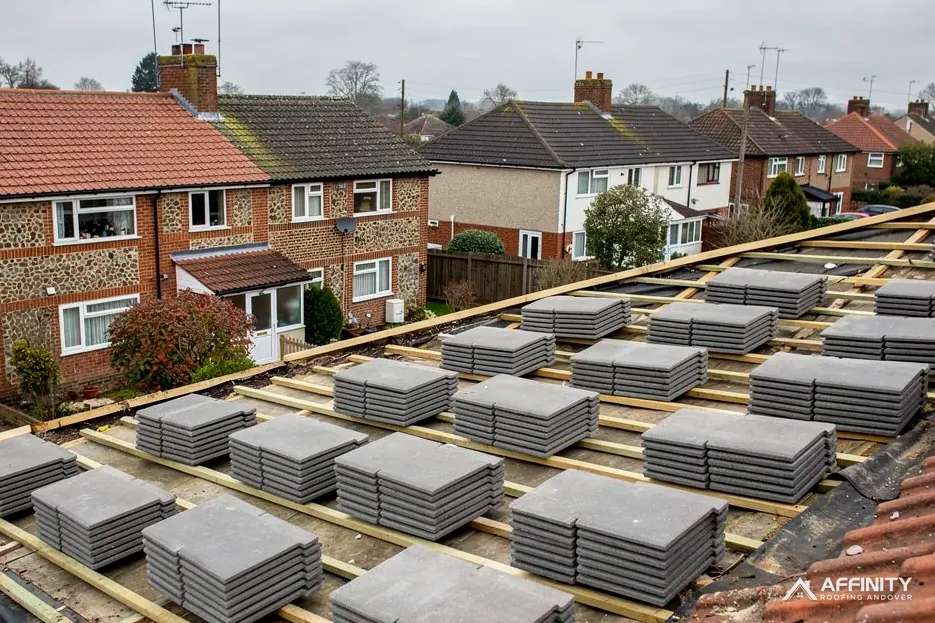
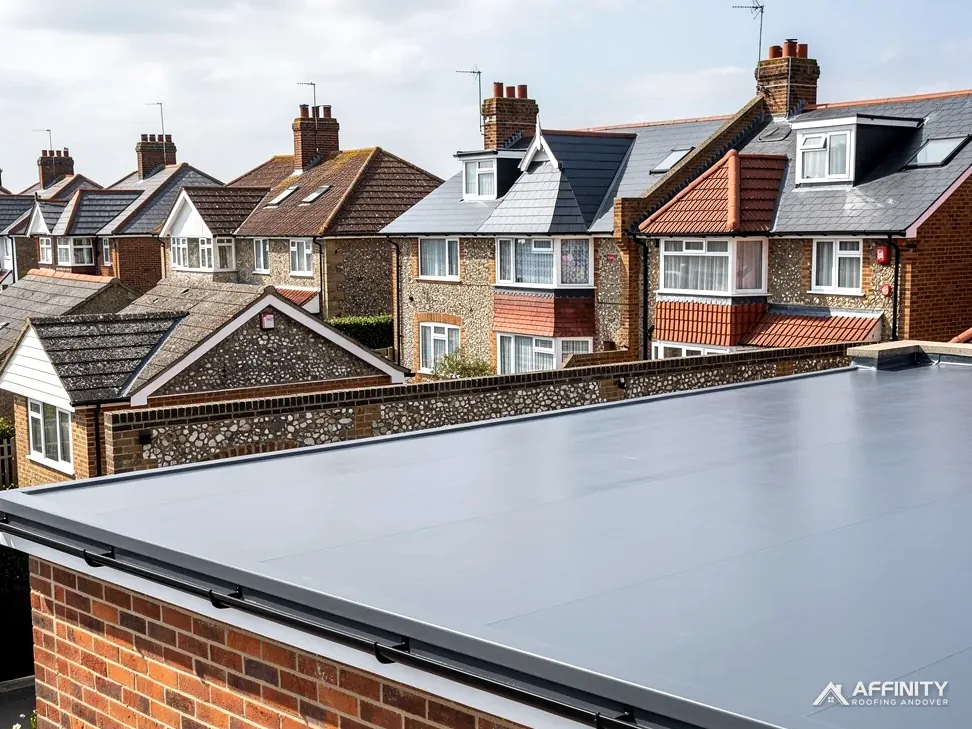
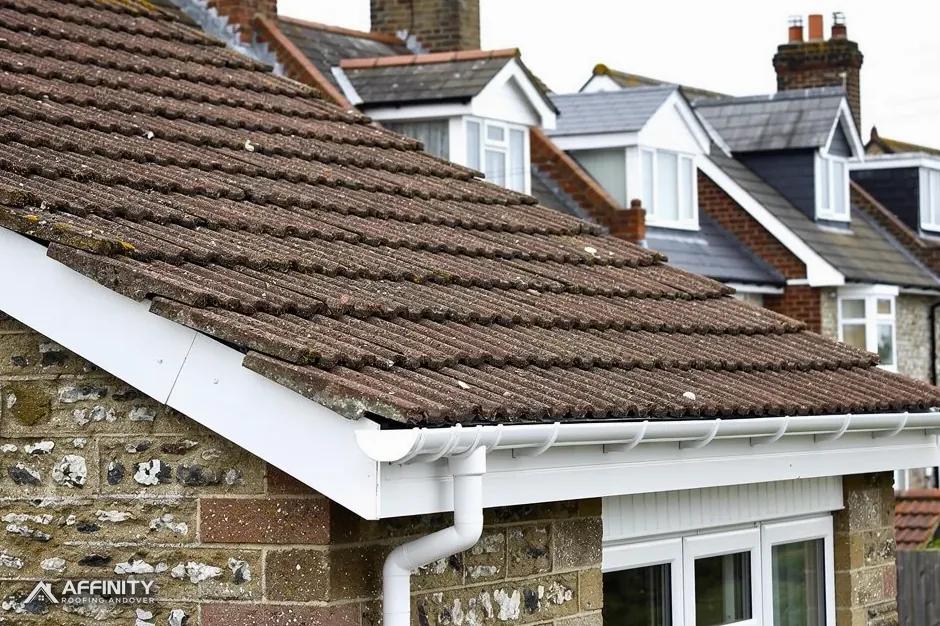

Totton roofs: Eling, the listings and the licence
Is a Totton dormer decided by the Park or by the district council?
By New Forest District Council, because Totton is outside the National Park. Inside a conservation area such as Eling, a new dormer still needs planning permission, and the council's boundary decides which streets are covered. We consult the council map for the address and photograph the roof's structure, so any application records the roof as found and the change proposed.
Who inspects a re-roof in Totton?
New Forest District Council, through its own building control team at Appletree Court, Lyndhurst. Planning sits with the same district council, because Totton is outside the National Park. A replacement 15 per cent or more heavier needs Building Regulations approval. Bigger jobs are raised with that team in advance, and its written reply is stored with the pictures for your file.
What does Article 4 direction 97/1 mean for a Totton roof?
New Forest District Council's published data places a direction with that reference over part of the Totton area. Such directions withdraw some permitted development rights for a defined area, so the effect can differ from one street to the next. We ask the council whether it reaches your street and what it covers, and note the answer.
How does the county scaffold licence work in Totton?
The scaffold firm makes the application to Hampshire County Council for you, leaving a clear gap of 10 working days. Hampshire County Council charges £211.90 for 2 weeks and £72 for each further 2-week block. Scaffold on land that is yours needs none, and any cost sits inside your single price. The work is sequenced so the scaffold comes down as soon as it can.
Totton roofs, surveyed first
Send your Totton address and a note on the problem. The survey comes first, with one written price after it.
10-year workmanship guarantee, in writing.