
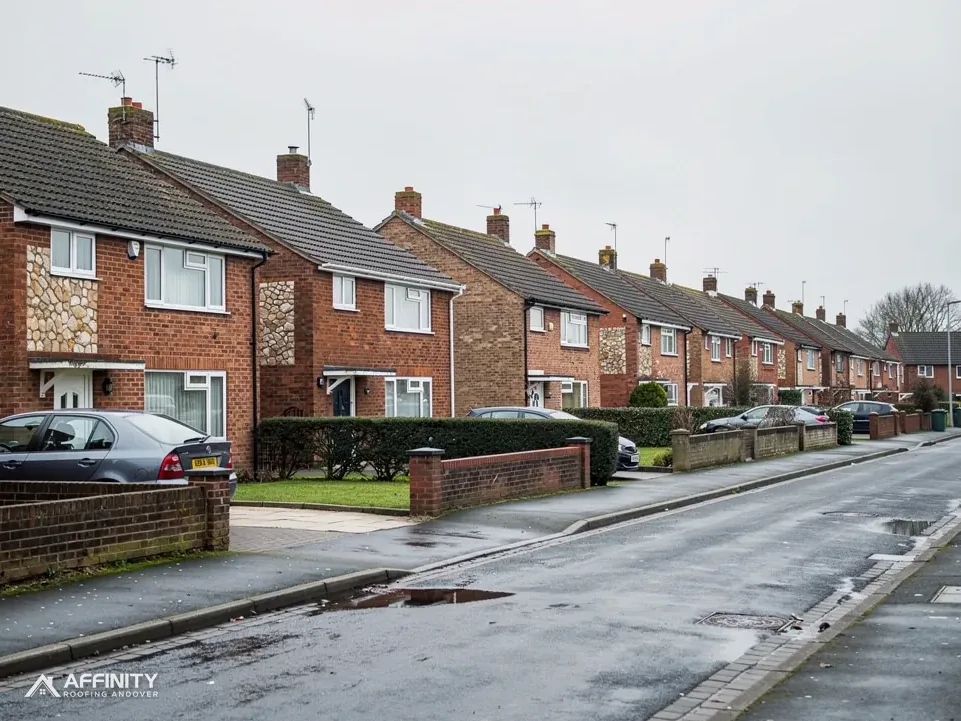
Roofers in Dibden
Houses on the park edge, in a parish of 20,182 people
Dibden sits at the edge of the New Forest National Park, with about 60 per cent of its surrounding box inside the boundary. We check which rules apply first.
Dibden roofs, on either side of the park line
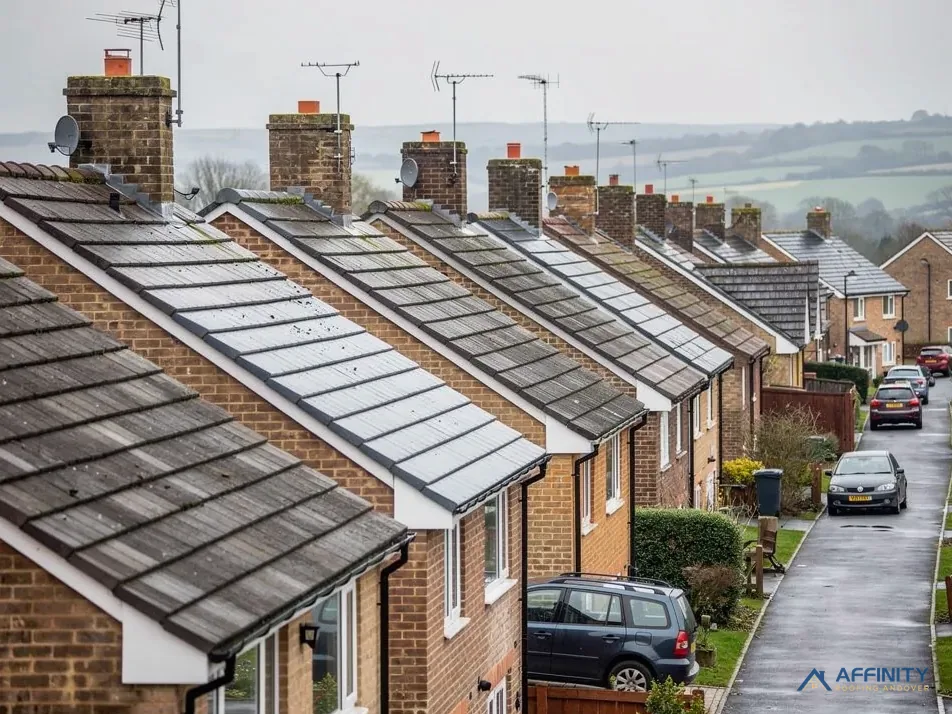
Houses inside the park boundary
Addresses in the 60 per cent of the box that lies within the National Park, where the park authority decides planning.
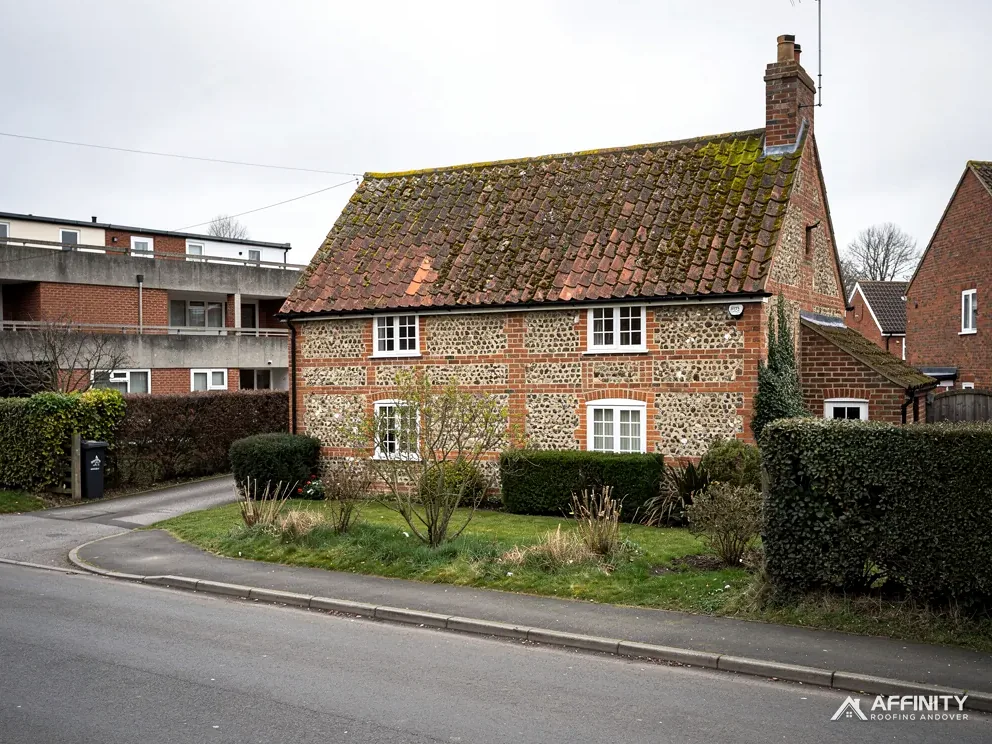
Houses outside the boundary
Addresses in the rest of the box, where New Forest District Council decides planning and runs building control.
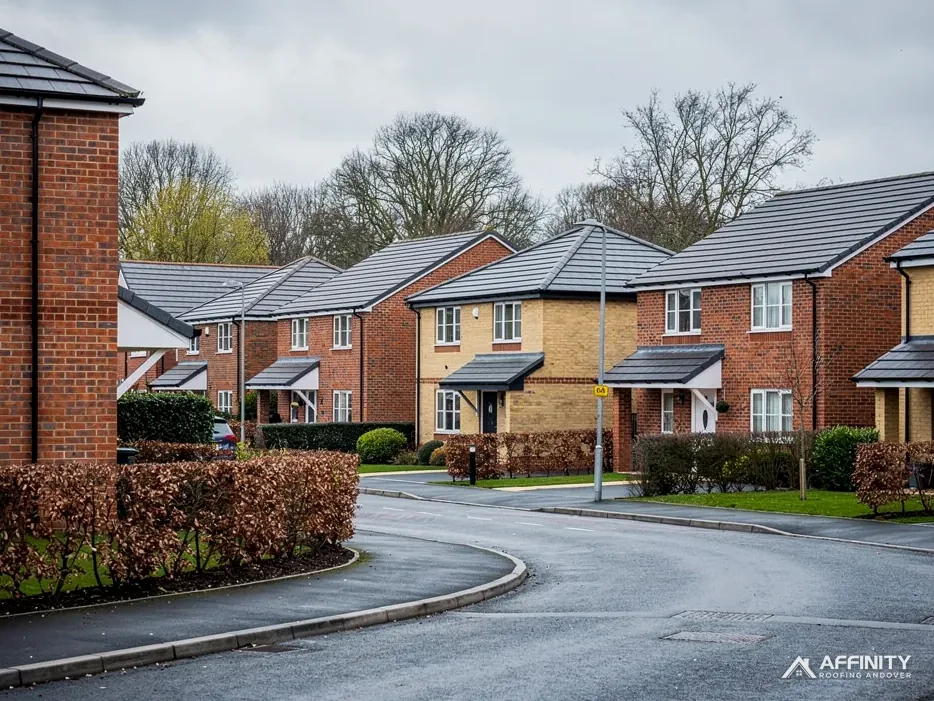
Streets towards Hythe
Homes within reach of the Hythe conservation area, where the street view of a roof gets a closer look.
Dibden and its neighbours to the north-west
Marchwood lies to the north-west, Southampton to the north, with Totton and Ashurst further north-west. Each gets the same survey before a repair is priced.
- Distance
- 29.5 road miles south of Andover
- Planning
- New Forest District Council
- Council
- New Forest District Council and Hampshire County Council
The Dibden roof report
Local editionDibden, HampshireA roof at the park edge
Dibden and the park boundary: which side of the line your roof sits on, and why it matters
Dibden lies 29.5 miles by road south of Andover, in a parish of just over twenty thousand people. This report explains the council that handles planning and building control, the New Forest National Park line, and the rules for scaffolding.
A parish of 20,182 and one council team
Dibden belongs to the civil parish of Hythe and Dibden, which counted 20,182 usual residents at the 2021 Census. It means a good many houses of different ages share the same council. For planning, Dibden answers to New Forest District Council, with Hampshire County Council in charge of the highways. The parish figure covers Hythe and Dibden together, so it describes the wider area and not Dibden alone. A buyer's solicitor may ask years later for the paperwork behind a re-roof, which is one more reason to keep a clear record of what was done.
Building control is handled by New Forest District Council as well, through its own building control team based at Appletree Court, Lyndhurst. Its direct line is 023 8028 5245. For a Dibden re-roof, the first call is to the council's own team. Having planning and building control under one roof is convenient, but the two answers are still separate. Planning asks whether a change is allowed; building control asks whether it is built safely and to standard. A job can need one answer, both or neither, and the survey tells us which before we put anything in writing.
On the building control question the Planning Portal sets two limits for a re-roof. Work that affects less than 25 per cent of the building envelope and less than 50 per cent of the roof is not normally something that needs an application. A heavier covering is a different matter: where the new material adds 15 per cent or more to the weight, approval under the Building Regulations follows, and a structural opinion is wise.
These limits do much of the sorting for us. A repair to a single slope, a replaced valley, even a run of fresh battens sits far below them. A strip and re-cover of a whole semi is not, and we ask the council before pricing. If you would rather use a private route, a registered building control approver can do the work in place of the council, under a regime in force since April 2024.
None of this needs the homeowner to read a statute. We note the address, the council that applies, the state of the roof and the likely route, and put the findings in writing with the survey photographs. Our guide to planning permission for roof work is there if you want to read the planning side in your own time.
The aim is that nobody learns about a consent requirement after the scaffold is up. A route settled early keeps a job moving, and checking it at the start costs nothing.
Which side of the National Park line
The New Forest National Park touches Dibden without quite covering it. The village point sits outside the boundary line, yet roughly 60 per cent of the 1.5 km box drawn around it lies within. In practice that means two neighbours on one road could sit under different planning bodies. For addresses inside the park, the New Forest National Park Authority is the planning authority, as New Forest District Council's householder page itself tells applicants. Outside it, the district council decides.
That is why the first question on a Dibden survey is the address, and the second is the park map. We do not guess from the postcode, because a boundary can pass between neighbours. The park boundary is on the government's planning data map, and we check the plot itself against it rather than the road name or the village sign. If your house is inside the park, the authority handles planning, while building control stays with New Forest District Council. The park authority never inspects a roof against the Building Regulations; that remains a district council job.
The status matters for the shape of a roof. A National Park is protected land under the planning rules, so altering a roof's outline, with a dormer the usual example, meets tighter rules inside it than in an ordinary street. Repairs and new coverings that copy the old are unaffected. The planning guide linked in the previous story sets out the detail.
Three Article 4 directions reach the area around Dibden: Article 4 Direction 97/1, NP New Forest Campsite and NP New Forest Recreational Campsite. Check whether an Article 4 direction applies to your address with New Forest District Council before you change anything visible about the roof.
The nearest conservation areas include Hythe, within about 2.5 km. The council's map shows whether your road falls inside one, and checking it takes a minute. If your road falls inside one, the planning rules on roof shape tighten in the same way as in the park.
Inside the park boundary a few things follow. The authority's planning team takes any application, such as one for a dormer, where outside it the district council would receive the same paperwork. Our part is to photograph the roof, describe the existing covering and write down what is proposed, so whichever body receives the file can see the case at once.
Whichever side you are on, the roof itself gets the same treatment: a survey, pictures of what turns up on your roof, and a written price after we have seen it.
“At Dibden the National Park boundary can run between two neighbouring roofs.”
Scaffold licences and the work we price
Dibden's roads come under Hampshire County Council as highway authority, and section 169 of the Highways Act 1980 makes a licence from it necessary for scaffolding that obstructs the highway. New Forest District Council and the National Park Authority issue no scaffold licences. Under Hampshire County Council's page the scaffolder is the applicant, acting for the customer, so you fill in nothing yourself. Hampshire County Council charges £211.90 on application for the first 2 weeks, then £72 for each additional 2-week period, and it wants ten clear working days to sit between the application and the start.
It does not allow extensions, which means the dates have to be right at the start. We therefore hold the scaffold booking until any consent that your job needs has been granted. A scaffold on land that is entirely yours needs no highway licence, and a house with a deep front garden is simpler in this respect than a terrace opening straight onto the pavement.
The jobs themselves follow familiar lines, because the same handful of faults show up on roofs of every age. We take roof repairs for slipped or cracked tiles and failed valleys, guttering, soffits and fascias where boards have rotted or joints have opened, and flat roofing on extensions, porches and garages. Moss and lichen where the roof is otherwise in good order call for a different approach, which our roof cleaning and moss removal page covers.
Each job starts the same way. We climb up, photograph the covering, the ridge, the verges, the valleys and the flashings, and look at the timbers where we can reach them. Then we tell you in plain language what turned up, and what we would do about it.
Weather and access shape the diary more than anything. A roof that is leaking today gets a temporary cover first, and the full repair is booked once the route is clear. Gutters and soffits along the same wall are checked from the same access, so a second visit is seldom needed. If anything in the findings changes the job, you are told before the work, not after it. A rotten fascia board found behind a gutter, for instance, is photographed and explained before a single screw is turned.
Where a repair will hold, you are told that. Where the underlay has perished and the battens are soft, patching one slope would be money wasted, and we show you the reason before suggesting a larger job. One written price follows, and the work is booked once you are happy with it.
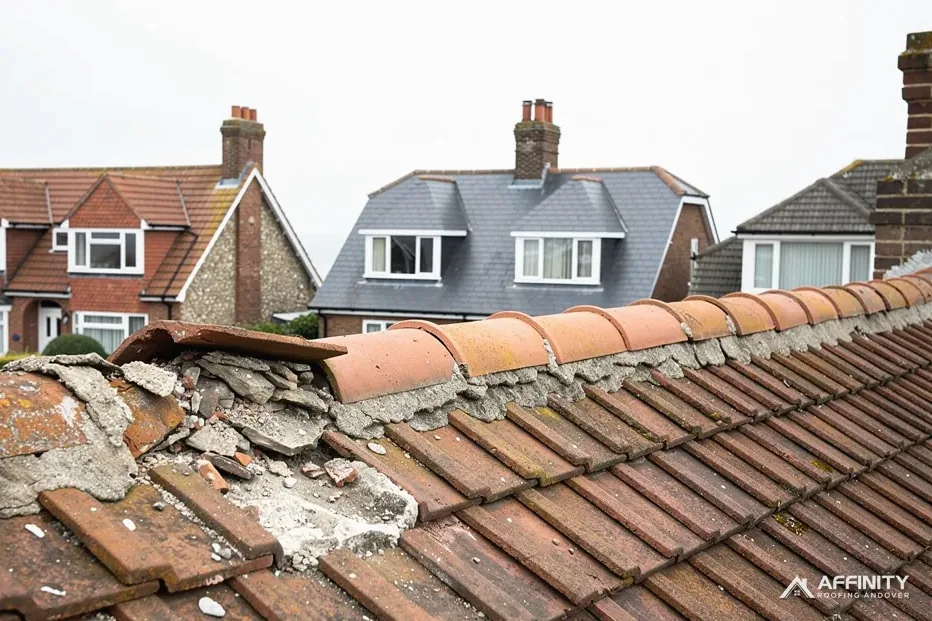
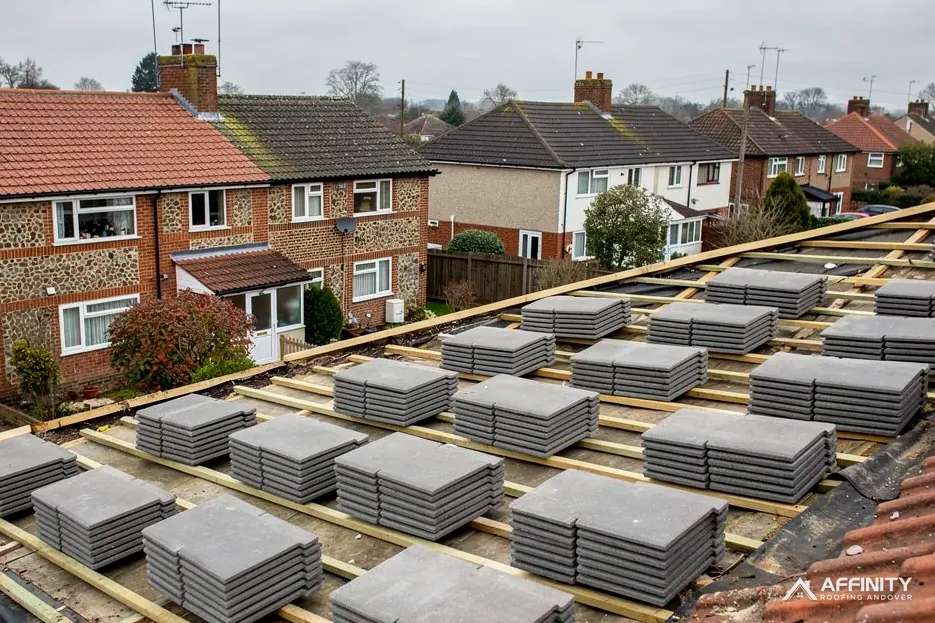
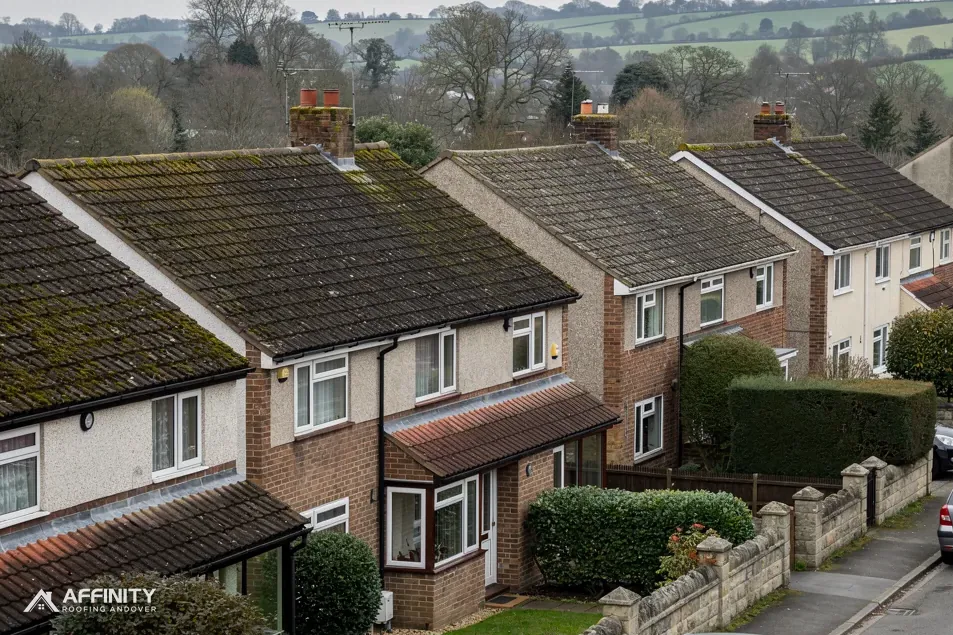
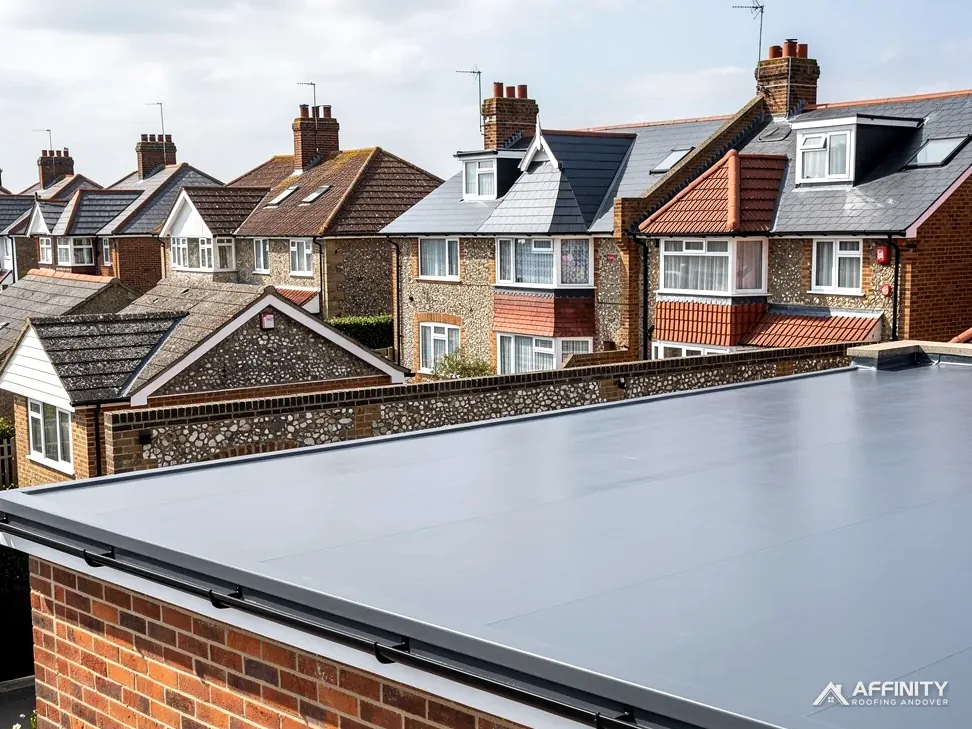
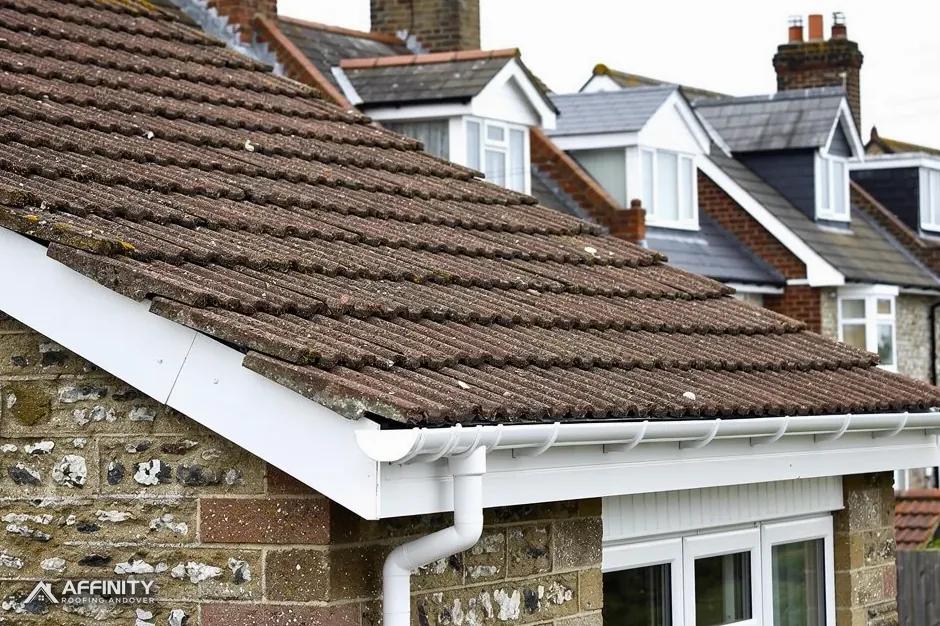
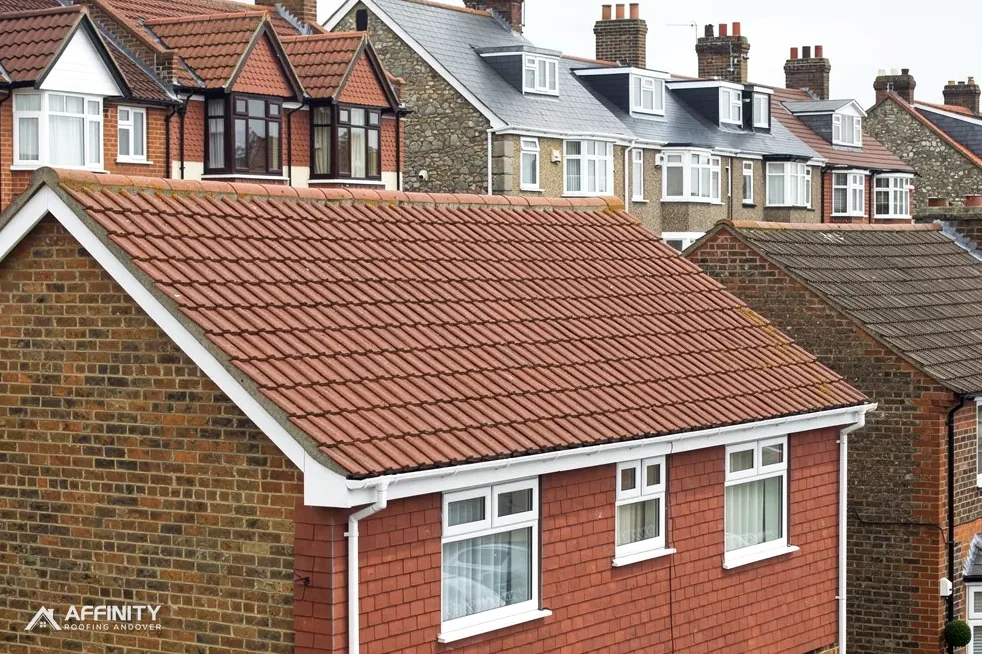
Dibden roofs: the park edge and the council
Is my Dibden house inside the New Forest National Park?
It may be. The village point sits just outside, but about 60 per cent of the surrounding 1.5 km box is inside the boundary. We check your full address against the park map at the survey, because the answer decides whether the park authority or New Forest District Council handles planning, and we write that answer on your report.
Does an Article 4 direction near Dibden stop me re-tiling?
The notice decides that. There are directions in the area, including 97/1. Ask New Forest District Council whether one applies to your address and what it covers, since a direction may withdraw rights that are normally available. Get the answer in writing, and we plan the roof work around it.
Who inspects a re-roof in Dibden under the Building Regulations?
New Forest District Council, through its own building control team at Appletree Court, Lyndhurst, on 023 8028 5245. The park authority never does this, even for houses inside the boundary, because building control is the district council's job on both sides of the line. A re-roof that touches under 25 per cent of the envelope and under 50 per cent of the roof normally needs none, though a heavier covering does.
How long before the start date must a scaffold licence be applied for in Dibden?
Hampshire County Council requires the scaffolding company to apply on your behalf, leaving ten clear working days before the start, and it does not offer extensions. Hampshire County Council's fee is £211.90 on application for the first 2 weeks, then £72 for each further 2-week period, so a late consent decision costs money, which is why we time the booking to the paperwork and not the other way round.
Dibden's neighbours to the north-west
Start with a survey in Dibden
Send an address and a photograph. We survey, check which planning body applies, then quote one price in writing.
10-year workmanship guarantee, in writing.