
Roofers in Marchwood
Armaments depot conservation area and Forest-edge roofs near Southampton
Marchwood had 5,775 residents at the 2021 Census and lies beside the New Forest National Park. We look over each roof, take photographs of the findings and write one price.
Marchwood roofs, from the White Horse to Malthouse Farm
Roofs near the depot
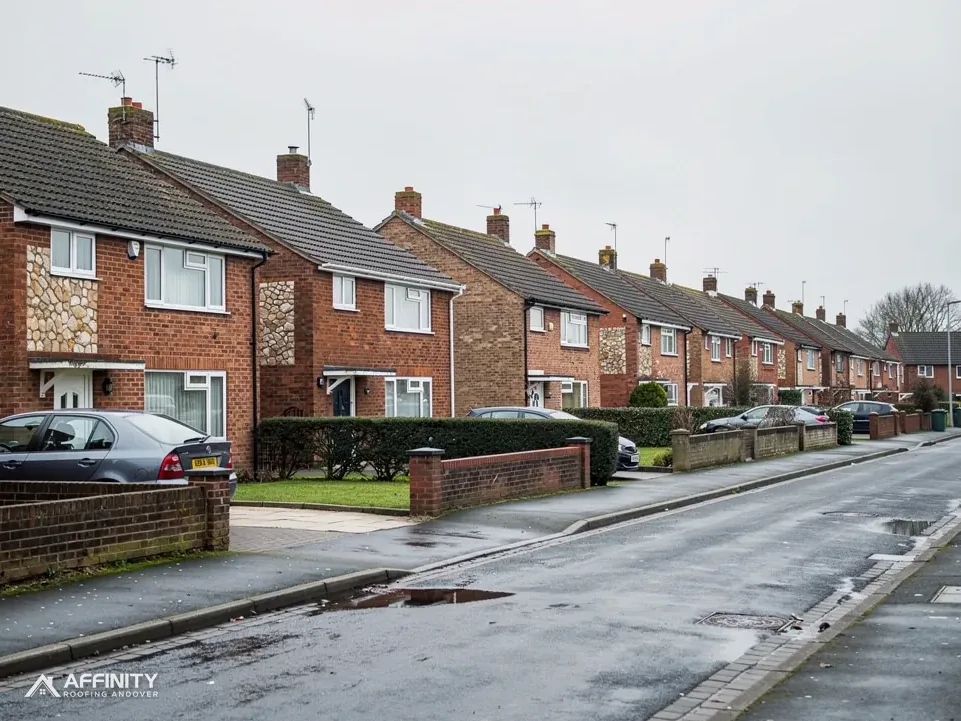
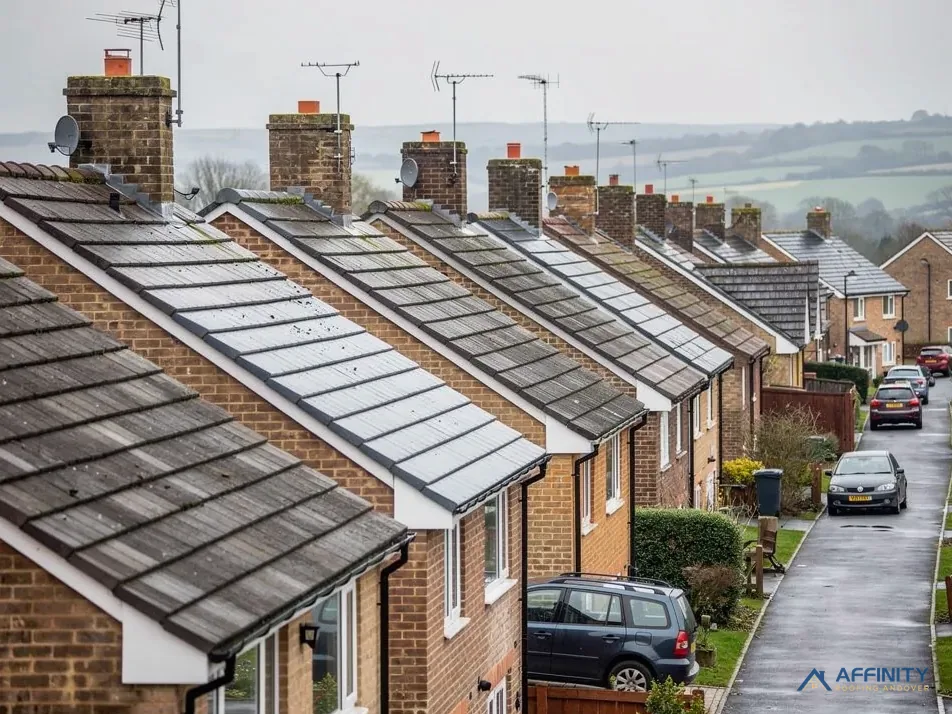
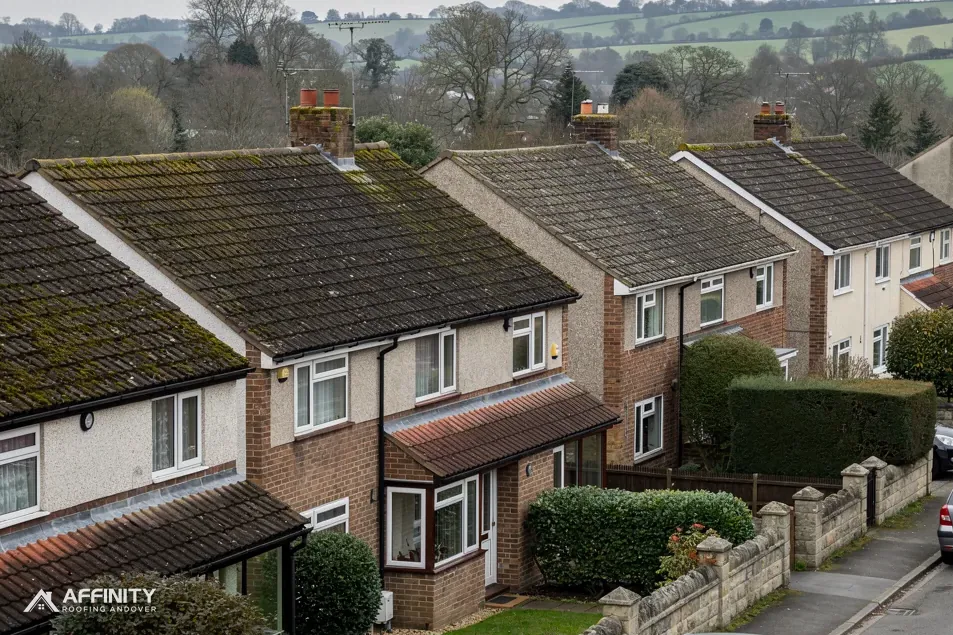
Homes near the Royal Naval Armaments Depot conservation area, where a visible roof change is checked with the council first.
Listed pub and farmhouse
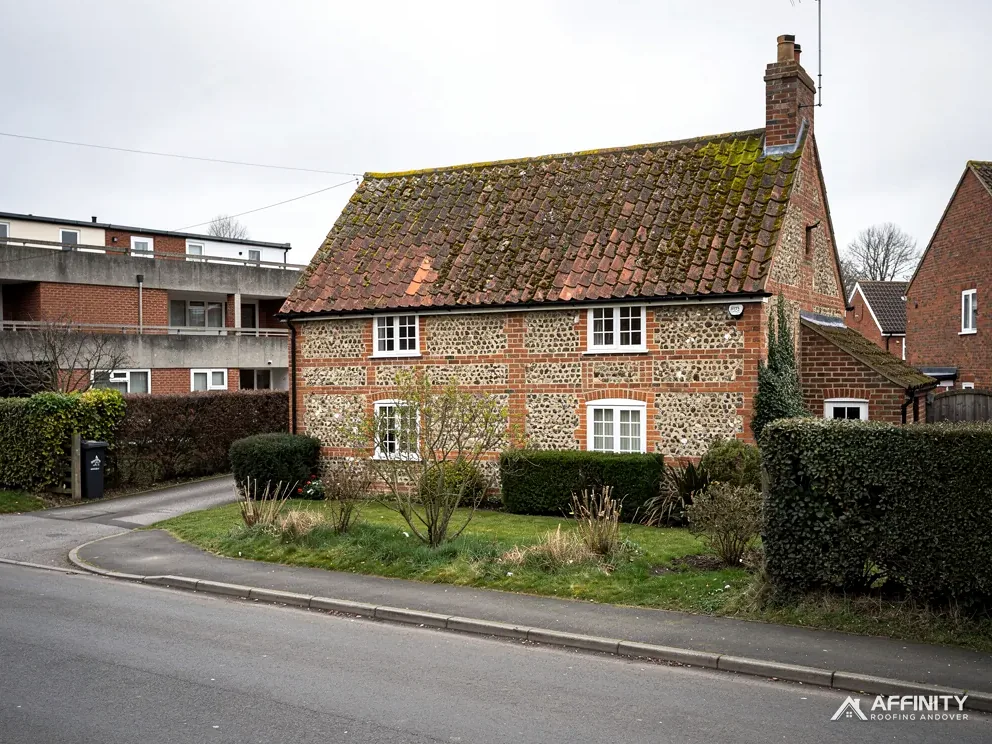
The White Horse public house and Malthouse Farmhouse, both Grade II, so repairs follow the roof already in place.
Houses at the Forest edge
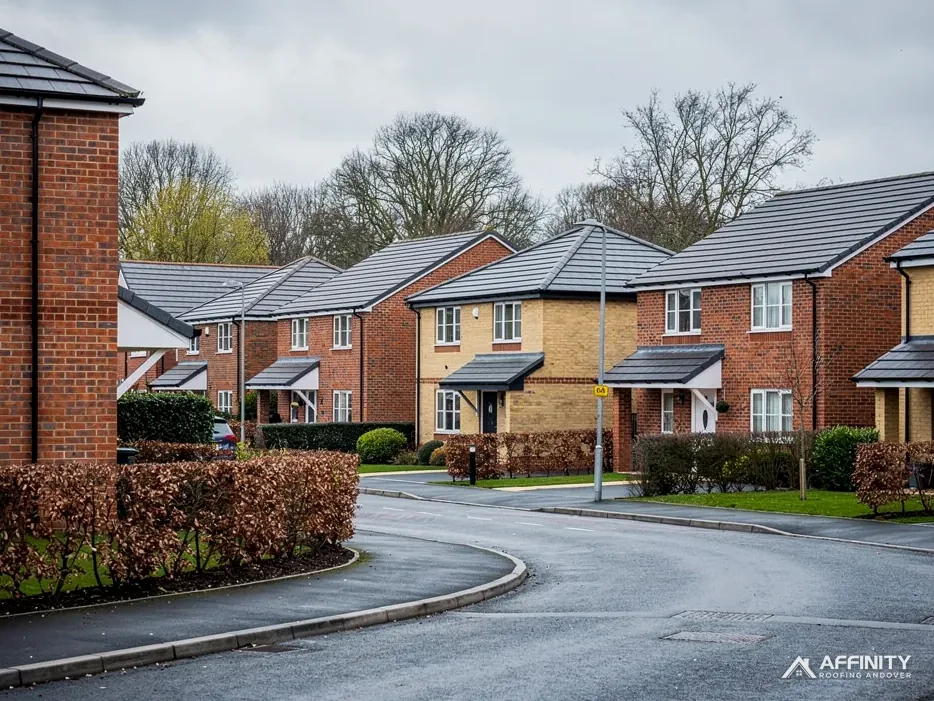
Addresses close to the national park boundary, where it matters which planning authority covers your particular house.
Marchwood between Totton and Dibden
Totton lies to the north-west, Ashurst to the west, Dibden to the south-east and Southampton to the east. We take on roof work in all four.
- Distance
- 27.3 road miles south of Andover
- Planning
- New Forest District Council
- Council
- New Forest District Council and Hampshire County Council
The Marchwood roof report
Local editionMarchwood, HampshireTwo planning bodies and one boundary line
Marchwood sits beside a national park: which authority your roof answers to
Marchwood is a large village on the Forest edge where one planning boundary can separate neighbours. This report names the councils involved, the heritage on the ground, and the county licence a scaffold on the road requires.
The district council, the park and the line between them
At the 2021 Census Marchwood parish had 5,775 usual residents, all counted in the one civil parish. Roofs here sit under New Forest District Council, which is the planning authority for the village and also runs its own building control team from Appletree Court in Lyndhurst. Hampshire County Council stands above it as the highway authority. That makes two councils and, for some addresses, a third body in the park.
The complication is the park. Part of the area around Marchwood, about 11 per cent of a 1.5 kilometre box drawn around the village, falls inside the New Forest National Park, which has its own planning authority. The Park Authority handles applications only for addresses inside the boundary, and New Forest District Council's householder page sends park cases to it. For a Marchwood home the district council is the one to ask; for an address near the edge, check the map first. Building control stays with the district either way, because a national park authority does planning and nothing else.
The split matters most when a roof changes shape. A plain re-cover starts from the Planning Portal's two figures: under 25 per cent of the building envelope and under 50 per cent of the roof, and building control need not be told. New Forest District Council quotes no percentage of its own, so those figures are what we apply. Added load is the other test: where the new material weighs 15 per cent or more than what it replaces, Building Regulations approval and a structural check follow.
New Forest District Council's building control team answers on 023 8028 5245, and you may use a registered building control approver instead if you would rather. Before pricing, we keep three questions apart on paper: what has failed, how much of the roof it touches, and which body has to be told. The answers go on one sheet with the survey photographs, so the officer, the scaffolder and you all work from the same facts.
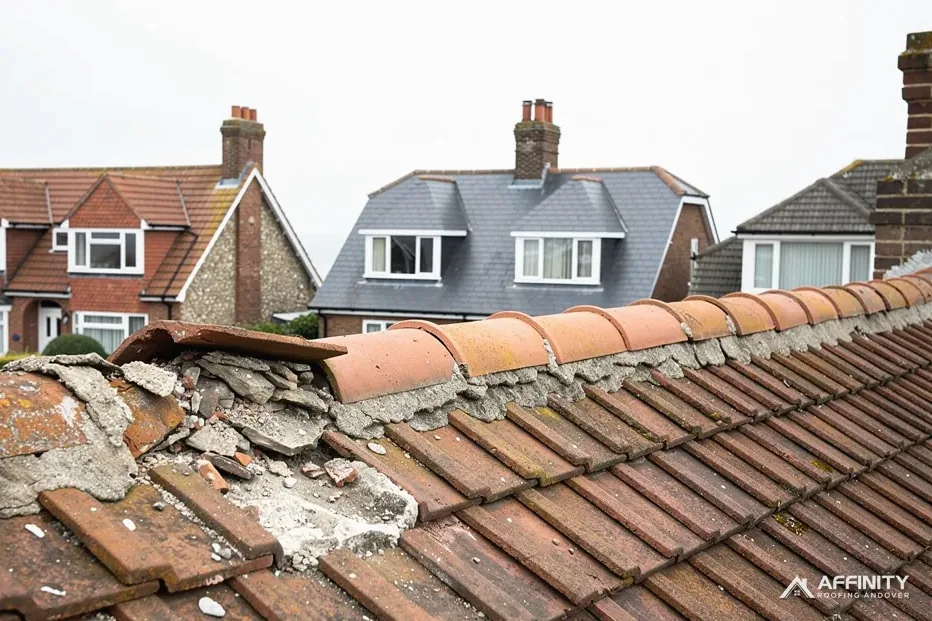
You can learn a good deal from the pavement. Look along the ridge, the line at the top where two slopes meet, for a dip or a lifted tile. Check the verge, where the roof finishes above a gable wall, for crumbling mortar. Glance at the valleys, where two slopes meet in a dip and carry water down between them. Photograph anything odd on your phone and send it over, but leave the climbing to us, since a wet slope and a ladder are no place for a homeowner.
Armaments depot, public house and farmhouse
The Royal Naval Armaments Depot (Marchwood) conservation area is mapped within roughly 0.75 kilometres of the village middle, using a boundary that New Forest District Council supplies. The name suggests a working military site, but the advice is ordinary: mention to the council's planning team any change to how the roof presents itself before tiles are ordered.
Historic England's list shows 4 listed buildings within 500 metres of the village centre. The White Horse public house is Grade II (list entry 1351260, first listed on 6 May 1976), and so is Malthouse Farmhouse (1178881, listed on 1 April 1980). When a roof belongs to a listed building, its character is what gets judged, so the covering, the ridge and the detail at the verge are all in play.
Listed building consent is the extra step. Work that alters a listed building's character needs it, and a matching repair in the same material gives the council least to argue with. We measure the tiles already there, note how they are fixed and put the proposed repair to the council in plain words, with photographs. Hips, valleys and abutments, where lead usually sits, are recorded too, so the council sees the whole roof and not just the tiles. A single photograph of a hip can settle a question that a paragraph of description would not.
Article 4 is the other piece of paperwork. New Forest District Council publishes its Article 4 areas as map data, and one of them touches the ground around Marchwood. Which rights it removes is for the council to confirm, so we ask whether any of them apply to your property. That question can ride on the same phone call as the park question and takes a minute to put. Another Grade II building nearby is the Church of St John the Apostle. St John's on Main Road appears in the Church of England's own parish directory, so for as long as worship continues there, roof work needs a faculty and not listed building consent. We would rather hear that answer before pricing than after.
Flashing is worth a look on any older roof. It is the strip of metal, often lead, that seals the joint between a roof slope and a wall or chimney stack, and it works exactly where water tries hardest to get in. When we survey a pub, a farmhouse or a village house, we photograph each flashing, each valley and the pointing around the stack, and we tell you which can be dressed back into place and which have reached the end of the road.
“A Marchwood roof can sit either side of a park boundary, so the address decides everything.”
County scaffold licence, and roof water near flood land
Scaffold on a public road falls under section 169 of the Highways Act 1980. In Marchwood the licensing body is Hampshire County Council, not the district council. Hampshire County Council wants the scaffold contractor to submit the application, not the householder. A gap of 10 clear working days is needed between application and start, and no extension can be bought.
Hampshire County Council charges £211.90 for the first 2 weeks and £72 for every 2-week period after. The county also checks the frame against BS EN 12810/12811 or NASC guidance TG20:13. A short run of frontage needs a short licence, so the survey measures how long the frame must stand, because that sets how many 2-week periods you pay for. A frame on private land, such as your own drive, needs no licence. The paperwork goes through the scaffolder, and the scaffold itself belongs in your single written price.
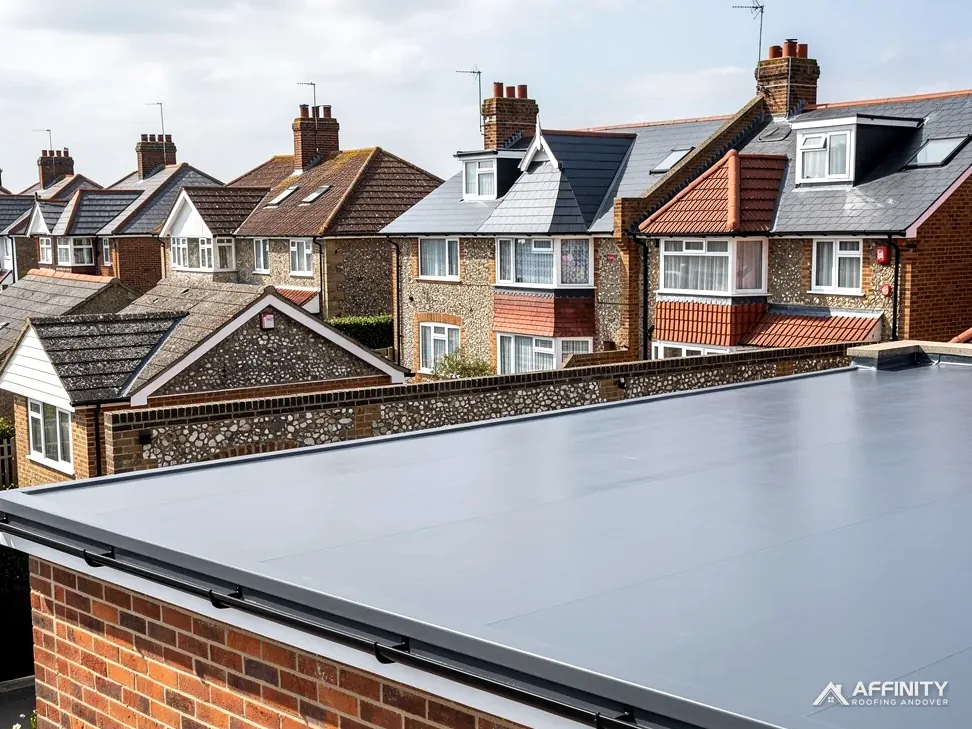
The Environment Agency's planning map has Flood Zone 3 within roughly 250 metres of Marchwood's centre. That is no comment on a single street or house, yet it explains why gutters, downpipes and outlets get a proper look on each survey here. Working rainwater goods keep a roof sound for longer, and one blocked outlet on a flat roof can undo a good covering. Our flat roofing work checks falls and outlets before anything else.
Services for Marchwood roofs cover repairs and replacements: pitched roofing on houses of every age, guttering, soffits and fascias along the roofline, and flat-roofed extensions and garages. Each job opens with the same survey and photographs. When a consent decision is still outstanding we hold the licence back, since Hampshire County Council allows no extension once a licence starts and idle scaffold is paid for all the same. Smaller jobs may need only a tower or a platform lift, and the survey tells you which it is, before the price is written.
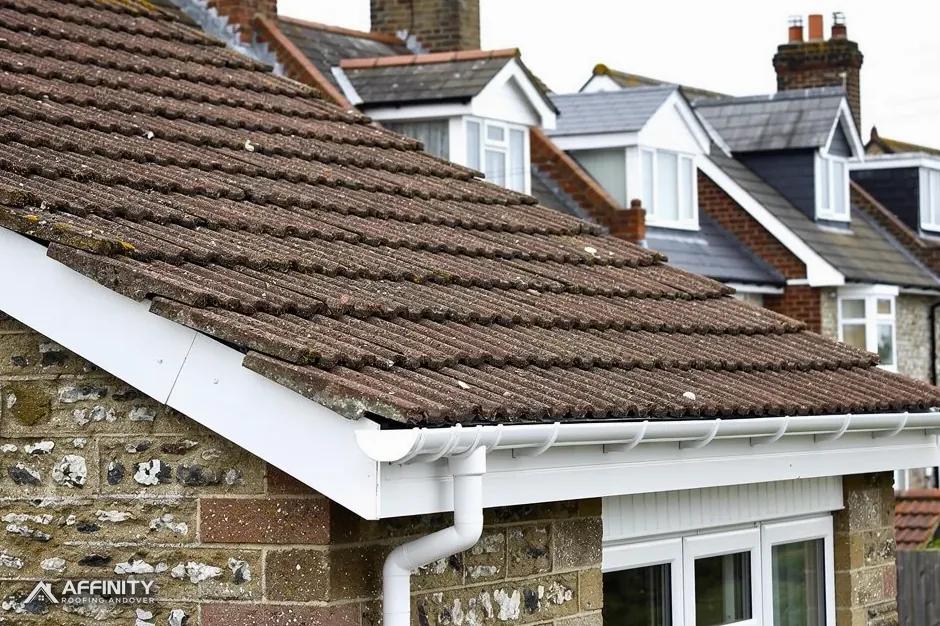
Rainwater goods are the gutters, hoppers and downpipes that carry water off the roof. They fail quietly, through a sagging run, a leaking joint or an outlet choked with leaves. The roofline has two boards to know: the fascia, which carries the gutter, and the soffit, which closes the eaves from below. We check all three together, because a rotten fascia will not hold a new gutter straight and a damp soffit invites further trouble. Where a gutter has to be replaced, we say whether a repair to the fascia can wait until the same visit.
Pitched, flat and roofline work in Marchwood

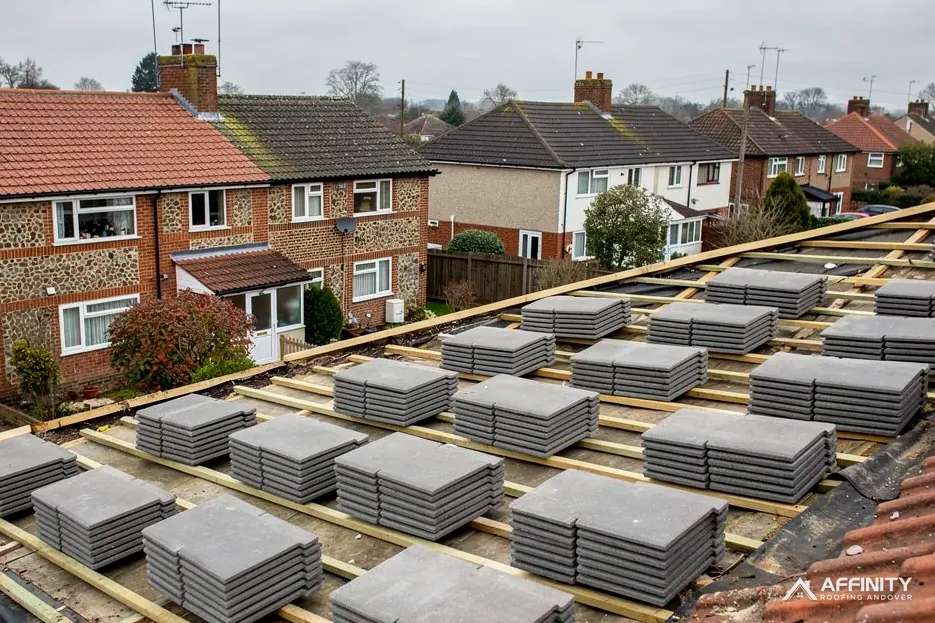
Marchwood roofs: the park boundary, the depot and the licence
Is my Marchwood roof under the National Park Authority or the district council?
Ask New Forest District Council which planning authority covers your exact address, because only properties inside the park boundary go to the Park Authority. Most of the village is outside, but edge addresses can differ. We give you the consent route alongside the price once you have that answer, so no design rests on a wrong assumption.
What does the armaments depot conservation area mean for a house roof?
It means a visible change to a roof near the Royal Naval Armaments Depot conservation area deserves a word with New Forest District Council's planning team first. Plain repair work raises few questions for the council, whereas a new dormer or a different tile colour draws closer attention. Check the council's map first, so your address is confirmed before we survey.
Who applies for scaffolding on a Marchwood street?
Hampshire County Council has the scaffolding firm apply on its customer's behalf, which spares you the form. It wants the application lodged 10 clear working days ahead of the start. Hampshire County Council charges £211.90 for the first 2 weeks and £72 for each 2 weeks after that. The scaffolder and we agree the dates together, and the cost is inside your written price.
Does a heavier tile on a Marchwood house need building control?
Yes, if the new covering is at least 15 per cent heavier than the existing one. The Planning Portal says that needs Building Regulations approval and advises a structural check first. New Forest District Council's building control team can confirm the position for your roof. At survey we compare the old covering with the proposed one, and tell you before any material is ordered.
Nearby areas
Arrange a survey of your Marchwood roof
Tell us the address, plus any roof photo. We survey, settle park or district, then give one price.
10-year workmanship guarantee, in writing.