
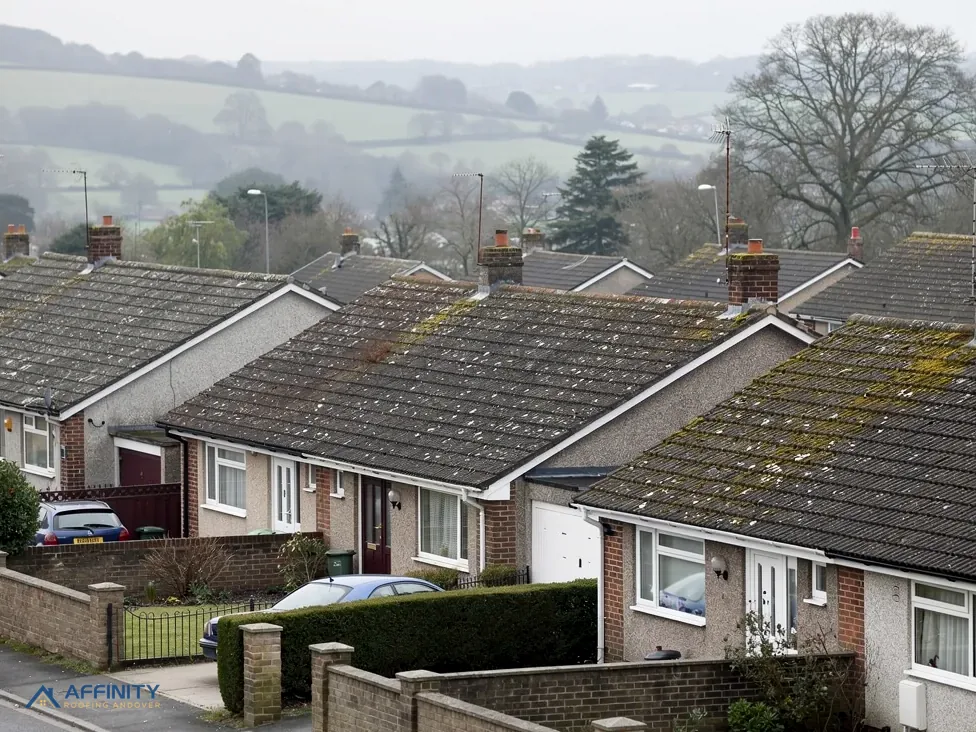
Roofers in Goodworth Clatford
Molesey Cottage, Farmhouse Cottage and the old tiles that need matching
20 listed buildings stand near the centre of Goodworth Clatford, which also has a conservation area. Every roof is surveyed and photographed, and the repair matches how it was laid.
Goodworth Clatford roofs, from cottage to farmhouse lane
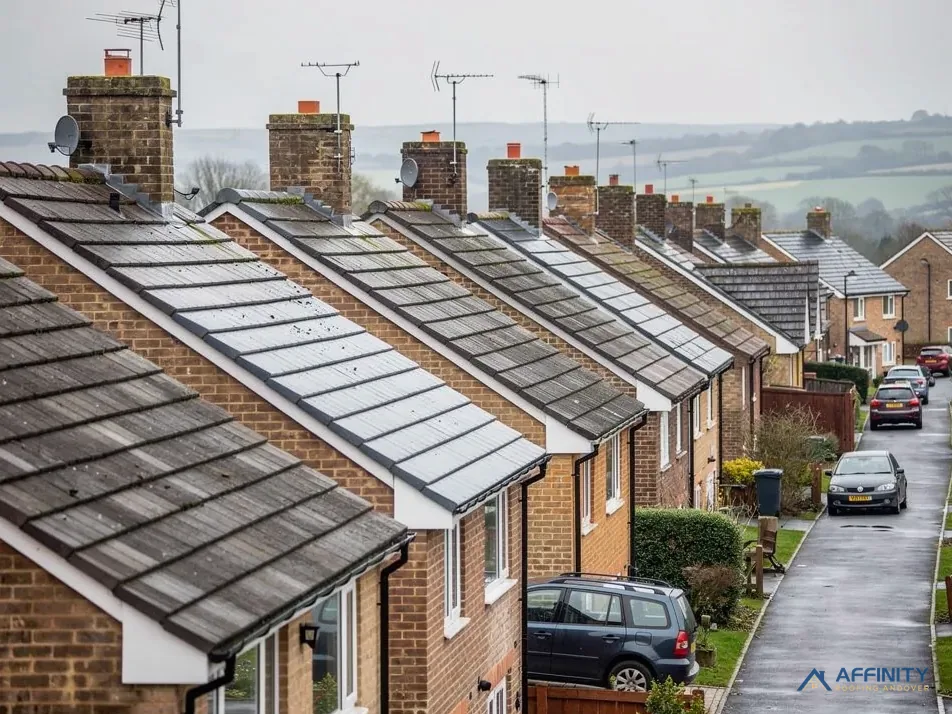
Molesey Cottage
Listed Grade II on 20 December 1960, a cottage where any repair follows the materials already on the roof.
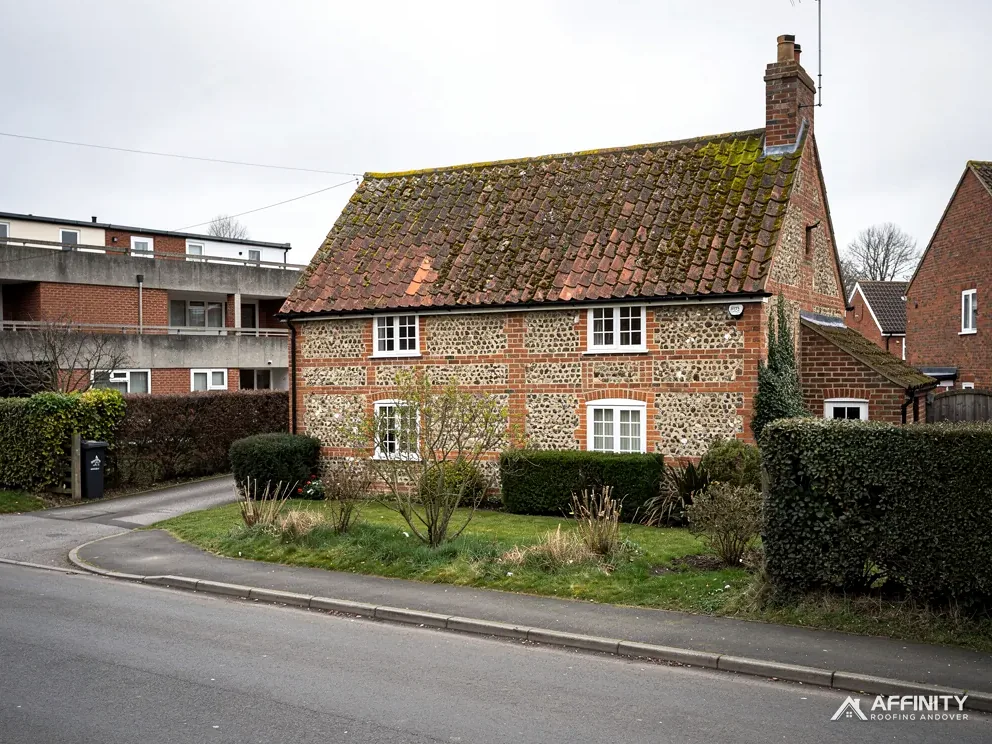
Farmhouse Cottage
Another Grade II listing dating from 20 December 1960, in a village with 20 listed buildings near its centre.
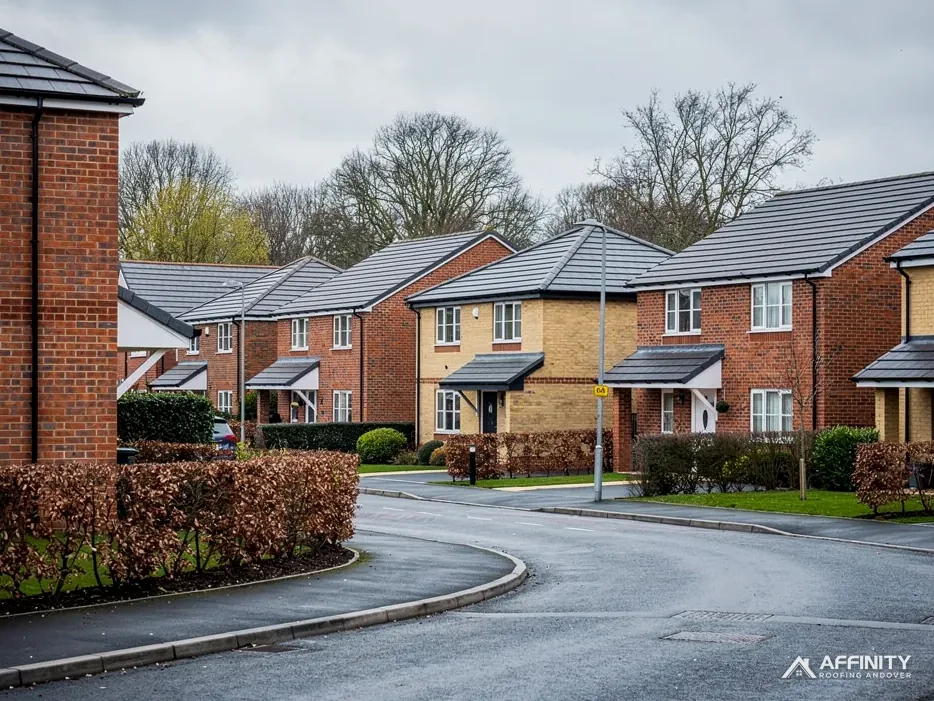
Conservation-area houses
Homes within about 0.75 km of the centre, where changes to a roof's appearance are checked with the council first.
Goodworth Clatford between Upper Clatford and Wherwell
Upper Clatford and Anna Valley lie to the north-west, Wherwell and Chilbolton to the south-east, Abbotts Ann to the west and Longstock to the south. We work there too.
- Distance
- 2.3 road miles south of Andover
- Planning
- Test Valley Borough Council
- Council
- Test Valley Borough Council and Hampshire County Council
The Goodworth Clatford roof report
Local editionGoodworth Clatford, HampshireCottages, tiles and a conservation area
Goodworth Clatford roofs: a conservation area, listed cottages and how old tiles are matched
Goodworth Clatford counts 20 listed buildings within about 500 m of its centre and has its own conservation area close to its centre. This report covers who approves roof work, how clay tiles age and how a repair is matched.
A conservation area and the council behind it
East Street in Andover is the starting point for the 2.3 road miles to Goodworth Clatford, which lies to the south. The 2021 Census counted 759 usual residents in the parish. Planning here is decided by Test Valley Borough Council. Hampshire County Council controls the highway, which matters when a scaffold needs to be put up in a lane. No national park or National Landscape covers the village, so the designations that apply are the local ones.
A conservation area for Goodworth Clatford is recorded within about 0.75 km of the village centre, drawn from boundaries Test Valley Borough Council supplies. Inside it, the council expects care over anything visible from outside, and a dormer needs planning permission, so the planners are involved from the start of any loft plan. For an Article 4 direction that might remove rights from your street, the council is the one to ask, and the question goes in before any pricing.
The building control side has its own tests. The Planning Portal puts the line for re-roofing at 25 per cent of the building envelope and 50 per cent of the roof; under both, approval is not normally needed. Slipped courses, a loosened ridge or a valley needing relining sit well under those limits, so a repair of that size goes ahead without an application. Stripping and re-covering a whole slope is different, and then your building control body is asked for its view. A registered building control approver can act in place of local authority building control.
Weight is a separate trigger that applies to every roof. If the new covering is heavier by 15 per cent or more, the job needs Building Regulations approval, and the Planning Portal advises that an engineer or surveyor assesses the structure first. We measure what is there, find out what the rafters can carry and report it before a covering is chosen.
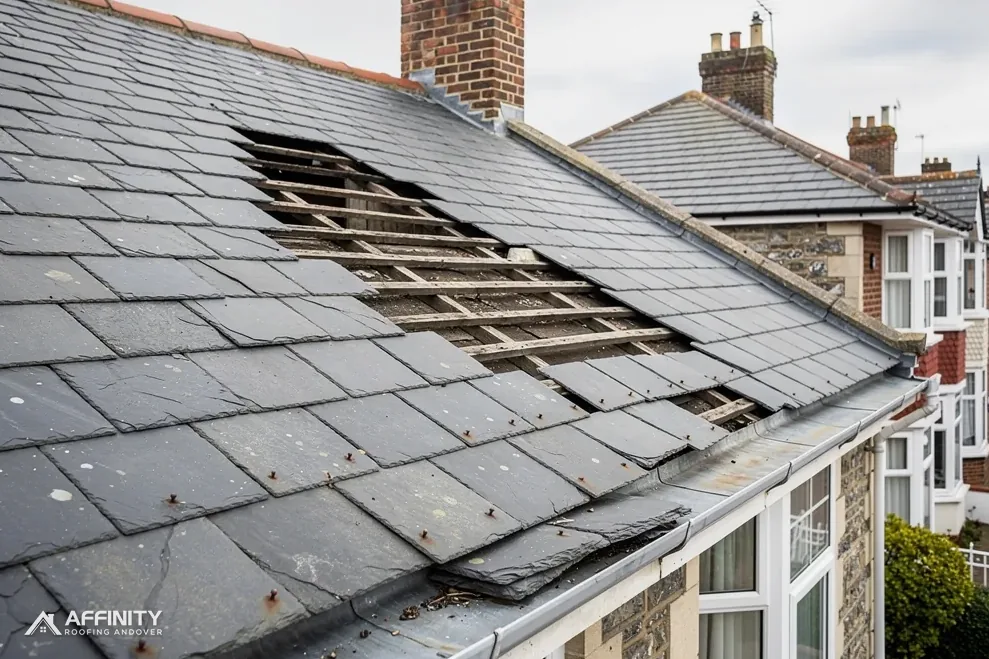
The survey is how all of this is made practical. We walk the ground, look up with binoculars, go onto the roof where it is safe and lift a tile to see the battens and underlay. Battens are the thin laths that carry the tiles; underlay is the sheet laid under them to catch driven rain. We photograph each, and send a clear account of what is failing and what is sound. The stain on a ceiling is not always under the fault, and the photographs show where the water got in.
Molesey Cottage, Farmhouse Cottage and the older tiles
Historic England's list records 20 listed buildings within about 500 m of the centre of Goodworth Clatford. Two of them are named here. Molesey Cottage is Grade II (list entry 1093417), first listed on 20 December 1960, and Farmhouse Cottage is also Grade II (1093420), listed on that date. Twenty listings in so small a radius means a listed roof is probably within sight of your own, and it can be one you share a wall or a boundary with.
A listed house keeps the usual freedoms for like-for-like repair, but work that touches its character also needs listed building consent, with Test Valley Borough Council deciding. The cleaner the match to the existing roof, the shorter the discussion. We prepare the paperwork for the council with the survey photographs attached, so the officer is looking at the roof as it is, not at a description of it. That is where reclaimed material earns its place, because a tile that has weathered for decades looks right beside its neighbours, where a new tile can stand out for years.
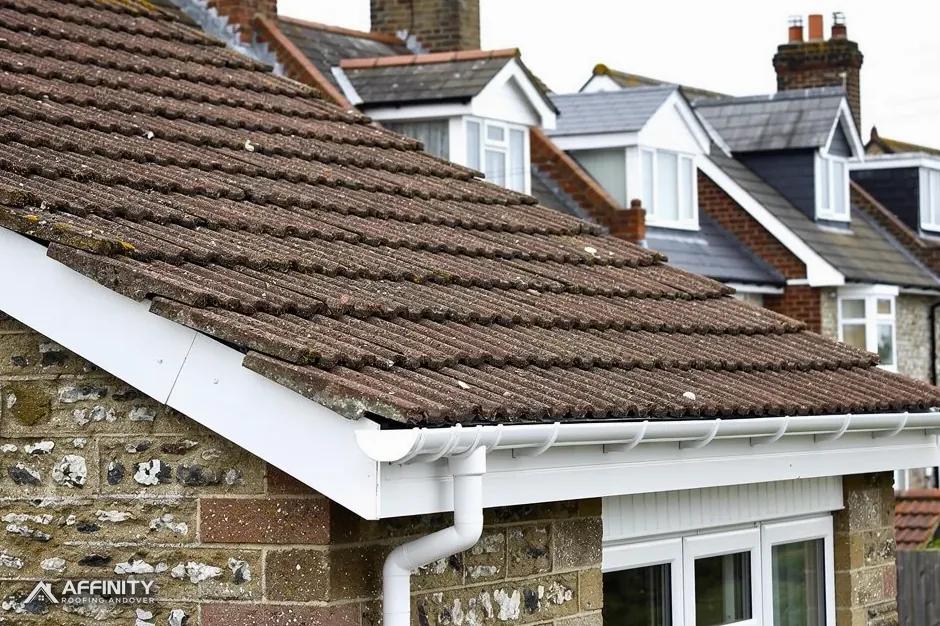
Clay tiles have a long track record. HomeBuilding (September 2025) gives clay 60 to 80 years, and Marley quotes the BRE's minimum life expectancy of 60 years for clay tiles, a figure that applies to clay only. Those are typical figures and never promises. A roof's actual remaining life depends on how it was laid, how the battens have fared, and whether the nibs, the small lugs that hold each tile on its batten, are still sound. After the survey a short list is drawn up of the tiles worth keeping, since a sound, well-matched tile is better re-used than replaced.
On a survey we record the size, colour, thickness and pattern of every tile type on the roof, along with how the ridge and hips are finished. The hips are the sloping lines where two slopes meet at an outside corner. If the ridge is bedded in mortar, we check whether the mortar is cracked and whether the tiles beneath it have moved. Our guide to matching old roof tiles explains how a supplier finds a match and why a few spare tiles from a back slope can solve a problem on the front.
Photographs also help neighbours. If a scaffold is going up against a shared wall, or a skip needs space on a narrow lane, it helps to show the owners next door what the work involves. We do it before the date is fixed, so nobody finds out from the noise.
“Twenty listed buildings near the centre mean a Goodworth Clatford repair is judged against its neighbours.”
Clay, pitch and a scaffold on the lane
Every clay or concrete tile has a minimum pitch, the angle below which water can be driven back under it. Marley's data for its clay plain tiles runs from 30 to 40 degrees depending on the range, and 15 degrees for its Lincoln pantile, and its guidance is always to check the product data sheet. That matters when a replacement covering is chosen for a roof that is lower than it looks. The right tile is the one the roof can take, not the one that looks good in a catalogue.
A frame on a public lane needs a licence from Hampshire County Council, the highway authority and not Test Valley, under section 169 of the Highways Act 1980. The scaffolding company files that application for the household, and Hampshire County Council wants ten clear working days to spare before the first day. Hampshire County Council's published charge is £211.90 on application, covering the first 2 weeks, then £72 for each further 2-week period; it does not extend a running licence.
Private ground does not need a licence. A garden, a drive or a private track can take a frame without one, and the scaffolder tells us at the first visit which case we have. On narrow village lanes it is worth measuring the road width and the position of any parked cars, because the scaffold plan has to leave room for traffic. A lean-to or outshut behind a cottage can sit at a shallower pitch than the main roof, so one covering may not suit both, and we measure each slope separately and report what the data sheet allows. Many small repairs can be reached from a tower instead of a full frame, with no licence on private ground.
The work we take on in a place like this is pitched roofing for tiled cottages and houses, roof repairs after a slipped or broken tile, and chimney repairs where a stack has weathered. Each is priced after the survey, and each starts from photographs of what we found rather than a quick look from the road. The report names the parts that are failing, the parts that are sound and the order in which work should be done.
If a roof is leaking while the paperwork is being sorted, we make it safe first. Tarpaulins, temporary battens and a tidy cover over the worst area stop the damage getting worse, and the same photographs support the final repair. When the work is done the site is cleared, the waste goes away with us and you have a clear record of what was changed.
Our services for Goodworth Clatford homes
Goodworth Clatford roofs: tiles, listings and the lane
How long do clay tiles last on a Goodworth Clatford cottage?
HomeBuilding (September 2025) gives clay 60 to 80 years, and Marley cites the BRE's minimum life expectancy of 60 years, which applies to clay tiles only. These are typical figures and never promises. The real answer depends on the battens, the nibs and the fixings, so we lift a few tiles at survey and photograph what is underneath.
Can reclaimed tiles repair the roof of a listed Goodworth Clatford house?
Often they are the best match, because weathered tiles sit in with the existing roof. Work that affects a listed building's character needs listed building consent, which Test Valley Borough Council decides. Your tiles are measured and their colour and thickness noted, then reclaimed stock is sought before any order is placed.
Is Goodworth Clatford village centre inside a conservation area?
The Goodworth Clatford conservation area lies within about 0.75 km of the centre, on a boundary drawn by Test Valley Borough Council, so check your road against it. The council's map shows whether yours is inside. Raise a dormer or a changed covering with the planners first; a plain repair seldom needs it.
How is the scaffold licence handled on a Goodworth Clatford lane?
The licence fee is built into the one price you are given. Hampshire County Council issues it, expects the scaffolding company to apply, and charges £211.90 for the first 2 weeks and £72 for each further 2-week period. The notice is ten clear working days. Frames on private ground, such as a drive or garden, need no licence.
Round about Goodworth Clatford
Ask for a Goodworth Clatford roof survey
Send the address and a photo. After the survey you receive one written price.
10-year workmanship guarantee, in writing.