
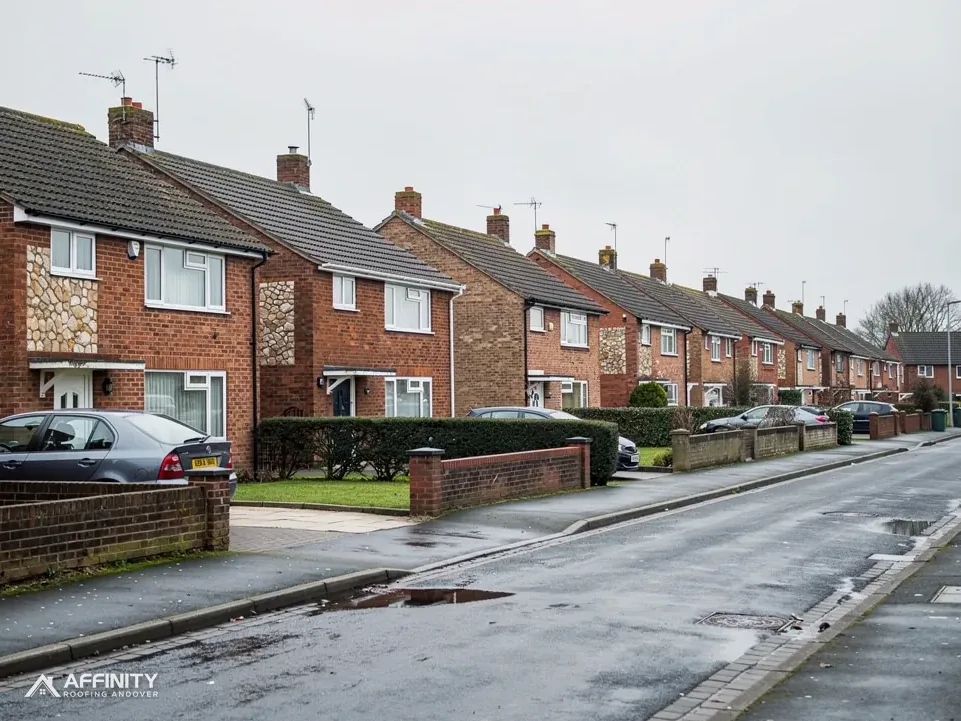
Roofers in Abbotts Ann
Beside St Mary the Virgin and the thirty-nine listings within 500 m
Abbotts Ann has a Grade I parish church, a Grade II* rectory and a conservation area. Roofs here are surveyed and photographed before a repair is chosen.
Abbotts Ann roofs, church to rectory
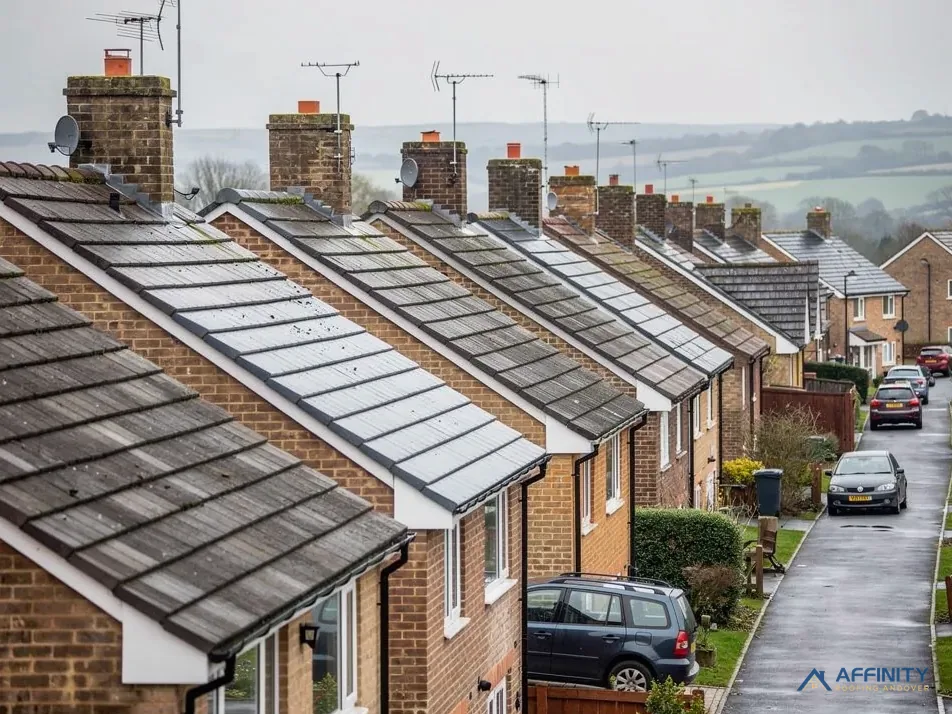
St Mary the Virgin
A Grade I church, first listed on 20 December 1960, whose roof is dealt with through the faculty system.
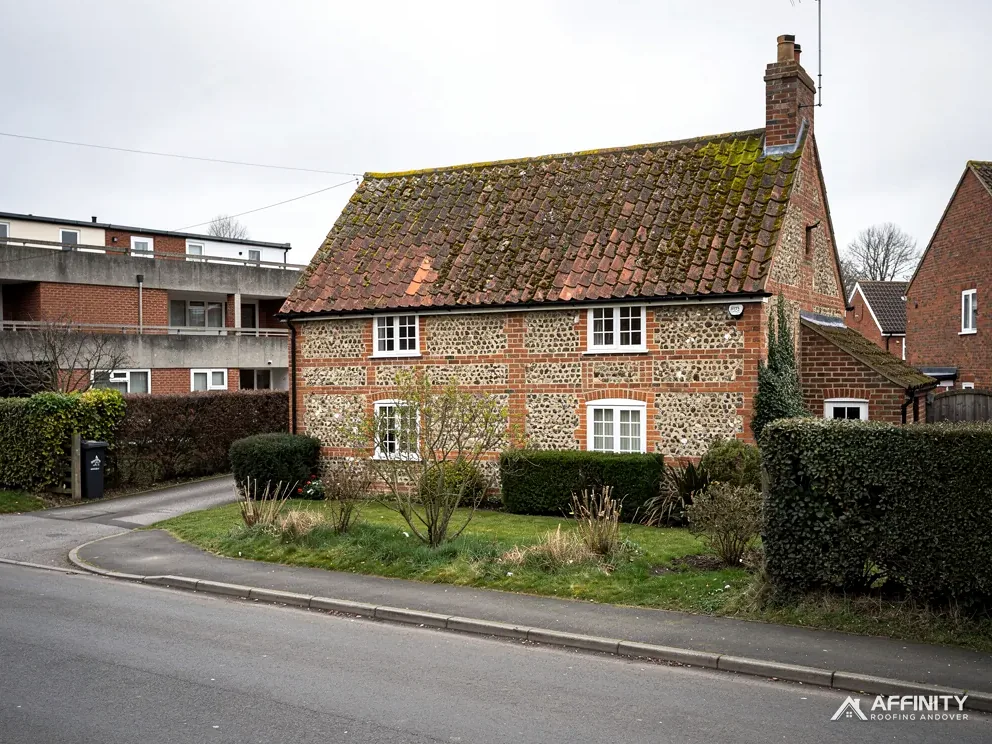
The Rectory
Listed Grade II* on the same 1960 date, a house where repairs are matched to the covering already there.
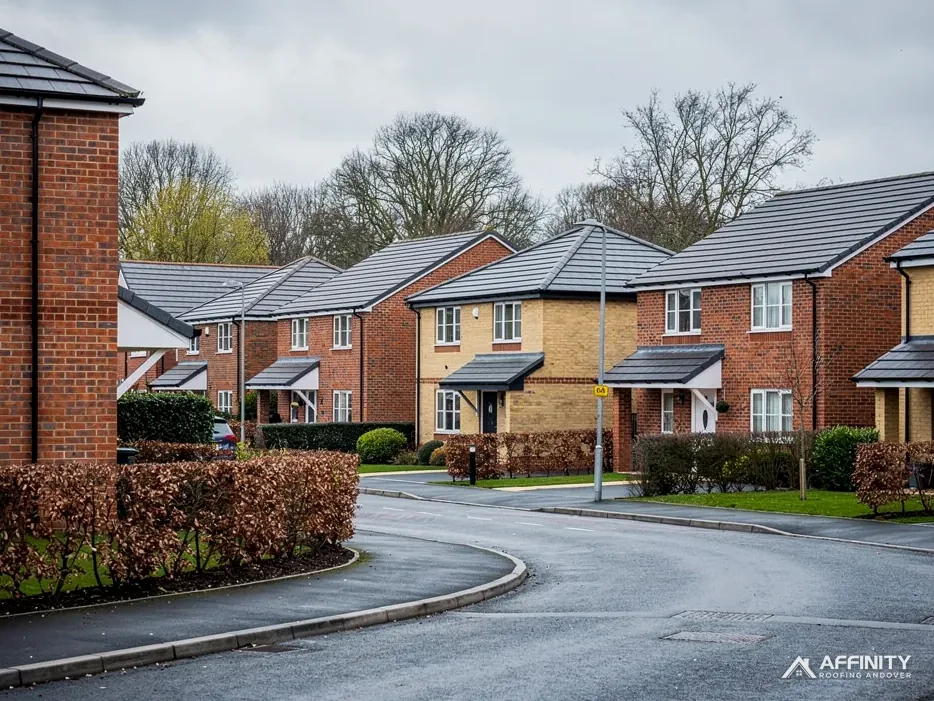
Conservation-area cottages
Homes within about 0.75 km of the village centre, where changes to a roof's look go to the council first.
Abbotts Ann between Anna Valley and Amport
Anna Valley and Upper Clatford lie to the east, Monxton to the north-west, Amport to the west and Weyhill to the north. We reach roofs in each.
- Distance
- 4 road miles south-west of Andover
- Planning
- Test Valley Borough Council
- Council
- Test Valley Borough Council and Hampshire County Council
The Abbotts Ann roof report
Local editionAbbotts Ann, HampshireA Grade I church and its neighbours
Abbotts Ann roofs: a Grade I church, 39 listed neighbours and the ridge work that holds tiles
Abbotts Ann has 39 listed buildings within about 500 m of its centre, with a Grade I church among them. This report explains who decides what on a village roof, how the church route differs and why ridge fixings matter.
Four miles out and still Test Valley
Abbotts Ann lies 4 road miles south-west of Andover, measured from East Street, and the 2021 Census counted 1,333 usual residents in its parish. Test Valley Borough Council is the planning authority, so a roof in the village goes through the same council as one in Andover town. Hampshire County Council controls the highway, which matters the moment a scaffold has to stand on a lane. No national park or National Landscape covers Abbotts Ann.
The village has its own conservation area. Its boundary, drawn by Test Valley Borough Council, lies within about 0.75 km of the centre. Inside it, plans that would alter how a roof looks from the lane should be talked through with the council before anyone orders materials, and a dormer needs planning permission. Whether an Article 4 direction touches your street is one more question for the council to answer, and we put it before pricing a job.
Re-roofing has two checks on the building control side. The Planning Portal's first is a pair of limits: under 25 per cent of the building envelope and under 50 per cent of the roof, within which approval is not normally needed. The second is weight. A covering that tips the load up by 15 per cent or more moves the job into Building Regulations, with a structural check from an engineer or surveyor advised beforehand. Older rafters may have been cut for a lighter load, which makes the second check matter.
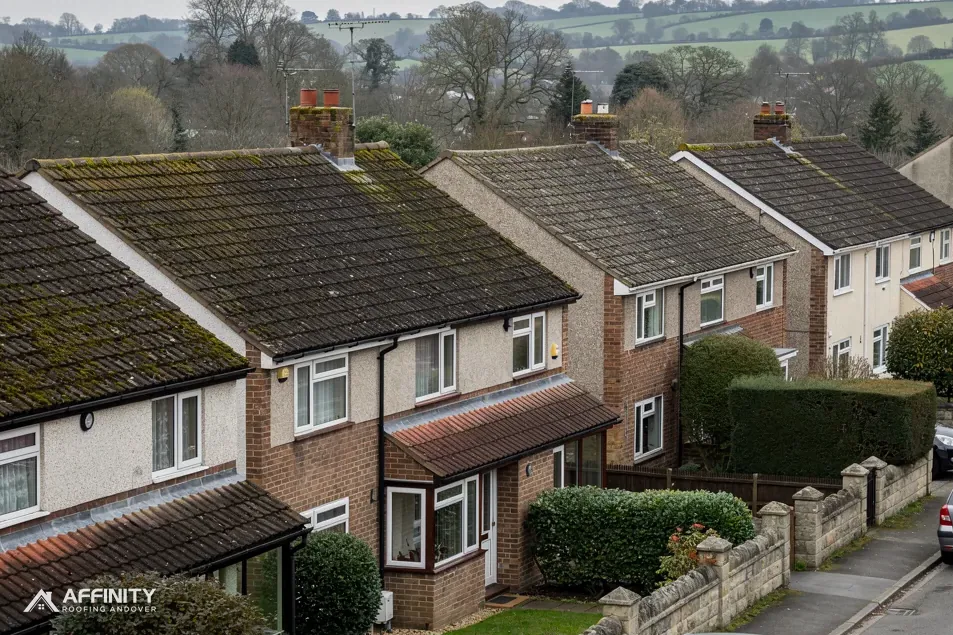
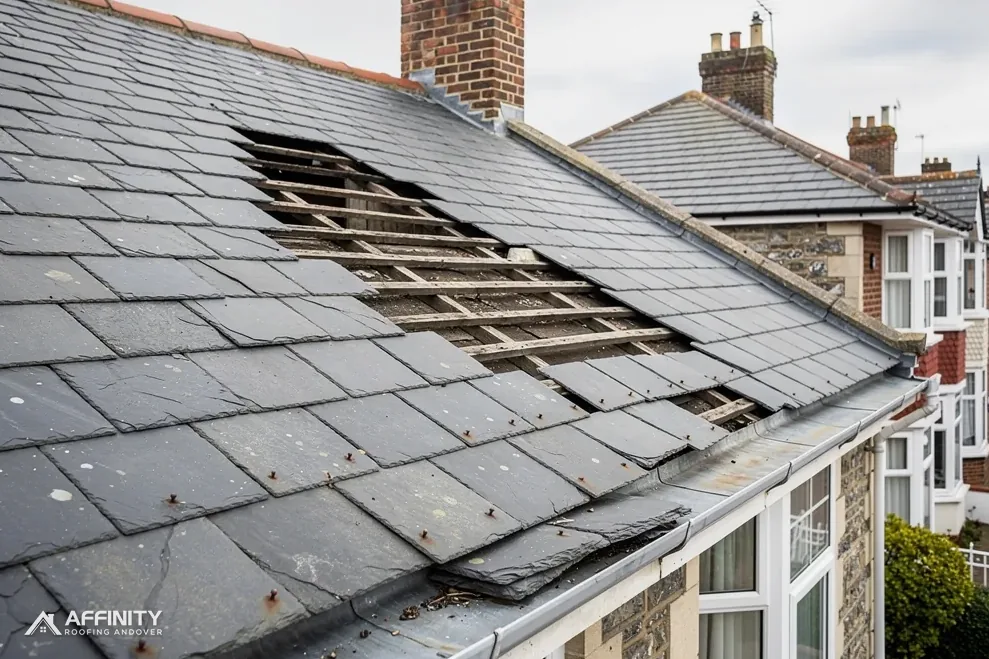
Your building control body can be local authority building control or a registered building control approver, and either will want to see the roof as it is. That is the use of our survey. We lift tiles to see the battens and underlay, photograph both, and record the pitch and the size of the timbers we can reach. The pictures go into a report that explains the findings in plain words. Nothing is decided from a glance at the road. A roof with years left in it is repaired, and the report says how many tiles are affected and why. Pictures of the street view help with the planners, who judge a repair from where the village sees it.
A repair of a few tiles, a ridge that has loosened or a flashing that has lifted is below both limits and goes ahead without an application. A whole slope stripped and re-covered is the occasion for the enquiry. Our guide to listed building roof repairs is worth reading before any conversation with the council about a listed house, since it sets out the usual order of events.
The Grade I church and the Rectory
Historic England's list records 39 listed buildings within about 500 m of the centre of Abbotts Ann. The Church of St Mary the Virgin is Grade I (list entry 1228703), first listed on 20 December 1960, and the Rectory is Grade II* (1228705), listed on that date. A church at Grade I is a landmark for the village as well as a place of worship, and a roof next to it is judged against it.
The church is in use as a Church of England place of worship, so works to it go through the Church of England's faculty system, not through listed building consent. That is a separate process from the council's, run through the church's own channels, and the work waits for it. The parish is the place to start. We can supply a survey, photographs and a description of the existing covering to go with the faculty application for St Mary the Virgin.
The Rectory is a different case. A listed house that is a private home still needs listed building consent from Test Valley Borough Council whenever work touches its character. The easiest application to argue is a repair that copies what is there: the same material, in the same size and pattern. A different covering, or a changed ridge, is harder, and the council may say no. Asking before the price is agreed spares everyone the cost of a plan that cannot go ahead.
Thirty-nine listings in a village this size means that an unlisted house may share a boundary with a listed one, which is useful to know before a frame goes up. We check the listing of neighbouring properties from the national list, tell the owner in good time and plan the scaffold to keep clear of the listed wall.
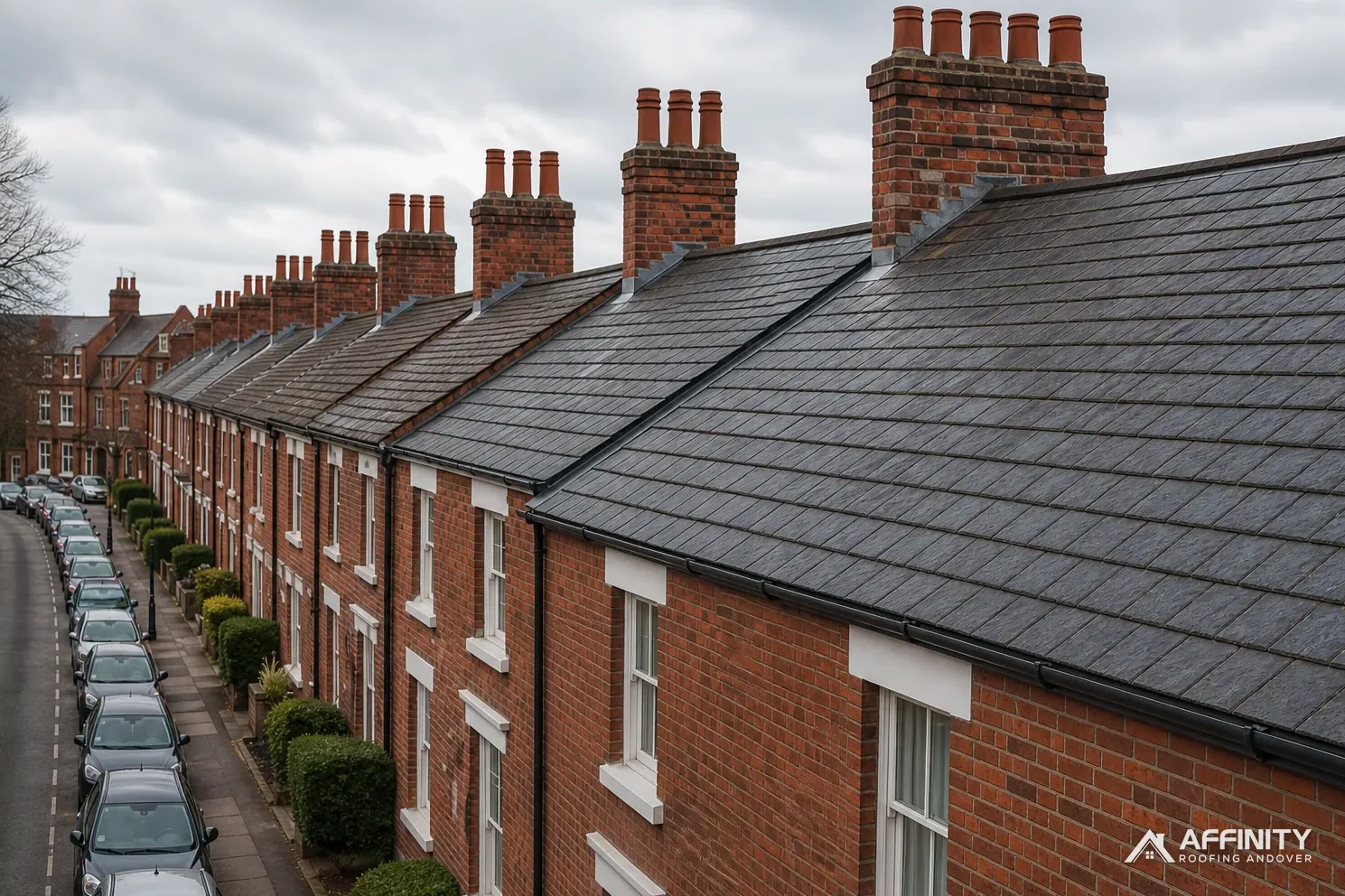
The survey photographs for a listed or neighbouring roof go further than for a plain house. We capture the ridge, the hips, the verges, the valleys and the way each tile course is laid, along with any stone, brick or lead detail. Those pictures let a supplier of reclaimed tiles quote from stock, and give an officer or a church architect something exact to approve. Because a Grade I church is part of the street scene, we also photograph the view of each roof from the lane, so any reviewer can judge how a repair would look from where the village sees it.
If you are only a neighbour of a listed building, none of this binds you, but it pays to know where the boundary of the listing lies. The council can confirm the extent of a listing.
“With a Grade I church at the centre, every Abbotts Ann roof is worth recording first.”
Ridges, verges and the lane outside
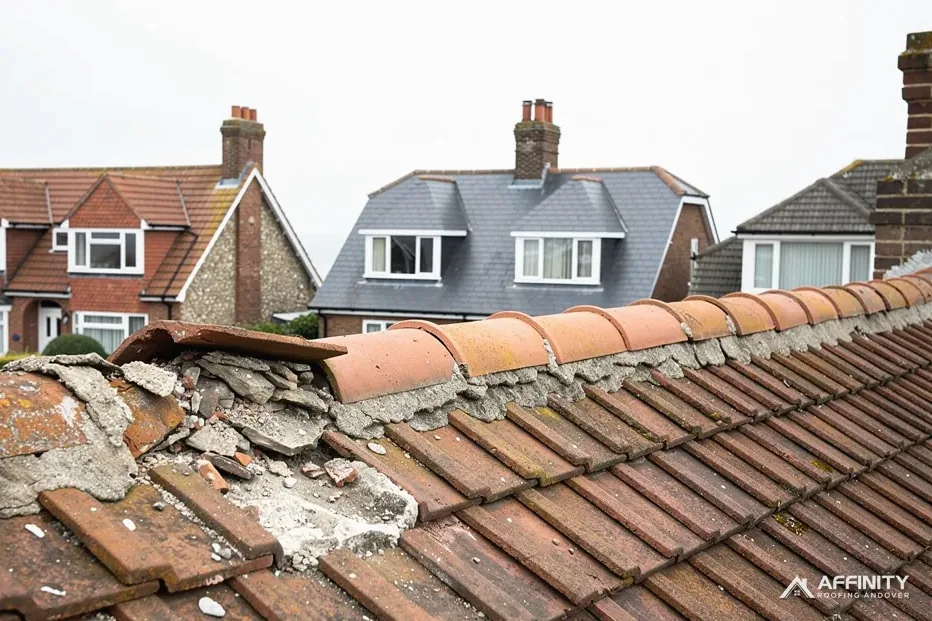
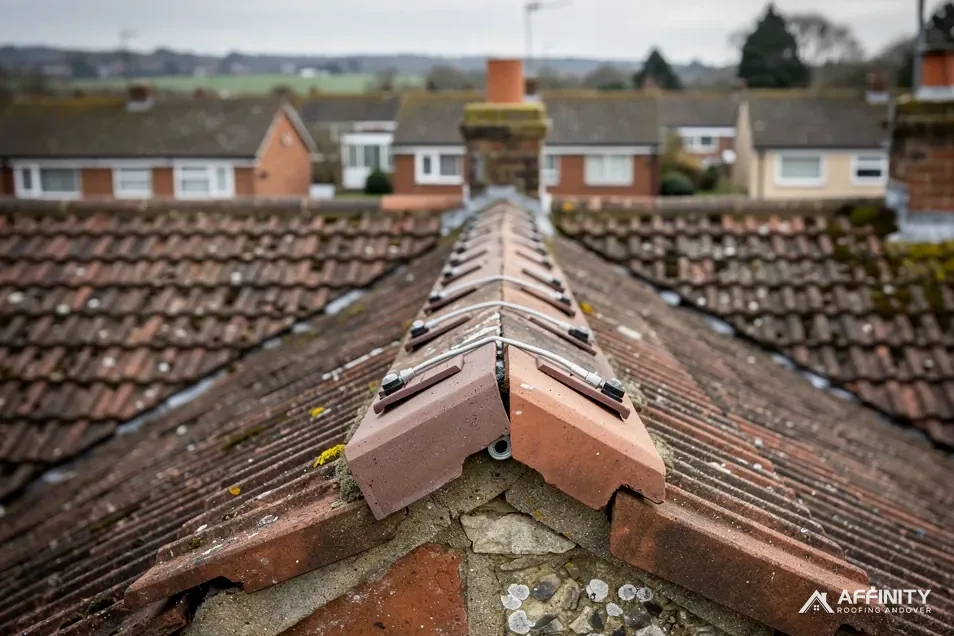
The ridge is the line along the top of a roof where two slopes meet, and the verge is where the tiles finish at a gable. Both have traditionally been bedded in mortar. Since the 2014 revision of BS 5534, Marley explains, a ridge or hip cannot depend on the grip of mortar by itself, and BS 8612 sets the tests that dry-fixed verge, hip and ridge kits must pass. BS 5534 is a code of practice and not the law, and mortar is still permitted, but it is not the only thing holding the tile.
On an older roof the ridge is one of the first places to check. Mortar can crack, tiles can shift, and the gap lets weather in. At survey we check how each ridge tile is fixed, press gently on the run and photograph any loose section from the ladder. A repair may be a rebed with mechanical fixing, or a dry-fix system fitted over a sound base. The choice depends on the tiles beneath: if they have moved or cracked, they are replaced first, because a new ridge on a poor base will fail again. Our dry ridge and verge page explains the options.
Where the work needs a scaffold on the road, the licence comes from Hampshire County Council under section 169 of the Highways Act 1980, not from Test Valley. Hampshire County Council expects the scaffolding firm to put in the application for the household, with ten clear working days in hand. Hampshire County Council charges £211.90 on application for the first 2 weeks and £72 for each further 2-week period, and allows no extensions. A frame on private ground needs no licence. On narrow village lanes the plan also has to leave room for passing traffic and neighbours' access.
Small repairs often avoid the question altogether. A ridge tile at the back of a house can be reached by tower or ladder from private ground, and then no licence is involved. We say which it will be when we survey, because a booking for a frame that turns out to be unnecessary only adds delay.
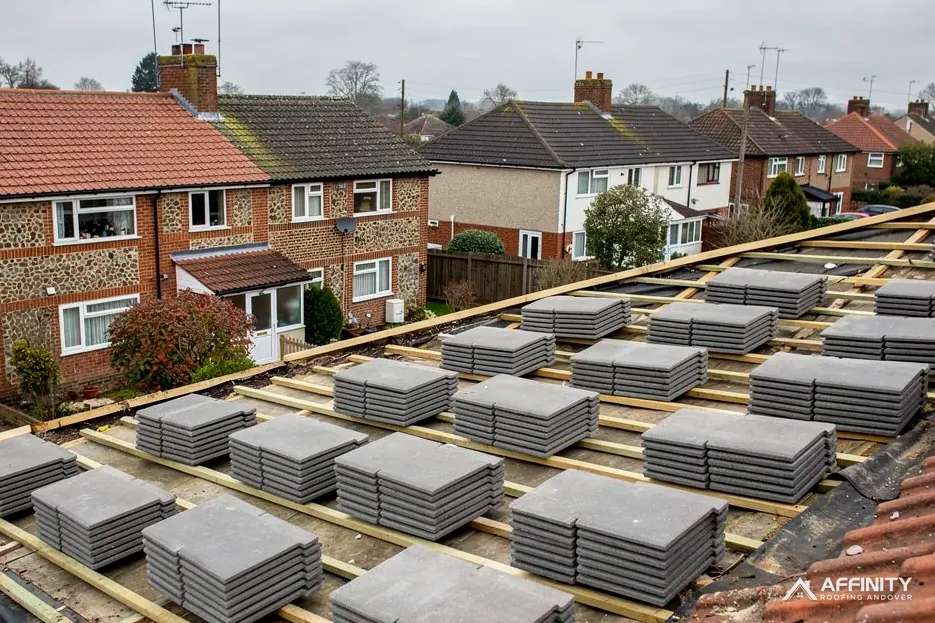
For Abbotts Ann roofs the starting points are pitched roofing repairs or roof repairs after a slip. Where the covering is sound and only the ridge has failed, the repair is limited to the ridge, and the report says so. Where the tiles themselves are spent, we explain why and show the evidence. Waste is taken away, the site is cleared and you are told what is happening each day.
From ridge to gutter in Abbotts Ann
Abbotts Ann roofs: ridges, the faculty route and the lane
Why do the ridge tiles keep loosening on my Abbotts Ann cottage?
Mortar bedding can crack, and since the 2014 revision of BS 5534 Marley says a ridge or hip cannot rely on mortar by itself. BS 8612 tests dry-fix ridge kits. At survey we check how each tile is fixed and photograph any loose run, so the repair is a rebed with fixings or a dry-fix system.
Does repairing a roof beside St Mary the Virgin need a faculty?
Only the church itself goes through the Church of England's faculty system. A house beside it follows the usual council routes, with listed building consent if it is listed. That faculty comes from the diocese's consistory court. Abbotts Ann's church roof gets a survey and photographs from us to support the application.
Is the Rectory in Abbotts Ann subject to special roof rules?
The Rectory is Grade II*, listed on 20 December 1960. Work that affects its character needs listed building consent from Test Valley Borough Council, and a like-for-like repair is the easiest case to argue. We photograph the existing covering and ridge first so that the application shows exactly what is there and what changes.
Who applies for the scaffold licence on an Abbotts Ann lane?
On a public lane the scaffolding firm applies to Hampshire County Council for the licence, ten clear working days in advance. Hampshire County Council's fee is £211.90 for the first 2 weeks and £72 for each further 2-week period. Private ground needs no licence, and the survey tells you which case your house falls into.
Villages beside Abbotts Ann
Arrange your Abbotts Ann roof survey
Give us the address and a picture of what is wrong. We survey, then send one written price.
10-year workmanship guarantee, in writing.