The short answer
It depends on who owns which part of the roof, which your title deeds and any agreement with the neighbour decide. The Party Wall etc. Act 1996 does not say who pays for a roof repair. It sets out notice and surveyor rules when work touches a party wall, such as cutting into a shared chimney breast. Agree things with your neighbour in writing.
Whose roof is it?
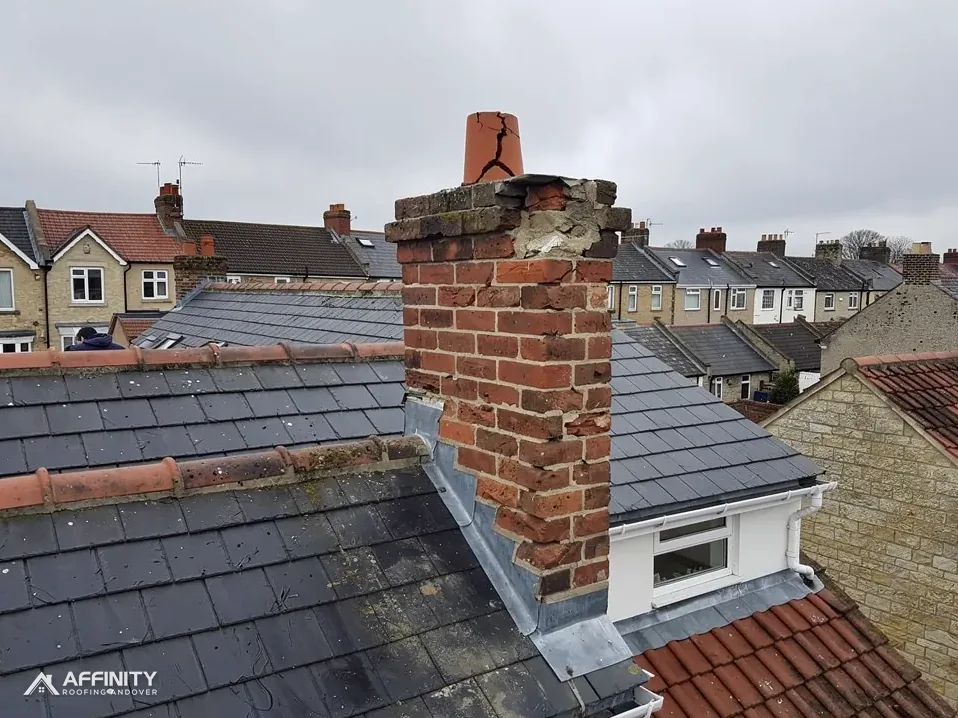
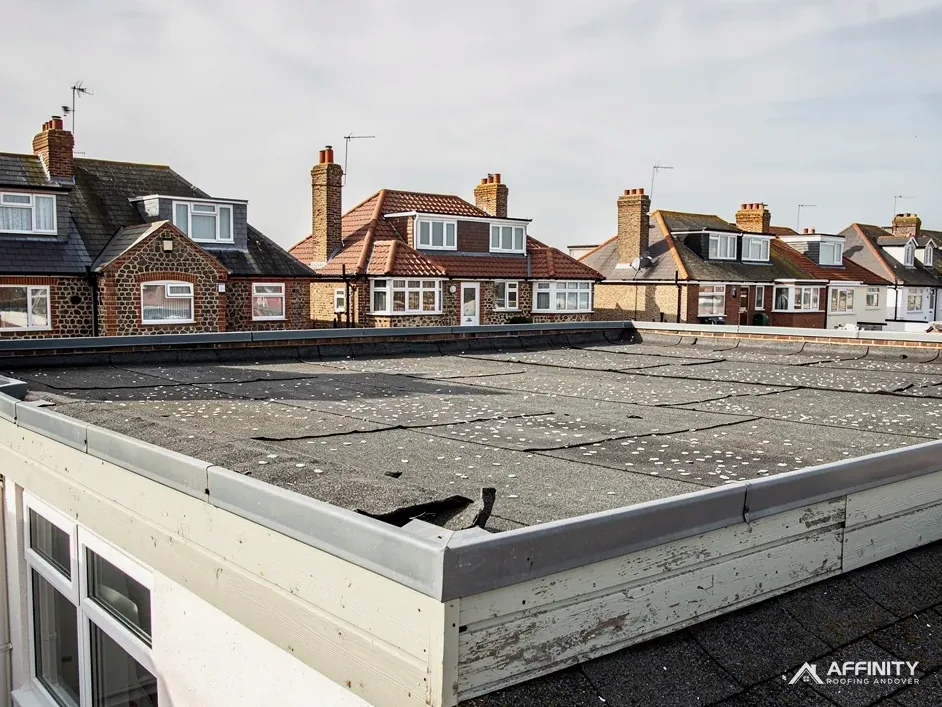
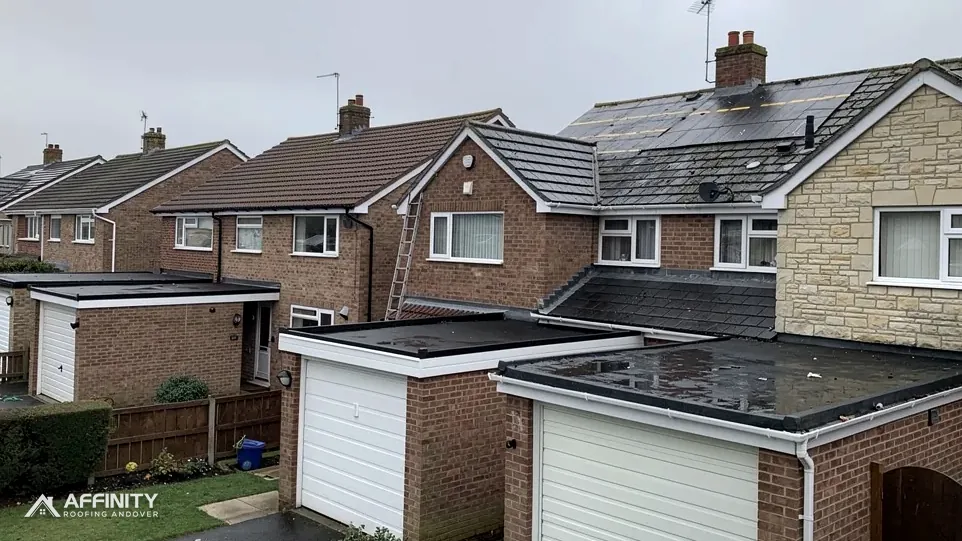
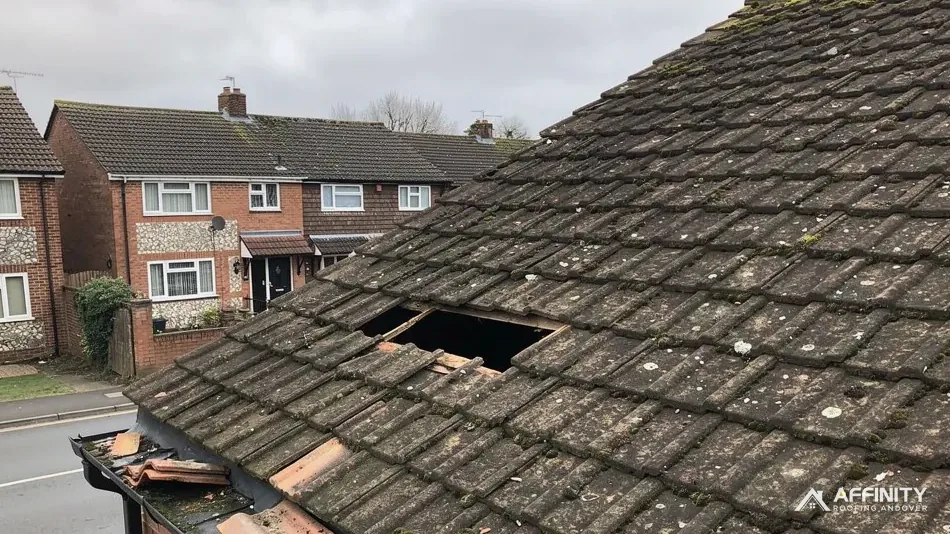
On a semi-detached house or a terrace, each owner usually has their own roof slope, but the details vary. Some roofs run continuously across several houses, with shared ridges, hips or valleys. A chimney stack may straddle the boundary, a parapet may sit on the dividing wall, and a gutter may serve two homes.
Who looks after what is a matter of ownership and title. Your deeds, and the transfer documents from your purchase, may say which parts you own and which you share, and whether either side owes a contribution to repairs. A solicitor can read them for you, and the Land Registry plan helps with the boundary.
Where nothing is written, the practical position is to deal with the part that sits over your own house, and to talk to the neighbour about anything that crosses the line. A leak that begins on one side and damages the other can raise a claim, so a quick word helps.
In a purpose-built block of flats the roof is usually owned by someone else and maintained under the lease, which is a different situation entirely.
A survey, with photographs of the roof as it runs across the pair or row, shows what is shared and what is not. It also gives you something to send your neighbour.
What the Party Wall etc. Act does and does not do
The Party Wall etc. Act 1996 deals with work to walls and structures shared between neighbours. It does not allocate the cost of a roof repair, and it does not apply to every roof job. If the work is entirely on your side, such as re-covering your own slope, the Act may never come into it.
It matters when the work touches the party wall or the structures on it. Section 2(2)(g) covers cutting back a chimney breast, jamb or flue where it intrudes on the shared wall, which matters when a stack is being altered or taken down. Work of that kind brings the notice rules into play.
Under section 3(2)(a) the neighbour must hear of the plan two months before work begins. GOV.UK warns against treating silence as consent. If you cannot agree, both sides need a surveyor.
The Act has an exception where the neighbour agrees in writing, which is covered in section 3(3)(a). That is one reason to put any agreement on paper.
Questions of this kind go to a party wall surveyor, not to building control. Our answer on party wall notices for a chimney breast covers the chimney case.
Agreeing things with the neighbour in writing
Most shared roof repairs are settled by a conversation, and the best ones are written down afterwards. A short letter or an email is enough: it says what is being done, who is carrying it out, who pays what share, and when.
Start by showing the problem. Photographs from the survey, taken before anything is touched, make the case more calmly than a complaint. Ask the neighbour to read the report and tell you what they think.
Agree three things: the scope, the cost and the access. The scope says what is being repaired. The cost says how it is divided, whether equally, by area or by benefit. The access says when the scaffold will be on their side, whether anyone needs to be home and who deals with any damage.
If your neighbour is reluctant, try again in writing, and keep copies. Where the work affects a shared structure, ask a party wall surveyor early. Our answer on who pays to repair a shared chimney stack applies the same thinking to a stack.
Never start work that crosses the boundary without consent, however urgent it feels. A temporary cover to stop a leak is a different matter.
Scaffold, access and the quote
Shared roofs bring practical points. A scaffold for one house may have to stand on, or hang over, the neighbour's land, which calls for their consent. Our answer on scaffolding on a neighbour's land deals with it.
Poles that sit on the pavement bring in the highway authority, which for an Andover address is Hampshire County Council. Under Hampshire County Council's guidance, the scaffolding company applies for it. Our answer on who applies for a scaffold licence explains the process.
A quote for work on a shared roof should say clearly which parts are being done and for whom. If the cost is divided, ask the roofer to make that clear in the paperwork, or give each owner a separate written total.
Treat the roof as one structure when you plan the repair, even if you pay for it in two parts. A new covering on one half against an old covering on the other creates a junction that can leak.
We survey the whole roof where we can and explain how the sides meet. The homepage sets out how the survey and the price work.