Plenty of listed buildings stand in Andover and its surrounding villages, from market-town inns to farmhouses and churches. Anyone who owns one knows the feeling of looking at a slipped tile and wondering whether touching it needs paperwork. Sometimes it does.
Put simply, listing adds a second layer of control on top of the usual planning rules. A re-roof on an ordinary house is usually permitted development and a listed house keeps that right, yet listed building consent is a separate requirement wherever the work would change the look of the building. The council that decides is Test Valley Borough Council for Andover addresses.
This guide covers consent, what like-for-like means in practice, how conservation areas and Article 4 directions fit in, the special case of churches, and the wildlife checks an old roof needs. It sits with our planning permission guide and the wider picture on our Andover roofing page.
What listing changes for a roof
Listing protects a building as a whole, inside and out, and the roof is part of what is protected. Section 7 of the Planning (Listed Buildings and Conservation Areas) Act 1990 requires listed building consent whenever works would change what makes the building special. Re-covering, altering the pitch, changing the ridge or removing a chimney can all affect character.
Permitted development still exists
A common misunderstanding is that a listed house loses its permitted development rights. It does not. Class B, for dormers, and Class C, which takes in other alterations to a house roof, have no exclusion for listed buildings. What differs is that listed building consent is a second, separate requirement. Passing one test does not satisfy the other.
Flats are different
Permitted development covers dwellinghouses, and the definition leaves out buildings containing flats and the flats themselves. A listed block of flats therefore needs planning permission for roof alterations as well as listed building consent.
Repair versus alteration
Repairing like with like is easier to argue than altering. A clear schedule that says what is being replaced, with what, and why, helps the officer reach a decision. A job that quietly changes the covering, or adds roof windows, is where owners tend to get into difficulty.
Always ask first, and do it in writing where you can. Talking to the planning team early is free, and it confirms which consents you need before a scaffold goes up, and it gives the officer a chance to say what they would like to see in the application. Keep a note of who you spoke to and what they said, then confirm it by email so there is a record.
Like-for-like materials and why they matter
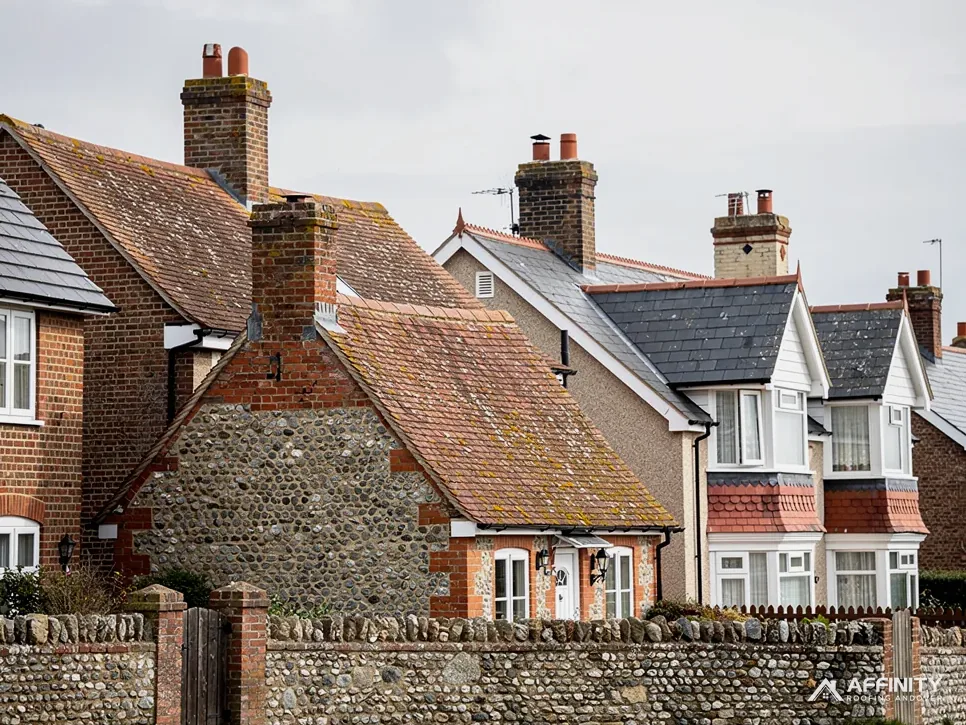
Like-for-like means matching what is already there in material, size, colour, texture and the way it is laid. Replacing handmade clay peg tiles with machine-made ones, or natural slate with a fibre cement slate, changes how the roof looks and weathers, and a conservation officer will notice. The same goes for the colour of mortar, the profile of a ridge and the width of an overhang at the verge, small details that decide whether a repair disappears into the roof or stands out from it.
Reuse before replace
Good practice on an old roof is to reuse sound tiles or slates and to replace only the ones that have failed, matching the replacements to the originals. A survey with photographs shows which are which, and gives you the evidence to put in front of the council.
Fixings and detail
The detail often matters more than the covering. Lead flashings, mortar bedding of ridges and hips, verge details and the coursing of the tiles all contribute to the character of the roof. Dry-fix systems, which hold ridge and verge tiles with clips rather than mortar, are a modern method, and whether one is acceptable on a listed roof is for the council to say, not for the roofer to assume.
Why the council is asked first
Consent comes from the council, and work done without it is the owner's problem to put right. Asking before the work gives you the chance to agree a specification, and gives the roofer a clear brief.
A thatcher, not a general roofer, should handle thatch; we work in tile, slate, lead and flat roofing, and we can advise on the rest of the house.
Andover's listed buildings, as illustrations
The National Heritage List for England, kept by Historic England, shows what listing looks like in Andover. The list records the Guildhall, the Star and Garter Hotel, The Angel Inn and the Church of St Mary, each at Grade II*, the grade between Grade I and Grade II. They are named here as illustrations of listing in the town, not as places we have worked on. A listed building can be a humble cottage or a grand hall; what the list records is the interest of the building, not its size or the owner's means.
The Angel Inn
The Angel Inn was first listed on 24 February 1950. Its entry in the National Heritage List gives the date and the grade. It shows how a working commercial building can be listed, and why a roof repair on a pub, hotel or shop in a historic street needs the same consent as one on a farmhouse.
A church is a different system
The Church of St Mary is Anglican, and a church still in Anglican use goes through the faculty system rather than listed building consent. Catholic, Methodist, URC and Baptist Union churches use their own arrangements, while closed churches and Quaker or Unitarian buildings need consent from the council.
Grade does not change the route
Grade I, II* and II all require consent for works that affect character, whether the job is a tile, a chimney pot or a whole slope. The grade affects how closely a proposal is examined and how much weight is given to what is original, not whether you ask.
The Andover conservation area, whose boundary is supplied by Test Valley, covers part of the town centre.
Conservation areas, National Landscapes and Article 4
A house does not need to be listed to be controlled. Conservation areas, National Landscapes and National Parks are all article 2(3) land, which has a specific effect: permitted development dormers cannot be built there. Class C re-roofing has no article 2(3) exclusion, so a like-for-like re-roof is normally still permitted development.
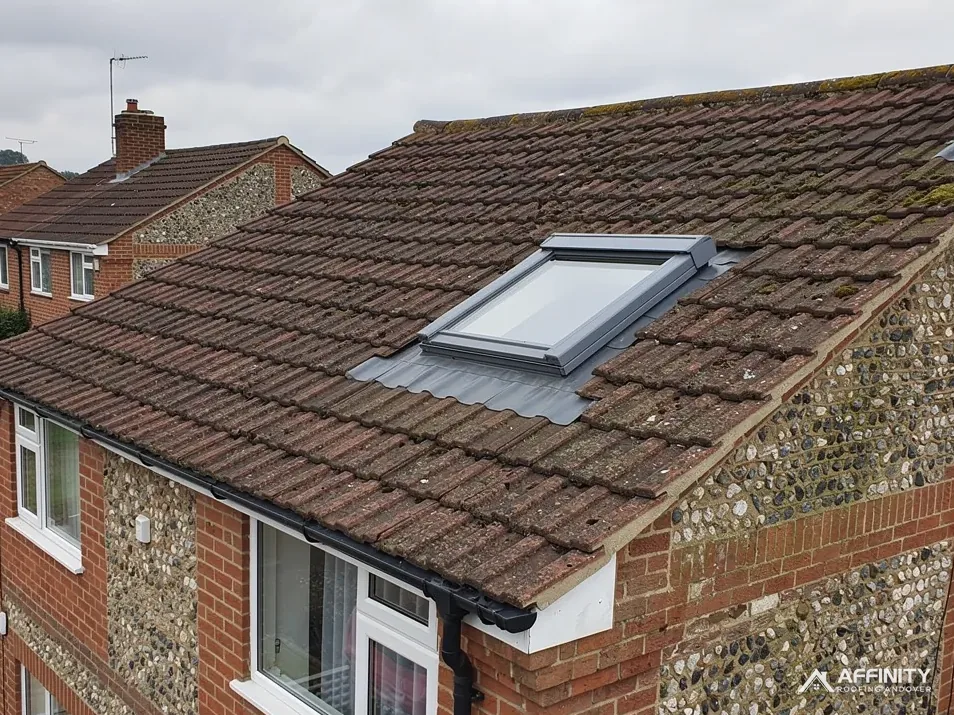
Where dormers or new roof windows are wanted, ask the council early. In a conservation area they are often a conversation rather than a formality.
Article 4 directions
Through an Article 4 direction a council can remove named permitted development rights from a set area. For Test Valley addresses, ask Test Valley Borough Council whether an Article 4 direction applies before you start, because the answer is specific to your street. Basingstoke and Deane is one council with roof wording of its own, and its published guidance sends roof changes in four of its town conservation areas through planning and expects the Welsh slate and clay already on those roofs to be kept.
Who is the planning authority
In the villages north and west of Andover, the North Wessex Downs National Landscape applies. Its partnership is advisory only, and the council remains the planning authority. Inside the South Downs National Park, planning decisions rest with its park authority, and inside the New Forest National Park with the New Forest National Park Authority.
Check the map
Because boundaries change, confirm with the council whether your property sits inside a conservation area. Do not assume a house is outside one because it is not in the main street.
Our building regulations guide covers the separate approval that can sit beside any consent.
Bats, birds and the old roof space
Older roofs are often where wildlife has settled, and the law protects it. GOV.UK gives full protection to every bat species and to their roosts, and lists roof repair as work that may affect bats.
What the law says
Under the Wildlife and Countryside Act 1981, section 9(4), disturbing a bat while it occupies a structure, or obstructing access to such a place, is an offence if done intentionally or recklessly. Regulation 43 of the 2017 Habitats and Species Regulations goes further: damaging or destroying a breeding site or resting place is an offence without any need to prove intent.
Birds
Under section 1 of the 1981 Act, intentionally damaging an active nest, or one that birds are still building, is an offence. In practice, work around an active nest and plan the job to suit.
What this means for a listed roof
If a survey finds droppings, staining at the eaves or signs of a nest, say so to the council and take specialist advice before work begins. A specialist bat survey may be needed on an old building, and it is far better to learn about it before a scaffold goes up than after stripping has begun.
None of this stops a repair. It shapes the order in which things are done, and records what was found, which is good practice on any old roof. Roofers should stop and take advice if they meet an animal or a nest during the work, rather than push on to keep to the programme.
Preparing a repair on a listed home
The best approach combines a good survey with early contact. Ask a roofer to inspect the roof closely, inside the loft and outside, and to photograph every area that needs work. You then have the evidence an officer wants to see.
What to send the council
Send a short description of the work, photographs of the faults, and the material to be used for each. Name where reclaimed materials will come from, if used. A schedule that ties each photograph to a repair makes the decision simple.
Agree the specification before the price
When the council has agreed the approach, the roofer can write one total price for exactly that work. This avoids the situation where a quote is drawn up for one method and the consent allows another. Ask the council to confirm the approved wording of any condition in writing.
Keep the paperwork
Keep the consent decision, the approved schedule and the survey photographs in a single folder, and write the date of each document on its front page. A future buyer's solicitor will ask for them, and if a dispute with a neighbour or the council ever arises, they show what was agreed and done.
Tell us at the first call if the house is listed or lies in a conservation area. We survey the roof, photograph the faults and write the price around the consent route you and the council have agreed.