The short answer
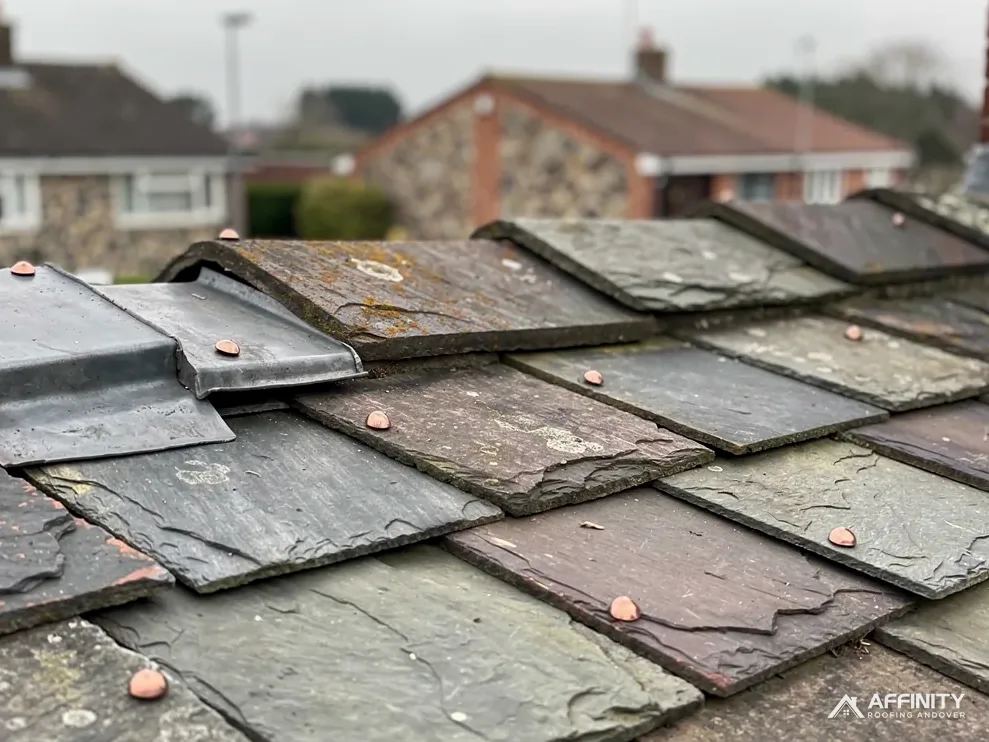
A tingle is a thin metal strip, usually lead or copper, fixed to the batten and bent up over the tail of a replacement slate to hold it in place. It is used when a slate is replaced without lifting those around it. A few tingles are a normal repair. A roof covered in them has failing nails, and that needs a different answer.
How a tingle is made and fitted
The strip is cut from sheet metal, usually lead or copper, though stainless steel is also used. One end is nailed to the batten, the timber lath running across the roof, at a spot that will be covered once the slate is in. The strip then runs down the roof, across the lower slate course, and is left long enough to curl up.
The roofer slides the replacement slate up from below until its head sits tucked under the slates in the course above. Because the nails cannot be reached, the tingle takes their place. The free end is folded up and over the slate's tail, a small bent lip that stops the slate sliding back out. Often the metal is shaped with a short hook so it grips a little tighter.
The result sits in the gap between two slates in the row below, where it is almost invisible from the ground. It lets one slate come out and another go in with the surrounding slates left in place, which is why it is the standard method for an isolated repair. Our answer on replacing a single slate shows the whole sequence.
Lead, copper or stainless steel
Each metal behaves differently in the hand. Lead is soft and easy to bend on the roof, so a tingle can be shaped to the gap. Copper is stiffer and holds its form. Stainless steel is the hardest, and the least forgiving to shape on a slope.
On older roofs lead is a common choice because it matches the lead already in place around the chimney and the valleys. Copper suits a roof that has copper elsewhere, and stainless steel is chosen where the owner wants the stiffest strip. Ask which metal is going on, and whether the nails match it. A good roofer will tell you the reason for the choice and show you the strip before it is covered by the slate.
Whichever metal is used, the strip must be wide enough that it does not cut into the slate it holds and long enough to reach the batten. A thin offcut that is too short will let the slate slide out within a season. We measure and cut each one on site for the slate it holds, then photograph the finished spot so you can see how it sits against its neighbours.
Where a tingle is the right answer
A tingle suits a roof that is basically sound with an odd slate that has cracked, slipped or been knocked loose. A branch landing in a storm, a heavy footfall from a satellite installer and a slate that was simply laid with a poor nail can all leave one or two gaps.
It also suits a shallow-pitched slate roof where hooks are not allowed. Cupa, the slate producer, advises that hooks should not be used on pitches below 25 degrees, and BS 5534 indicates a minimum pitch of 20 degrees for natural slate, so on a low roof the tingle is the safer fixing; check the slate's data sheet. See our guide to slate hooks and nails for the full comparison.
On an older roof it often matches earlier repairs, and this keeps the appearance consistent. Conservation-area and listed-building houses may prefer a tingle because it leaves the original slates in place and shows little change from the street. A few well-made tingles do no harm to a roof, and they can sit unseen for years. Each one is a small record of a repair, and it is worth knowing where they are.
When tingles point to a wider problem
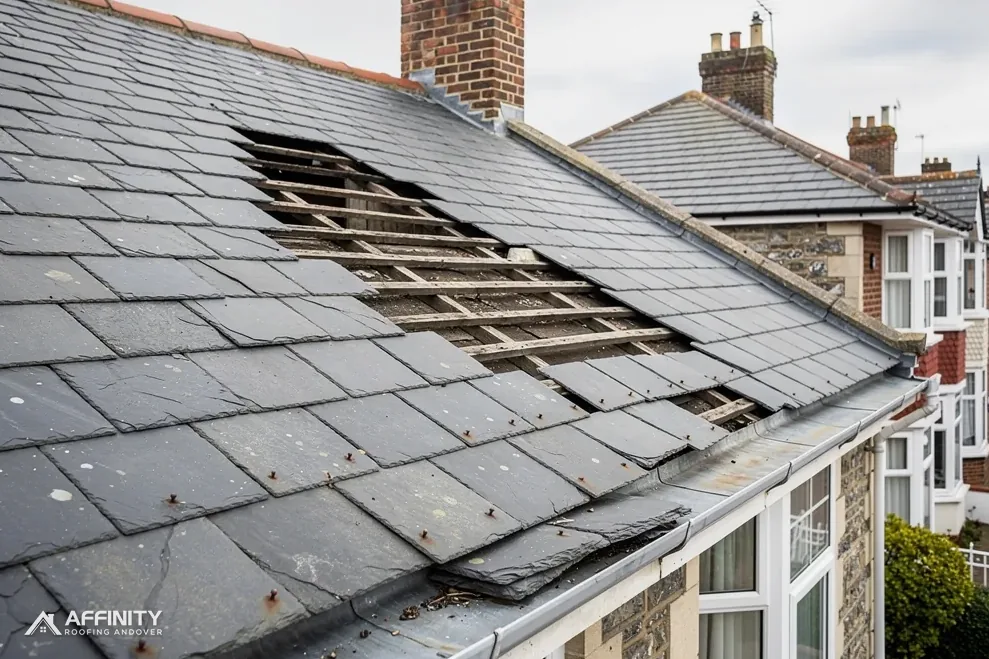
The trouble starts when tingles turn up everywhere you look. Each one marks a slate that has already slipped, and a roof dotted with them is telling you its fixings are going. One cause is nail sickness, where the old nails corrode and let slates slide out in numbers.
At that stage, adding another tingle restores one slate while the nails on either side carry on failing, and the next storm can shift the next weak one. A string of single repairs can cost more over a few seasons than doing the slope properly. The honest answer may be to strip the area, put on new battens and nails, and lay back the slates that are sound.
We look at the pattern, not just the slate: how many tingles, how close together, how loose the neighbours feel. If it is isolated, we tell you that and make the single repair neatly. If it is widespread, we show you the evidence and explain the choice. Our guide to slipped roof slates and our slate roofing page cover the bigger job.