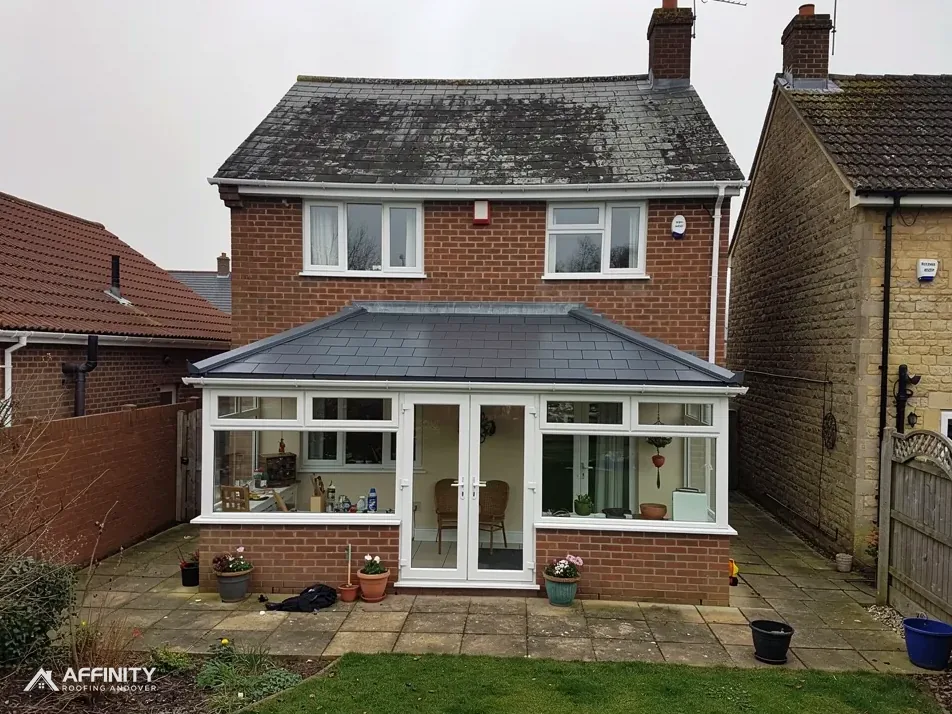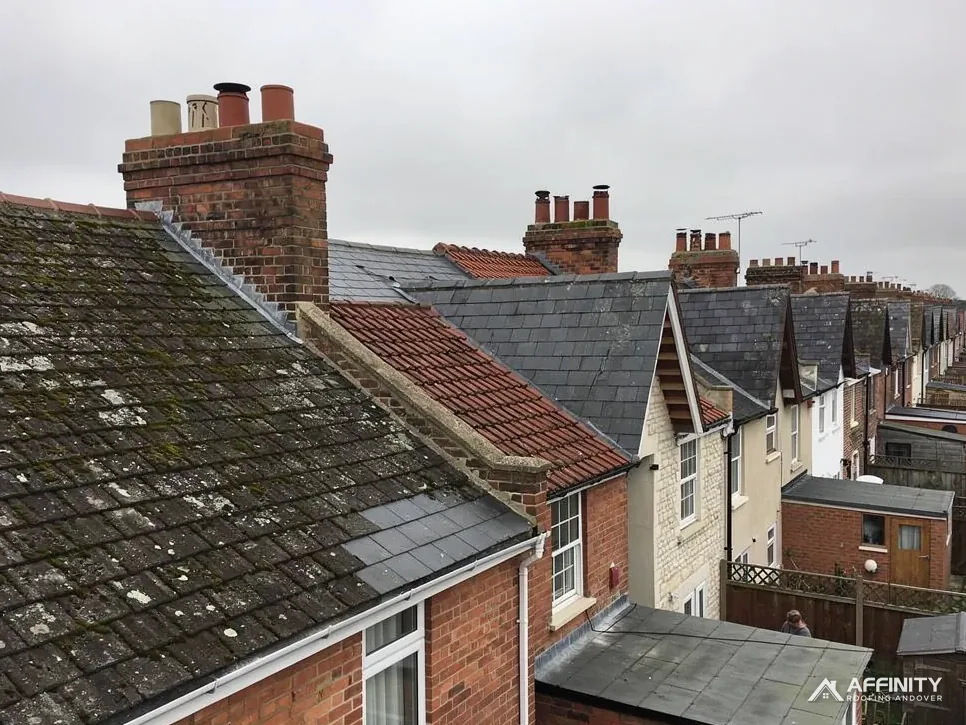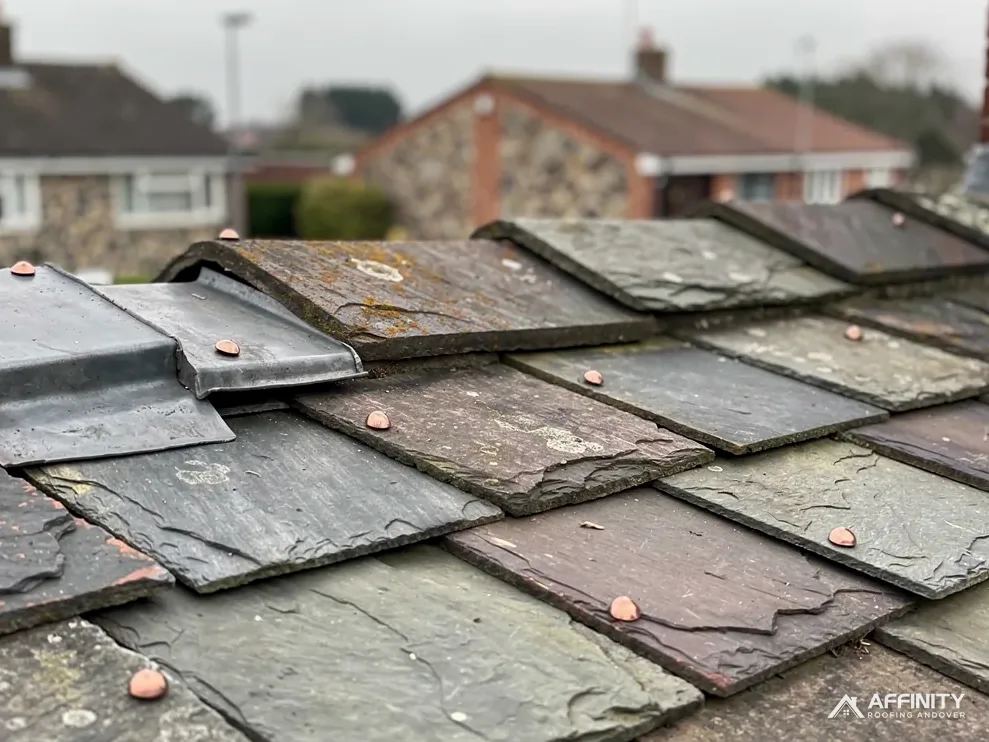
Walk along any street of slate roofs and you will see that no two are quite the same. Some have a cool blue-grey sheen, some lean towards purple, some are darker and flatter. Much of that difference comes from where the stone was cut. Slate is a natural material, and the quarry that supplied it leaves a signature.
For roofing in England, the choice usually comes down to two sources. Welsh slate has been the traditional covering for centuries and is still quarried. Spanish slate has become the common import, widely used on new work and repairs because it is available in volume and costs less. A third source, reclaimed slate, gives old stock a second life.
This guide compares Welsh and Spanish slate on origin, look, price and life, shows how to match an existing roof, and sets out how to decide. The cost comparison is a ratio, not a set of totals, because the published per-square-metre figures disagree with each other.
Where each one comes from
Slate forms where fine-grained rock has been squeezed and heated over a very long time until it splits cleanly into thin sheets. Deposits of roofing quality are rare, and the places that have them became centres of an industry, with villages, railways and ports built to carry the stone away.
Welsh slate
The Welsh slate belt in the north-west of Wales has supplied roofing for centuries, and its product went onto houses across Britain. It is quarried in large blocks, split by hand or machine and trimmed to size. A Welsh roof is a traditional choice for Victorian and Edwardian houses, which were built with it in mind.
Spanish slate
Spanish slate comes mainly from the north-west of Spain. It is quarried at scale and sold into Britain at a lower price than Welsh stone. Today it covers many new and refurbished roofs and is the standard answer where a natural slate is wanted at a moderate cost.
Within each group
Neither Welsh nor Spanish slate is one product. Each quarry yields several grades and thicknesses, and the finish varies from a smooth, machine-cut face to a rougher, riven one. Two slates both described as "Welsh" can look and perform quite differently.
Why provenance matters
A supplier who names the quarry, the grade and the thickness is giving you what you need to compare like with like. A quote that says only "natural slate" is hiding the question that decides the price.
Our slate roofing page shows how the covering sits in the full build-up of the roof. Before the order, write down the quarry, the grade, the thickness and the delivery date, and keep that note with the quote, because it is the only record of what was bought.
How they look and how they weather
Appearance is where a choice can be regretted later, so it deserves attention before the order is placed. A roof is looked at every day from the road, the garden and the upstairs windows, and a poor match is hard to unsee.
Tone and colour
Welsh slate commonly shows a blue-grey range, with purple and green tones among the products of different quarries. Spanish slate tends towards a darker, more even grey. Neither is a fixed rule: choose from samples, not from a description. A slate that looks right in a catalogue picture can look flat or too dark when laid across a whole roof.
Surface and edges
Natural slate has a texture. A riven face has ripples and a dull sheen. A smoother face reflects more light. The edges may be sharp or slightly irregular. These features give a roof its character and show up most in raking light, morning and evening.
Weathering
Slates change as they age. Some darken, some pale, and some develop a patina that makes an old roof glow in the sun. Moss and lichen take hold depending on pitch, shade and exposure to damp. A new roof of either kind looks crisper than an old one, and in a conservation area that contrast matters. Our guide to slate roofs in conservation areas deals with how councils see it.
Check a sample dry
Ask the supplier for a few slates and lay them dry on the existing roof, in daylight, beside the old ones. Look from the road. A few minutes of that comparison avoids most disappointments.
Price: the ratio, not a total
Price is the other big difference, and the published figures need careful handling. Quote the wrong number to a roofer and you invite an answer that fits the number, not your roof.
What HomeBuilding says
HomeBuilding & Renovating's supply-only table, dated 30 September 2025, prices roofing materials per square metre. In it, Welsh slate costs around two-and-a-half times the price of Spanish natural slate. Reclaimed Welsh slate sits between the two, nearer to Spanish. Each figure covers supply only, per square metre, so we rely on the ratio and never turn the individual numbers into a total for your roof.
What the ratio means
Welsh is the premium material, and Spanish is the economy choice among natural slates. But the ratio applies to the slate alone. Battens, underlay, nails, ridge, flashings, labour and scaffold cost much the same whichever slate goes on top, so the difference in the finished total is smaller than the difference in the slate.
A whole-roof marker
HomeBuilding works through a three-bedroom semi with 65 square metres of roof: plain concrete tile at £10,000 to £15,000, against a possible £18,000 for Welsh slate there. Separately, MyJobQuote's average for a slate roof is around £7,800 (MyJobQuote, Oct 2026). Those are typical UK figures from different sources. They show direction, not a price for your house.
Never multiply
A per-square-metre supply price multiplied by your roof area is not a quote. Our guide to what a new slate roof costs explains why.
Lifespan: three ranges
Life expectancy favours the slower-wearing stone, but the ranges overlap, and they describe the slate, not the whole roof. They also come from one table, so a different source might shift the edges a little.
The published ranges
From the same HomeBuilding table, Welsh slate is given as 100+ years, Spanish natural slate as 75 to 100 years and reclaimed Welsh slate as 50 to 80 years. Read these as typical ranges, not commitments, because a warranty and a lifespan are two different things.
What the ranges leave out
A slate roof's real life depends on its fixings, battens, underlay and flashings. Steel nails corrode long before the stone does, battens rot where water gets in, and lead flashings fail at the edges. A Spanish slate laid on good battens with sound fixings will outlast a Welsh slate laid on rotten timber. The slate sets the ceiling, and the build quality decides how close the roof gets to it.
Why a shorter range is not a failure
A life of 75 years still outlasts any one owner's time in the house. The upper end of the range matters most where a building is expected to last for generations, such as a listed house or a family home meant to stay in the family.
Maintenance matters as much as origin
Keep gutters flowing so water does not run back under the lower slates, clear moss from valleys and keep trees back from the slope. A roof that is looked at every few years, from the ground and also from inside the loft, will reach the top of its range far more often than one that is ignored until it leaks.
The reclaimed middle
Reclaimed slate has used part of its life already. Our guide to reclaimed roof slates explains when it makes sense and how to check a batch.
Matching an existing roof
If you are repairing or extending a roof, matching matters more than the choice between origins in the abstract, and a good match is almost always achievable with patience and a handful of samples.
Find out what is there
The old slates may be Welsh, Spanish, a different quarry or fibre cement dressed up as slate. Look at colour, thickness, texture and edges, and compare in daylight. A roofer with experience can often tell by eye, but a sample from the supplier is the proof. Thin, uniform grey sheets dating from before 2000 may be asbestos cement, and they need a survey before anyone handles them.
Repairs
For a small repair, the best match is often reclaimed slate from a similar roof, because it has already weathered. New slates of the same origin come next, mixed among sound old ones and spread across the slope.
Extensions
On an extension, the new roof should relate to the old one. Using the same slate keeps the street view continuous. Using a different slate leaves a visible line where the two meet, which in a conservation area may draw comment.
Listed buildings
On a listed house, councils usually expect a close match to the original, and listed building consent applies to work that changes character. Raise the question with the council before ordering, and send it the sample photographs, since a clear picture helps an officer reach a decision.
Making the choice
A few direct questions settle the matter for a given house, and they are worth asking in this order, because the early answers often make the later ones unnecessary.
Is there an existing slate to match?
If yes, match the origin, size and tone as closely as you can. That usually points to the same quarry or to reclaimed stock.
Does a listing or a designation apply?
If yes, ask the council first. Natural, matching slate is the safe answer, and Welsh is often the original.
How long will you own the house?
For a long-term home, the extra years of a Welsh roof may justify the cost. If you plan to move within a decade or two, Spanish slate gives a natural-slate roof for less.
What does the budget allow?
The ratio of 2.5 to 1 on supply narrows on the total, but it is still real money on a large roof. Ask to see both options costed side by side, with the same scaffold, underlay and battens in each so the comparison turns on the slate alone.
What does the roof need underneath?
Slate is only as good as what holds it. Rotten battens or a torn underlay need attention whichever origin you choose, and that work is part of the price.
Next step
Choose from samples laid on your own roof, in daylight, and ask your roofer to name the quarry and grade in the quote. If the supplier cannot provide a sample, treat that as a reason to look elsewhere, since a firm confident in its stone has no reason to hide it.