The short answer
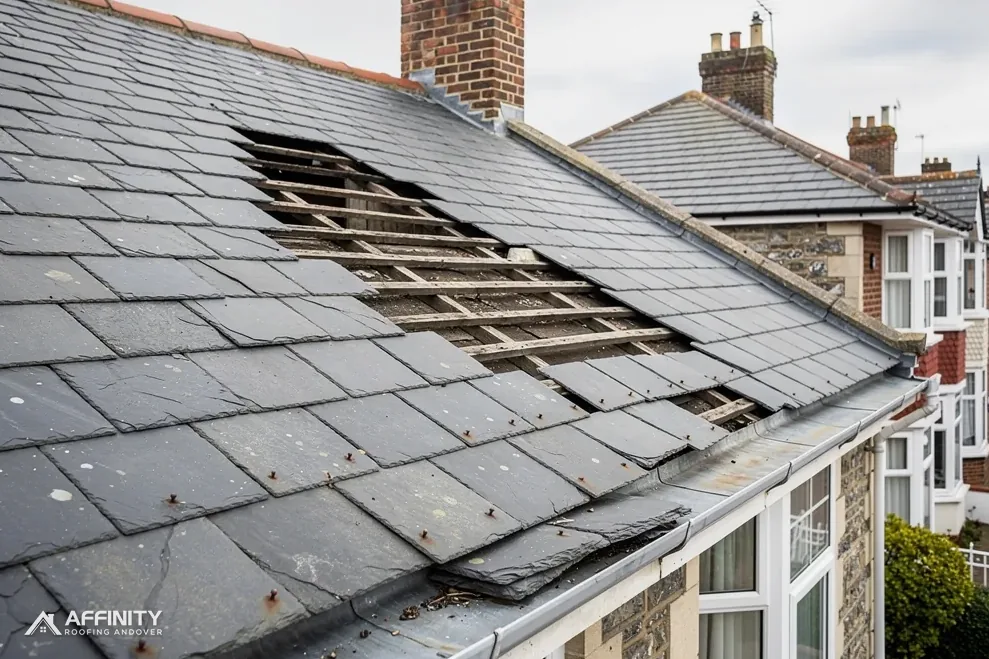
Yes. One broken or slipped slate can usually be replaced without disturbing the slates around it. The old nails are cut, the new slate slides into the gap, and because it cannot be nailed through the course above, a tingle or a hook holds it at the tail. A run of slipped slates is a different matter: the nails behind them are failing.
Taking the broken slate out
Natural slates are fixed with two nails through holes near the head, the top edge, into the batten behind. The next course up then overlaps that head, so the nails are hidden and cannot be reached from the face of the roof. That overlap is what keeps rain out, and it is also why a single slate cannot simply be unscrewed and swapped.
The tool for the job is a slate ripper: a long, flat blade with a hooked end. It slides up under the broken slate, catches each nail and cuts or draws it. The pieces then come out without lifting the slates on either side, which is the whole point of the tool.
With the gap open, we can see the batten and the underlay behind it. That look matters. If the batten is soft, or the nails beside the gap are rusted thin, the repair is not really about one slate, and we photograph it so you can see why. If the timber is sound, the repair carries on as a single-slate job, and the slates either side are never touched.
Holding the new slate: tingle or hook
The replacement slate has to be cut to the same size and holed to match, but it cannot be nailed through its head, because the course above now covers the batten. So it is held from below instead.
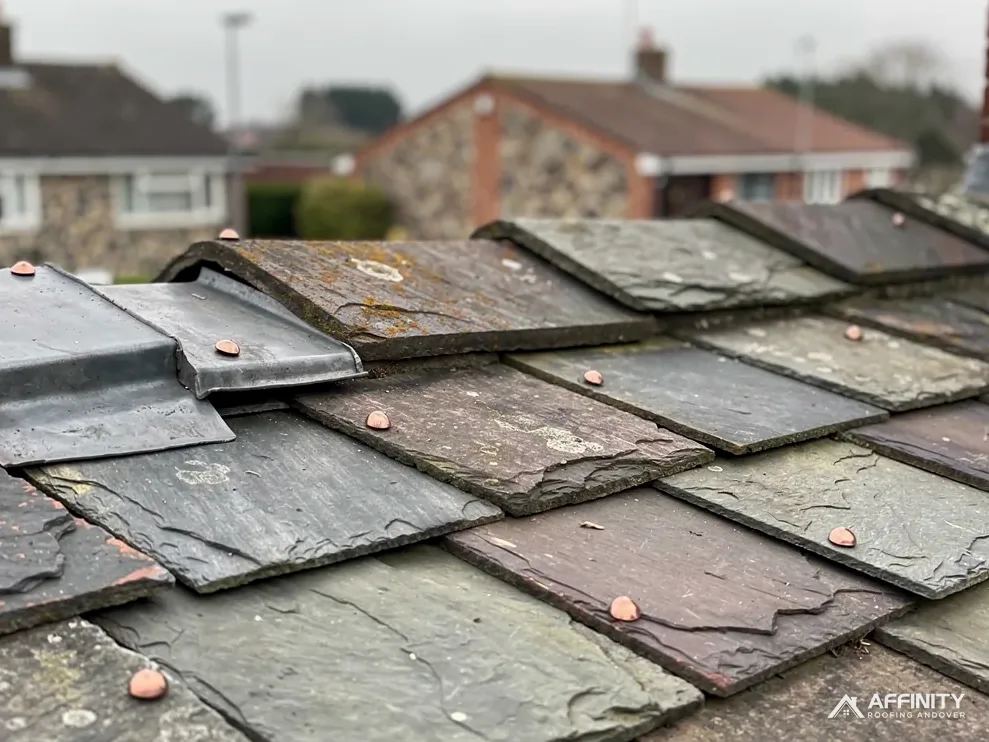
A tingle is a narrow strip made of lead, copper or stainless steel. It is nailed to the batten through the joint between the two slates underneath, the new slate is pushed up into place over it, and the end of the tingle is turned up around the slate's lower edge to stop it sliding. Done neatly, it is hard to spot from the ground. Our answer on the slate tingle covers the different metals.
A hook does the same job with a shaped wire clip, and is common on newer slate roofs. There is a limit on where hooks belong. Cupa, the slate producer, advises against hooks on roofs pitched under 25º, and BS 5534 indicates a minimum roof pitch of 20 degrees for natural slate, so read the maker's data sheet. On a shallow slope, a tingle is the safer choice, and on an old roof it usually matches the earlier repairs too.
When one slate points to nail sickness
Slates themselves last a long time. HomeBuilding puts the typical life of Welsh slate at 100+ years, Spanish natural slate at 75 to 100 years and reclaimed Welsh slate at 50 to 80 years. The iron nails that held older roofs together often give up first. When they corrode, slates start sliding out one after another, a pattern roofers call nail sickness.
So the slate you can see may not be alone. Signs that the fixings are going across the slope include several slipped slates in a band, slates that rock when the wind gets under them, and tingles already dotted across the roof from earlier repairs. Each tingle is a slate that has slipped before, so a roof covered in them is telling you its own history.
At that point, a string of single repairs becomes poor value, and we tell you that plainly. We show you the photographs and set out the choice between re-fixing one area and re-slating the slope with new fixings, reusing sound slates where they come off whole. Our guide to slipped roof slates goes into the causes, and the slate roofing page covers the larger job.
Reaching one slate safely, and what sets the price
Please do not go up onto a slate roof to inspect the damage. Slates crack underfoot, and a loose one can slide off without warning. A photo taken at ground level or from an upstairs window tells us plenty to start with.
How we reach the slate depends on where it is. A low slope over a porch or extension may need only a roof ladder, its hook over the ridge and its weight spread on boards. A slate high on a main roof, or above a path, calls for a tower or full scaffold. Any scaffold standing on the public highway needs a Highways Act licence, which we arrange with the scaffolder.
The price for a single slate is set by that access, by the slate itself and by what the survey finds around it. A match matters: the new slate should share the old one's size, thickness and colour, or it will stand out and may not lie flat. On HomeBuilding's per-square-metre figures, Welsh slate costs roughly 2.5 times as much as Spanish, and reclaimed slate is often the closest match on an older roof.