The short answer
Roof slates crack for three reasons: weight, water and weak stone. A footstep, a ladder or a dropped tool can snap a slate in two. Water that freezes inside a thin, layered slate can split it from within. Slate that was poor to begin with gives way sooner. A few cracks are a small repair, while a roof full of them needs a different decision.
Weight in the wrong place
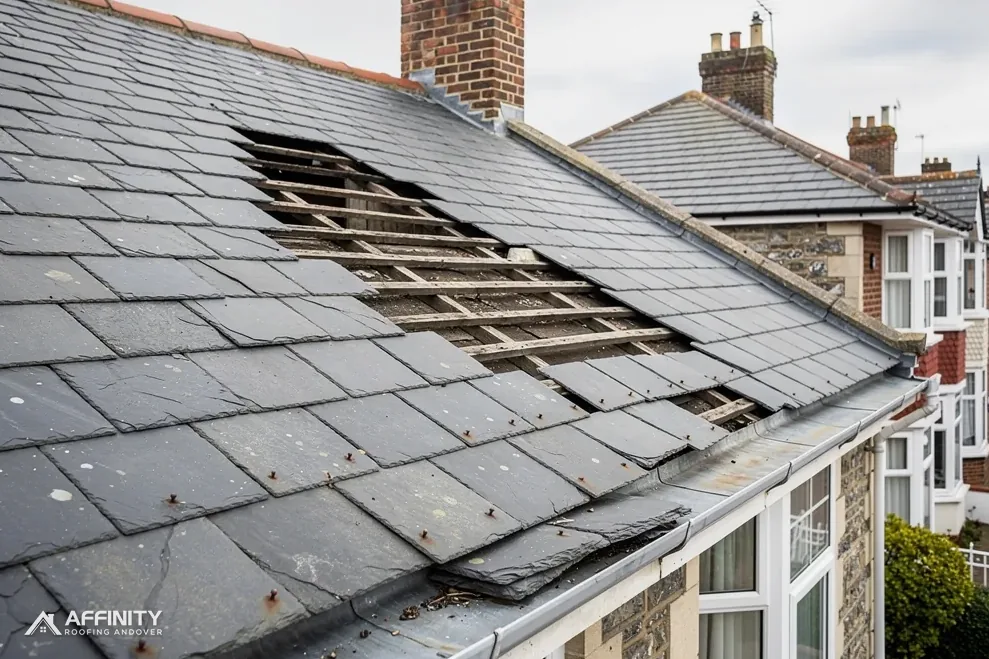
Slate is strong when it is loaded evenly and weak when a point load lands on it. A slate is a thin plate supported only along its head and at its overlaps, so a boot or a ladder foot presses on an unsupported span and snaps it. The crack often runs across the middle, and the break can be invisible from below because the slate above still covers it.
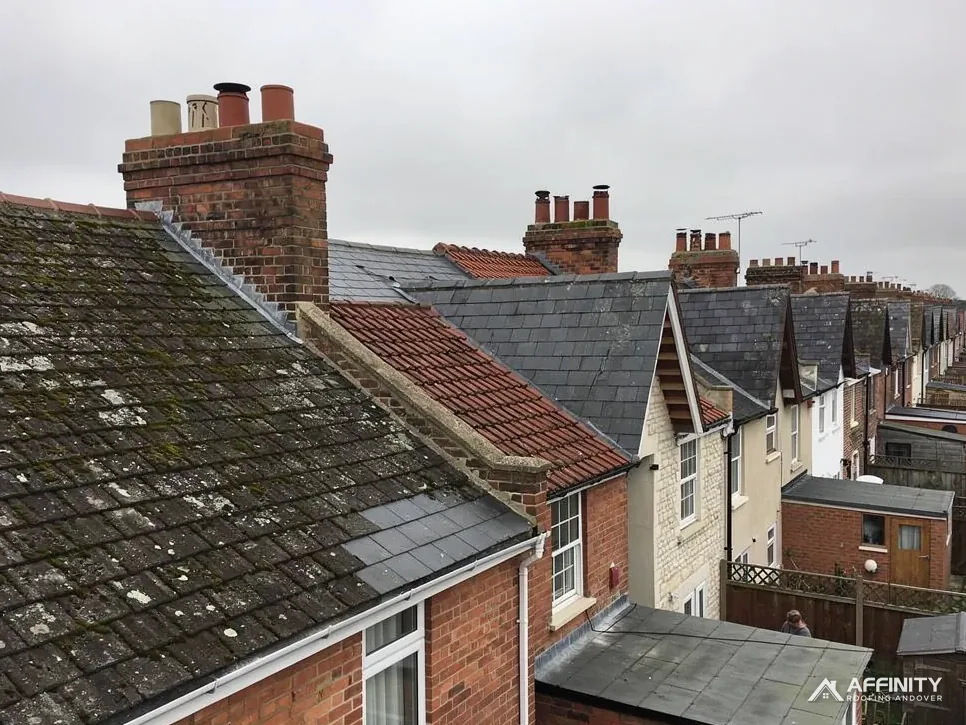
A cluster of cracks on one slope usually has a footprint behind it, so look at where people have been. Roofs get walked on by aerial fitters, chimney sweeps, satellite installers, gutter cleaners and well-meaning neighbours, and each visit can leave a few slates cracked behind. The damage only shows later, when rain seeps through the break and a stain appears on the ceiling.
Our rule is simple: if a roof has been walked on, we inspect the slates for hairline breaks before anyone declares the roof sound. We use a roof ladder or crawling boards that spread the load across several slates, so our own access does not add to the damage.
If you need someone on the roof, say that it is slate when you book them.
Frost, thin layers and weak stone
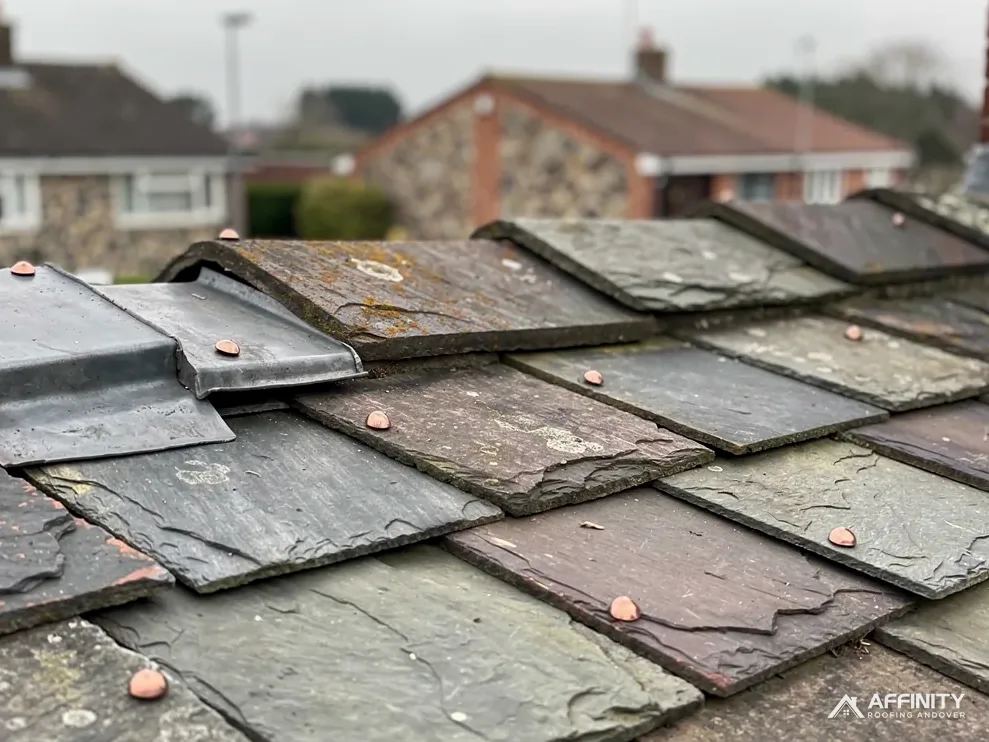
Natural slate is split from rock in thin sheets, and it keeps that layered structure. Water can creep between the layers, and when it freezes it expands and pushes them apart. Repeated over many winters, that pressure opens a crack from the edge or sheds a skin from the face. The sound a tapped slate makes can hint at the problem: a sound slate rings, while a damaged one gives a dull note.
Quality matters here. Slate varies from quarry to quarry, and a slate with poorly bonded layers or mineral veins through it will crack sooner than a dense one. In HomeBuilding's guide the usual span is 100+ years for Welsh slate, 75 to 100 years for Spanish natural slate and 50 to 80 years for reclaimed Welsh, and those are ranges, not promises. A slate that cracks long before those ages suggests a poor batch, an unlucky repair or damage from handling.
If the faces are flaking rather than the slate splitting through, the cause is a related one, and our answer on flaking roof slates covers it.
Repairing one or two cracked slates
A scattering of cracks is a small job. The broken slate is freed by cutting its nails with a slate ripper, a flat hooked blade that reaches up underneath, and a matching slate is slid into the gap and held at the tail by a strip of metal called a tingle. Neighbouring slates are left alone, which keeps the repair neat and the cost down. The full method is in our answer on replacing a single slate.
The lowest-priced repair is not always the right one. A crack can be sealed with mastic or tape from the outside, and these patches look fine for a season and then peel, trapping water behind them. We do not recommend them on a roof you intend to keep.
Before any slate is replaced, we check the cause. If a cracked slate sits directly under a regular path of footfall, such as a route to a chimney, the better answer may be to stop the traffic rather than to keep paying for the breakages.
You get photographs of each broken slate and the one written price for the visit.
When cracking has spread
Cracks across a whole slope tell a bigger story. If slates are splitting everywhere, not only where people walk, the slate itself is reaching the end of its useful life, or it was a poor choice for that roof. Replacing them one at a time then becomes a treadmill, because each repair disturbs the neighbours and the next crack is already forming.
At that point the real comparison is a run of patch repairs against re-slating the affected area properly. Sound slates from the roof can be sorted and reused, and the rest replaced, which is covered in our answer on reusing old roof slates. The wider job, from a single course to a full slope, is explained on our slate roofing page.
You see the photographs, and we explain which course we would choose and why, including when patching still makes sense. Having the survey result and a single written total side by side lets you weigh a repair against the full job. We also check the battens and underlay beneath while the slates are off, because a new slate on tired timber will not stay put.