The short answer
The old covering is stripped, sorted and carried off by a registered waste carrier, in a skip or on a grab lorry, and the site is swept before the crew leaves. Tiles, slates, battens and underlay are ordinary building waste. Asbestos is handled differently: it is double-wrapped, labelled and moved on a consignment note, and it never goes in an open skip or in general waste.
Skips, chutes and waste carriers
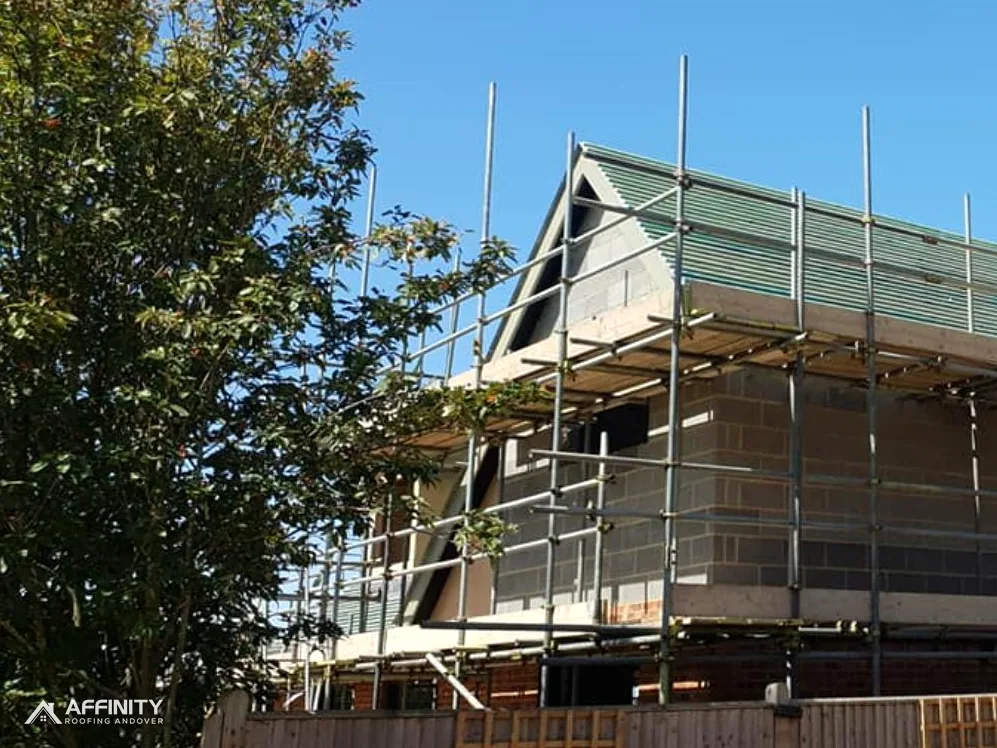
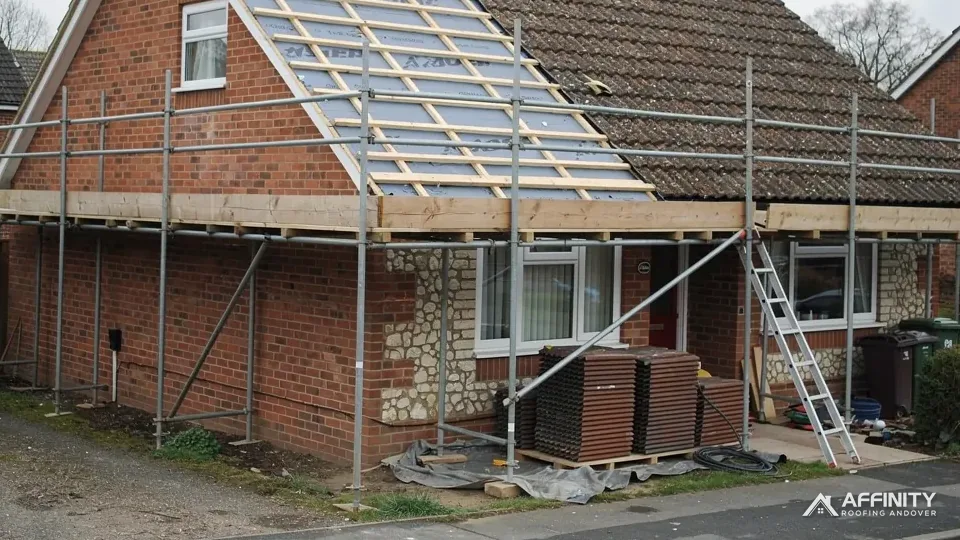
As the covering comes off, it is lowered by chute into a skip or onto a lorry so it does not land in the garden. Tiles and slates are heavy and a skip fills quickly, which is why its position is settled before the job starts. It needs level ground and clear access for the lorry, and on a terraced street a skip on the road has to be planned alongside the scaffold.
Anyone who carries waste as part of their trade, including a roofer taking it to a tip, needs to be registered as a waste carrier. GOV.UK runs a register where you can look a firm up. Ask the roofer how the waste leaves the site, whether in their own vehicle or through a hired skip company, and who the carrier is.
The wider point is that disposal sits inside the job. Check that your written quote includes taking the old covering away, so there is no later charge for the skip. Our answer on how long a roof replacement takes explains why skip changes affect the programme, and the roof replacement page shows the whole job.
Asbestos is never ordinary waste
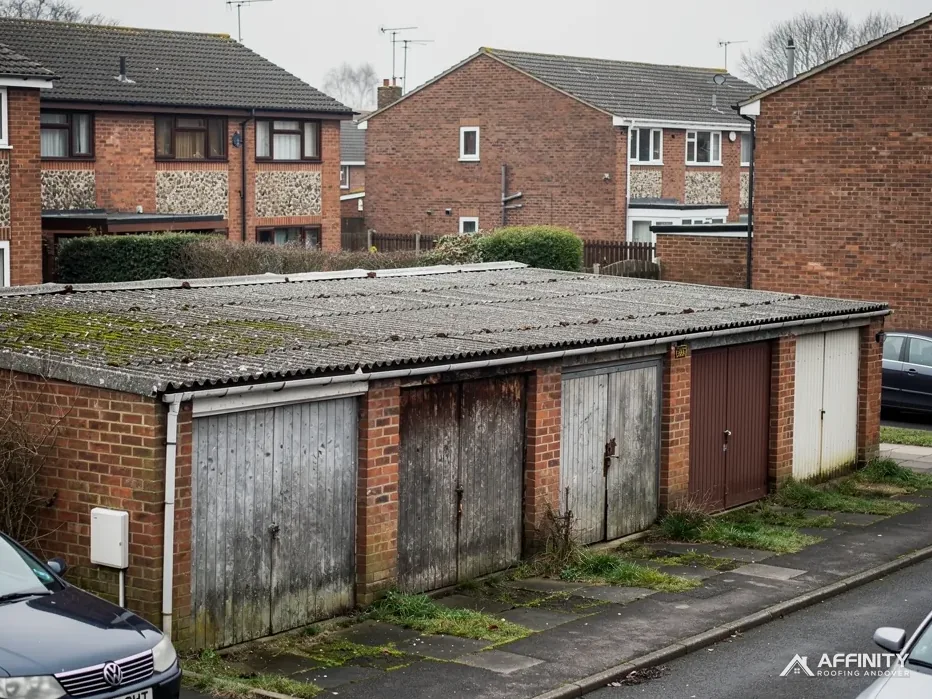
Some older roofs contain asbestos. HSE's rule of thumb treats any property built or refurbished before 2000 as a likely source until a survey shows otherwise. Asbestos cement sheeting, the corrugated material seen on garages and outbuildings, is fragile and needs great care. Asbestos insulating board, found in external soffits, is checked first on a roofline job because it is hard to tell from non-asbestos board by eye.
Under HSE rules, lifting asbestos cement carefully and intact is non-licensed work, while substantial breakage moves it into the notifiable non-licensed category, and insulating board work that is not short in duration is licensable. If a roof needs a specialist contractor, that is who we recommend.
The waste route is strict. Waste from asbestos is sealed in two layers, labelled, and sent with a consignment note to a facility able to accept it. An open skip is out of the question, since HSE permits only lockable or sealed ones, and general waste is equally wrong. It is a separate stream from the rest of the strip. Our page on signs you need a new roof includes the clues on older sheeting.
Recycling tiles and slates
Whole, sound tiles and slates can go back on the roof, and that is the first choice on an older house where the covering is part of its character. Our guide to reusing old roof tiles explains which are worth keeping and which are not.
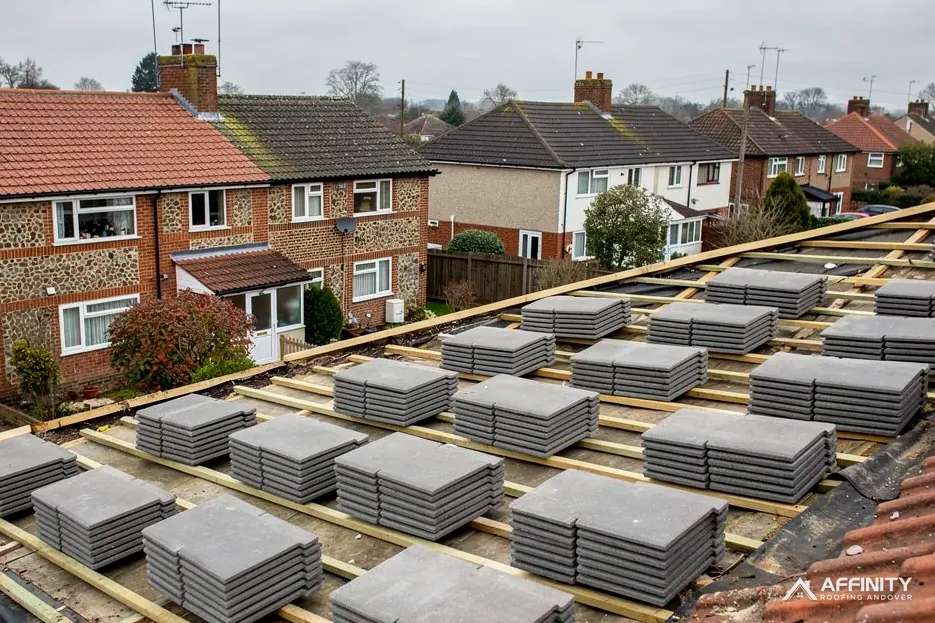
What cannot be reused is still sorted where it can be. Clay and concrete tiles, slate and brick are mineral waste, and a skip company that separates its loads may send them on for crushing. Timber battens form another stream, and underlay, felt and lead sheet go separately again. A mixed skip is harder to recycle than a sorted one, so ask the skip company how your load is handled.
Ask where the waste ends up, in the same breath as who removes it. A firm that cannot answer plainly has not thought about it, and a clear reply tells you the waste is being taken seriously. It is usually a short, simple answer and it costs nothing to ask, and it tells you whether the firm treats waste as part of the job or as an afterthought.
A tidy site at the end of each day
The practical test of disposal is the state of the garden. Roof waste includes sharp fragments, nails and broken tile, and those do not belong on a lawn or drive where children, pets and cars can find them. We leave the site tidy: access set up properly, waste taken away, and the customer told what happens each day.
Boards protect paths and patios where loads land, and plants beside the wall can be covered or moved beforehand. You should not be left with a heap at the back door to deal with once the crew has gone.
Your quote is one written total, so read it for the line that says the old covering is taken away. It is also worth asking whether the skip allowance covers a larger or more complex roof, such as one with two layers of tile or a heavy slate covering, which produces more waste than a plain single layer. Settle these questions at the survey, and the clear-up will be part of the plan from the first day.