The short answer
Sometimes. Sound clay tiles and natural slates can go back on a new roof once they are sorted, cleaned and checked, and reclaimed material suits an older house well. Cracked, flaking or worn pieces are discarded. Whatever is reused goes onto new battens and underlay and is fixed to current practice, because old nails and fixings are the weak point.
Condition and life left
A tile or slate is worth reusing when it is whole and still has years in it. HomeBuilding gives clay tiles 60 to 80 years, and the Building Research Establishment cites a minimum life expectancy of 60 years that applies to clay only. For slate, HomeBuilding gives Welsh slate 100 plus years and reclaimed Welsh slate 50 to 80 years. All of these are typical ranges, not promises.
Concrete is a different case. Marley puts its concrete roof tiles at about 60 years, with a warning that this is no warranty, whereas HomeBuilding allows plain concrete tiles 40 to 50 years. Two sources give two answers, and neither is a promise about your roof.
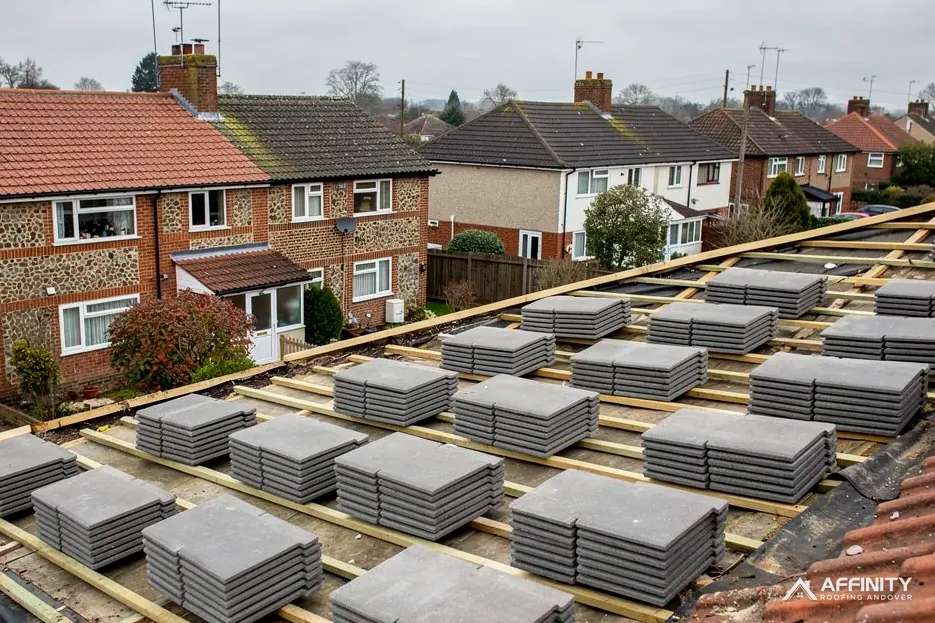
We sort tiles as they come off. Whole, sound ones are stacked and counted, and cracked, flaking or laminating ones are rejected. If the sound pile falls short of the roof area, the remainder has to come from elsewhere, which brings up matching, covered below. Our page on how long clay roof tiles last has more detail, and the roof replacement hub explains how a re-roof is run.
Fixings to current standards
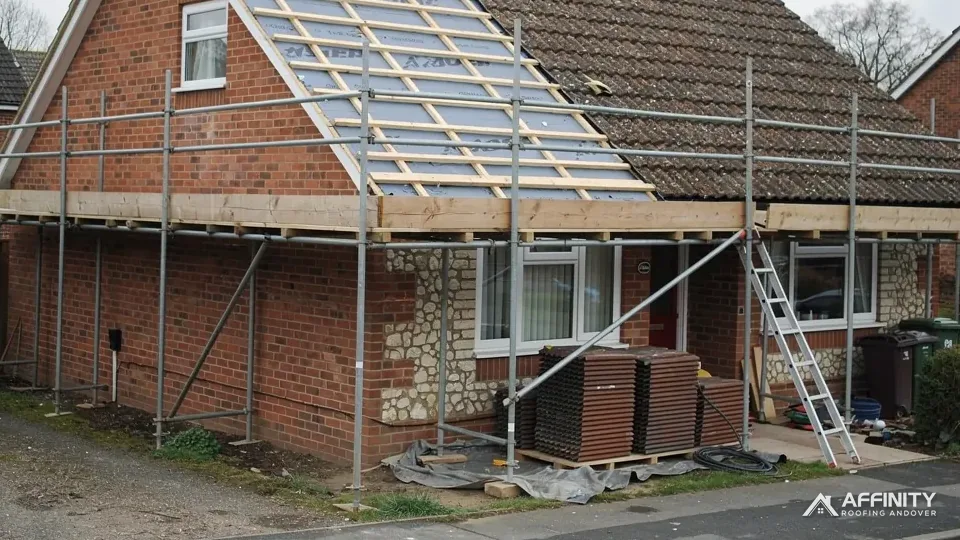
Reusing the covering does not mean reusing the way it was held on. Old roofs relied on iron nails that rust, on mortar bedding along the ridge and hips, and on battens and felt that have aged. Those get replaced.
The standard for fixing slates and tiles is BS 5534:2014+A2:2018. Marley is clear that the law does not require it, though it is still the standard that sets out how each tile is fixed. Marley adds that the 2014 revision made plain that mortar's tensile strength could not carry ridge and hip tiles alone, which is why dry-fix systems tested to BS 8612 are now common. Bedding a ridge in mortar is still allowed; it simply cannot be the sole means of fixing. Fixings cost little compared with lifting a roof twice, so renewing them while the covering is off is sound sense.
On slate, the usual failing is nail sickness, where nails rust and slates slip. Reused slates are re-fixed with new nails or clips, and our answer on replacing a single slate shows how the holding methods work. Underlay and battens are new, so the reused covering rests on fresh support. The same Approved Document wants every piece of covering held in a manner suited to it.
Mixing old and new
If there are not enough sound tiles, new ones fill the gap, and the skill is in where they go. Reclaimed tiles are best kept on the slope the street sees, with the newer ones turned to a rear slope where weathering differences stay out of view. A new tile beside a weathered one looks bright for a while, then the roof settles as sun and moss do their work.
Profile matters as much as colour. Tiles with the same name from different makers can differ in thickness and in how they interlock. Every tile type also comes with a lowest safe pitch from its maker. Marley lists 40, 35, 30 and 30 degrees for its Canterbury, Ashdowne, Hawkins and Acme Single Camber clay tiles, for example, and the maker's data sheet is the place to confirm any figure.
If you are weighing a change of material instead, our pages on matching old roof tiles and changing roof tiles to slate compare the options. A heavier material needs a weight check on the roof structure before it is chosen.
What reuse means for the price
Reuse saves buying new tiles but costs time. Every tile is handled twice, once to sort and stack it and again to lay it, and some will break along the way. The gain is that an older roof keeps its look, which counts in a conservation area. In four Basingstoke town conservation areas, for example, that council's Article 4 advice is to keep original slate and clay. Ask how breakage is handled: a sensible roofer allows for losses and says in advance where replacement tiles will come from.
You will receive one written total after the survey, so ask the roofer to state whether reused or new tile is assumed, and what happens if the count of sound tiles falls short. That prevents an unpleasant surprise once the pile is counted.
Do not forget the rest of the roof. Lead flashings, ridge and verge details and the gutters are renewed or repaired at the same time, so they do not cut short the life of the reused covering. Our page on the best roof covering for a re-roof helps with the material decision.