The short answer
Usually not. Many home insurance policies exclude wear and tear and slow deterioration, and the Financial Ombudsman Service lists both as common exclusions. A sudden blow in a gale may be covered if your policy's own definition is met and the weather was the main cause. Read your wording, tell your insurer first, and never assume a claim will be paid.
Ageing versus an event
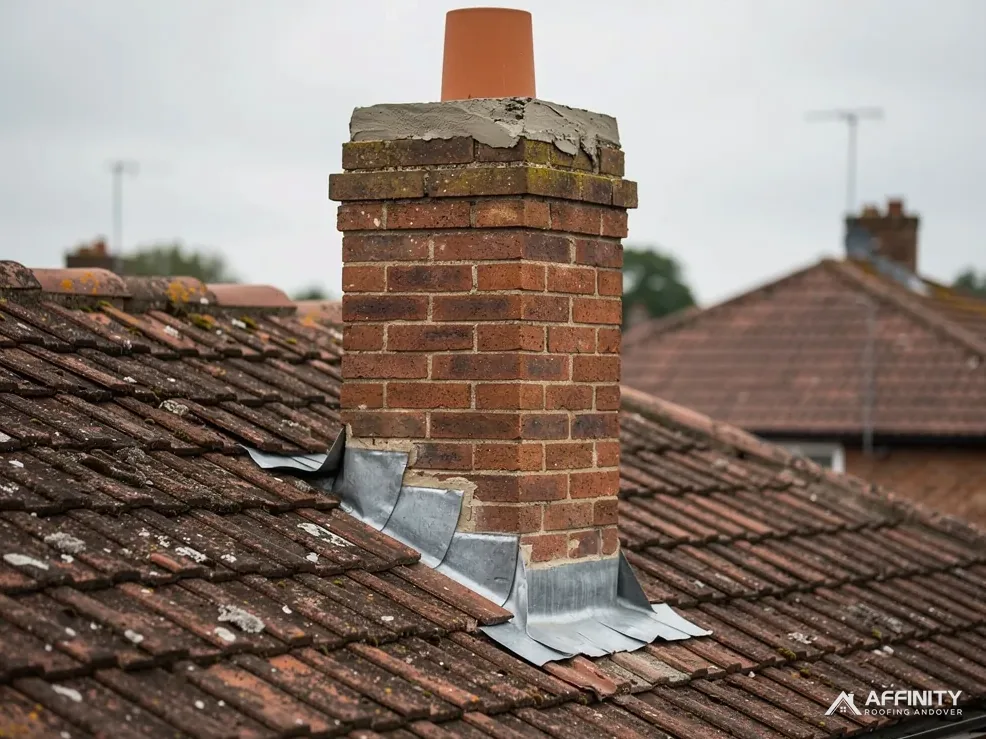
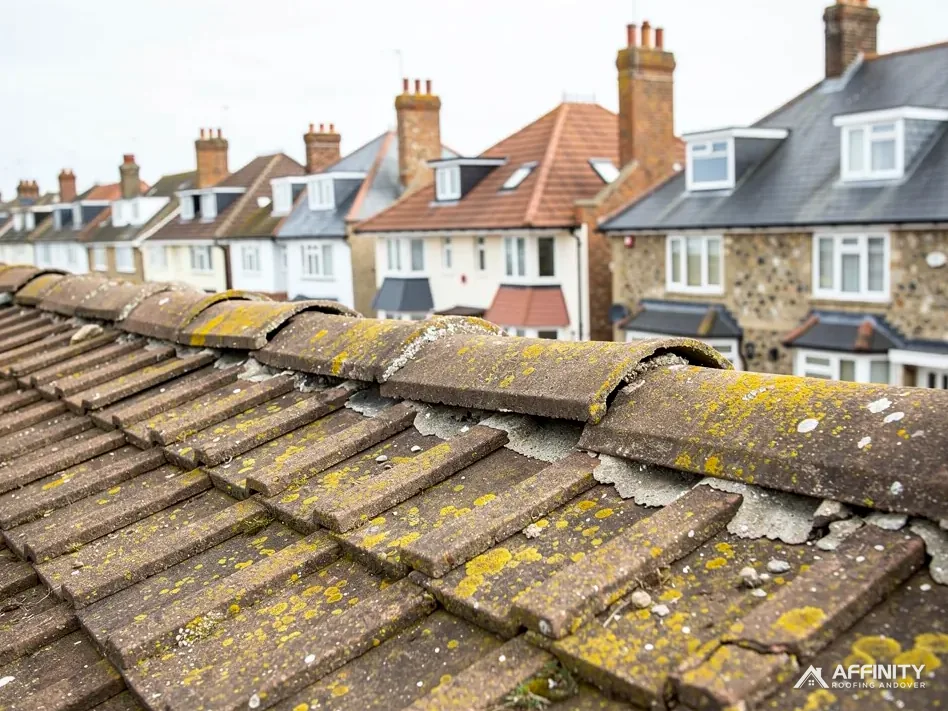
Insurance is built around events: something happened, a covered peril was responsible, and damage followed. A roof that has simply grown old is not an event. Nails corrode, bedding mortar crumbles, underlay perishes and flashing works loose over many seasons, and those slow changes are what insurers mean by wear and tear.
The Financial Ombudsman Service, which resolves disputes between customers and insurers, says insurers often write wear and tear and gradual damage into their exclusions. Where a roof was already poor before the weather arrived and the owner knew, or the weather only exposed a defect that pre-dated it, the Ombudsman is unlikely to uphold the complaint.
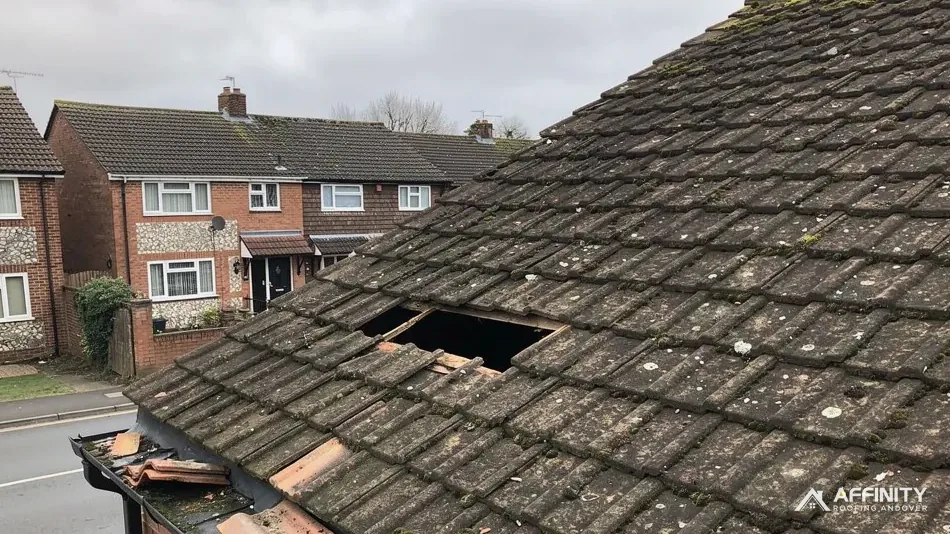
That distinction is practical. A gale that strips tiles from a sound roof makes a different claim from a gale that removes tiles which were already slipping. In both cases the insurer will ask how the roof stood before the weather came.
Nobody can promise how a particular claim will go. What you can do is understand the way the question is framed, describe the damage accurately and gather the proof that supports your account, ideally from before the event as well as after it.
What your policy says about storms
Storm cover depends on the policy's own definition, and definitions differ between insurers. The Financial Ombudsman Service publishes its own view of what counts as a storm. Violent wind with some precipitation is the usual picture, yet it recognises that calm but extreme rain, or hail, or snow can qualify too. The Ombudsman also weighs the Beaufort Scale, and notes that some insurers choose a wind level below which they will not call the wind storm-force.
For snow, rain or hail, the test is about quantity and speed: a great deal arriving in a short window, or an extreme fall. The Ombudsman then asks which factor did the real harm, and whether what you see fits that explanation.
Read your schedule and booklet before assuming anything. Look for the headings on storm, escape of water and accidental damage, and then read the exclusions list with care. If the wording is unclear, ask the insurer in writing how it applies to your roof.
Our answer on storm damage and home insurance goes through the claim steps in order.
Before you repair anything
Contact your insurer first, before arranging permanent work. Make the roof safe so further damage does not follow, keep each receipt and take dated pictures. The Institution of Structural Engineers calls pictures vital evidence of a loss. Cover the roof from the garden, the loft, the ceiling stain and any debris on the ground.
Which? reported that only 32% of storm-related claims made in 2024 resulted in a payout, so both the evidence and the wording matter. Nobody can say in advance how one claim will end, and we make no such promise.
A roofer can help with the facts. A written report with pictures of what we find, such as long-corroded nails or fresh impact marks, gives you something concrete to hand to an assessor, and it records the roof's condition at the date of the visit. What the insurer decides is the insurer's call, and a roofer cannot change it.
Our guide to photographing roof damage lists the views worth capturing, and the pictures are far more useful if they were taken before any temporary cover goes on.
When the insurer says no
Being turned down does not always close the matter. Ask the insurer for its reasons in writing and set them beside your policy wording. If you think the decision is wrong, use the insurer's complaints process. A complaint can go to the Financial Ombudsman Service when eight weeks go by with no final answer from the insurer, and 6 months from a final answer is the time allowed.
Its helpline is 0800 023 4567, and it calls the service free and straightforward to use. Its checks on a storm complaint are plain: was there one, is the pattern of damage what a storm leaves behind, and was the weather the main cause of the harm, or was it something that had been developing for a long time.
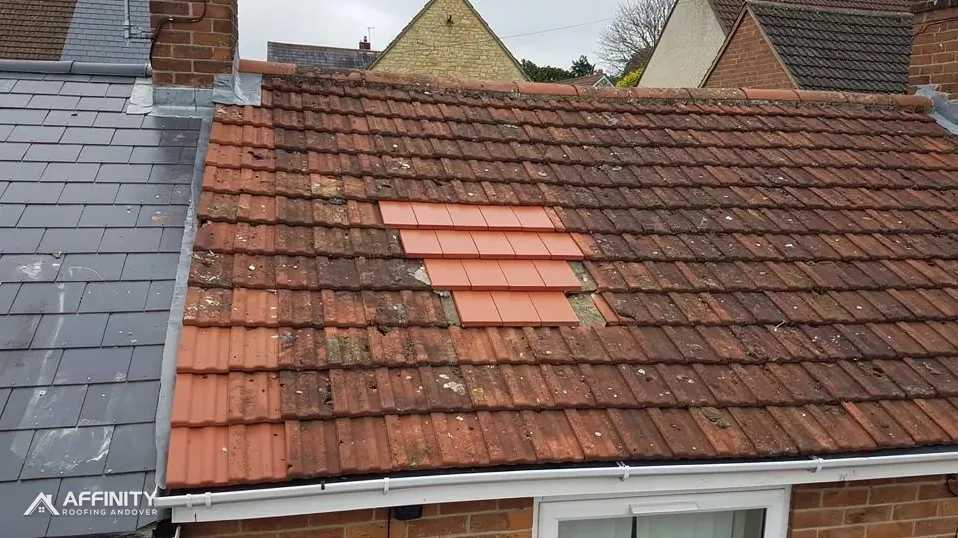
Meanwhile the roof still needs attention. If the insurer will not pay, the repair is yours to arrange, and which job is right depends on the survey. Isolated damage may need only a modest patch, while a covering that has simply run its course may call for something larger. We explain which it is, with pictures, and you decide.
Our page on a rejected roof insurance claim covers that stage, and the roof repairs hub lists what we can fix.