After a gale, tiles lie on the lawn and a ceiling is damp. The first question is usually whether the home insurance will pay. The honest answer is that it may, and that it depends on two things: the exact wording of your policy, and whether the damage was caused by a storm and not by a roof that was already failing.
Neither can be settled by a roofer, a neighbour or an article. The policy is a contract, and the insurer decides, in the first instance, whether it applies. What a roofer can do is document the damage so that you can show what happened, make the roof safe and explain, in plain words, what looks like storm damage and what looks like age. The rest is between you and your insurer.
This guide covers how the Financial Ombudsman Service, the free body that settles disputes between consumers and insurers, describes a storm, how storm damage differs from wear and tear, the steps to take straight after damage, what to look for in your policy and what to do if a claim is turned down, including the time limits. It promises no outcome, and it does not replace your policy documents.
Is storm damage covered? It depends on the policy
There is no single rule that says home insurance covers storm damage. Buildings policies commonly list storm as an insured cause of loss, but each has its own definitions, limits, excesses and exclusions, and those decide what is paid.
What to look for in the documents
Find the buildings section of your policy and look for the word storm. See how the policy defines it. Some define it in words and some set a wind speed or another threshold. Check the exclusions, which often mention gradual damage, wear and tear, and lack of maintenance. Check the excess, the amount you pay yourself on any claim.
Buildings and contents
Buildings cover protects the structure: roof, walls, windows. Contents cover protects your belongings. Water coming through a damaged roof may involve both, so read each section and tell the insurer about both.
The wording that governs
Because policies differ, the phrase to hold on to is your policy's own storm definition. Anything an article says, including this one, gives way to the words in your documents.
Cover is no assurance of payment
A policy on the shelf does not mean a payment in the post. Which? reported that only 32% of storm-related claims made in 2024 resulted in a payout, a reminder of how often claims fall short. That is a reason to document everything carefully, not a reason to avoid claiming.
Our wider guide to making a roof insurance claim covers the process step by step, and the roof repairs hub shows where this guide sits.
How the Financial Ombudsman sees a storm
When a policy leaves the word undefined, or the definition is disputed, the Financial Ombudsman Service, known as FOS, weighs the facts. Its published approach is a useful guide to how complaints are judged.
Wind first, but not only wind
FOS begins with violent winds, normally arriving with rain, hail or snow. It then widens the picture: a storm can occur without much wind, and rain, hail or snow in a heavy fall can qualify on its own.
The Beaufort scale
FOS considers the Beaufort Scale, the standard measure of wind force, while accepting that some insurers draw their own line on that scale and treat only the stronger winds as storm force. We name no wind speed here, because your policy's wording governs and FOS does not treat one figure as settling every case.
Rain, snow and hail without a gale
For these, FOS looks for a lot falling in a short time, or an extreme fall. An ordinary wet winter is not a storm. A cloudburst that swamps the roof drainage may be.
The three questions
When an insurer turns a claim down, FOS checks three things. Did a storm occur? Does the damage fit the sort a storm causes? Did storm conditions do most of the harm? All three need to line up for a complaint to succeed.
These are not rules an insurer must follow, because the policy is the contract. They show how a neutral body reads the same words when there is a dispute, and they give you a checklist for your own evidence.
Storm damage or wear and tear?
This is where many claims are won or lost. A storm can damage any roof, but it does most harm to those that were already weak, and insurers separate the two.
What looks like storm damage
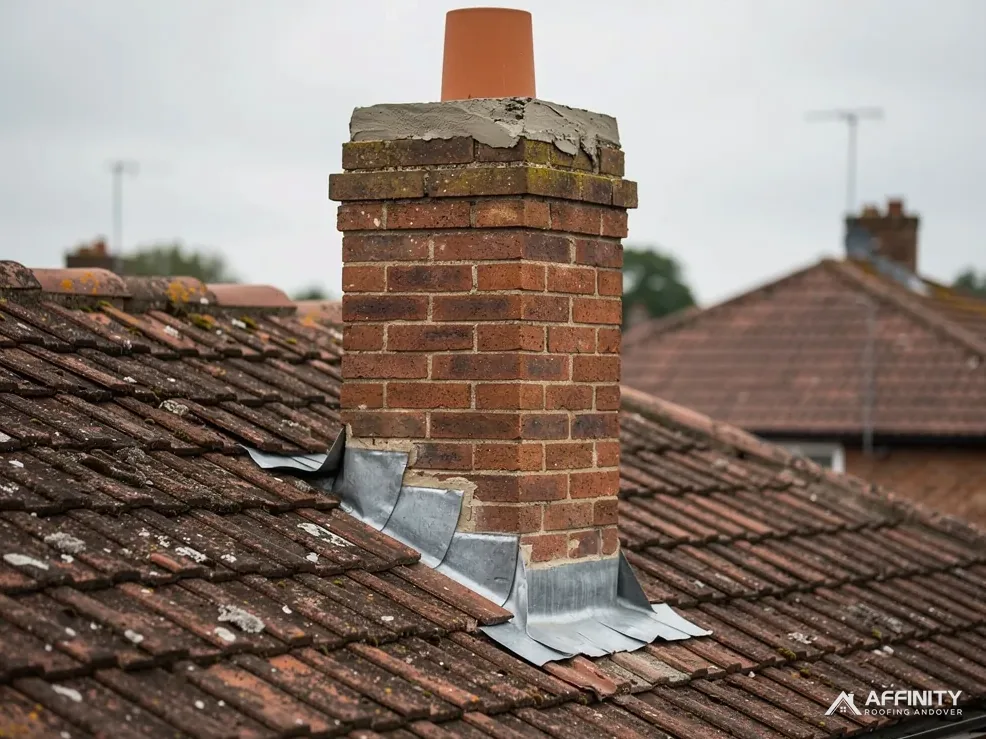
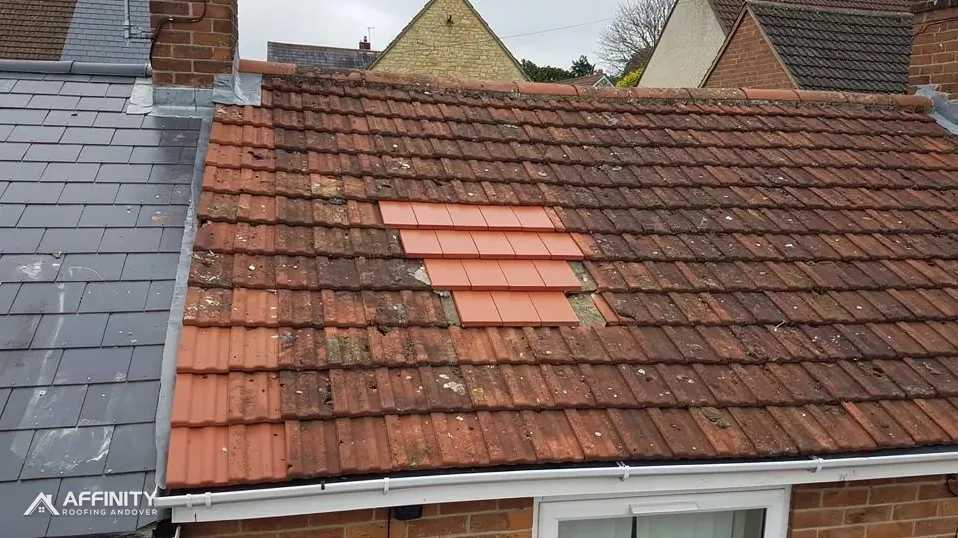
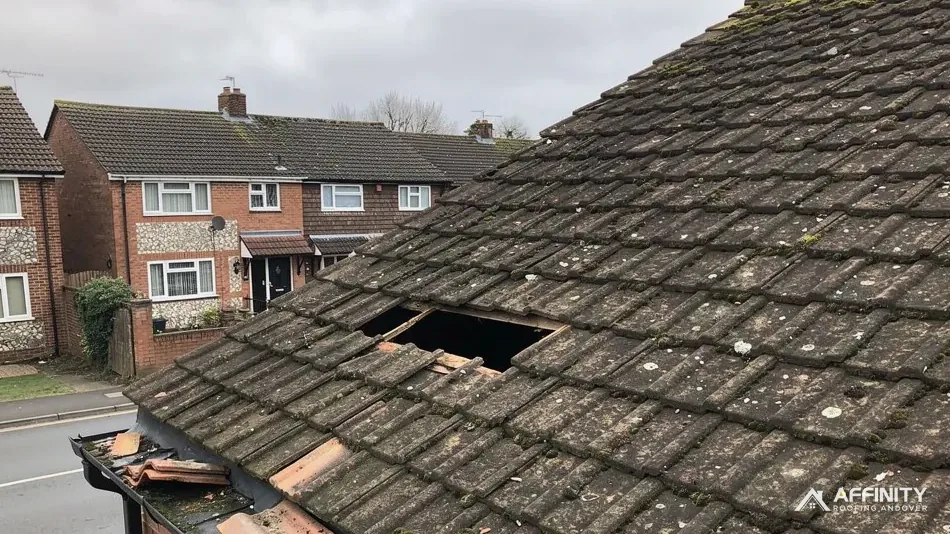
Damage that appears suddenly and fits high winds or heavy precipitation: tiles lifted in a clear pattern, a ridge displaced, a branch or chimney pot on the roof, flashing torn away. Fresh breaks, scattered debris and a clear date all point to a storm.
What looks like wear and tear
Gradual deterioration: nails that have rusted through, crumbling mortar, tired felt, tiles that were cracked and slowly moving. Policies commonly exclude gradual damage and wear and tear, and FOS recognises that such exclusions are widespread.
When the storm only exposed the fault
If the roof was run down beforehand and the owner was aware, or the weather simply brought an old fault to light, FOS tends to find against the owner. A leak in a gale from a flashing that had been failing for years falls into that category.
How photographs and a survey help
A roofer can often tell from the pattern of breaks which is which, and a dated survey with photographs makes the difference visible. We tell you what we find, including when the evidence points to age and not weather. That is more use to you than a report that flatters your claim.
Our short answer on roof wear and tear and insurance looks further at the dividing line.
What to do straight after the damage
The order of the first steps matters, both for safety and for your claim.
Stay safe
Keep away from damaged chimneys, loose tiles and sagging ceilings. Do not climb onto the roof. If anyone is at risk, ring the emergency services.
Ring the insurer before the repairer
Contact the insurer before you book permanent work, and ask what it requires. Which? notes that insurers generally run round-the-clock emergency lines. Ask whether it wants to inspect, whether it has a preferred contractor and what it will cover for urgent work.
Make the roof safe
A temporary repair to stop further damage is normally expected of you, and a roofer can provide it. Our guide to temporary roof repairs explains what a make-safe visit involves. Keep temporary measures simple, and hold off on permanent work until the insurer has said what it needs.
Photograph everything
The Institution of Structural Engineers urges homeowners to photograph the damage, because pictures are the visual evidence an insurer relies on. Take wide and close shots, inside and out, before anything is moved or mended, and note the date.
Keep receipts
Hold on to every receipt for emergency work, hotels and replacement items, since some policies reimburse them.
Write it down
Note when the storm happened, when you spotted the damage and what you did next. Keep copies of every message with the insurer.
The claim itself is yours and the insurer's. What we provide is a survey and photographs that you can pass on.
Reading your policy wording before you need it
The best time to understand your cover is before a storm. A short review now can head off unpleasant surprises later.
Key terms to check
Look at the storm definition, the list of insured perils, the exclusions and the excess. Note any condition about keeping the property in good repair, which insurers sometimes rely on when damage is blamed on neglect. Check whether storm or flood claims carry a separate, higher excess.
Sums insured
The buildings sum insured should reflect the cost of rebuilding, and not the market value of the house. If it is too low, a payment may be reduced.
Roof-specific conditions
Some policies treat flat roofs, older properties or unoccupied homes differently. Check whether your roof type or circumstances trigger special terms.
Keep roof records
Photographs of the roof in good order, survey reports and invoices for earlier repairs are evidence of its state before a storm. They help show the damage is new and the roof has been looked after.
Ask in writing
If any wording is unclear, ask the insurer or your broker to explain it by email or letter. A reply you can show later is worth more than a remembered phone call.
No grant for a new roof
The grant schemes do not pay for a new roof, so insurance is the route for storm damage. Do not treat anything as paid until the insurer confirms it in writing.
If your claim is refused or reduced
A refusal is not necessarily the end. There are routes to challenge it, and clear time limits apply.
Ask for reasons in writing
Ask the insurer to explain the decision, identify the policy term it relies on and say what evidence it considered. Compare that with your documents and photographs.
Use the insurer's complaints process
Every insurer has a complaints procedure. Put your complaint in writing and attach evidence, including a roofer's survey if you have one that answers the insurer's reasons.
The Financial Ombudsman Service
If you are still unhappy, you can take the complaint to FOS. Its service is free and easy to use. If the insurer gives no final response within eight weeks, you may go to FOS. Once it has issued one, you have 6 months from that date. The FOS helpline is 0800 023 4567.
What it will weigh
It looks at whether a storm occurred, whether the damage fits one and whether those storm conditions were the main cause, and it considers the roof's condition at the time. No outcome is certain either way.
Other help
Citizens Advice runs a consumer helpline on 0808 223 1133. Our answer on a rejected roof insurance claim covers the next steps.
Whatever the result, the roof still needs a sound repair, and a survey with photographs and one written price will show what that involves.