The short answer
Not yourself. Getting onto a wet or damaged roof is one of the most dangerous things a homeowner can do, and a loose sheet can blow off and cause more harm. Photograph the damage from the ground, tell your insurer, and have a roofer fit a properly fixed temporary cover. Until then, catch drips inside and keep people clear.
The climb is the danger
Tarpaulin jobs go wrong before the sheet is even unrolled. A wet roof is slippery, tiles shift under a boot, and the damage you are trying to cover may have weakened the area around it. Leaning a ladder against the gutter adds a second hazard, because plastic gutters flex and brackets give way, and a ladder footing on wet grass or a sloping drive can slide.
Tarpaulin itself is a poor material on a roof. It flaps in a breeze, and a flapping sheet scours the tiles beneath. A gust that gets under it turns it into a sail, and it can drag a person, or the ladder, with it. If it comes loose in the dark, it may land in a neighbour's garden or the road.
There is also a structural question. If a tree or a storm has hit the roof, you cannot tell from outside whether rafters have cracked or battens have split. Standing on the covering puts your weight on exactly that part.
For all of these reasons, the safest action is the least dramatic one. Stay inside, protect the room, and let someone with the right access and fall protection do the climbing. Our page on the repair of a roof in the rain says more about why wet work is treated carefully.
What a roofer's cover does differently
A temporary roof cover from a roofer is not just a sheet thrown over the hole. It starts with access that is set up properly, usually a ladder tied off at the top or a tower, and it ends with a cover that is fixed so it cannot lift.
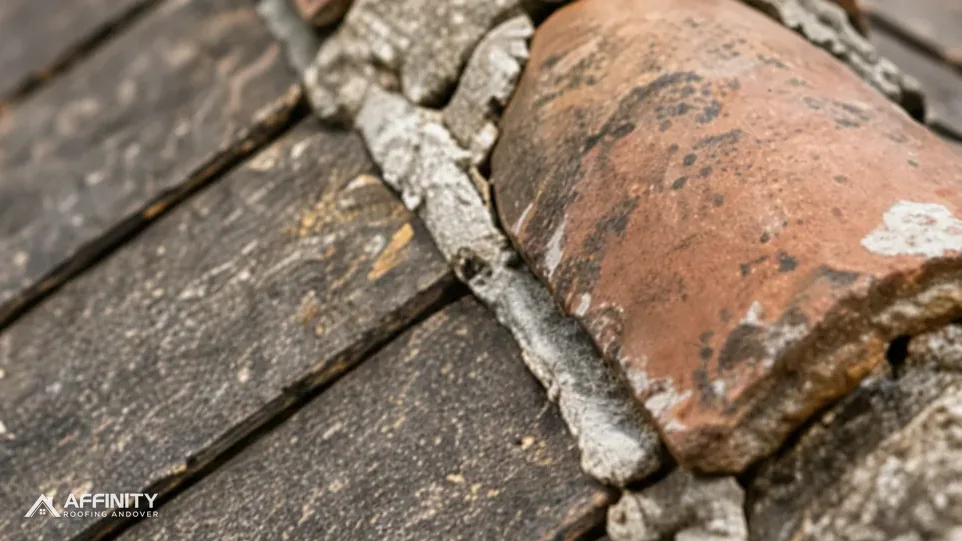
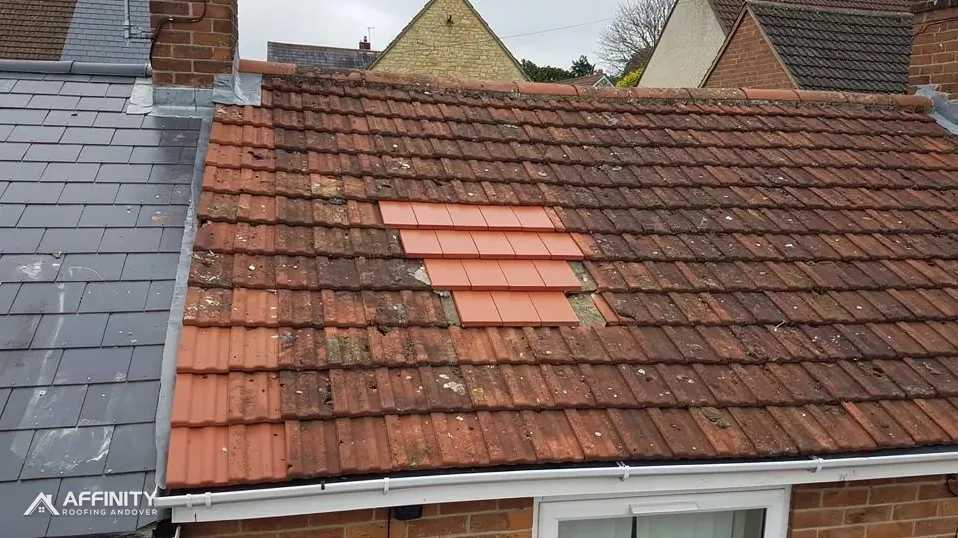
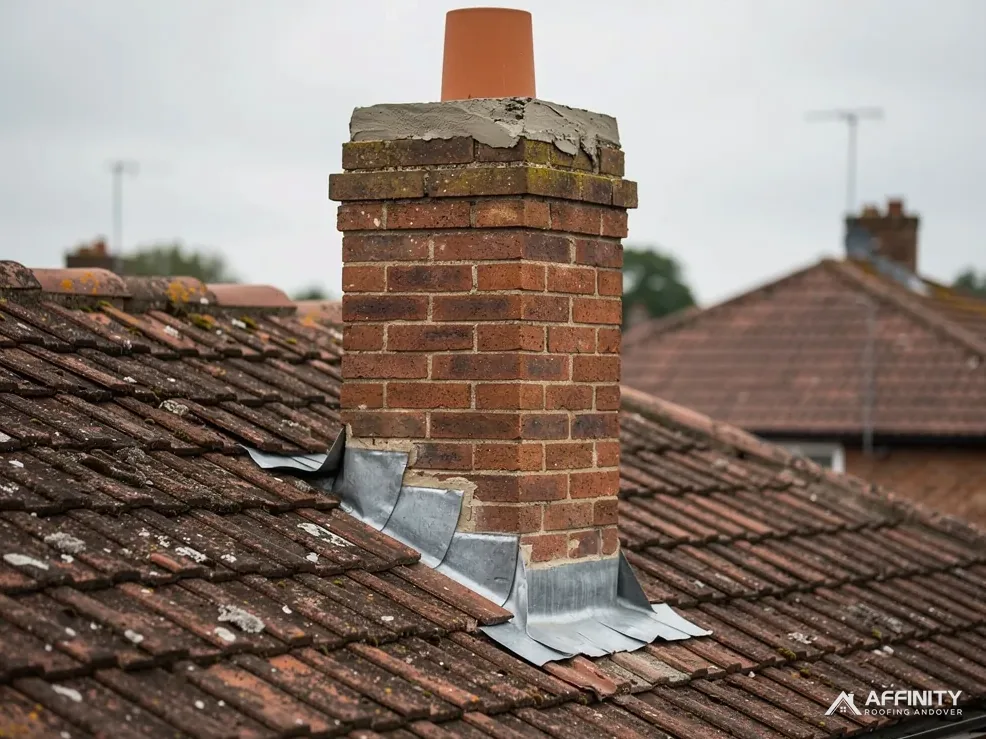
The method varies with the damage and the covering, and a roofer chooses it only after looking at what lies under the break. A missing tile may be replaced or blocked with a board and sheet under the adjacent courses. A torn area may be covered with a heavy-duty sheet pinned under the course above and fixed along its edges with battens, not left to hang loose. Over a chimney or a hole, the cover is shaped to shed water away from the opening, not into it.
It is also meant to stay put until the proper repair, which may be days or weeks away. That is why a temporary repair is judged on how well it is secured and how well it sheds water, not on how quickly it goes up.
Our guide to a temporary roof repair explains what the stopgap can and cannot do, and why the permanent fix still has to follow.
Take pictures before anything is covered
Cover hides evidence. Once a sheet is on, nobody can see the broken tiles, the torn felt or the splintered batten, and an insurer's assessor may want to. Take pictures first, and take plenty. The Institution of Structural Engineers treats pictures as vital evidence of a loss.
From the garden or the pavement, frame the damaged area and then step back to show where it sits on the house. Use the loft hatch to photograph the underside, where daylight, wet timber or sagging insulation might show. Add the ceiling stain from below, and include something for scale.
Write the date and hour beside each set, and hold on to the receipts for emergency work. Your insurer will want to hear before permanent repairs begin, and the order is simple: tell them, make the roof safe, keep the proof.
Which? has reported that most insurers run emergency helplines, so look in your policy papers for the number and ring it while the details are fresh. Our guide to photographing roof damage lists the views worth capturing, and nothing in it needs you to leave the ground.
While you wait for help
Inside the house, the aim is to limit the harm. Put a bucket or a washing-up bowl under each drip, with a towel beneath to stop splashes. Move electrics, rugs and furniture away. If the ceiling is bulging with trapped water, do not stand under it, and keep children and pets out of the room. Let a professional decide how to release it.
Where water has reached a ceiling rose or a socket, turn that circuit off at the consumer unit and stay clear. An electrician should check it before anyone uses it again.
Close the door of the affected room if you can, and tell everyone in the house why.
Then call us, or whoever you prefer, with the photographs you took from the ground, and describe which room is affected and how fast the water is entering. For us the first job is making the roof safe, and the explanation of the repair follows. A single written price follows the survey, not a figure on the phone. Our roof repairs page lists the jobs we cover.