When should a roof be replaced instead of repaired? Owners ask this after a second or third visit from a roofer, usually with a bill in hand and a growing suspicion that the repairs are not getting anywhere. There is no single age at which a roof has to come off, and anyone who names one without seeing the roof is guessing.
What decides the question is condition, pattern and cost. Condition is what the survey finds: whether the covering is sound, whether the battens and underlay beneath still do their job, whether the problems are local or spread across the roof. Pattern is how often something has needed fixing, and where. Cost is the plain comparison of what a repair now, a series of repairs over the next few years and a new roof would each come to.
This guide sets out a working rule of thumb, the signs that favour a repair and those that favour replacement, how repairs add up, what national cost guides give for a full replacement and what the Building Regulations and planning rules say about re-roofing. It ends with how we help you decide. Every cost below comes from a named guide, as a typical range for the UK, and none is an Affinity price.
Why age alone does not settle it
People like a number, and roofing offers some. Published lifespans give a sense of what to expect from each covering, but they are typical ranges, never promises, and none of them says that a roof must be replaced on a given birthday.
What the published figures say
HomeBuilding gives Welsh slate 100 years or more, Spanish natural slate 75 to 100 years, clay tiles 60 to 80 years and plain concrete tiles 40 to 50 years. It gives fibre cement tiles 30 to 40 years. Marley expects its tiles to last around 60 years and adds that this is no guarantee. The BRE's 60-year floor applies to clay alone, and nobody should read it across to other coverings.
Why the figures mislead on their own
A tile roof in a sheltered position, well maintained, may outlast its range. One that has been neglected, blasted by a jet wash that can damage the face, or poorly fixed may fall short. The ranges say what is typical for the material, and not what has happened to your roof.
A working rule of thumb
Treat age as a prompt to look and not as a verdict. A roof in the last quarter of its typical life deserves a survey. One well inside its range with a single fault is likely to be a repair. One near or beyond its range, with problems in several places, is a candidate for replacement.
What decides it
Condition, found by a survey with photographs. We look at the tiles, the battens, the underlay where visible and the loft, and we tell you what we see.
Signs that a repair will do
Repair makes sense where the fault is local and the rest of the roof is sound. A few markers point that way.
One place, one cause
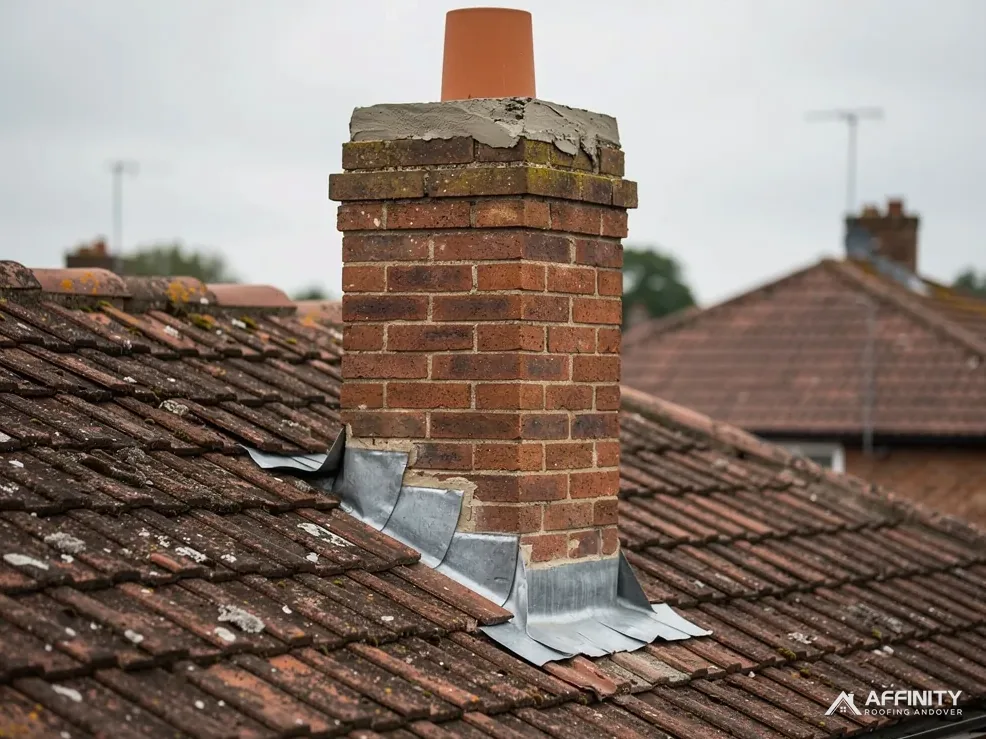
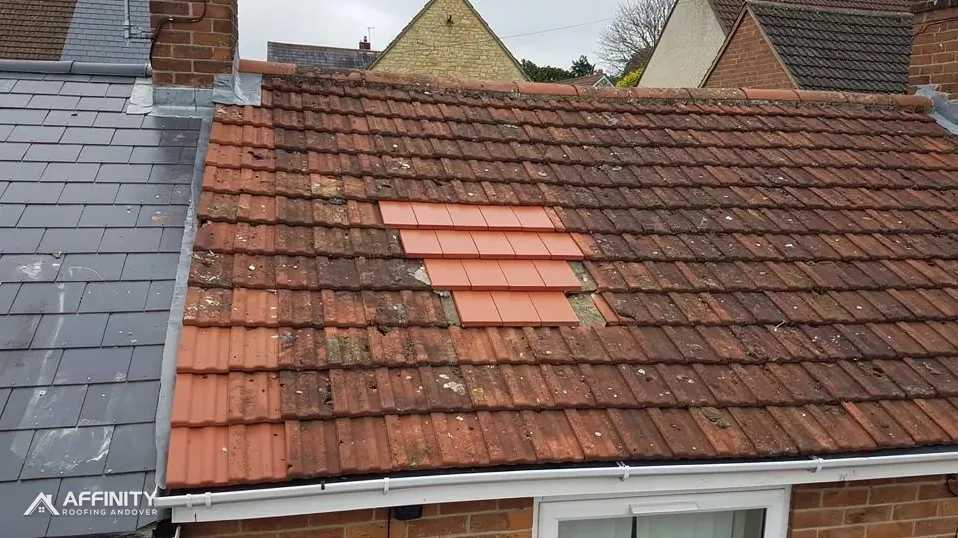
A leak traced to a single lifted flashing, a cracked valley liner or a patch of slipped tiles is a local fault. The surrounding covering is firm and the battens beneath are solid when pressed.
The covering is sound
Tiles or slates are whole, flat and tightly fixed, with only occasional breakages. Their surfaces are weathered but not crumbling, and few are laminating or flaking.
Underlay and battens hold up
When a few tiles are lifted, the underlay is intact and the battens are firm and dry. If they are rotten, a repair is only a delay.
The roof is inside its typical life
The covering is well inside the range for its material, so a repair buys many more years.
The pattern is rare
It has needed attention once in a long while, not every winter. Our guide to small roof repairs covers what these jobs look like, and the roof repairs hub shows the whole service.
What it costs
For scale, Which? gives £75 to £400 before VAT where a few tiles are broken (Nov 2025), and MyJobQuote's average repair is around £650 (Oct 2026). Both show how far a repair sits below a re-roof.
A repair like that, on a sound roof, is good value, and you will hear that from us when it is.
Signs that replacement is the right answer
Replacement is the better choice when the problem is the roof as a whole and not a single fault.
Slipped tiles in many places
Slipped tiles spread across a whole slope point to failing nails or tired battens. Refixing tile by tile treats a symptom and not the cause.
Rotten battens or torn underlay
If lifting a few tiles shows soft, black battens or felt that has split, the structure carrying the covering is failing. New tiles on old battens will not last.
Sagging or dipping
A slope that dips between rafters or ridges that sag suggest timber or structural trouble. That needs investigating by someone qualified, and a roof may have to be stripped to deal with it.
Crumbling covering
Tiles that are laminating, flaking or soft, or slates that are splitting, cannot be repaired individually for long. The next frost brings more breakages.
Leaks in several places
When one patch is fixed and another appears, the roof is losing its ability to shed water as a whole.
A flat roof past patching
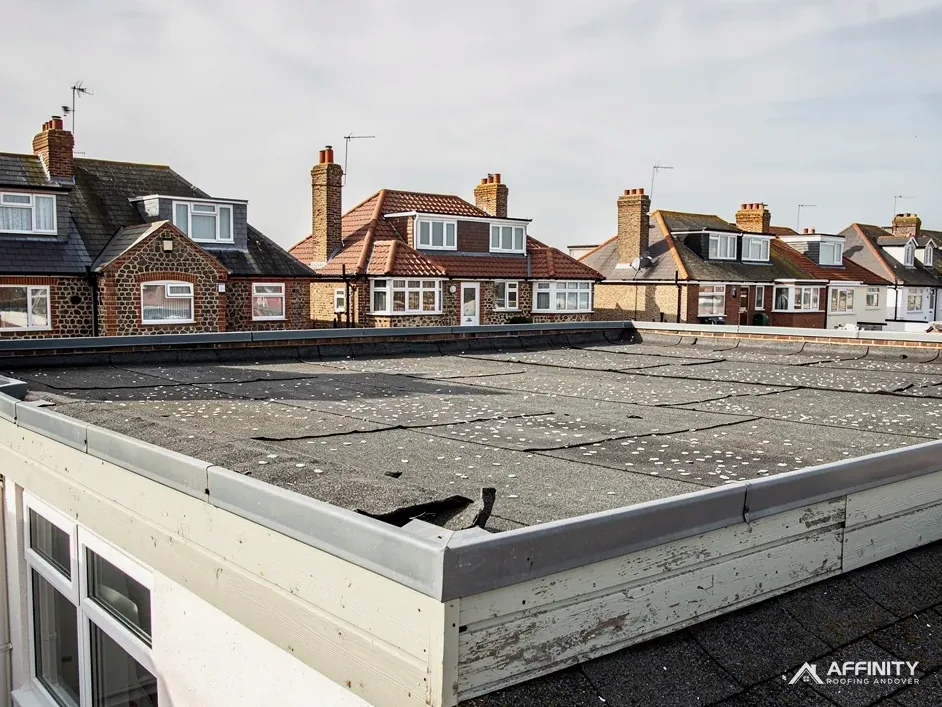
Felt, EPDM or GRP with many splits, blisters and ponds is cheaper to re-cover than to patch repeatedly. HomeBuilding and Less disagree on lives, with felt at 10 to 15 or 10 to 20 years and EPDM at 25 to 30 or 30 to 50, so judge by condition.
Plain advice
When a new roof is the right answer, we tell you and show the photographs. When it is not, you hear that too.
When repairs add up
The hardest cases sit in between: a roof with problems that are each fixable but keep coming. The test is whether the series of repairs is heading somewhere.
Count the visits
Write down the repairs of the last few years, what each cost and where on the roof it was. If the same slope keeps needing attention, or the bills are close to a sizeable fraction of a replacement, that pattern is a reason to price a replacement too.
Scaffold is paid again each time
If each repair needs access equipment, you pay for it repeatedly. One scaffold for one larger job may cost less than three small ones. Our guide to scaffold tower or full scaffolding explains when the larger access pays.
The middle route
Between a patch and a whole new roof is a slope-by-slope approach: strip and re-cover the worst slope, repair the rest and plan for the others. It spreads the cost and keeps the sound parts. A roofer should be willing to price it as an option.
The cost of leaving it
A roof that leaks causes damage that costs more than the roof: wet insulation, damp walls, ruined ceilings and rot in rafters. Waiting rarely saves money, and a leak found in spring has usually been running since the autumn.
Selling or buying
A buyer's surveyor can report on an old roof, and a documented repair history with photographs helps. Our common roof repairs guide shows what each fault means and how it is fixed.
Ask for both options as single written totals, and compare them over the years you expect to stay.
What replacement costs, and the rules around it
Published guides give wide ranges for a full roof, and the sources disagree, so we name three.
Typical UK ranges
Which? gives £7,000 to £21,000, before VAT, for a typical three-bedroom house (Nov 2025). HomeBuilding gives £10,000 to £15,000 for a 65 m² semi covered in concrete tiles, labour, scaffold and insulation included, and warns that natural Welsh slate could push the same job to about £18,000 (Sep 2025). MyJobQuote gives around £5,250 (Oct 2026). The spread is huge, and a per-square-metre rate times your roof area is no way to guess a total.
Building Regulations
Building control has a threshold. By the Planning Portal's test, if work touches under 25 per cent of the building envelope and under 50 per cent of the roof, no building control application is usually required, while a replacement covering at least 15 per cent heavier calls for approval and an engineer's or surveyor's check. Basingstoke and Deane names roof re-covering among projects that might need approval at its own addresses.
Planning
Class C of the permitted development rules usually extends to a re-roof on a house, though flats have no such rights and listed houses need listed building consent too. Conservation areas and Article 4 directions can add conditions, so ask the council.
Where to read more
Our roof replacement hub covers coverings, scaffolding, waste and the paperwork in full.
How we help you decide
The decision is easier when you can see the roof as the roofer saw it and compare options on equal terms.
A survey with photographs
We inspect the roof from outside and, where we can, from the loft. You receive photographs of the faults and of the sound areas, so you can judge for yourself.
A plain account
We explain what is failing and why, what a repair would achieve and how long it should last. If a repair would only delay a replacement, you are told.
Two options, each with one price
Where the choice is real, we give a written total for the repair and a written total for the replacement, each including access, so the comparison is fair. Citizens Advice advises getting three written quotes, and a decision of this size deserves them, as does the question of whether to repair at all.
No pressure
You are entitled to time. Unless water is coming in, a decision on a roof does not need to be made on the day. If it is, we make the roof safe first.
Help with the paperwork
If building control, listed building consent or a scaffold licence is needed, we flag it and explain who applies. For a scaffold on the pavement in Hampshire, Hampshire County Council says the scaffolding firm applies.
Send photographs of what worries you, or request a survey, and we will give our view.