The short answer
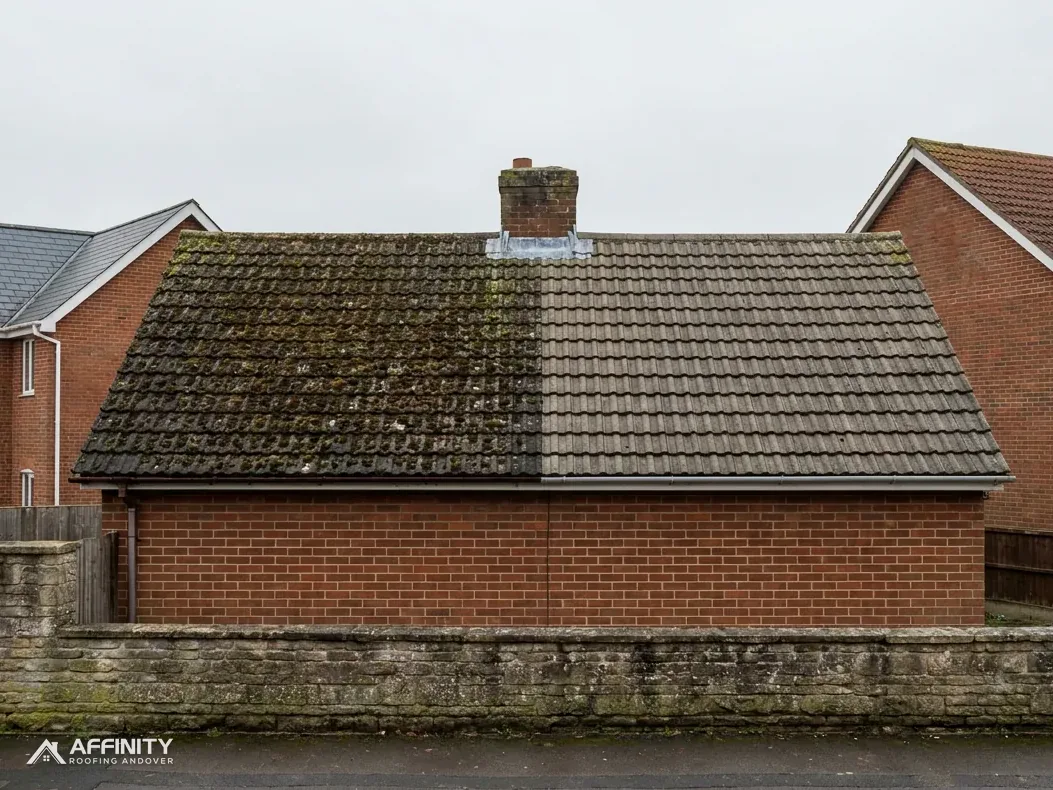
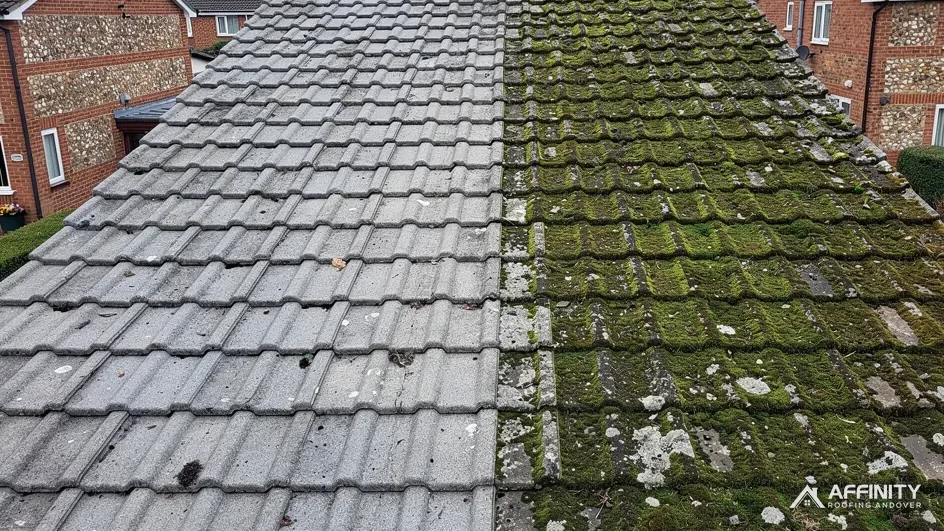
Lichen is removed with a biocide treatment and patience, not by scraping. It is a slow-growing crust that grips the tile far harder than moss or algae, so chipping it off takes the surface of the tile with it. A professional applies an approved treatment, lets it work, and the dead patches fade and loosen over a long spell of weather.
Why lichen is harder than moss
Lichen is two organisms in one: a fungus and an alga that live as a single crust. It spreads as a flat crust or a leafy rosette, and it fixes itself to the surface with tiny threads that work into the pores of the tile. That grip is the reason it is harder to remove than moss, which sits in a loose cushion, or algae, which lies on top as a film.
It is also very slow. A patch of lichen can take years to reach the size of a coin, and the colonies you see on an old roof have been there for a long time. They prefer stable, slightly damp, undisturbed surfaces, so old concrete tile, clay, slate and ridge caps all carry them. Once established, a patch stays for years without much change.
Telling the three growths apart helps you choose the treatment. Moss stands up, algae smears flat, and lichen sits like a hard, dry-looking crust that does not rub off with a finger. Our guide to moss and lichen on roofs covers the differences with more detail.
Lichen alone is a minor concern for the structure, but where it holds moisture against a tile it adds to wear.
Treatment with a biocide
The accepted route is a biocide wash, brushed or sprayed onto the affected tiles, and the lichen, having absorbed it, weakens and dies. Because the organism is tough and slow, the effect shows only gradually. Patches may stay in place for months while they turn pale, dry out and crumble, and rain and wind take them away in pieces.
Heavy lichen can need a second application, applied after the first has had time to work. A roofer will plan that into the job and explain it before you agree to anything. Setting the right expectation matters, because the roof can look unchanged for weeks after treatment and the owner may assume it has failed.
Biocides are regulated, and the stronger treatments are trade-only under Health and Safety Executive guidance, which is why a roofer applies them. A product sold to the public must be used strictly as its label directs.
Treatment also has to be timed with the weather, as most biocides need a period of dry conditions to take. Our guide to roof biocide treatments explains the process in more detail.
What not to do
Do not scrape lichen off with a trowel, a wire brush or a scraper. Because it is rooted in the surface, you will remove the top of the tile with it, leaving a rough, pitted patch that collects moisture and growth again more readily. A damaged tile is a worse outcome than a spot of lichen.
Marley does not recommend jet washing tiles, and lichen shows why: the force strips whatever surface the crust is gripping. Jets also drive water under the tile laps and scatter debris across gutters and garden.
Chemicals not meant for roofs are another trap. Household bleach is a poor choice, and the run-off is hard on plants and metal. Our answer on using bleach on roof moss explains why.
Above all, do not climb onto the roof. Lichen patches are often on the older, higher courses and the ridge, where footing is poorest and a fall is the most serious. Pictures from the lawn, or from an upstairs window with a zoom lens, are enough for us to identify what is growing.
Should you bother at all?
Not every patch calls for action. Light lichen on a sound roof with clear gutters is largely a matter of looks, and leaving it is a fair choice. The question becomes more pressing when the colonies are widespread, when they sit on a tile that is already flaking, or when you are preparing to sell.
A survey gives the answer. We photograph the lichen, check the tiles beneath and around it, look at the ridge and gutters, and tell you whether treatment is justified. If the tiles are in good order, the advice may be to leave them be and check again in a year.
If treatment is justified, patience is part of the plan. We explain the timetable and what you will see at each stage, and we do not suggest a quick scrub as an alternative. The result is slower but it leaves the roof in better condition.
Cost follows the extent of the growth, the roof's size and the access, and is set after the survey. The roof cleaning and moss removal page lists the options, and a single written total follows.