The short answer
Only up to a point. A moss killer sold to the public can be used on a roof if you follow its label exactly, but the product is the smaller risk. The bigger ones are working on a roof or ladder, spraying where the run-off can reach drains and plants, and picking a trade-only biocide that the Health and Safety Executive says the public should never use.
Professional-only biocides are off limits
Moss and algae killers are biocidal products, and biocides are regulated. Article 17(5) of the Biocidal Products Regulation ties every product to the terms of its authorisation, so the label is not a suggestion. It sets the legal conditions of use.
The Health and Safety Executive goes further on one point: biocides made for professional users only are never for the public. Some of the strongest roof treatments fall into that group. They are not sold on the high street, and a homeowner who finds one through a trade supplier or an online listing is not the intended user.
The Control of Pesticides Regulations add another warning, and the HSE spells out that using a non-approved product is an offence. A bargain concentrate of unknown origin, or a cleaning chemical never meant for roofs, creates its own trouble.
The rule is short. If the product is sold for general use and its label names roofs or hard surfaces, follow the directions word for word. If it is sold to the trade, leave it to the trade. Our guide to roof biocide treatments explains what a professional application involves.
Safety at height is the real danger
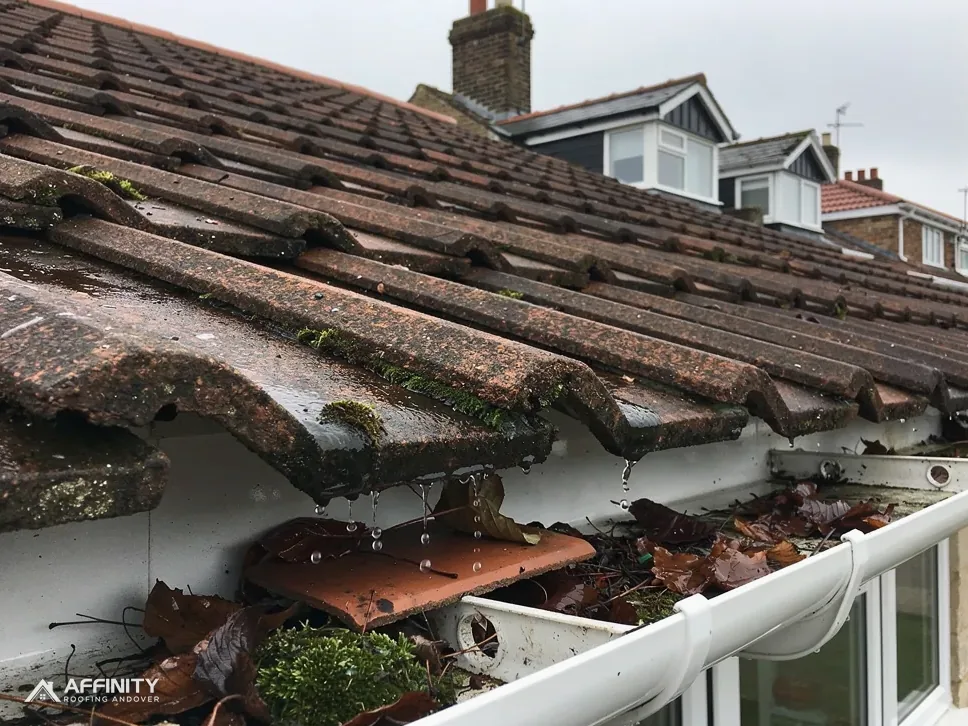
Moss grows on the shaded, damp slopes where footing is worst. A wet mossy tile is as slippery as ice, a steep pitch makes it worse, and an adult standing on tiles can crack them, which creates a leak and a hazard at once. A fall from the eaves of a two-storey house can change a life.
Spraying from a ladder is not much better. To cover a slope you have to lean sideways at the top of a ladder with a pump sprayer in one hand, which is exactly the awkward, off-balance position that causes ladder accidents. A ladder resting against a gutter also bends the gutter and can crack its brackets.
Professionals arrange access before anything else: a roof ladder, a tower, a scaffold, or a long-reach lance from the ground when the slope allows it. If the roof cannot be treated from the ground and you are not prepared to build proper access, that is a strong sign the job belongs to someone who is.
Nothing about moss is urgent enough to justify the risk. The growth took years to arrive and will wait for a safe plan.
Where the run-off goes
Whatever you spray lands on the roof and then moves. It flows off the tiles, into the guttering, down the pipes and onto the ground, where it meets beds, lawns, paths and drains. Products designed for roofs are usually meant to stay on the tile and be rinsed away gradually by rain, which means the active ingredient reaches the ground as a dilute solution over several weeks.
That matters for ponds, rainwater butts and any garden that grows food. Check the label for warnings about water, fish and plants, and plan around them. Disconnect or cover a butt that you intend to use on vegetables. Protect plants that sit directly below the eaves, and keep pets and children away from the area until the label says it is safe to return.
A professional works out the run-off before spraying, picks a dry window and protects the planting. If your downpipe runs to a surface-water drain or a soakaway, the label may restrict use altogether. Our answer on using bleach on roof moss shows how badly an unsuitable product can behave when it leaves the roof.
What a DIY treatment cannot do
Even a well-chosen spray applied safely does only part of the job. It treats growth on the surface. It does not clear the valleys and gutters, check the ridge and hip mortar, look for slipped or cracked tiles or find the places where water is already creeping under the covering. Those are the things a survey exists to catch.
A kill treatment also leaves dead moss on the roof. It breaks down and washes off slowly, often into the gutter, so a blocked run can follow a few weeks after a perfectly good treatment. Someone then has to go up to clear it, and the cycle of access risk begins again.
If you want a middle path, stay on the ground. Photograph the roof with a zoom lens, look at the gutters for moss and grit, trim back branches that keep the slope shaded and damp, and send us the pictures. We can tell you what is growing, whether treatment is justified and what it involves. The roof cleaning and moss removal page covers the methods, and afterwards you receive a single written total price.