The short answer
Yes, when conditions allow. A roof can be treated in winter if there is a dry spell, no frost on the tiles and no strong wind, because a biocide needs dry hours to take hold and a wet or icy slope is unsafe to work on. Some winter days simply will not suit, so the visit is planned against the forecast and moved when it turns.
Dry spells and how a biocide works
A biocide treatment is applied to the surface of the tile and has to stay there long enough to do its job. Heavy rain soon after application can rinse off the product before it has soaked into the growth, which wastes the visit and the money. So the real requirement is a dry spell, not a particular month.
Winter has such spells, even if they are shorter and less frequent than in summer. A cold, dry, still day is fine for treatment in many cases, while a mild, drizzly one is not. Product labels set out the conditions each treatment needs, including the lowest temperature and how long it should stay dry, and a roofer works to those instructions.
Growth is also less active in the cold. Moss goes dormant in hard weather, and a treatment can take longer to show an effect in the colder months. The dead growth then washes away gradually as the weather turns, so the roof may look patchy until spring. Owners sometimes assume this means the treatment failed, and it helps to be told at the start what to expect.
Our guide to the best time of year to clean a roof compares the seasons side by side.
Frost, ice and the dangers of a cold slope
Frost is the main practical barrier. A thin film of ice on a tile is almost invisible and extremely slippery. Roof ladders, scaffold boards and tower platforms can freeze as well. Work stops until the surface has thawed and dried, which in midwinter may not happen until midday.
Frost also does harm to the tile and to the treatment. Water in a wet tile expands as it freezes, and cleaning products can react differently at low temperatures. Applying a biocide to a frozen surface is pointless, because it cannot soak in and may simply freeze in place.
Snow is a similar story. It hides edges and fixings, adds weight and melts into the gutters. Nobody should be on a snow-covered roof, and treatment waits until the slope is clear and dry.
If you are tempted to attend to moss yourself in winter because you can see it, please resist. The combination of wet moss, cold hands and a ladder against a gutter is a poor one, and the growth can wait for a safe day.
Short days are a further limit. Less daylight leaves fewer working hours, and a roofer will not leave a job half finished at dusk.
Wind, rain and short days
Strong wind makes ladders and towers unsteady and can blow spray onto neighbours' cars and washing. It also carries loose debris around, so a gutter cleared in the morning may have leaves in it by the afternoon. We postpone work in high winds, however fine the rest of the day looks.
Rain makes everything slower and riskier. Wet tiles are slippery, wet gutters are heavy with mud, and treatments will not take. The job is moved to the next suitable day, and you are told as early as possible so that nobody waits around for nothing.
This is why winter booking needs a little flexibility. A date is a plan, not a promise, and we agree a new one with you if the forecast changes. A roof clean done in poor conditions is poor value, and the safety of whoever is working on the roof always comes first.
In practice, the winter is a good time to arrange a survey and book the treatment for a settled spell in spring. The survey can happen in most weather, because it starts from the ground and the loft, and it gives you the findings and the plan with time to spare.
Making winter work for you
There is plenty worth doing in winter. Gutters can be cleared after the leaves have fallen, which helps the roof drain through the wettest months. A survey can be done to document the condition of the roof, and any repairs identified can be dealt with first. Winter storms often reveal slipped tiles that the moss was hiding.
Inside, check the loft after heavy rain for damp timber or dripping. If you find water, treat it as a repair first and a cleaning matter second. The roof repairs side of our work is covered on the roof repairs page.
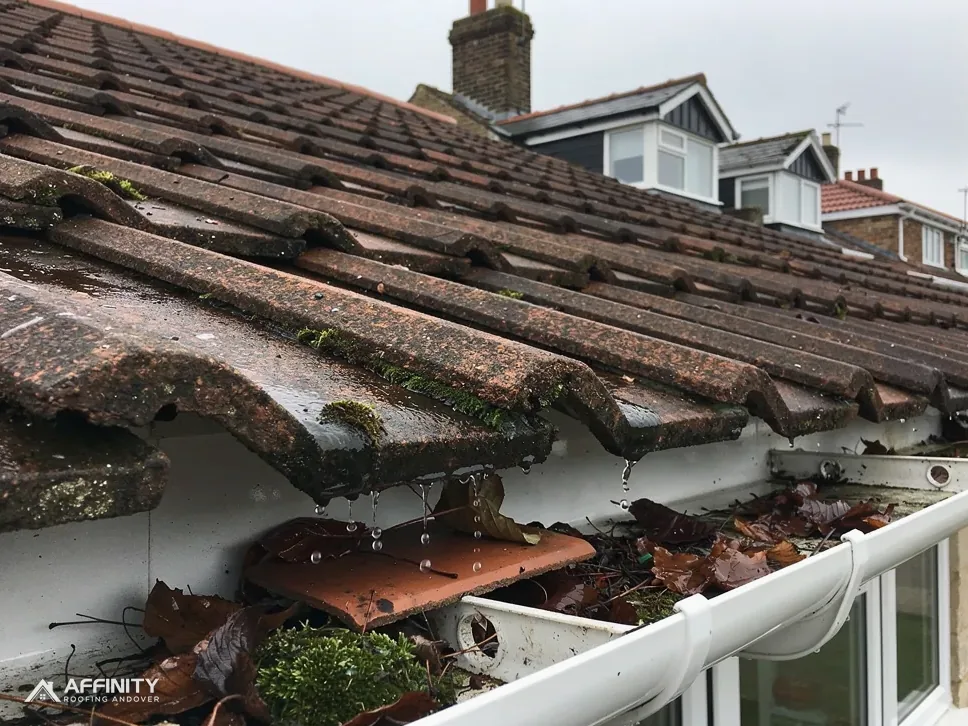
Moss left alone over winter is unlikely to cause a sudden failure, though thick growth does hold water through the coldest months and a roof that is already weak may show it. If you can see moss growing into the gutters, our answer on moss blocking gutters explains why they are worth clearing sooner.
When you are ready, the roof cleaning and moss removal page covers the methods. The price is fixed after the survey, as one written total for the whole job.