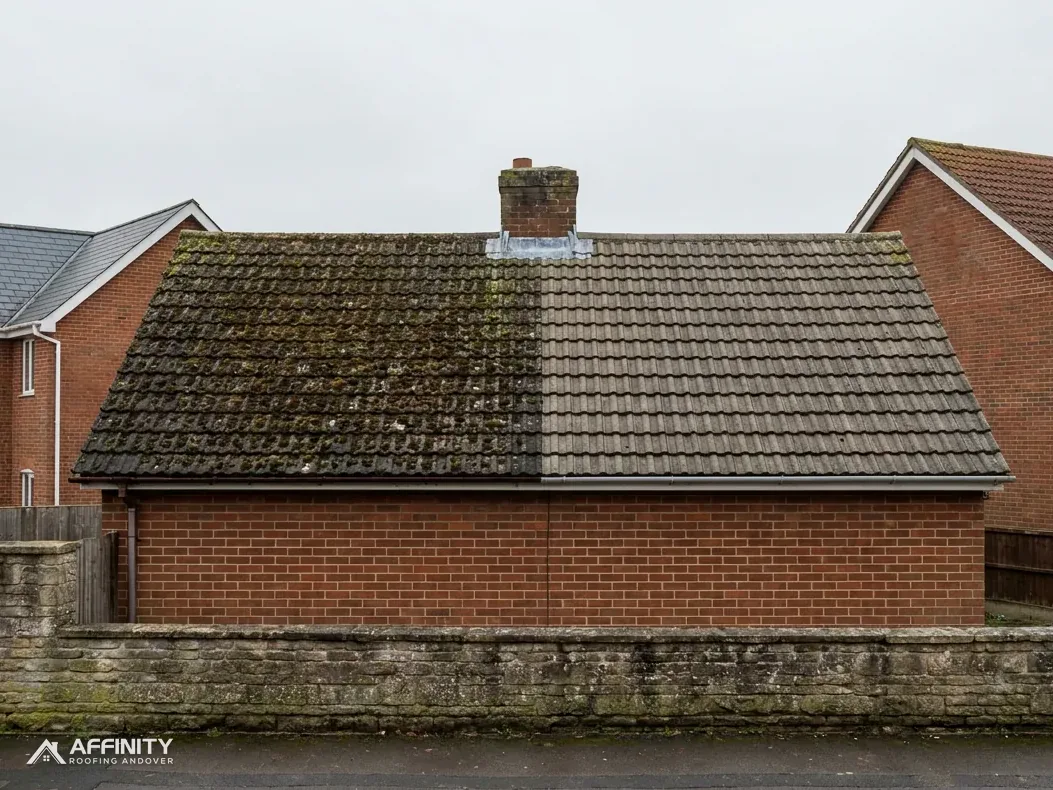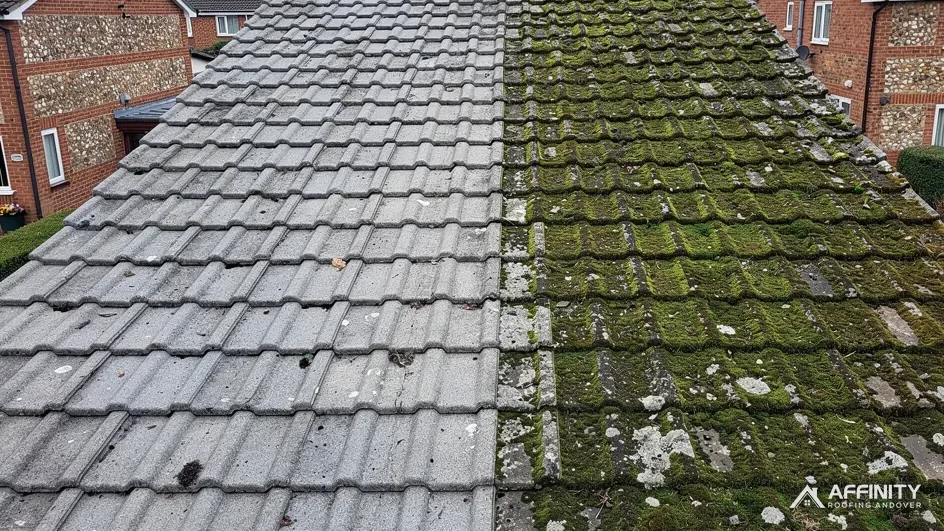
The short answer
It is not a good idea. Household bleach may brown the moss, but it does not treat a roof the way a purpose-made biocide does. It runs off into planting beds and drains, it can mark or corrode fittings, and it needs someone to work on a wet, slippery slope. A roofer uses an approved treatment applied from safe access instead.
Where the bleach goes after it leaves the roof
A roof is a collecting surface. Whatever you put on it travels down the slope with the next shower, along the gutters, through the downpipes and out at the bottom. If that bottom is a flower bed, a lawn or a vegetable patch, the strong chlorine solution arrives there as well.
Plants close to the wall are at risk. Climbers, shrubs and anything planted along the drip line can scorch or die back, and soil life takes a knock too. If the downpipe feeds a rainwater butt, the contents are spoiled for the garden. If it runs to a soakaway or a surface-water drain, the bleach passes into the drainage network instead, which is not where a household cleaning chemical belongs.
A professional treatment is planned with the run-off in mind. The roofer decides the dry window, protects or covers the planting below, and works out where the water will go before anything is sprayed. That planning is a large part of what you pay for, and it is difficult to copy with a bucket and a brush from a ladder.
Why bleach is not a roofing product
Moss and algae are living growths, and a good treatment has to reach the roots as well as the surface. Bleach tends to scorch the top of the growth and leave the base behind, so the patch looks better for a few weeks and then returns. Because it contains nothing that stays on the tile, there is no lasting effect once rain has rinsed it off.
There is also a legal point. The Health and Safety Executive treats moss and algae killers as biocides, and its guidance makes using an unapproved biocidal product an offence, with trade-only products kept away from the public. Moss killers on sale to the public carry their own approvals and directions on the label, and those directions are the ones to follow. Household bleach was never approved to be used on a roof for this purpose.
Professional products are chosen for the tile in front of us: concrete, clay or slate each behave differently, and some treatments are gentler than others. Our guide to roof biocide treatments explains how an approved product works and why it is left to act rather than blasted off.
What bleach can do to the roof and its fittings
Tiles are not the only thing a strong solution reaches. Lead flashings, zinc gutters, aluminium fascias, painted timber and the rubber seals around a roof window all sit within the path of the run-off, and chlorine is hard on several of them. A pale, chalky patch on lead or a pitted bit of metal is a lasting mark, and no amount of later cleaning will reverse it.
Where a roof has been scrubbed, the tile face can suffer too. Marley, the tile manufacturer, does not recommend jet washing a roof for the very same reason. If bleach is followed by scrubbing or a hose, the same risk applies to the tile face, because the wear comes from the force as much as the chemistry.
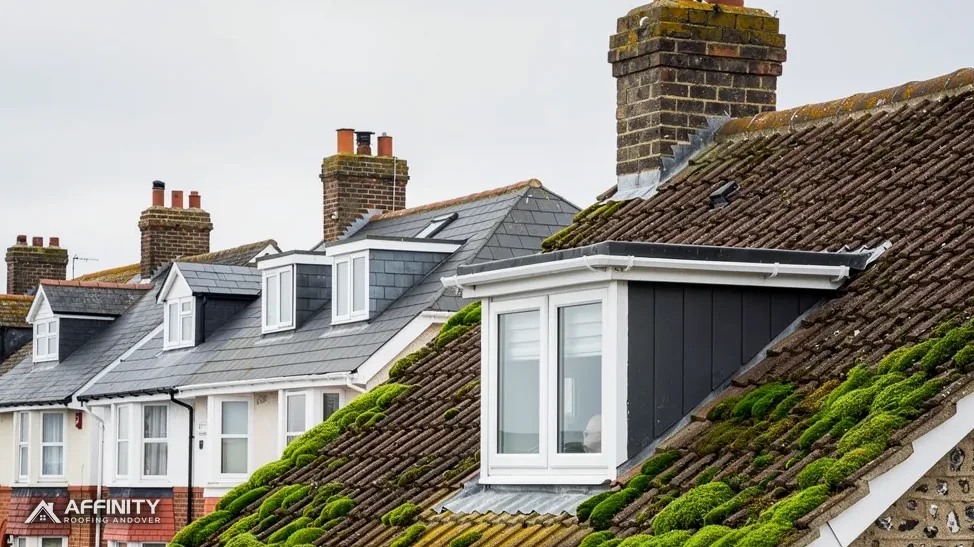
Clay and concrete tiles that lose their surface also hold water longer, and that gives moss a better start the next time. In other words, an aggressive clean can leave the roof in a worse state than the moss ever did. If you can see moss on the tiles from the ground, the better first step is a photograph and a survey, not a bottle.
Safer ways to deal with roof moss
The safer option is to stay off the roof and let a roofer treat it. The roof is surveyed first, so growth is dealt with in context: a stretch of moss next to a slipped tile is a repair job as much as a cleaning one. Where the surface growth is the only issue, a biocide treatment is brushed or sprayed on from proper access, left to take effect, and the dead material comes away gradually afterwards.
Gutters and downpipes matter as well. Moss that loosens ends up in the gutter, so clearing the run is part of the sequence, and it is done on the same visit as the treatment where access allows. Our answer on moss blocking gutters sets out what happens when it does not get cleared.
Some jobs are safe to do from the ground. Photograph the roof, cut back overhanging branches that keep it damp and shaded, and keep the gutters running clear. The full range of methods sits on the roof cleaning and moss removal page, and the quote that follows the survey is one written total price for the whole job.