The short answer
Black streaks on roof tiles are usually a growth, such as an algae, rather than soot or dirt. It feeds on the damp film that rain leaves on the surface and spreads down the slope in dark bands. On its own it is mostly a cosmetic problem. It is worth treating, but a survey should check that moss or damaged tiles are not hiding behind it.
Algae or dirt: how to tell
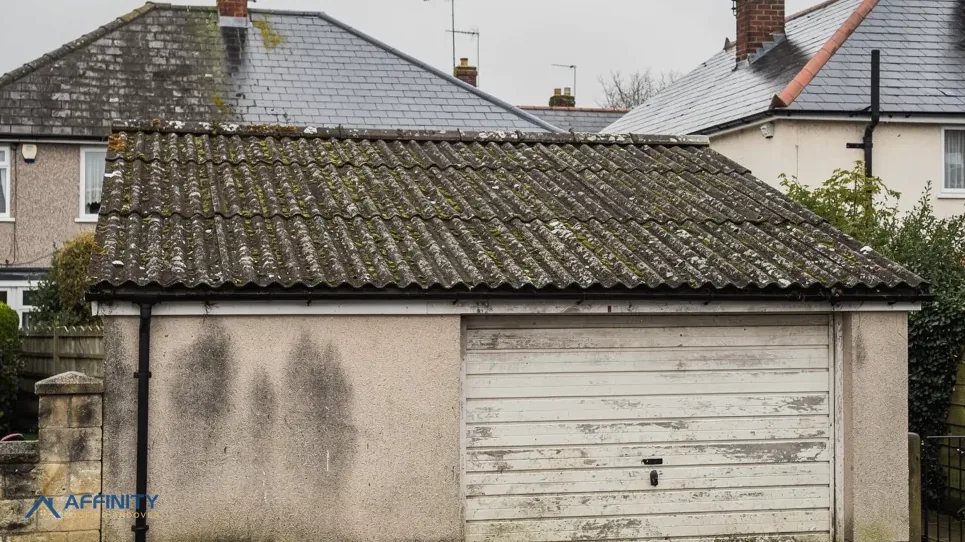
Ordinary dirt sits on the tile and washes away in the next downpour. A growth stays put. If the dark patches keep their shape after heavy rain, and they run in vertical streaks that follow the way water leaves the slope, you are probably looking at algae rather than a coating of grime.
Algae is a very simple plant that needs only light and moisture. A roof tile holds a little water after every shower, and the growth darkens as it builds up, so the streaks look black or deep grey instead of green. Slopes that dry slowly tend to show it first, so shaded edges and the side of the roof that faces away from the sun are the usual places.
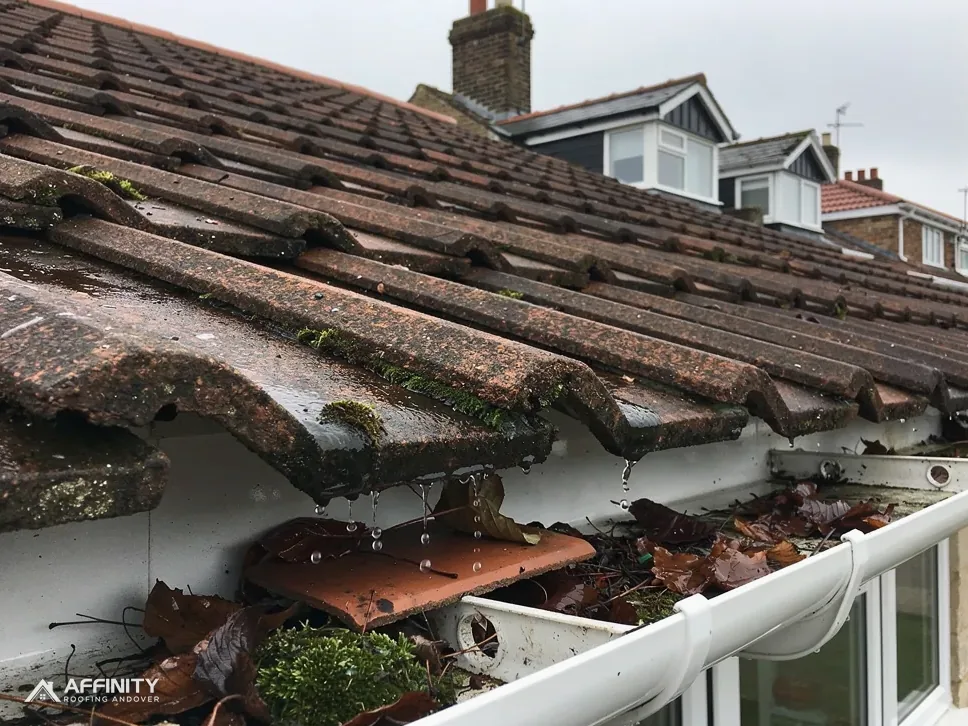
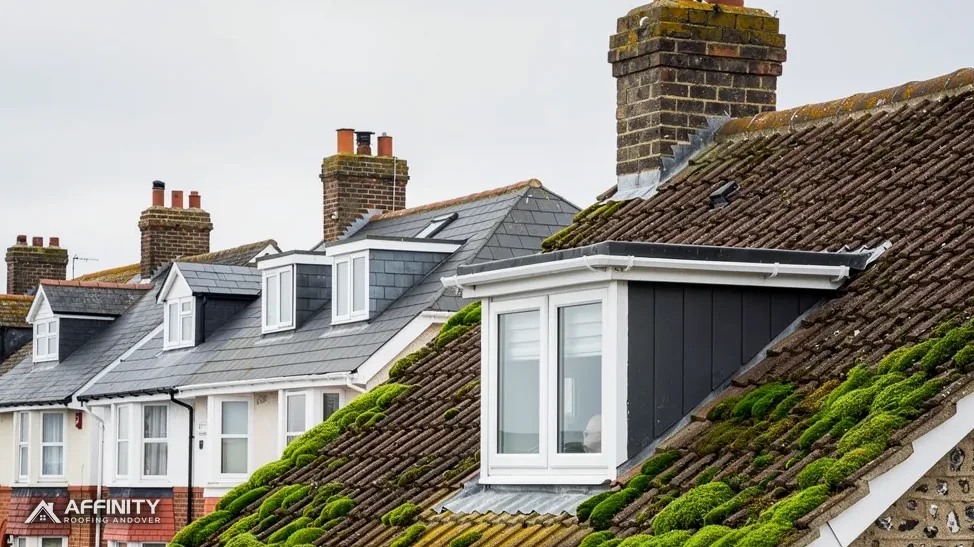
You can tell a lot from the ground. Moss stands up from the tile in cushions that you can see in outline against the sky. Algae lies flat. Lichen is crusty and grows in rounded patches. A roofer will often find all three on one roof, and each one is dealt with a little differently. Our guide to moss and lichen on roofs explains the difference in more detail.
Is the staining doing any harm?
On its own, a dark streak is mostly cosmetic. The growth sits on the surface of the tile, and a tile with algae on it still sheds water as it was designed to. Plenty of roofs carry streaks for a long time without leaking.
There are two reasons not to ignore it entirely. First, a surface that never dries encourages moss, and moss is a different matter: it holds water against the tile and can lift the edges of the course above. A streak can be the early warning that a damp patch is forming. Second, a roof that looks neglected from the pavement can put buyers off, even when the structure is fine.
When we survey a streaked roof, we are looking past the colour. We check for slipped or cracked tiles, for ridge mortar that has gone, and for gutters that have started to fill with debris. We photograph anything we find. If the streaks turn out to be the only problem, that is what you are told, and nothing extra is added to the quote. Our page on whether moss harms a roof covers the point where staining stops being cosmetic.
How a roofer treats black staining
The method matters more than the speed. Marley, the tile maker, does not recommend jet washing, because high-powered water can damage the surface of the tile and reduce its expected life considerably. A tile that has lost its surface layer holds more water and collects growth faster, which is the opposite of what anyone wants. Treatment also needs a spell of dry weather, so the visit is timed to the forecast.
The gentler route is a biocide wash, a treatment that kills the growth where it sits. It is brushed or sprayed on, left to work, and the dead material then loosens and washes off over the following weeks. Biocides are regulated products. The Health and Safety Executive advises homeowners to keep away from biocides sold for trade use only, so a product labelled for professional use is never one to buy for your own roof.
Because the treatment works slowly, the slope may look blotchy for several weeks after the visit, which is expected. Our guide to roof biocide treatments sets out how the process runs, and the roof cleaning and moss removal page covers the other methods we use.
Planning the work and what sets the price
A clean is priced once someone has looked at the roof, because the total depends on details that only show up on the roof itself. Slope area and steepness count, so do the tile type and the thickness of the growth, and so does anything the survey turns up, such as cracked tiles or blocked gutters.
Reaching the slope can move the price a long way. A low bungalow roof may be tackled from a ladder with a hooked roof ladder laid across the tiles, whereas a tall house wants a tower or a full scaffold, and that moves the total noticeably. Whatever the method, access is set up before anyone steps on the roof, and the site is left tidy afterwards, with the treatment run-off kept away from plants and drains wherever possible.
Please do not climb up to scrub a streaked roof yourself. Wet algae is slippery, tiles crack under a boot, and a fall from the eaves is a serious injury. A clear photograph taken from the lawn will tell us plenty. The written quote then gives one total for the whole job.