The short answer
Because moss needs damp more than it needs warmth, and a north-facing slope stays damp longest. It gets the least direct sun, so rain, dew and mist dry slowly, and spores that land there find a wet surface for weeks. Trees, tall neighbouring buildings and rough or ageing tiles make it worse. Treatment helps, and so does letting in more light.
Shade, damp and slow drying
Moss has no true roots. It absorbs water through its leaves, goes dormant when it dries out, and revives when rain returns. What it cannot do is thrive on a surface that dries quickly. Sun and wind are the enemies of roof moss, and a slope facing north in the northern hemisphere gets little of either.
On such a slope, the early-morning dew stays on the tiles into the afternoon, and light rain may never fully dry before the next shower. Over a damp autumn and winter the tiles remain wet for long stretches, and moss spores that drift onto the roof settle into the film of moisture and begin to grow. The same slope on the south side of the house, dried by the sun for hours each day, stays far cleaner.
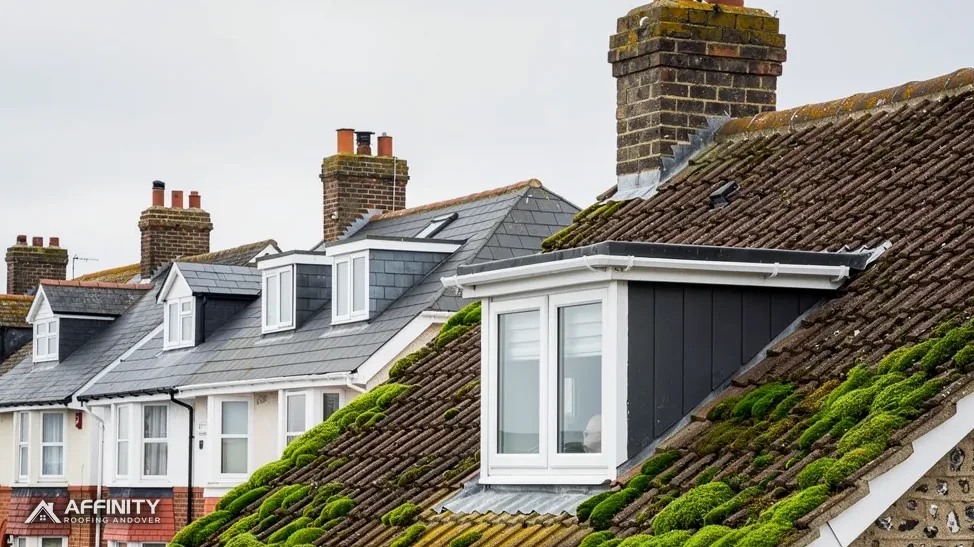
Pitch plays a part. A shallow slope drains and dries more slowly than a steep one, so the same orientation gives a greener result on a low roof. Roof windows, dormers and chimneys can cast further shade on their own patches, which is why growth often appears in tidy shapes behind them.
None of this means the roof is failing. It means the conditions are in favour of the growth.
Trees, buildings and tile surfaces
Orientation is only part of the story. Overhanging branches block the light and also drip water long after the rain has stopped. Leaves, seeds and twigs fall on the roof and lodge in the valleys and the lower courses, and as they rot they feed moss and algae. A roof under a big tree may be green on every side, not just the north.
A tall building, a high hedge or a wall to the south of the house produces the same effect as a tree, with a long afternoon shadow. A narrow road with houses packed close together can leave whole terraces in damp shade through the winter months.
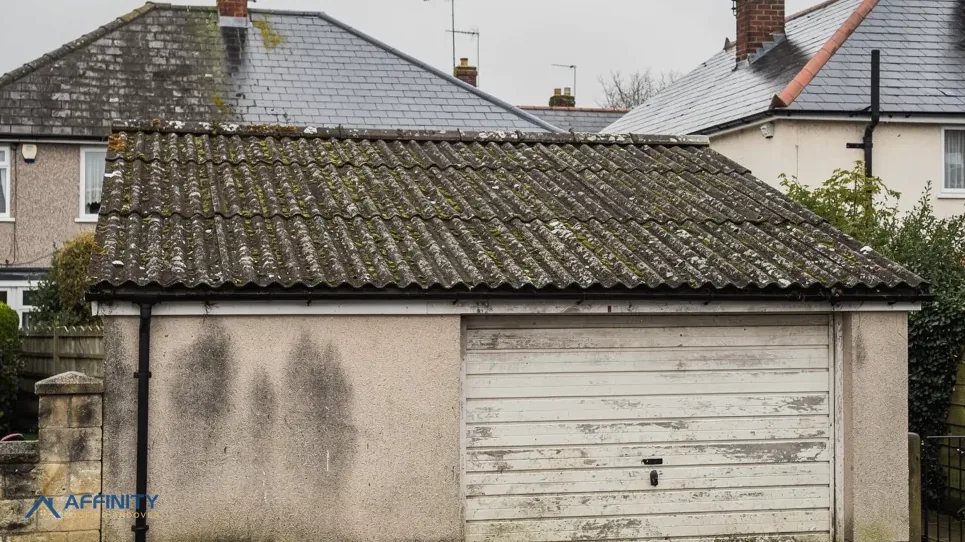
The tile itself matters. A rough, porous or weathered surface holds moisture and gives spores something to cling to, so older concrete tiles are often greener than newer ones in the same position. Clay tiles, slate and glazed finishes can also be colonised, though they may resist for longer.
Our answer on whether moss harms a roof looks at what a long-lived mat does to the covering underneath. The point is that shade, not neglect, usually explains why one slope differs from another.
Treating a shaded slope
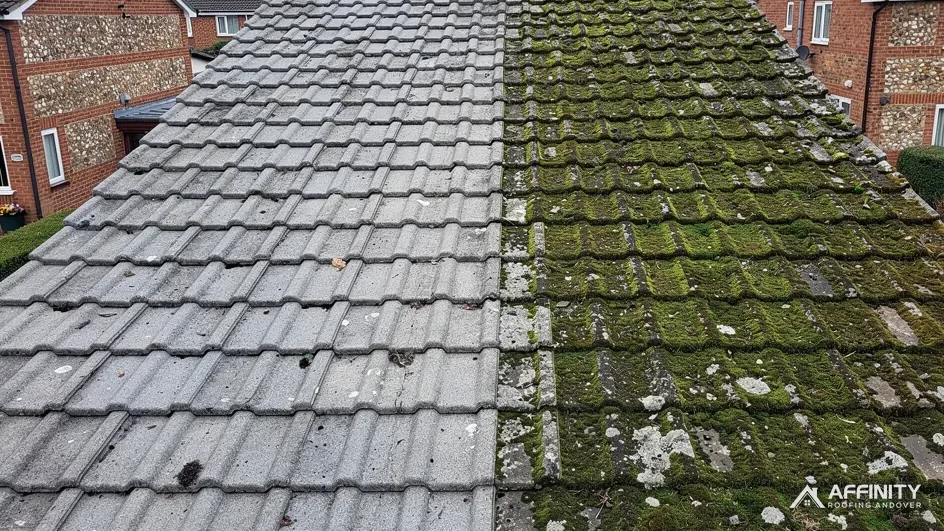
A biocide treatment kills the growth and, over the following weeks, lets rain carry it away. It is the gentle route and it suits a north slope well, since scraping and jetting tend to roughen the tile and leave it holding more moisture. Marley does not recommend jet washing, for the same reason.
Treatments do not change the orientation of the house, so the growth will return as long as the damp conditions persist. A roofer should tell you that at the outset and describe how long you might expect the benefit to last on your particular slope, given the trees, the pitch and the tile. A shaded roof under trees will recheck sooner than an open one, and promises of permanent cleanliness should be viewed with caution.
Stronger biocides are restricted to trade users under the Health and Safety Executive's guidance. Shop-bought treatments exist, but applying them means standing on a wet, slippery slope, and that is the step to avoid.
Our guide to roof biocide treatments explains how the process works from application to results.
Slowing it down for good
The best long-term fix is to let in light and air. Prune or remove overhanging branches, ideally leaving a clear gap between foliage and tiles, and trim hedges that block the sun. Be aware that some trees are protected by a Tree Preservation Order or stand in a conservation area, so check with the local planning authority before cutting anything significant.
Keep the gutters clear so water leaves the roof quickly, and repair any slipped tiles or sagging sections where water might pool. Dry, clean valleys give moss nowhere to start.
Some owners add a metal strip along the ridge to discourage regrowth, and our answer on zinc strips for roof moss covers where they help and where they do not. Coatings are another route, but on a sound roof they are rarely needed.
Finally, accept that a north slope may always need more attention than the rest. A twice-yearly look and a clean when the growth thickens is a realistic plan. The roof cleaning and moss removal page covers the work, and we send one written total price after a survey.