The short answer
Usually not a serious one. Green algae is a thin film that sits on top of the tile, and on its own it does little harm to the roof's structure. It does keep the surface damp, it can make a roof dangerously slippery for anyone climbing on it, and it can be the first stage before moss moves in. Treatment is sensible when it spreads, though rarely urgent.
What the green film actually is
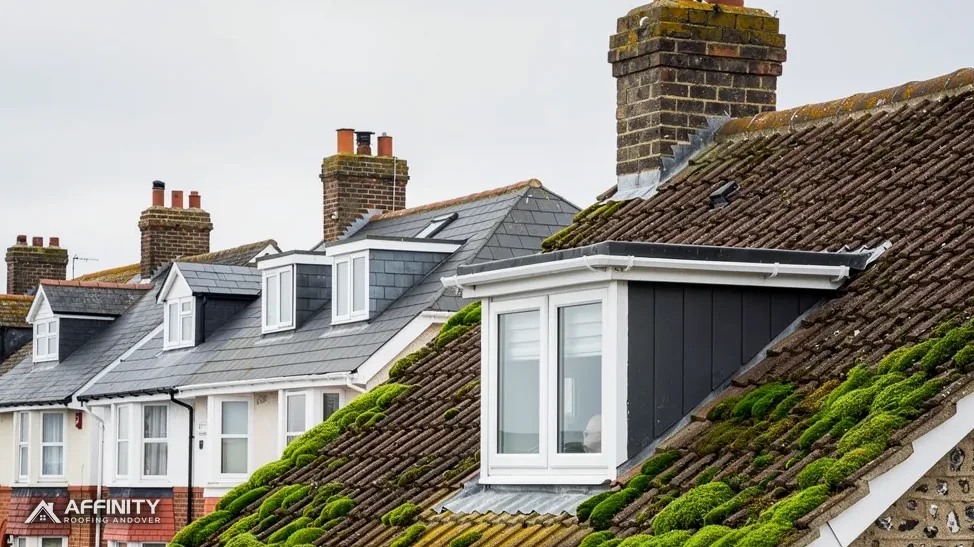
Green algae is a simple plant that needs only light, air and moisture. It settles on a roof surface when tiles stay damp, spreads as a powdery or slimy film, and gives the slope a green or grey-green tint. It has no roots, so it cannot grow into a sound tile the way a tree root grows into a wall.
Where algae differs from moss is in structure. Moss stands in cushions with stems and a spongy base. Algae lies flat against the tile, and you can often rub a patch away with a damp finger. Lichen is something else again, crusty and slow, and it grips the surface much harder. Our guide to moss and lichen on roofs sets the three side by side.
The conditions that favour algae are those that favour damp: shade from trees or a neighbouring building, a slope that faces away from the sun, and a roof covering that is slightly porous or roughened by age. Clean, glazed or fresh tiles resist it better at first, but few surfaces stay that way for ever. A dusting of algae in the first years of a new roof is quite possible.
Cosmetic, but not entirely harmless
On a sound roof, a green film is mainly a question of looks. The tile beneath still sheds water, the gutters are unaffected and the structure carries on as before. For a homeowner who is not selling, it can sometimes be tolerated for a good while.
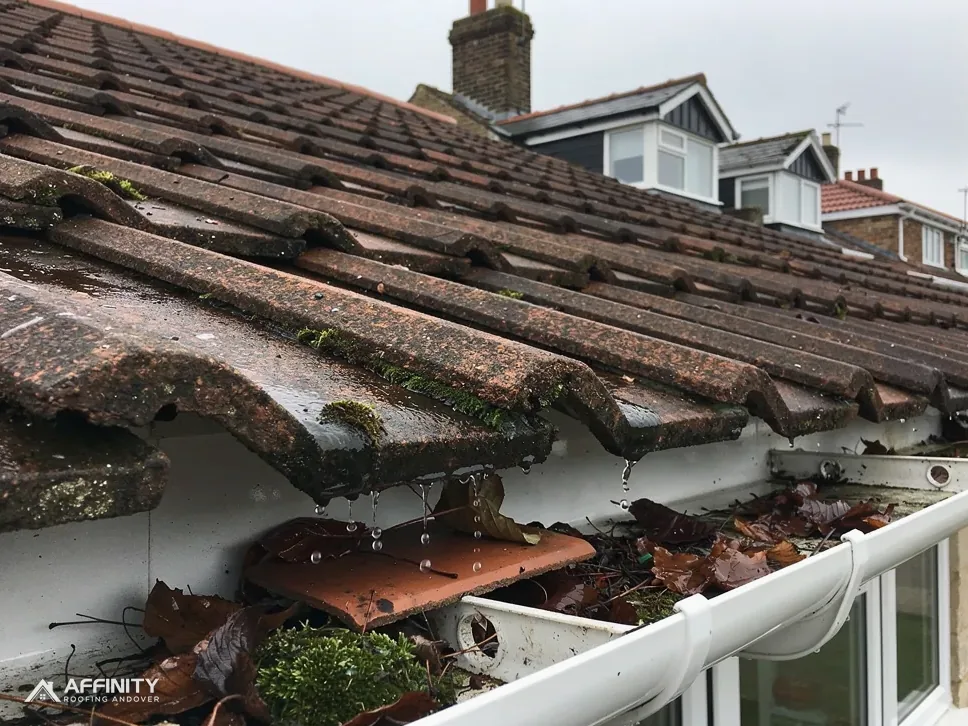
There are three reasons not to ignore it indefinitely. The first is dampness. Algae holds a thin layer of moisture on the tile, and a tile that rarely dries is more likely to flake in frost. The second is that it prepares the ground for moss, whose spores settle more easily on a damp film. The third is safety: a wet algae-covered tile is as slippery as a wet pavement slab, and anyone who has to go up for a gutter, an aerial or a repair is at risk.
There is also the matter of selling the house. A surveyor or buyer who sees a green roof may wonder about its condition, and an inspection can answer that quickly. If you are planning to sell, a survey with photographs gives you evidence either way.
None of this makes algae an emergency. It makes it a prompt for a look.
How algae is treated
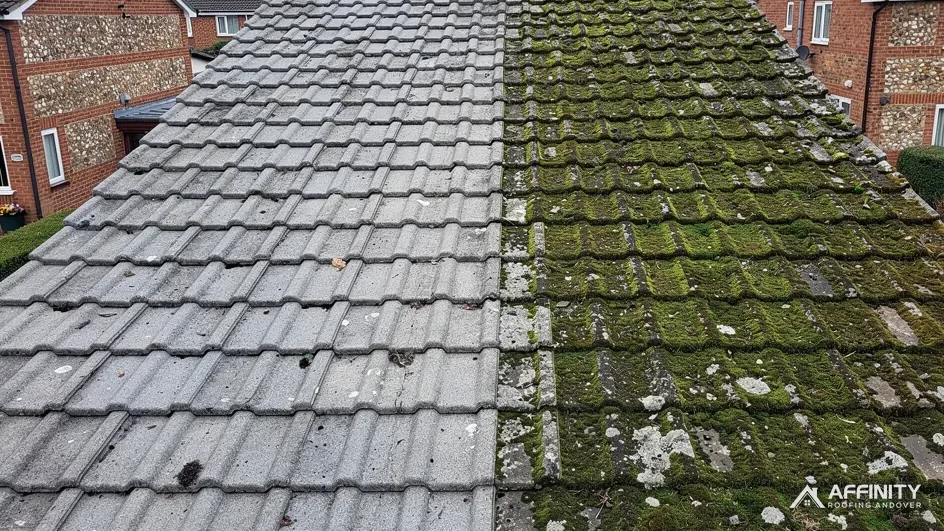
The gentle answer is a biocide wash. The product is applied by brush or low-pressure spray, left to take effect, and rain then carries the dead film away over the following weeks. The roof can look streaky during that time, which is expected, and the final result tends to show after a couple of months.
Jet washing is the shortcut to avoid. Marley, the tile manufacturer, does not recommend high-powered jets because they can damage the tile surface and reduce its life, and a roughened tile collects algae faster than a smooth one. Hard scrubbing causes the same harm.
Biocides are regulated, and products meant for professionals are not for householders. The Health and Safety Executive's guidance is clear on that. A shop-bought algae remover can be used if its label covers roofs and you follow the directions, but you still have to reach the roof safely and keep run-off away from ponds and drains. Our answer on DIY roof moss killer looks at those risks.
Treatment works best in dry, settled weather, and it is worth having the gutters cleared at the same visit so the dead material has a free path out.
Keeping it from coming straight back
No treatment makes a roof immune. Algae returns wherever the conditions return, and it will do so more quickly on a roof that is shaded or damp. What you can change is the damp itself.
Trim trees back so more light and wind reach the slope. Keep the gutters flowing so water leaves the roof edge instead of lingering. Fix any slipped tiles or ridge faults that let moisture sit in the roof. If a particular slope always goes green first, accept that it will need attention more often than the rest.
Some owners ask about coatings or metal strips to slow regrowth. Strips can help in some places, and our answer on zinc strips for roof moss says where. A coating is a larger commitment and is rarely needed on a sound roof.
Algae is priced like the rest of roof cleaning: after a survey, because the total depends on the roof's size, steepness, covering and access. The roof cleaning and moss removal page covers the range of work, and the quote that arrives afterwards is one written total.