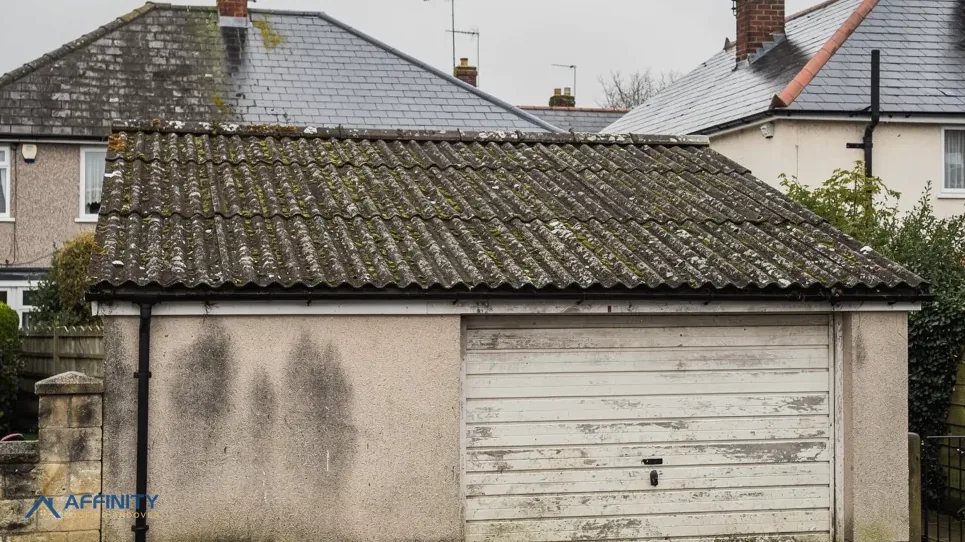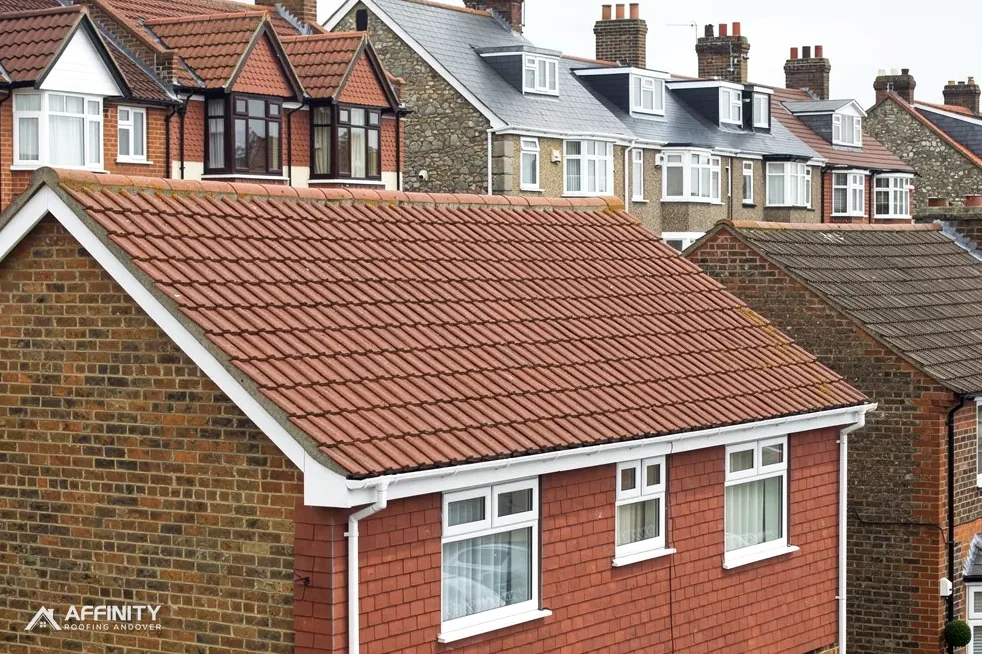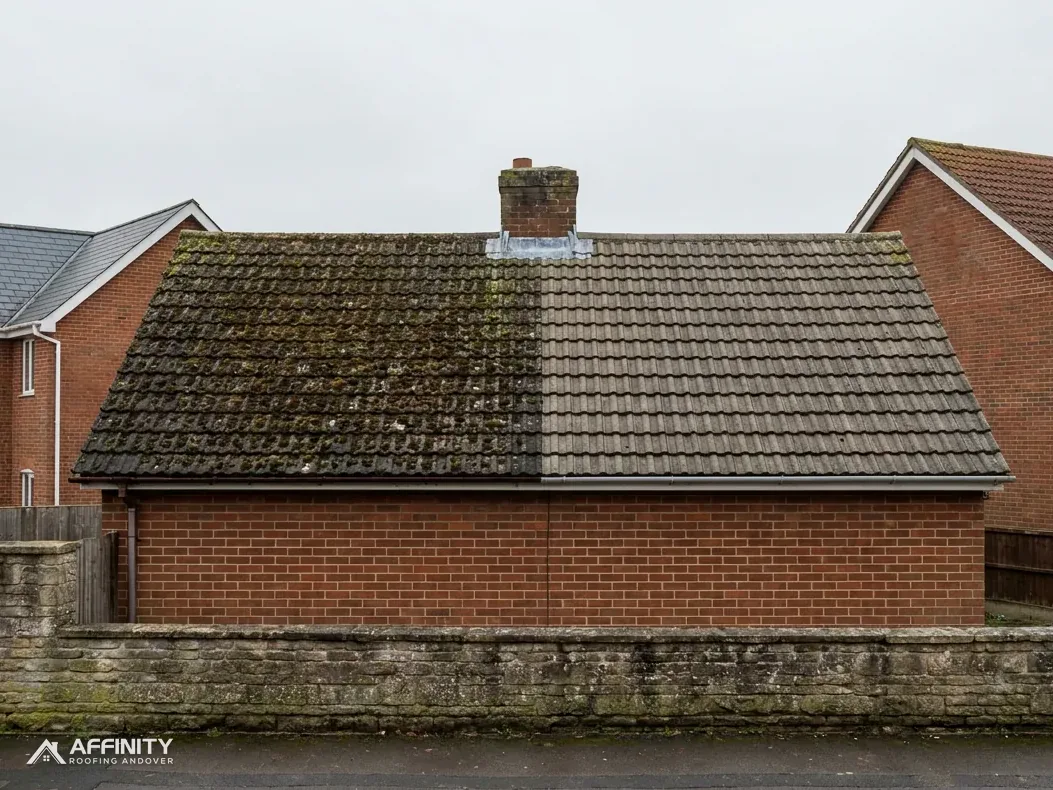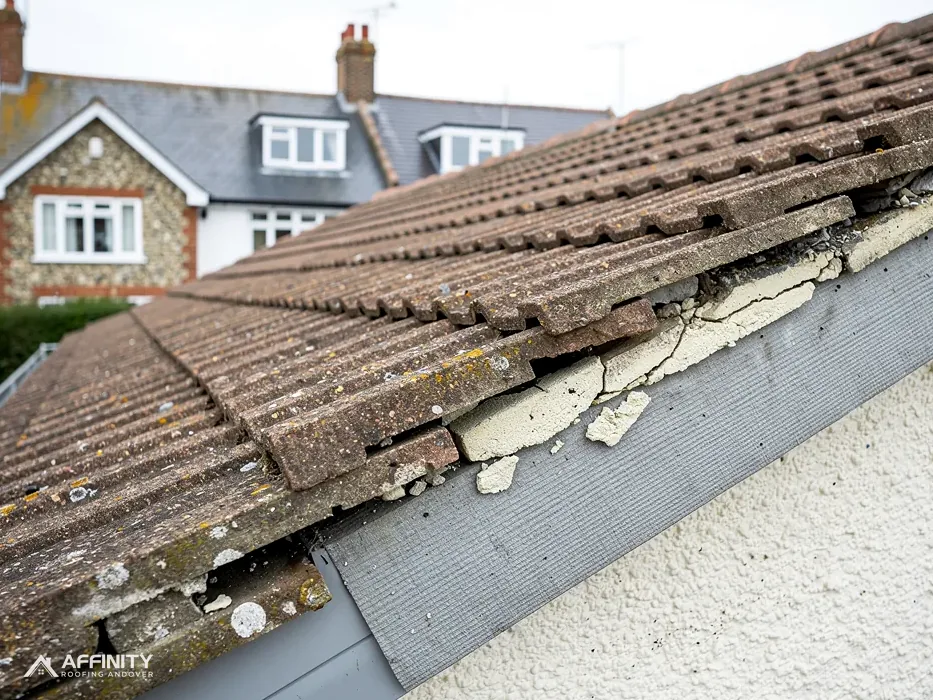
Pressure washing is the method people picture when they think of cleaning a roof, and the one that can do the most damage. A lance, a fan of white water and a stripe of clean tile moving across the green: it looks decisive, and the before-and-after photographs can be striking. It is also the method tile makers say to avoid.
Marley, one of the main tile makers, tells owners not to use powerful jets on its slate and tile: the force can damage the face of each one, and the roof's working life shrinks with it. Whether the damage is visible on the day depends on the roof. Often it is not, and the first sign is a stain on a ceiling the following winter.
This guide answers the question directly: yes, pressure washing can damage roof tiles. It sets out the three kinds of harm, which are cracked or lifted tiles, a stripped surface and water driven under the laps. It then covers the gentler alternatives, what a roof owner can ask of a cleaner, and what to do if the damage has already been done.
Where a jet washer can damage a roof
Mains water goes through a narrow nozzle in a pressure washer, and that is how it can damage a surface: a small stream carries a great deal of energy. On a car or a patio, that is what you want, because the surface is flat and hard and built to drain downhill. A roof is neither.
A roof sheds water in one direction
Tiles and slates are laid in overlapping courses so that rain falling from above runs down and off. Each tile sits on top of the one below and is held by a nib, a clip or a nail. Every joint is designed to face downhill. A jet does not respect that. It sprays across the slope, up under the tail of a tile and into the gaps between courses.
The operator cannot see the effect
Someone standing on a ladder or on the roof sees the tile face clearing. They cannot see the water going under the tile, the underlay getting wet or a nib giving way. The damage happens out of sight, and the feedback is that the roof looks better.
Roofs are not all the same
An old clay roof, a worn concrete roof and a natural slate roof each respond differently, but none is built to take a jet. Marley's published advice covers its slate and tile products, and it steers owners away from powerful jets on all of them. The tile maker is the best authority on what its tile can stand, and that authority is clear.
We treat this as a rule for our own work, so you will not find pressure washing in the method we propose for a roof.
Cracked, chipped and lifted tiles
The first kind of damage is mechanical: the jet breaks or moves something.
Nibs and corners
A tile hangs on its batten by small projections called nibs, and many tiles have thin corners or edges where they overlap. A concentrated jet at close range can snap a nib or chip a corner. The tile stays in place until the next gale or the next foot on the roof, and then it slides. Because the break is out of sight, the owner has no idea until a tile is found on the lawn.
Tiles lifted at the tail
Water driven under the tail of a tile can lift it slightly. A lifted tile no longer lies flat on the one below, so the next heavy shower can run through the lap. It may also unseat a tile from its clip, which on a concrete interlocking roof can break the interlock along that row.
Old tiles most of all
The older the tile, the thinner its margin. HomeBuilding puts clay tiles at 60 to 80 years and plain concrete at 40 to 50 years, and a roof near the end of those ranges has been through a great many cold winters. Such tiles are brittle, and a jet that a young roof would shrug off can crack them.
Where a jet wash has already done damage to your roof, our guide to roof problems found during cleaning lists the faults a roofer looks for once the growth is gone.
It is easy to blame age for a broken tile that was broken by a hose.
A stripped surface and a shorter life
The second kind of damage is quieter. A jet strips the weather-facing surface of the tile along with the growth.
What the face does
The top of a roof tile is its first defence. On a concrete tile it is a finished face, and on a clay tile it is the fired skin of the clay. Over decades the face weathers and thins, and a jet takes away a good share of what is left in a single pass. The result can look pale, patchy and rougher to the touch.
A rough face holds more moss
A scoured face is rougher than a weathered one, and a rough surface holds moisture and gives spores somewhere to cling. That is why a roof hit with a jet wash and left with damage can turn green again within a season or two, and sometimes more thickly than before. The cleaning has made the next outbreak easier.
What Marley says about life
Marley's concern, put briefly, is that a jet harms the face of a tile and so shortens its working life. That is a manufacturer talking about its own product, and it should carry weight with anyone about to hire a washer. Tile life is a typical range, never a promise: even Marley, which expects its tiles to reach around 60 years, says plainly that this is no warranty. Strip the surface, and the repair or replacement date moves nearer.
Our companion piece on roof cleaning methods sets out what to do instead.
Water under the laps and into the loft
The third kind of damage is the one people find hardest to connect with the cleaning.
The route the water takes
Under the tiles sit battens, the timber laths that carry them, and below those the underlay, a membrane that catches stray rain and carries it to the gutter. It is meant to cope with a little water that gets past the tiles. It is not meant to take a sustained blast driven upwards from below. Jet water pushed under the courses soaks the battens, runs onto the underlay and can pass through laps, nail holes and old tears into the loft.
What the owner sees
Wet insulation, damp patches on the ceiling a day or two later and a musty loft are all reported after a jet wash has done its damage. They are easy to put down to the weather, and easy for a cleaner to dismiss. If a stain appears within days of a clean, ask a roofer to inspect it.
Older felt and weak spots
Old bitumen felt can be brittle, and an underlay that has been torn or has slipped has even less ability to cope. A jet reveals those weak points by finding them. The roof then leaks where it previously did not, and the blame lands on the roof.
A repair costs more than a gentle clean
MyJobQuote's average for a roof repair is around £650 (Oct 2026), a typical UK figure, and a wet loft can add to that. Our roof cleaning and moss removal hub explains the approach we take instead.
Alternatives that work without the damage
A roof can be cleaned without a jet, and the methods are well established.
Hand removal and soft brushing
Thick moss is picked off gently in sections, then brushed away downhill with soft bristles. That is slower than a jet, and the tile face is left alone. Walking on the roof is avoided by using a roof ladder or scaffolding, because tiles crack underfoot.
Treatment with an approved product
A biocide kills the growth and lets it die back, and the debris loosens over the following weeks. The product matters. Anything sold as a moss killer must be used within its authorisation; professional-only products are off limits to householders, as the HSE puts it, and under COPR it is an offence to use a product that has not been approved. Our guide to roof biocide treatments goes through them.
Low-pressure rinsing
A gentle flow from a hose that sweeps loosened debris towards the gutter is a different matter from a jet. Mind the direction and the distance, and keep the water running with the fall of the roof.
Aftercare
Clear gutters, trimmed branches and a check of ridge mortar and slipped tiles do more for a roof than a harsh clean does. A repair list from the survey photographs is more useful than a shiny surface.
Patience as a method
On a sound roof with a light covering, doing nothing for a year is also an option. Not every roof needs a clean, and a roofer who says so is helping you.
If a cleaner has already damaged your roof
Some readers come to this after the event, with a roof that a jet wash did damage to, and that has begun to leak or shed tiles.
Document first
Take dated photographs of the roof, the loft and any stains, and keep the quote, invoice and messages. If you have before-and-after pictures from the cleaner, keep those too. They may show things the cleaner did not intend to.
Your rights
Section 49 of the Consumer Rights Act 2015 requires reasonable care and skill from anyone providing a service. If that standard was missed, you have remedies, and the Act says liability for this cannot be excluded. The Citizens Advice consumer helpline, 0808 223 1133, gives free guidance on how to raise it. The first step is usually to write to the firm, say what is wrong and what you want done.
Get an independent survey
Ask another roofer to look at the roof and tell you what is damaged and what it would take to put right. A written survey with photographs is more useful in a dispute than a verbal opinion. Our roof repairs hub explains how we approach this.
Do not make it worse
A temporary repair to stop water coming in is sensible, and you should keep the receipts. Avoid a second jet wash to see whether the damage was as bad as feared.
If you are still choosing a cleaner, ask what method they use and what product, and treat any plan for a pressure washer on tiles as a reason not to hire that firm.