People ask when to have the roof cleaned as if there were a calendar answer, a month in which moss comes off best. In practice, the question has three parts. What does the weather need to be doing on the day and for a while after? Is anything living on or under the roof that needs to be left alone? And how do you get a booking that lands in the right conditions rather than the wrong ones?
The weather part is the obvious one. Moss and lichen are living things, and the treatment that kills them is a chemical product with instructions. It has to be applied when the roof is dry and left alone while it works. A product washed off by rain an hour later has been wasted, and the roof still has the problem.
The living-things part matters just as much, because nesting birds and roosting bats are protected by law. This guide explains how to pick the weather, what the law says about nests and bats, why the choice of method belongs to the roofer, and how to arrange a visit on a roof around Andover. For the wider picture of what we do, see our roof cleaning and moss removal page.
Why there is no best month
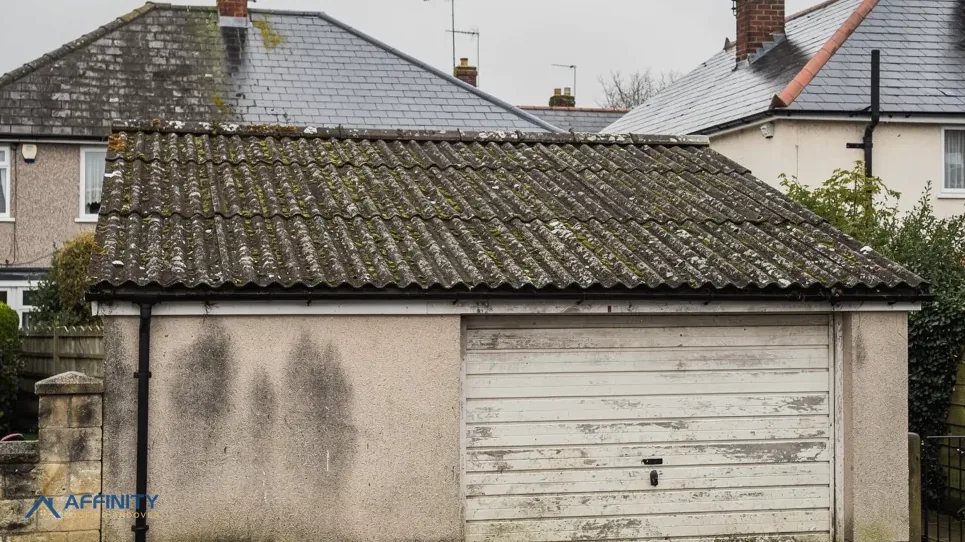
A calendar tells you little about a particular roof on a particular day. Moss grows wherever a roof stays damp and shaded for long enough, and it can be a problem in any season. What changes is the conditions in which it can be treated.
What the roof needs
The roof should be dry on the surface when work starts, because treatment spread on a wet roof dilutes and runs off. It should be forecast to stay dry for the period the product label sets. Some products need a rain-free spell and some a certain temperature. The label of the product used is the authority, and the roofer reads it before choosing a day.
What the roof does not need
It does not need a particular month, and a mild week in winter can serve as well as a dry spell in summer. Frost is a different matter, since a frosted roof is slippery and treatment does not behave as it should. So the answer is a spell, not a month: any month can offer a good one and any month can offer a bad one.
What changes with the season
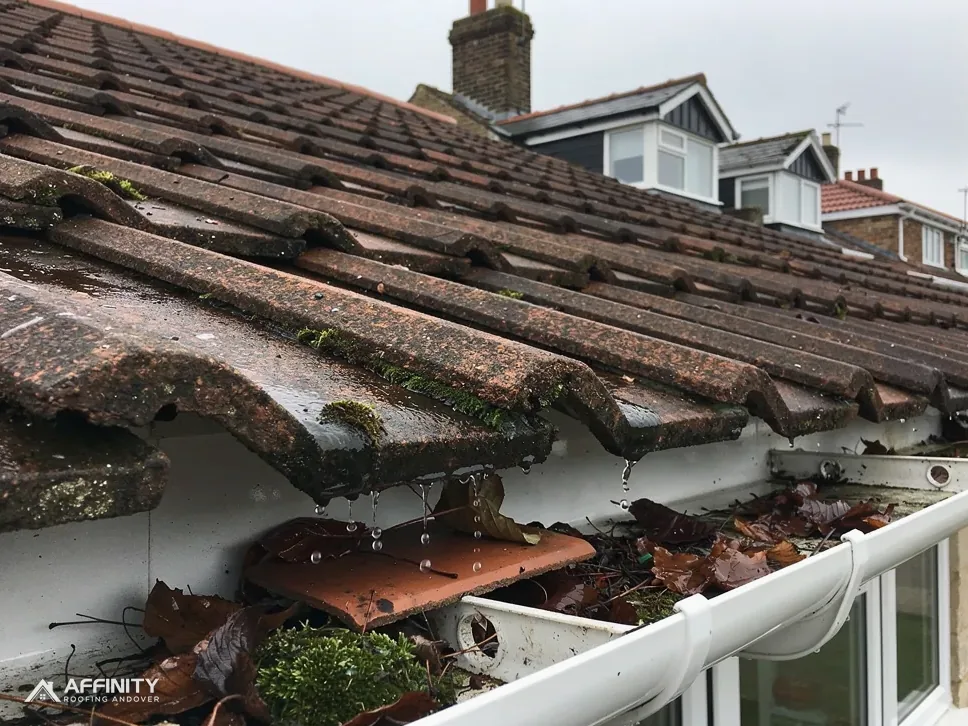
Moss tends to be most obvious after a wet period, when it is green and thick, and the signs of trouble in gutters and valleys appear. Leaves block gutters in the autumn. These are reasons to look, not reasons to clean immediately.
The sensible approach
Book a survey first. It tells you what is growing, how far it has spread and whether anything is damaged. Then pick the first good spell that suits the product. Our guide to roof cleaning methods explains the choices.
Biocide timing and weather
A biocide is a chemical made to kill growth such as moss, algae and lichen. Putting one on a roof is a regulated activity, and the timing is written into the instructions.
The legal frame
The Biocidal Products Regulation, article 17(5), says biocidal products must be used in compliance with the terms and conditions of their authorisation. HSE says members of the general public should never use biocidal products that are only intended for professional users, and the biocides regulations make it an offence to advertise, sell, supply, store or use a non-approved product. That is why roof treatment is a job for a roofer with the right product, not a weekend task with something from a builders' merchant.
What the label decides
The label states how the product is applied, how much, and what weather it needs afterwards. We follow it exactly. If a forecast turns, the job moves. Applying a product in marginal weather for the sake of keeping a date is false economy.
Why treatment works slowly
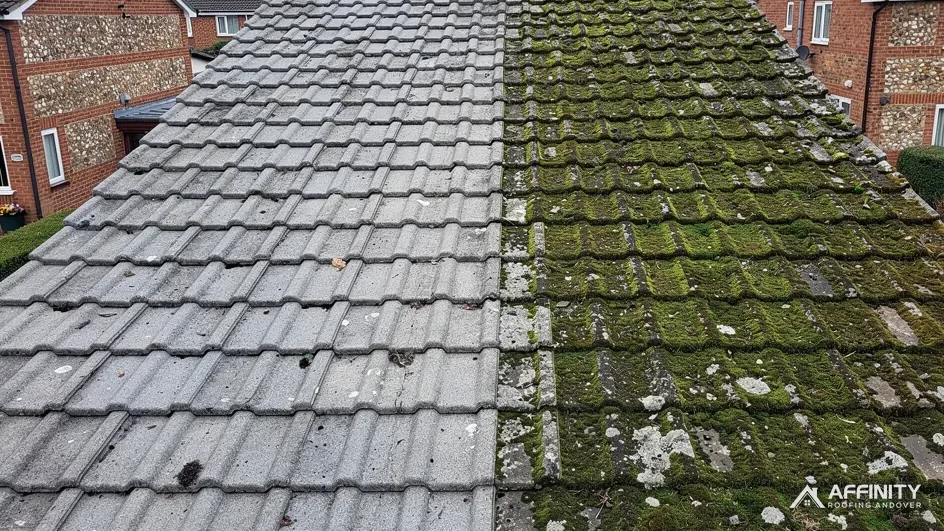
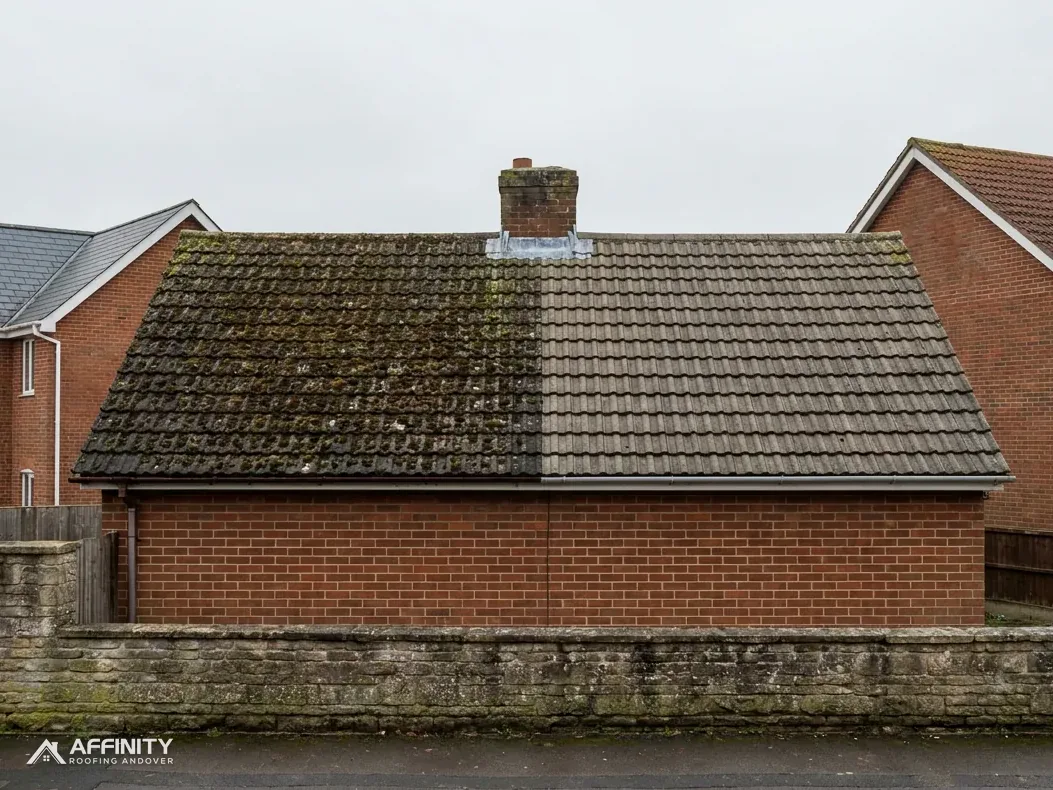
Treating a roof does not remove moss on the day. The product kills the growth, and the dead material loosens and clears over a period as weather works on it. That is why a treated roof can look worse before it looks better, and why one clean-and-treat visit is not always the end of it.
Jet washing
Marley does not recommend using high-powered jets on roofs, warning that they can mark slate or tile and cut its expected life. Our guide to roof biocide treatment covers the product side.
Nesting birds: what to check first
A roof is also a home for wildlife, and the law protects some of it. Before any cleaning begins, the roof is checked for nests.
What the law says
Section 1(1) of the Wildlife and Countryside Act 1981 makes an offence of intentionally taking, damaging or destroying any wild bird's nest during occupation or construction, and GOV.UK adds that no licence exists to permit development or construction. Everything turns on the word intentionally. A roofer who knows there is an active nest on a slope and cleans it away is committing an offence, and a roofer who checks and finds none is not.
What a check involves
We look along the eaves, behind the fascia, in the valleys and around chimneys and vents, where birds nest. If a nest is occupied or going up, that part of the roof is left alone until the birds have finished with it. No date range tells us when that is; the nest tells us.
Why this affects the booking
An active nest can mean part of a job is postponed, or a whole slope. Whether a given date is clear of nests is only known on the day, so the check on site decides.
What you can do
If you have noticed birds going in and out at the eaves, tell us when booking. Do not block openings in the hope of avoiding the problem, because that can cause harm to birds and breach the law if a nest is in use.
Bats and roosts
Bats can use roof spaces, gaps under tiles and the edges of eaves. They are among the most strictly protected animals in Britain.
The legal position
GOV.UK says every bat species is fully protected, roosts included, and lists fixing or renewing a roof as one of the jobs that can disturb them. Regulation 43 of the Habitats Regulations 2017 covers deliberate disturbance and also damage to a breeding or resting site, where no deliberate act need be shown. Section 9(4) of the Wildlife and Countryside Act 1981 adds disturbing a bat inside a shelter, or blocking its way in, when done intentionally or recklessly.
What this means for a clean
Cleaning a roof surface seldom touches a roost, but lifting tiles or working at eaves and ridge ends can. If droppings, staining at gaps or sightings suggest bats, work stops until advice is taken. Bat licences are not always needed, and the decision depends on what is found.
Tell us what you know
If you have seen bats around the house, mention it when you book. It changes how the survey is done and does not delay it. Sightings at dusk near the eaves, droppings on windowsills or beneath a ridge, and staining at a gap under the tiles are all worth reporting, even if you are unsure what they mean.
No dates
No calendar window makes a roof safe for bats. The check on site, and the advice that follows if bats are suspected, come first.
Safety, access and the day itself
Roof cleaning is work at height, and conditions that affect the product also affect safety.
Wet and frosted roofs
Wet moss and slates are slippery, and a frosted roof more so. Work stops when the surface is unsafe, whatever the diary says. Tiles that look sound can crack underfoot, and old slates can slide, so access is planned from the ground up, with edge protection and, where needed, scaffold.
Why access matters
A roof cleaned from a ladder alone gets a partial clean at best. Where the roof is high or complex, scaffold lets the work be done properly. If the scaffold stands on the highway, a licence is needed from the highway authority, and we arrange that with the scaffolder.
What gets protected
Gardens, cars, windows and plants below are covered or moved before treatment starts, and the run-off from the roof is controlled. Gutters are cleared as the moss comes off, since the debris would otherwise end up there, and downpipes are checked afterwards to make sure they still run freely.
Problems found underneath
Once moss is gone, damage that it was hiding can show: cracked tiles, slipped slates, failed pointing. We photograph what we find and tell you, and our guide to roof problems found during cleaning explains the usual ones. Repairs are agreed with you before they are done.
Booking a visit and what happens after
The practical way to get a roof cleaned at the right time is to survey early and book the work for a suitable spell.
Step one: the survey
We inspect the roof, photograph the moss, lichen and any damage, check for nests and signs of bats, and note the roof's covering, pitch and access. The photographs come to you with the plan, and they are worth keeping: a dated record of the roof before cleaning shows whether growth returns, how quickly, and where.
Step two: the price
Roof cleaning is priced once the roof has been surveyed, since the cost depends on the roof's size, pitch and covering, how bad the growth is and what access is needed. The written price is one total for the whole job.
Step three: choosing the day
We agree a window with you and keep an eye on the forecast. If conditions turn, the day moves, and we tell you. Booking early gives more choice of days, and a flexible diary helps us pick the best one.
After the clean
Keep gutters clear, trim branches that overhang the roof, and glance up at the slopes from the garden each season. Moss tends to come back where shade and damp persist, and a roof that is kept dry lasts longer. HomeBuilding gives clay tiles 60 to 80 years (Sep 2025), a typical range and not a promise.
Tell us about the roof
If you are not sure what covers your roof, a photograph is enough to start. Send one, or book a survey.