The short answer
A roof leaks where it meets a wall because that junction depends on several small parts all working together: the flashing, the soakers beneath the tiles, the joint it is tucked into and the wall face above. If any one fails, rain runs behind the lead. Common causes are a lifted flashing, a crumbling mortar joint, cracked render above the lead and sealant that has split.
Four parts that have to agree
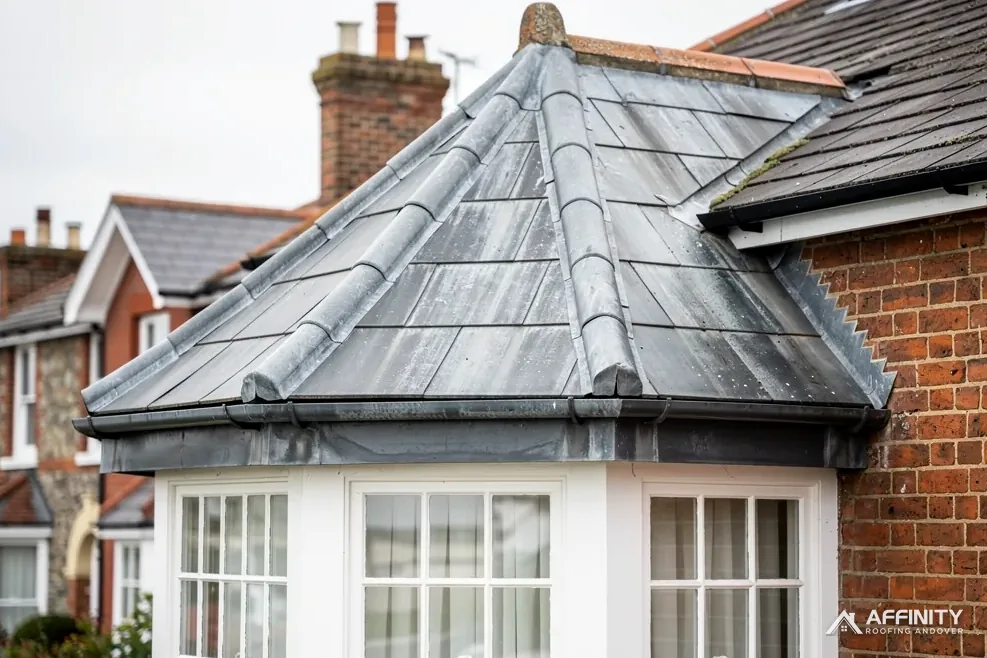
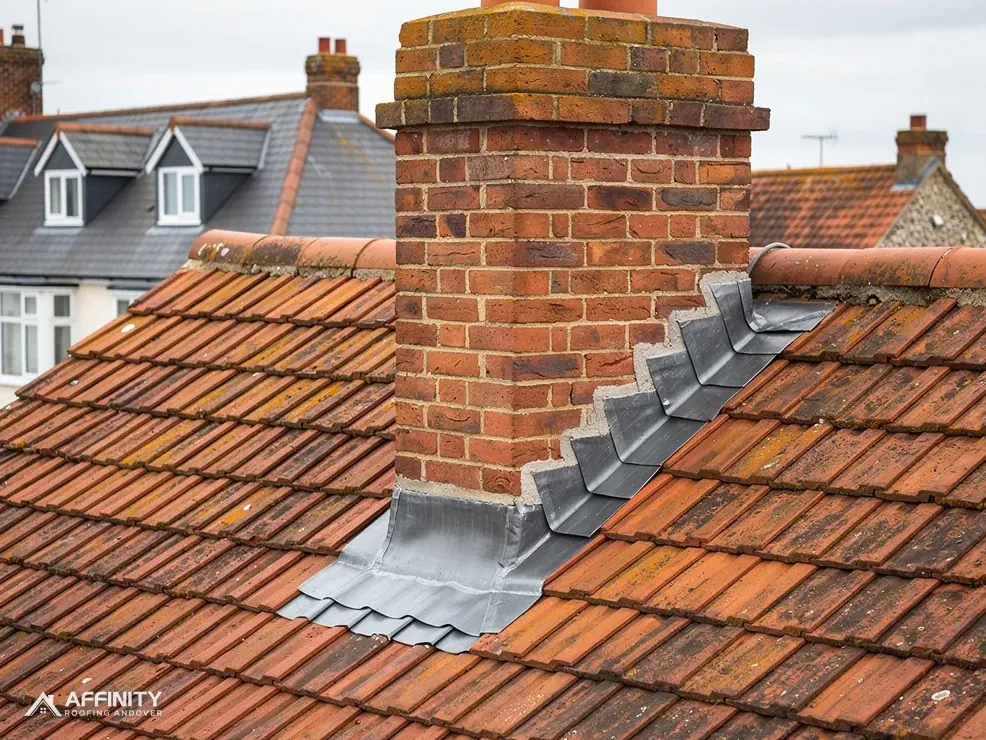
At a wall junction, the roof covering stops short of the brickwork, so the gap has to be bridged. The first bridging part is the soaker, a bent piece of lead under each tile or slate course that turns up the wall. The second is the cover flashing, a stepped strip of lead tucked into a groove in the wall and laid over the soakers. The third is the groove, or chase, and the pointing that holds the flashing in it. The fourth is the wall itself, which sheds water down onto the lead.
When all four work, rain coming off the wall meets the flashing, passes to the soakers and leaves via the gutter. When one fails, water takes a different route.
A flashing pulled out of a weathered joint lets rain behind it. A missing soaker leaves a gap under the first tile, and a short one leaves no lap to shed water. Damp that appears inside the house can sit some distance from the real entry point, because water follows timbers and runs down inside the wall before it shows. Look for the stain, then ask what lies above it. Our page on lead soakers describes the hidden layer in more depth.
Render, brick and the wall above the lead
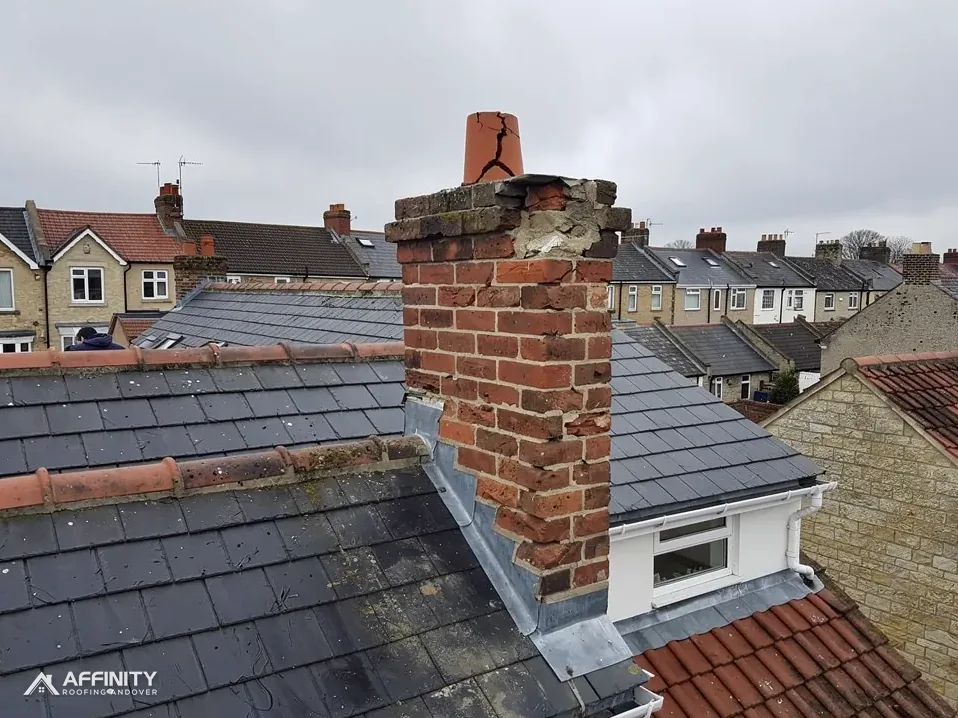
The wall matters as much as the metal. On a brick wall, the weak point is usually the mortar. A flashing sits in a raked-out joint, and if that mortar has weathered, cracked or fallen away, the lead has nothing to hold it. It then lifts, and rain runs in behind it.
A rendered wall behaves differently. Render is a hard coating, and it cracks as the wall moves. Water can run in through a crack above the flashing, travel down behind it and come out inside, even though the lead is sound. In that case, repairing the lead alone does not solve the leak. The crack must be cut out and made good, and the render finished so that it stops just above the flashing and does not bridge it.
Look for staining below the render, bulging patches and hollow sounds when tapped.
If the junction is between a house and a neighbour, or between an older roof and a newer extension, our page on step flashing shows how the lead follows the line of the slope.
Why sealant makes it worse
A tube of sealant is a tempting first reach. A bead along the top of the flashing looks like a neat answer. It is not, because a wall and a roof move at different rates, and the sealant sits across that movement. It splits, lets water in, and holds it against the lead and the brick.
Worse, sealant hides the cause. A second person looking at the junction sees a line of grey filler instead of a failed joint. Cleaning it off takes time, and the surface beneath may already be damaged. Our guide to why sealant is not a lead repair goes through this more fully.
The same goes for roofing felt strips, bitumen tape and cement smeared along the edge. They may keep a stain from spreading for a season. They do not return the junction to the working layers it was meant to have, and they make a proper repair harder.
If water is entering today, the useful steps are practical: put a bucket under the drip, move furniture, and photograph the stain. A roofer can then make the junction safe while the real repair is planned.
How the junction is repaired
We start with a survey, reaching the junction by ladder, tower or scaffold, and photographing each part: the lead, the chase, the render or brick above and the soakers where we can see them. You see what we see, in pictures, before any decision is made. We also look inside, at the loft or the ceiling, to follow the water's path.
The repair follows the finding. A loose flashing is re-dressed and re-fixed into sound pointing. A rotted chase is cut out and repointed first, so the new fixing has something firm to grip. Where the brick itself is soft or spalled, that is dealt with before any lead goes back. Missing or short soakers are replaced, which means lifting the tiles along the edge. Cracked render is repaired above the lead. If the old lead is thin or split, it is renewed in full along the length of the wall.
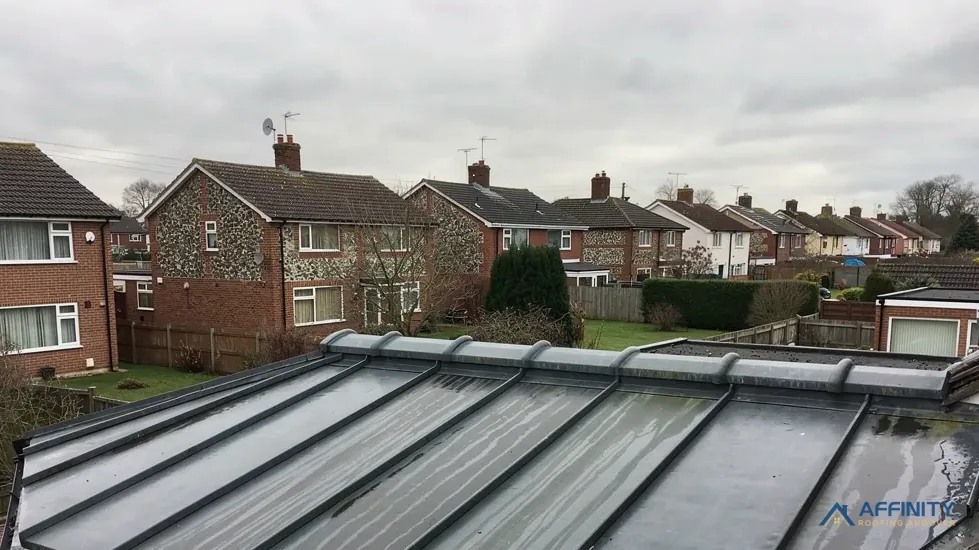
Length of junction, type of covering, access and whatever the survey turns up behind the lead all move the price. You then get a single written figure before anything starts, and the roof is left clear. For related work, browse the lead roofing hub.