The short answer
Lead flashing comes away from a wall because what holds its top edge has failed. The flashing is tucked into a groove in the brickwork, the chase, and held by lead wedges and pointing. When the pointing crumbles or the wedges loosen, the edge lifts and rain runs behind it. Sealant is a stop-gap. The lasting repair is to re-wedge and repoint the chase.
How a flashing is held to the wall
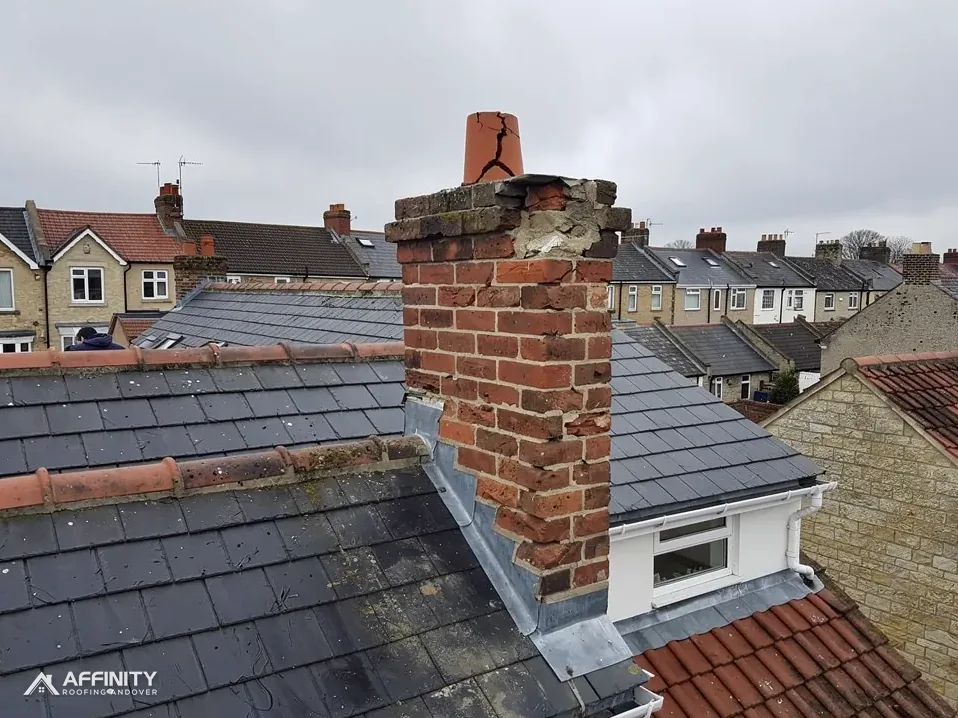
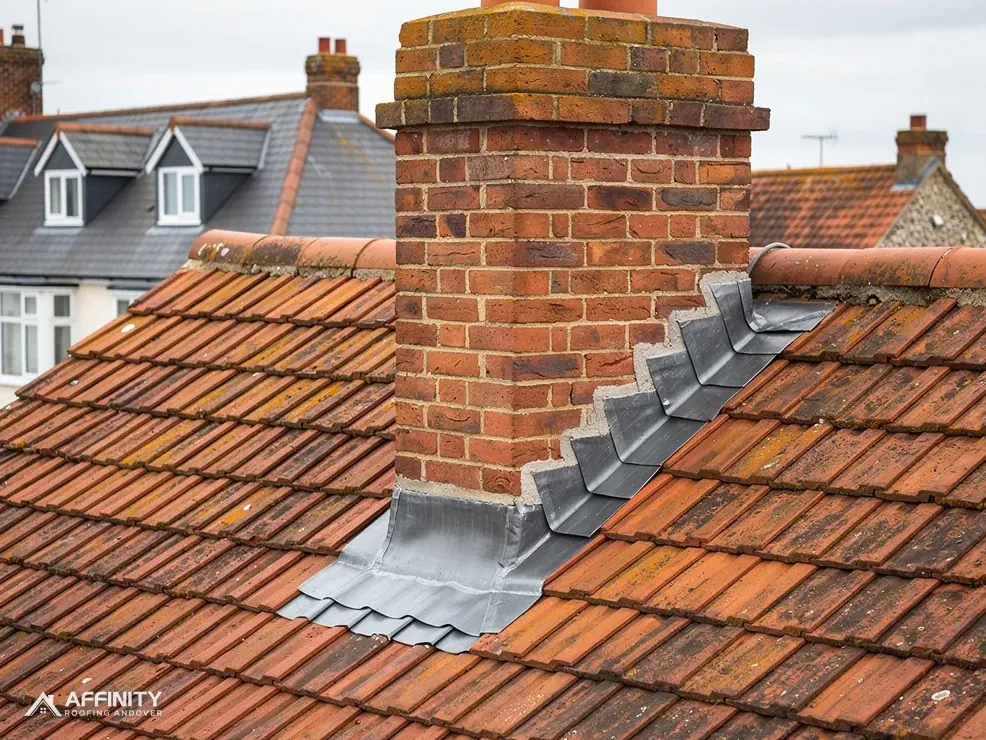
Lead flashing against a wall is not stuck on. The top edge is turned into a groove, the chase, which is cut into the brickwork, often along a mortar joint. Small folded strips of lead, called wedges, are tapped into the chase to hold the edge in place at intervals. The chase is then filled with mortar, or sometimes a suitable sealant, to close it and keep rain out.
The flashing stays put because the wall grips the edge and the wedges stop it springing out. The lower part lies over the roof covering and is left free to move, which is what lets it cope with warming and cooling. In that sense the upper edge is the anchor and the lower edge slides.
This is why a lifted flashing at the wall nearly always points to the anchor. If the grip goes, the lead rises, the gap opens and rain blows behind it. Our guide to chimney lead flashing shows the same arrangement around a stack.
The pieces should be checked together: the chase, the wedges, the pointing and the lead.
Why the edge lifts
Crumbling pointing is one cause. Mortar weathers, cracks and falls out over the years, particularly on exposed walls and old brickwork. Once it is gone, the wedges are free to shake loose, and the lead edge is no longer clamped.
Wedges themselves can fail. They may be missing, set too far apart or made from material that has corroded or slipped. Lead that has been wedged with the wrong material, or with nothing, moves in the wind and lifts.
Movement of the wall can also be the cause. A settling wall, a bowed gable or a chimney that has shifted pulls the chase out of line. Sometimes the cause is damage, such as a ladder resting on the flashing, a falling branch or heavy foot traffic.
Poor repairs add to the problem. Sealant squeezed over a lifting edge may cover the gap for a time, but it bonds the flashing to the wall and stops it moving. Our guide to why sealant is not a lead repair explains why that backfires. Look for a thin line of rust-coloured or green staining below the lead as a sign of water behind.
What sealant does and does not do
A bead of mastic or silicone along the top of a lifted flashing looks like a repair. It can stop a drip for a few weeks. It does not restore the clamp, and it traps the edge rigidly against a wall that moves differently from the lead.
Sealant also ages. Sunlight hardens it, the lead's movement tears it, and the wall's dampness lifts it off. Water then gets behind the bead, where it stays, and the damage continues out of sight. A repeated sealant job is usually a sign that the true cause has never been tackled.
There is a place for a high-quality sealant in the chase, as the finish over wedged lead in some circumstances, but it is never a substitute for wedges and sound pointing. The lead itself has to be held.
If you can see a sealant line on your flashing, treat it as a clue. It tells you someone has already seen the problem. We photograph the line, test the wedges and look behind the edge, so the survey shows what lies under it. Where the repair is in lead, the fix is set out in our lead roofing service.
Re-wedging and repointing
A proper repair starts by rake-out. The loose mortar is cut from the chase, the old wedges are checked, and the flashing is lifted so the lead can be inspected. Sound lead is straightened and dressed back into place. Cracked or thin lead is opened up and a new piece let in, or the flashing is renewed.
New lead wedges are fixed at regular spacing along the chase, with the lead held tight, and the chase is repointed in a mortar that suits the wall. The pointing mortar is chosen to suit the wall, so it does not damage older brick or stone. The result should be a flashing that lies flat to the wall, with a neat, full pointing line.
Price is driven by the flashing's length, the access and the state of the wall. Full chimney leadwork has a typical UK range of £350 to £920 in MyJobQuote's Sep 2026 guide, and scaffold swings the figure. A simple re-wedge and repoint costs far less than a new flashing.
Pricing follows the survey, and our answer on a roof leaking at a wall abutment covers related causes.