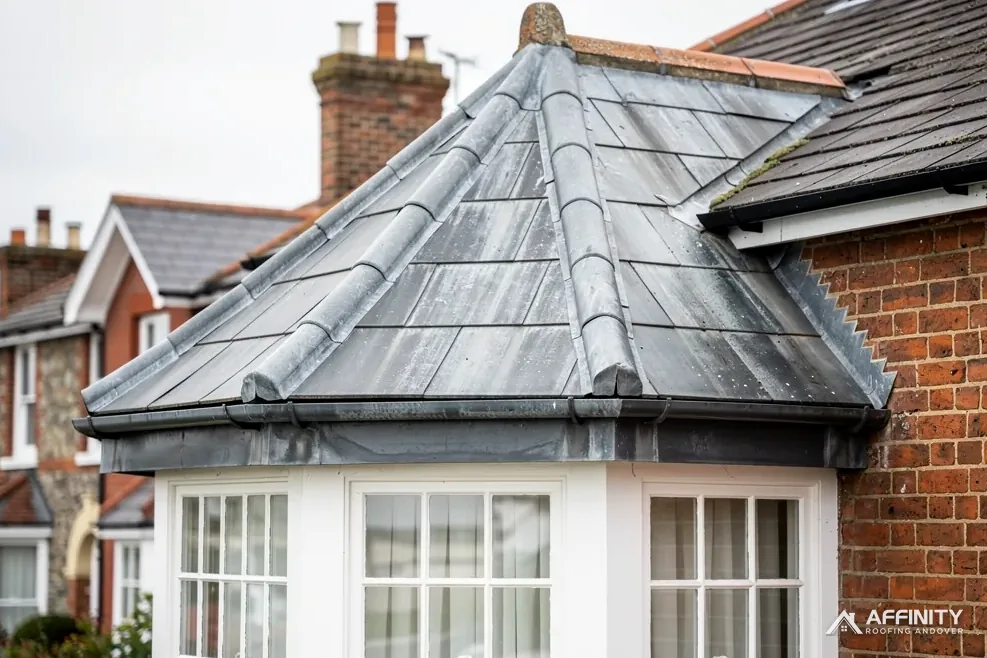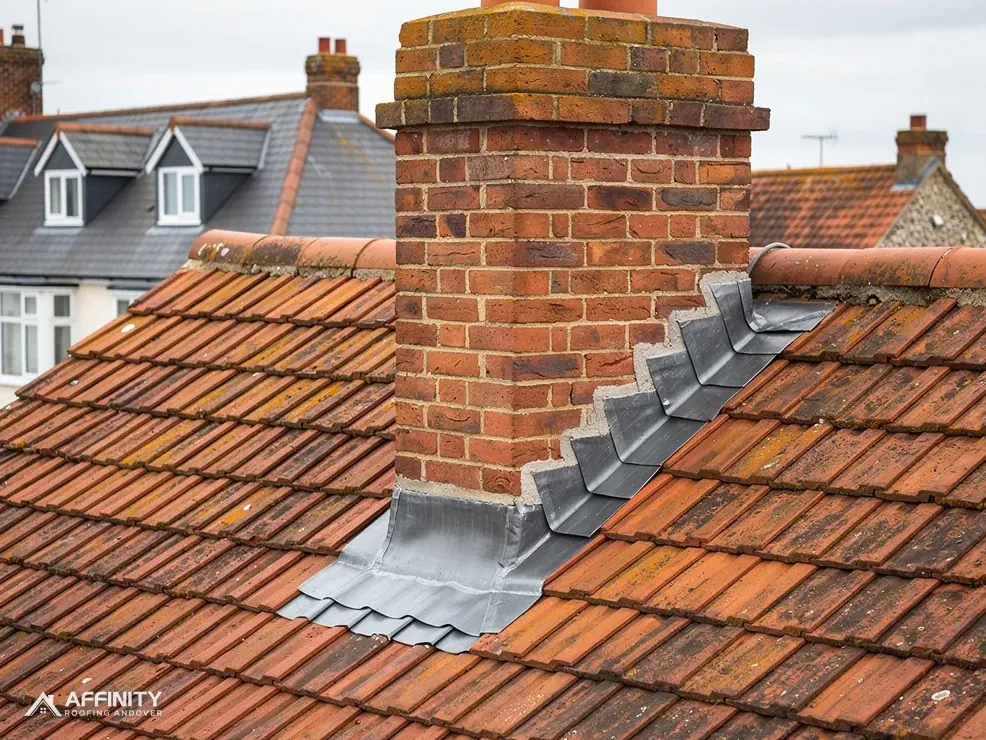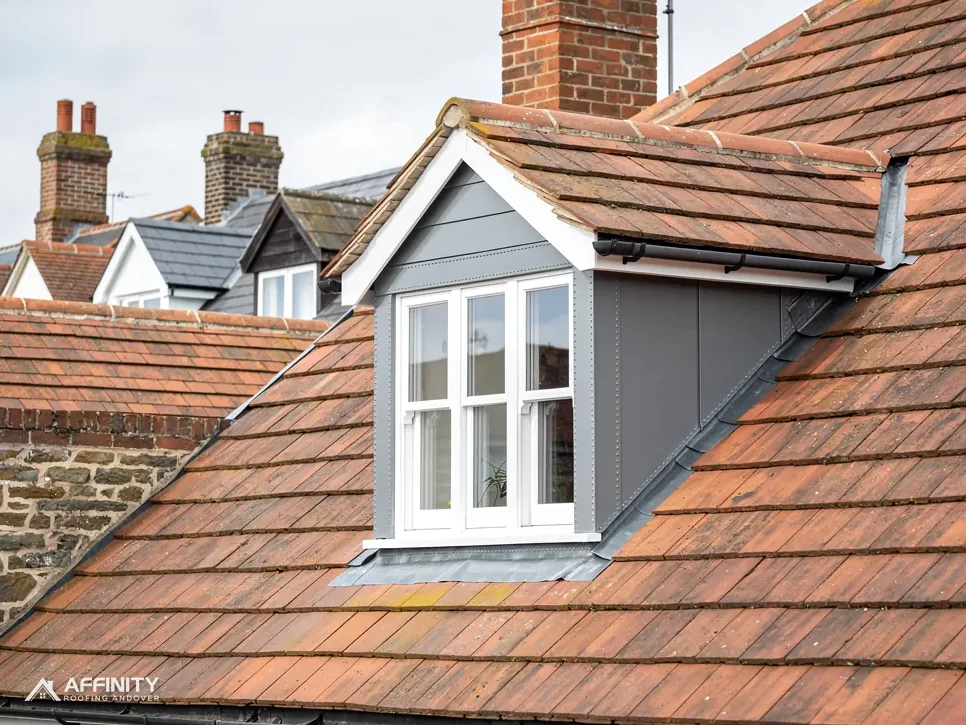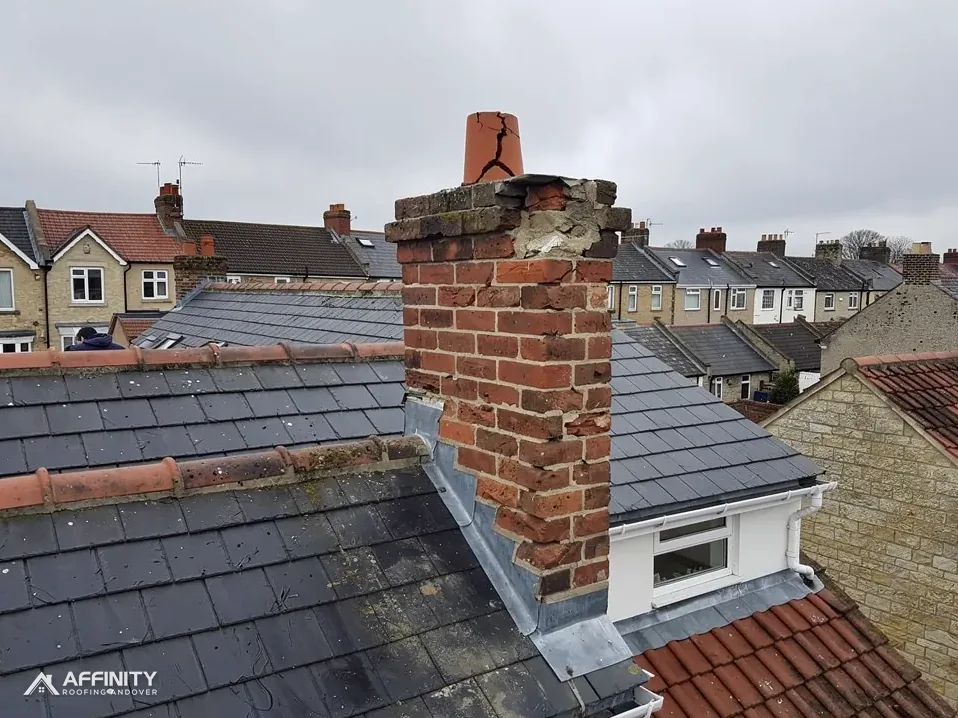
The short answer
Yes, often. Lead stays soft and easy to dress in cold weather, and a leadworker can shape it on a winter day. What limits the job is everything around the metal: frost on the roof, damp mortar in the wall chase, sealants that will not cure and the plain risk of working on an icy slope. If the conditions are unsafe, the lead waits for a better day.
Why lead copes with cold
Lead is a forgiving roofing metal to work in winter. It can be bent, folded and beaten into shape on a frosty morning as easily as in July. A leadworker's tools do the shaping, not heat, so there is no need for warm weather to make the metal pliable.
There is one point to understand about timing. Lead contracts when it is cold and expands when it warms, so a sheet laid in winter is at its shortest. The detail has to allow for the summer growth, with rolls, drips and laps sized to let the sheet slide. A bay that suits a mild day can pinch in July if the fixings hold it too tightly, with a cracking fold as the early warning. A competent installer lays the lead with that growth in mind in every season, which is why a winter job need not be a worse job. What changes is the care taken with timing and handling.
The same movement is behind many splits, as our page on why lead splits explains.
What cold weather does stop
The trouble in winter is rarely the lead. It is the surface the lead is going on and the materials that hold it.
Frost or ice on a roof makes it unsafe to walk, and a wet or frozen deck is a poor base for new sheet. Boards must be dry before lead goes down, or moisture is trapped beneath it. Where a flashing is set into a groove in the brickwork, the pointing mortar needs to harden without freezing, and a frozen mix can crumble when it thaws. In that case the flashing is wedged and the pointing is left until the weather allows.
Wind matters too. A large sheet of lead can catch the wind like a sail, and gusty conditions make handling it on a ladder or scaffold dangerous. Rain and snow add to the problem, since a wet sheet is slippery to hold in a gust.
These are the reasons a roofer may pause a lead job in winter. They are judgements about safety and about the work, not a sign that the job cannot be done. On a day of hard frost we make the leak safe and wait for the roof to be workable.
The sealant trap in winter
Winter is when sealant looks most tempting. A leaking roof, a cold day and a tube of mastic seem to promise a quick answer. The weather works against it, though. Many sealants need a dry, clean, reasonably mild surface to bond and cure, and a bead run onto damp or frosted lead can fail within weeks.
Even when it sticks, sealant does not cure what is wrong. It sits across a joint that was meant to move, then cracks as the lead expands and shrinks, and it hides the fault from the next person who looks. Our guide on why sealant is not a lead repair goes through the detail.
Where rain is entering today, a better winter step is a temporary cover or a make-safe that keeps the weather out and leaves the lead untouched. The proper repair is then done when the surface is dry and the mortar and fixings can be trusted. That way you pay for one repair instead of a failed patch followed by the real one, and the roof is not left with sealant to cut away.
Booking leadwork in winter
If you have a leak and the weather is cold, tell us. We survey the lead first and photograph the fault, so you can see whether the repair can be made safely now, needs a make-safe and a later visit, or can be done in a short dry spell.
Access in winter needs more thought. A frosty roof ladder or board can be treacherous, and a tower or scaffold may be a safer way to reach the work. A scaffold standing over a pavement or road comes under Highways Act licensing. In Hampshire the authority is Hampshire County Council, and on its page the scaffold firm, not the householder, makes the application.
The price reflects the amount of lead, the access and the dry spells the job needs. A single written total comes after the survey, and it includes the temporary cover if one is part of the plan. For the wider subject, visit our lead roofing page, or read about lead flashing coming away from a wall, a fault that can start any time of year.