The short answer
Roof lead is normally dressed rather than welded. Dressing means shaping the sheet by hand and with tools into rolls, drips, welts and folds, so each joint can move as the metal warms and cools. Lead welding, also called lead burning, fuses two edges into one with a flame and filler, and it has a limited place in specialist details. Plain mechanical joints are the usual choice.
What dressing means on a roof
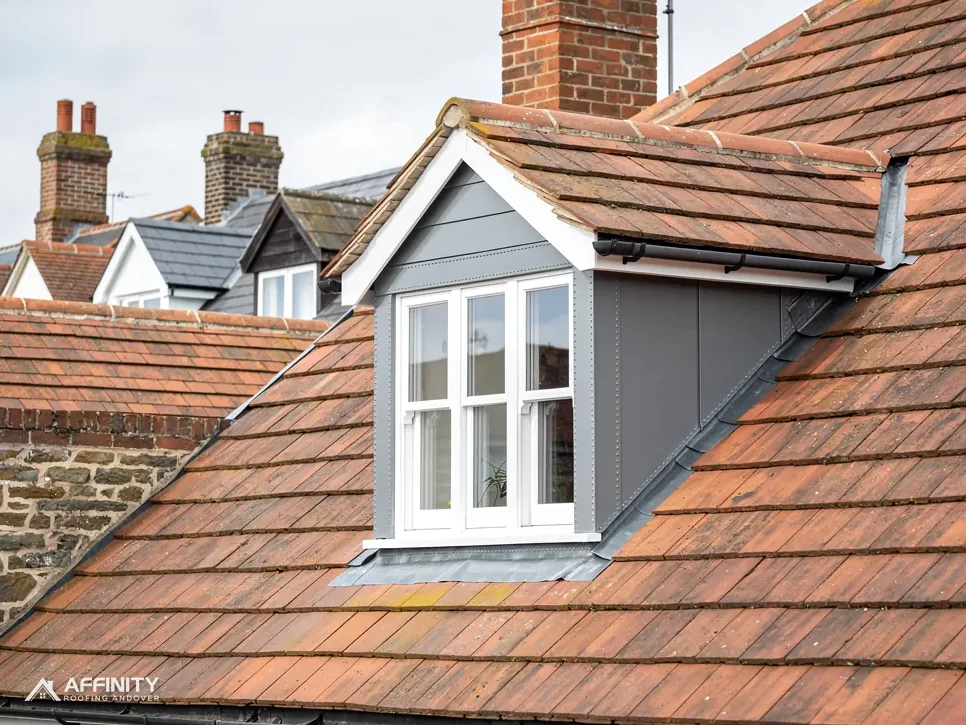
Dressing is the everyday work of a leadworker. A sheet is cut, then persuaded into shape with a dresser, a bossing stick and a mallet: pushed into a corner, turned over an edge, folded into a seam. No heat is involved, because lead is soft enough to take a shape and keep it.
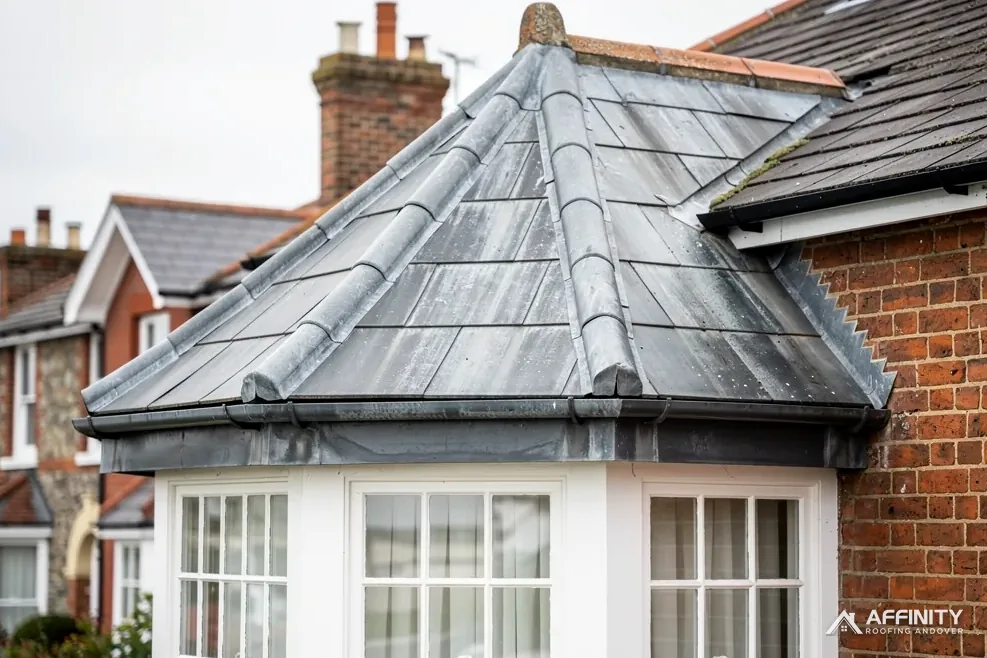
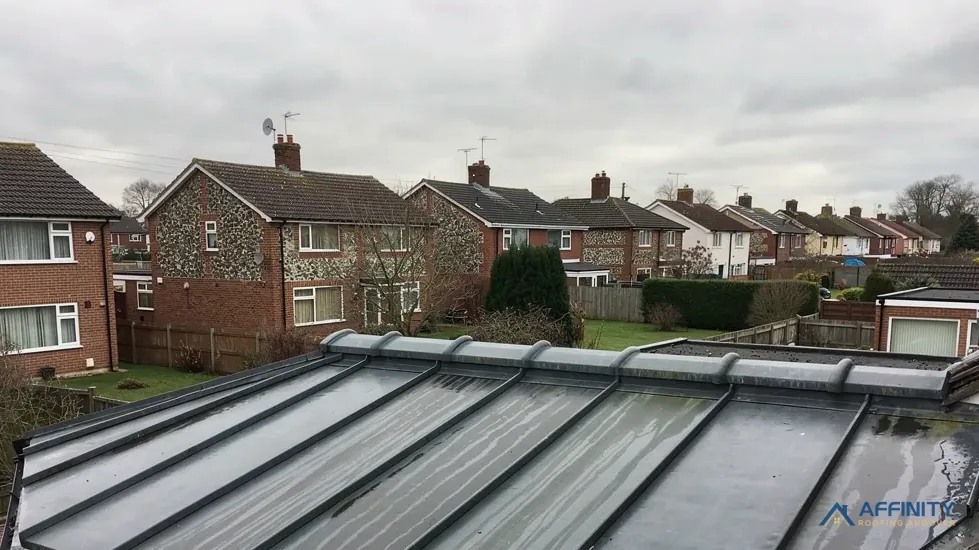
The shapes have names. A roll is a raised, rounded seam over a wooden core, while a drip is a low step that sends water on to the next bay, and a welt is a folded edge that holds a flashing or a sheet against the wind. Each joins sheets by overlapping or interlocking them, never by fusing them, and each can be taken apart and re-made when a repair calls for it.
The reason is movement. Lead expands in warm weather and shrinks in cold, and a roof sheet will creep unless it is allowed to slide. Mechanical joints let each piece shift without tearing, while a fixed joint would pin the sheets together and send the stress somewhere weaker. Our answer on why lead splits shows what happens when movement is blocked.
Lead welding and where it fits
Lead welding, or lead burning, joins two lead edges by melting them together with a gas flame and a filler stick, leaving one continuous piece. A skilled worker can make a neat, watertight seam, and the process has a long history in plumbing and in sheet-lead work.
On a roof it suits a few situations: a joint at a complex corner where folding is awkward, a repair to a lined gutter, or a historic detail that was originally made that way. In those cases it is a deliberate choice, made for the shape of the job and not as a shortcut, and the leadworker can tell you why the weld sits where it does.
It is not the default, and it should not be a substitute for good design. A welded seam on a large flat sheet can stop the metal moving, which brings back the splitting it was meant to cure. Hot work also brings fire risk next to a timber deck, so the area has to be protected and checked before and after.
If a roofer says your lead will be welded, ask where, why and how movement is allowed for. A clear reply is a good sign, and a vague one is worth a second quote.
How to tell which method was used
On the roof, the two methods look different. Dressed joints are visible as raised rolls, stepped drips and folded edges, each with a lap or a fold you can follow with your eye. A welded joint looks like a flat, slightly rough ridge of metal with no overlap, as though two pieces had been poured into one.
Both can last a long time when made well, and neither is a mark of quality on its own. Age, fixings and the setting count as much as the method. What matters is whether the joint suits its place. A welded seam in a gutter lining can serve well. A welded seam across a wide, sun-exposed sheet is a different story.
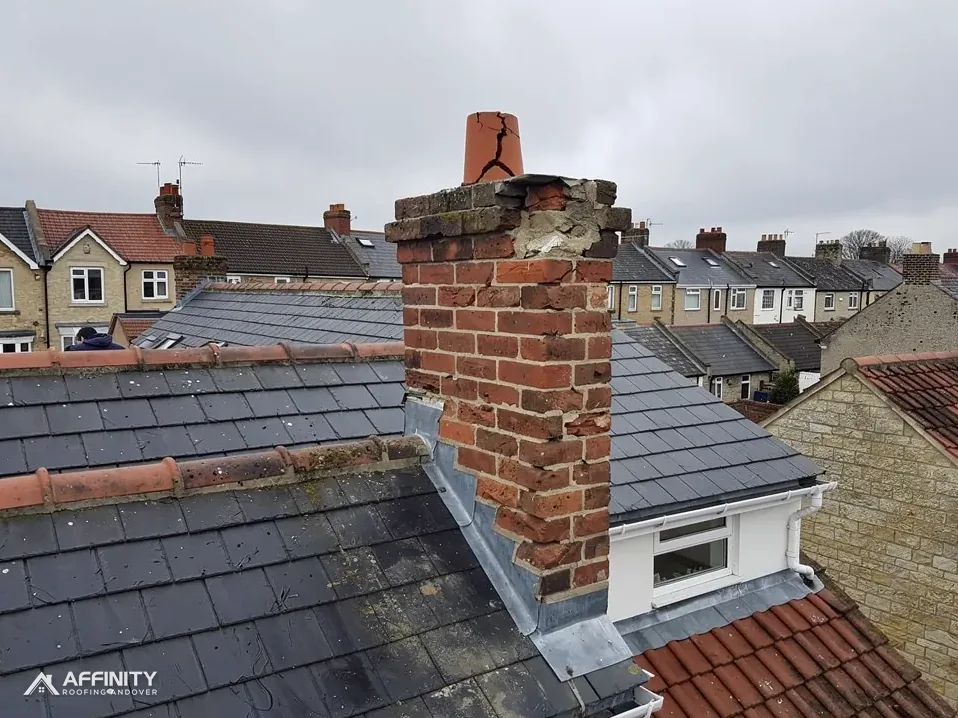
If you see lines of grey sealant, black tape or filler along lead joints, it is neither method. That is a repair applied to cover a failed joint, and our page on sealant and lead repairs explains why it rarely lasts. Lead sheet work follows BS 6915, the standard Approved Document C points to, and that is the reference a competent leadworker works from when deciding how sheets are joined and fixed.
Choosing the method for your job
For a repair, the right method is usually already on the roof. If a flat roof was built with rolls and drips, the repair keeps them. If a bay window roof has welted edges, the new lead follows. We look at the existing joints and match them, since a repair in a different style can alter how the sheet moves.
Where a detail has failed, we explain why. A split at a weld may mean the sheet was too large. A lifted welt may mean the fixings were poor. We photograph each joint, show you what we see and set out the options in plain words, with the repair we would choose and the reason for it. Our page on lead flat roofs covers the bay layout in more depth.
Price follows the amount of lead, the number of joints and the access. A scaffold or tower may be needed, and the cost of that sits inside the one total. One written total follows the survey, and the lead roofing hub lists the other leadwork we carry out.