The short answer
A lead porch canopy is repaired by finding where the sheet has failed, then either mending the sound lead or laying a fresh sheet. A split, a lifted edge or a flashing pulled from the brickwork can often be put right locally. Lead cracked in several places, or a deck that has gone soft beneath it, calls for a new covering, because patching over movement or rot does not last.
Where a porch canopy lets water in
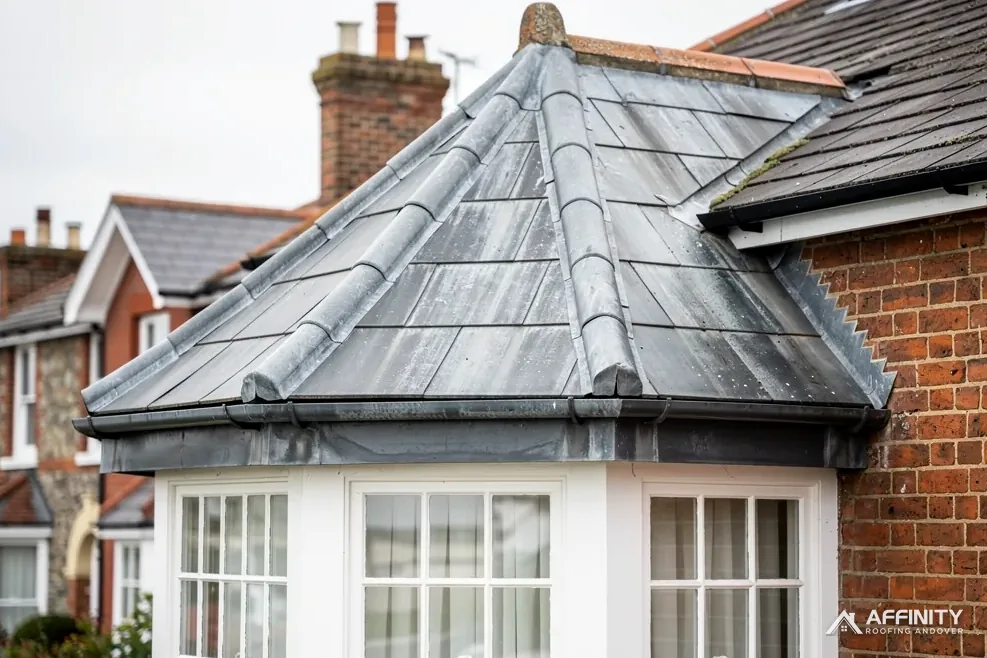
A canopy is a small lead roof with a lot of edges. Each edge is a chance for water to get behind the sheet, so the faults tend to cluster along them.
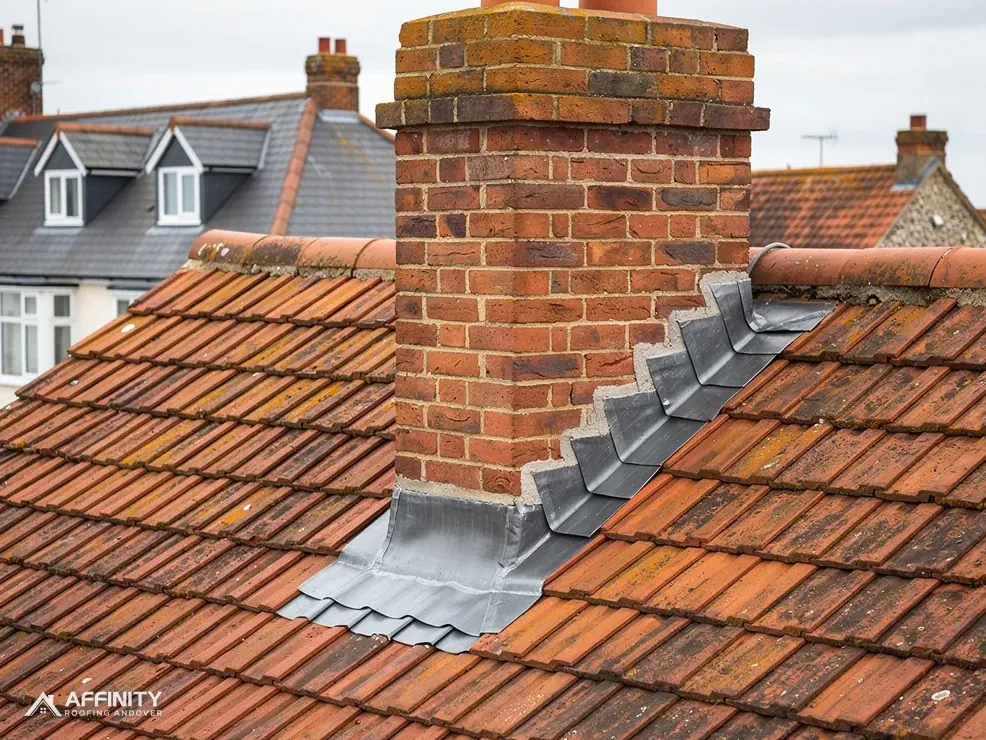
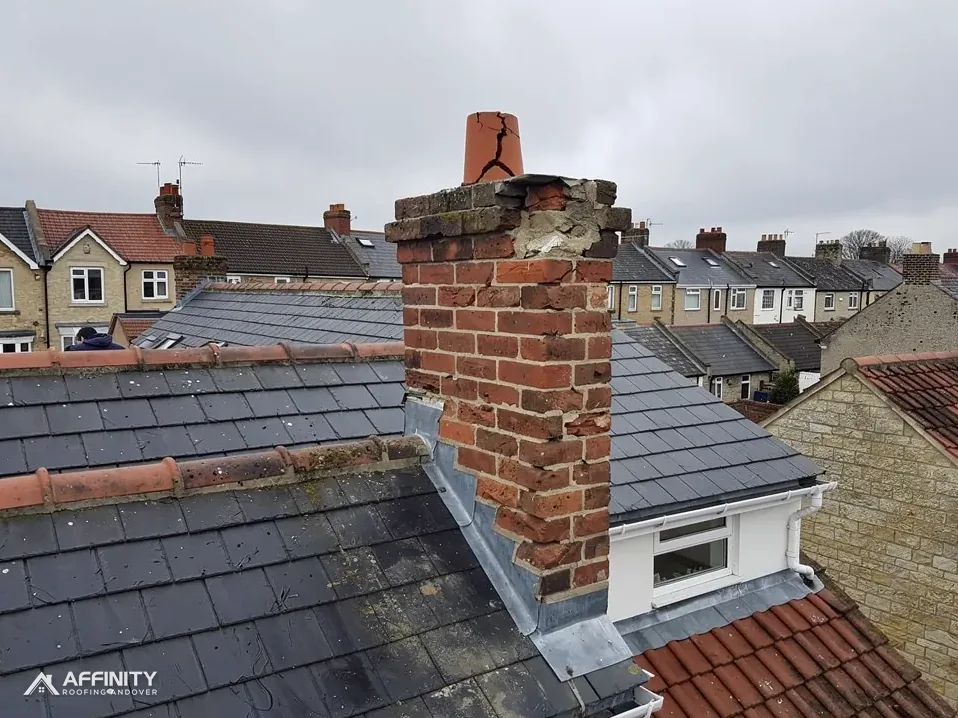
The first is a split. Lead expands and contracts with the weather, and a sheet laid too large or fixed too tightly tears along a fold or across its width. The second is a lifted edge, where the lead has curled away from the deck at the front lip. The third is the flashing, a strip of lead tucked into the wall and dressed down over the canopy to seal that joint. If the mortar joint it sits in has weathered, the strip pulls out and rain runs behind it.
A fourth fault is human. A porch is easy to reach, so it collects sealant, tape and screw holes from earlier attempts. Each one hides the real fault and adds a new gap.
From the garden, look for a stain on the porch ceiling directly below the wall, because the wall joint is one place water gets in. Do not climb onto the lead: it dents and stretches underfoot, and it is not made to be walked on.
Patch, repair or lay new lead
The honest test is whether the lead itself is still sound. Sheet that is whole, flat and free of cracks can take a local repair: a split is trimmed back and patched with new lead, a lifted edge is re-dressed and fixed again, and a loose flashing is chased back into a fresh mortar joint, with the neighbouring sheet left alone. Our guide to why sealant is not a lead repair explains why a bead along a crack is a delay, not a cure.
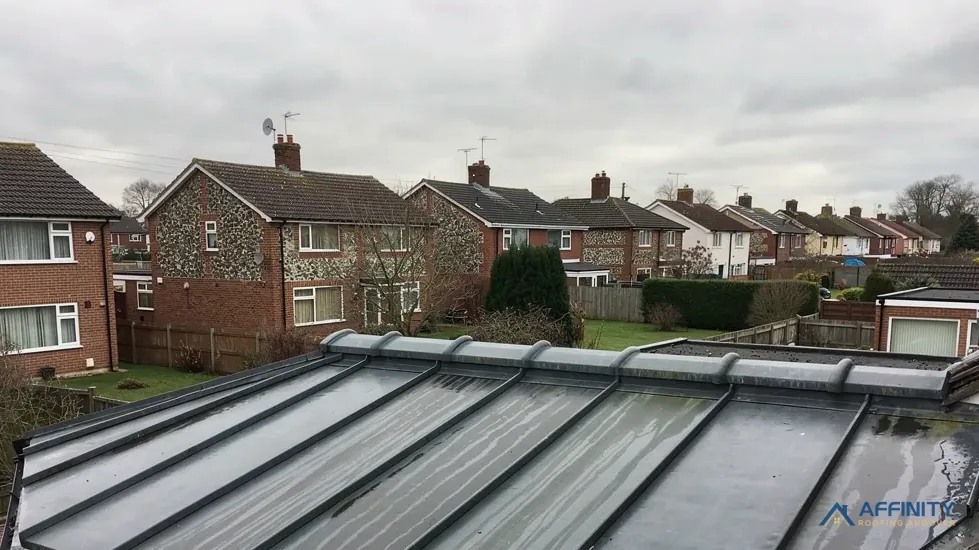
Where the splits keep coming, or the sheet is thin, creased and work-hardened from years of movement, a patch only moves the failure along the sheet. Then the canopy is re-leaded: the old sheet comes off, the deck is checked, and new lead is laid in bays small enough to move freely.
The thickness is chosen for the job. In Royston Lead's brochure, code 4 (1.80 mm) and code 5 (2.24 mm) both appear for flashings, while parapet and box gutters take code 5 or heavier. Our answer on code 4 versus code 5 lead sets out the difference.
Falls, the deck and the walls around it
A canopy that looks flat is rarely flat. It needs a slope so water leaves the lead instead of lying on it, and a deck that has dipped, perhaps because a board has rotted, leaves a pond that works at every joint. Before new lead goes down we check the boards and the timber behind the wall plate, and replace anything soft.
The falls rules people quote need care here. BS 6229:2025 sets its 1:80 finished fall for flexible membrane roofs, and it does not cover lead. Lead sheet work follows BS 6915, which Approved Document C points to for lead. The practical result is that the sheet is laid to the slope the structure gives it, in correctly sized pieces, and the detail at the wall is built to shed water.
Ventilation is a smaller question than on a house roof. Approved Document C accepts that a porch or bay roof is small enough for ventilating the deck to be optional in some builds. That is guidance on cold decks, so we look at how yours was built before relying on it.
How a canopy repair is quoted
We start with the survey. A porch is usually within ladder reach, so we photograph the lead, the flashing, the front edge and the gutter or downpipe it drains to, and show you the pictures. A tower or scaffold becomes a question only if the canopy sits high or above a path.
What sets the price is the scale of the fault. A local repair to sound lead is a short visit, with little to clear away afterwards. A re-lead involves stripping, deck repairs, new sheet, new flashings and clearing away the old lead. The type of wall also matters, since brick joints take a chased-in flashing differently from render. One written total follows the survey, so the figure is fixed before work starts and does not drift.
If the canopy is attached to a listed building or stands in a conservation area, tell us at the start so we can talk about the consent route. Our lead bay window roof answer covers a close cousin of this job, and the lead roofing hub gathers the rest of our leadwork in one place.