The short answer
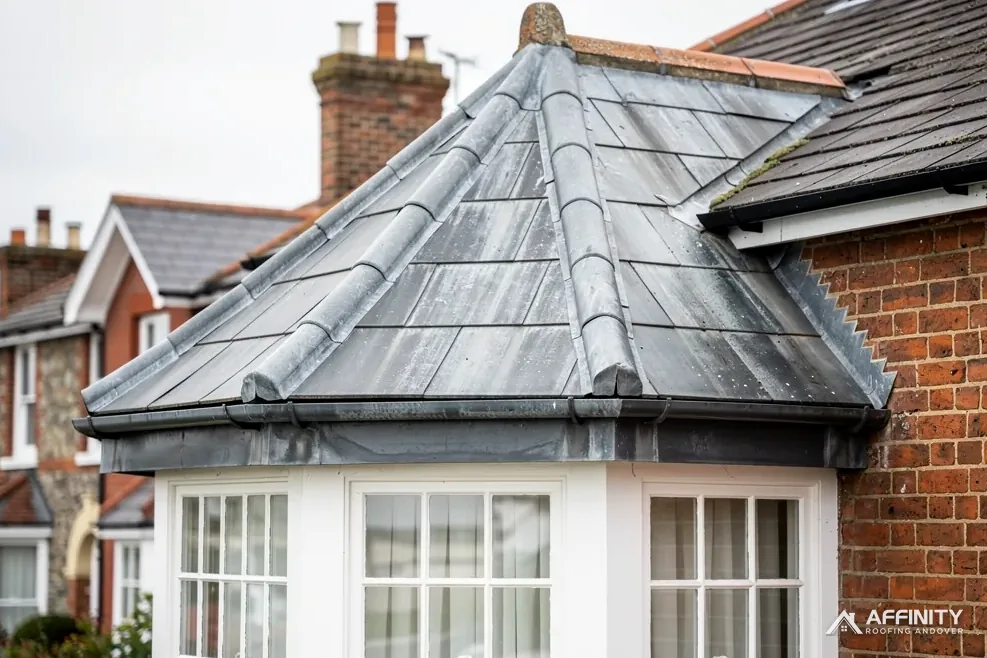
A lead ridge roll is a rounded timber core fixed along a ridge or hip, with sheet lead dressed over it so the joint between two slopes sheds water. The lead on each slope runs up to the roll and is covered by a capping piece. It is a neat detail on bay windows, dormers and lead-clad roofs, and it fails mainly where the core rots or the lead splits.
Core, undercloak and capping
A ridge roll has three working parts. The first is the core, a length of shaped timber, often called a wood roll, nailed along the line where two slopes meet. Its rounded top matters: lead folded over a sharp edge cracks, and a curve lets the metal bend without being stressed.
The second is the sheet of lead on each slope. It is laid up to the roll and turned over the side of the core, and it is held by fixings hidden under the cover. This lead is the undercloak: the layer that actually keeps water out and lets the roof move.
The third is the capping, a strip of lead dressed over the top of the core and down both sides, lapping the undercloak. It sheds water and shades the joint beneath from sun and rain. The capping is held at its lower edges by clips or by a tight, careful dress, never by sealant alone.
Lead is a soft metal, so the detail is designed for movement. Each piece is cut to a size that can expand and shrink without tearing, and the roll gives the sheets a place to meet without being pinned together.
Where you find rolls on a house
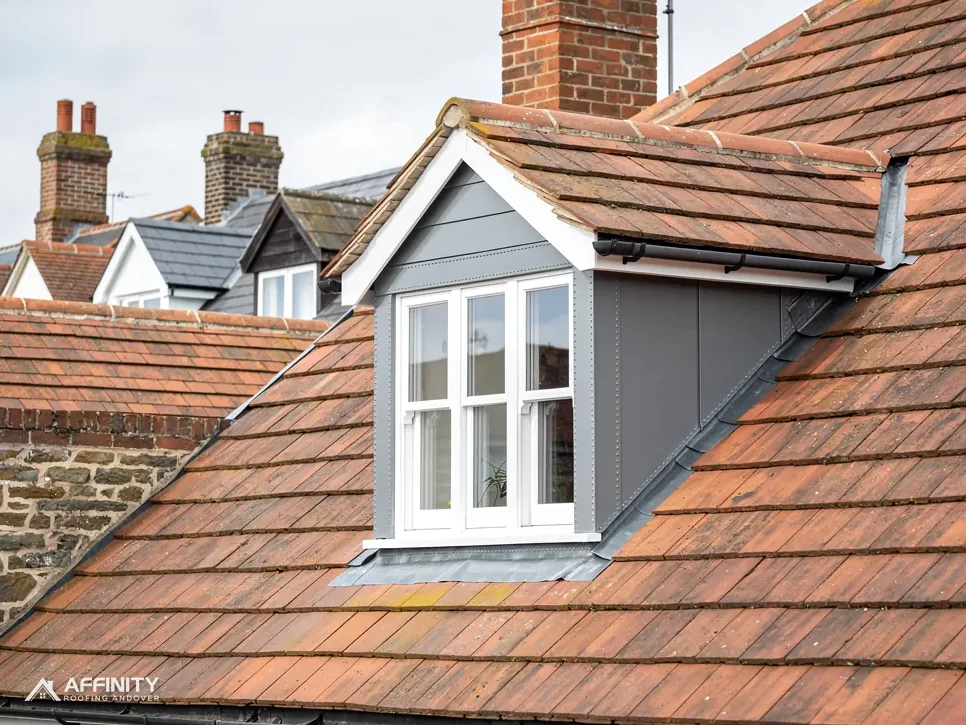
Look for rolls on the ridges and hips of lead-covered roofs: the top and corners of a bay window roof, a dormer cheek or a mansard slope. They also run down the slope of a lead flat roof, where they form the long seam between bays. In that role the roll is a standing joint that carries water past the seam without leaking, rather than a ridge or hip.
Hips on tiled and slate roofs are different. Those are normally capped with ridge tiles, or with dry-fixed hip and ridge units. Lead may be used on a hip as a cover strip on an older house, but a lead roll in the strict sense belongs to lead-covered roofs.
Two sibling pages deal with the roofs that carry most rolls, and each shows the detail in its own setting: lead bay window roofs and lead dormers.
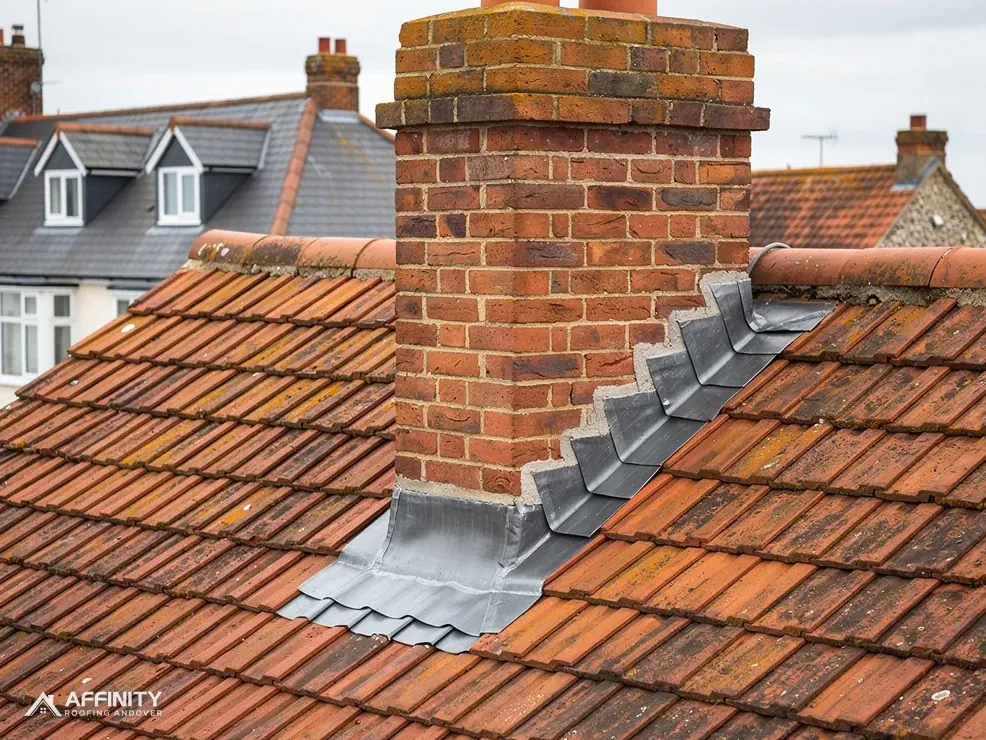
Spotting a roll from the ground is easy: it reads as a raised, rounded line, where a drip, the stepped seam used across the fall, looks like a small stair. Either way, a roll that sags, opens or stains the ceiling beneath it deserves a closer look.
Rot, splits and lifted cappings
Because the roll is a timber core under metal, its first enemy is damp. Rain that gets in at a split or a lifted edge cannot dry out under the lead, and the core can rot from the inside while the surface looks fine. A soft or sunken line along the roll, or a ceiling stain beneath it, is the signal.
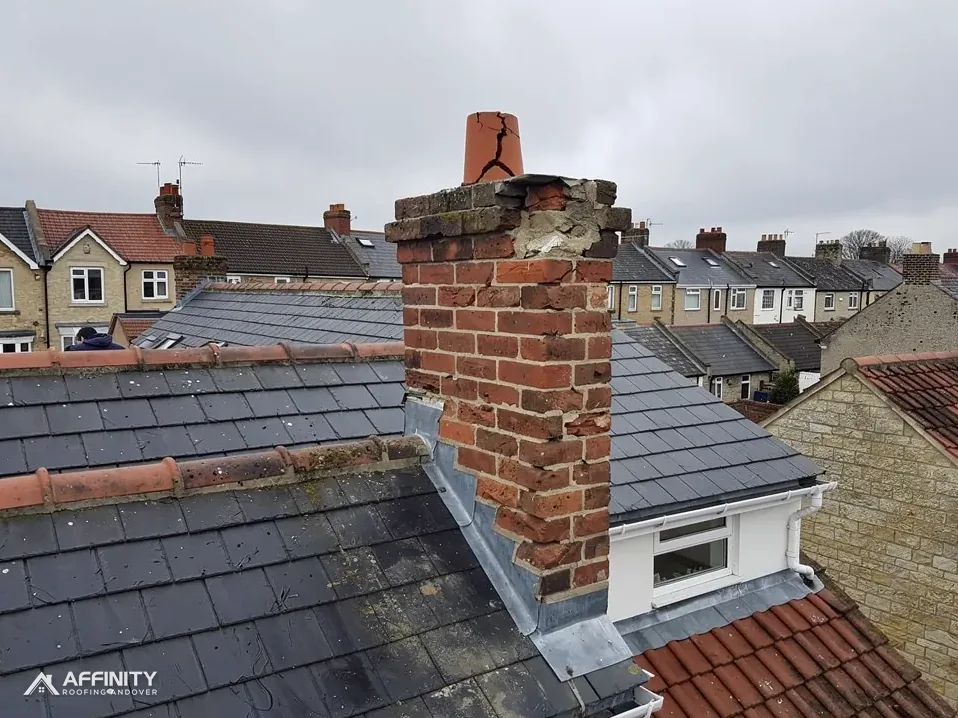
The lead splits too. The crown of a roll is where the metal bends most, and a capping fixed too hard, or cut too long, tears along the line it is trying to expand across. Cracks often start at the ends of a roll, where the capping meets a wall or turns a corner.
A lifted capping is the third fault. Wind gets under a loose edge and works it further each time, until the undercloak is exposed. Sealant smeared along the lap hides all three faults and holds none of them: our answer on sealant and lead repairs shows why.
MyJobQuote says lead flashing can last for over 80 years. That is a lower bound for the metal, and the core and the fixings can decide the real life of a roll.
Repairing a ridge roll
The repair follows what the survey finds. If the lead is whole and the core is sound, a lifted capping is re-dressed and re-fixed, and a short split is cut out and patched with a new piece. If the core has rotted, the capping and undercloak come off, the timber is replaced with a new shaped roll, and the lead goes back or is renewed.
When the lead is cracked along its length, or the roll has been repaired several times, a full re-lead of that ridge is better value than a patch that opens again next winter. We photograph each stage so you see the core as well as the metal.
Price depends on the length of the roll, how many hips and junctions it has, how it is reached and whether the lead can be reused. Access may mean a ladder, a tower or scaffold. A written total follows the survey, so you can decide with a fixed figure in front of you, and the site is left tidy when we finish.
For the wider job, the lead roofing hub is the place to start.