The short answer
A chimney back gutter is a lead channel formed on the uphill side of a chimney stack. It catches the rain running down the roof towards the stack and carries it round both sides, so the water never piles up against the brickwork. Because it is a gutter that must hold water, not just shed it, the lead is heavier than for a simple flashing.
Where it sits and what it does
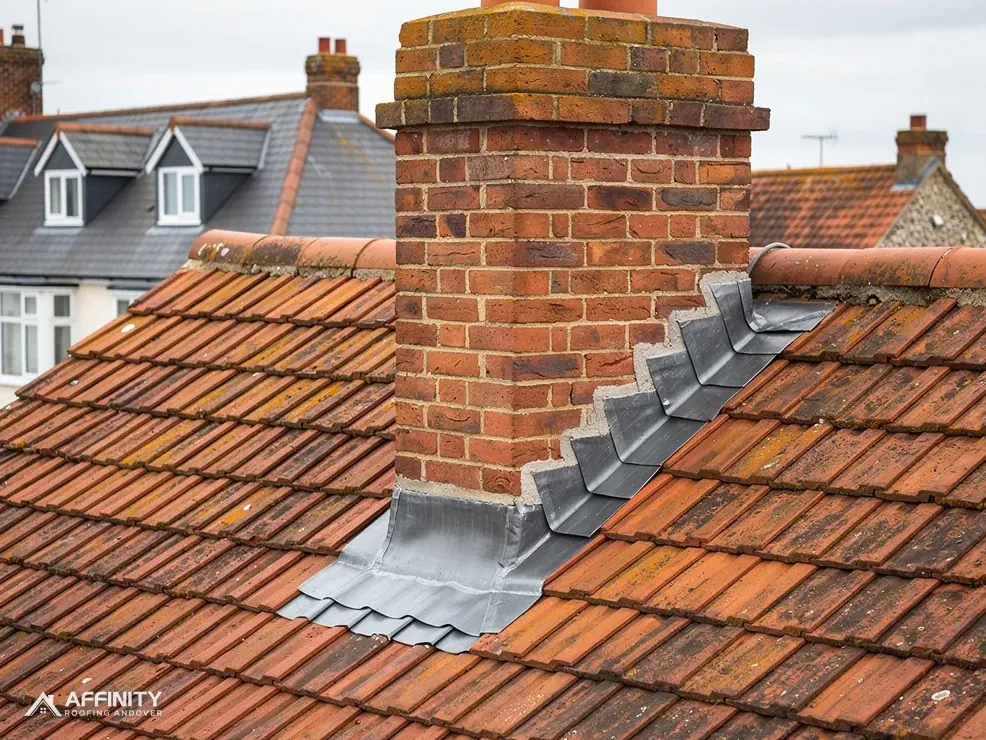
Think of a chimney on a sloping roof as a rock in a stream. Rain running down the slope reaches the stack from above, and without help it would build up against the brickwork on the uphill side and push into every joint. The back gutter solves this. It is a shallow, sloping channel of lead set in the angle behind the stack, sloping gently to each side.
Water that arrives at the back of the chimney drops into the channel, runs sideways along it and spills out beyond the corners of the stack. From there it joins the flow down the roof again. The upturned lead at the stack end is tucked into a slot cut in the brickwork, the chase, and covered by a flashing.
It is one part of the full set of leadwork around a chimney. The apron at the front, the stepped flashings at the sides and the back gutter work together, as our guide to chimney lead flashing shows. If any one fails, the whole junction is at risk of letting water in.
Why back gutters leak
The back gutter is the most demanding piece of chimney leadwork because it has to carry a flow of water, not only turn it aside. It also lies in a place that fills with moss, leaves and silt. A blocked channel overflows into the roof, and the lead can crack where debris holds it under water. Clearing it each autumn is a cheap job that saves a dear one.
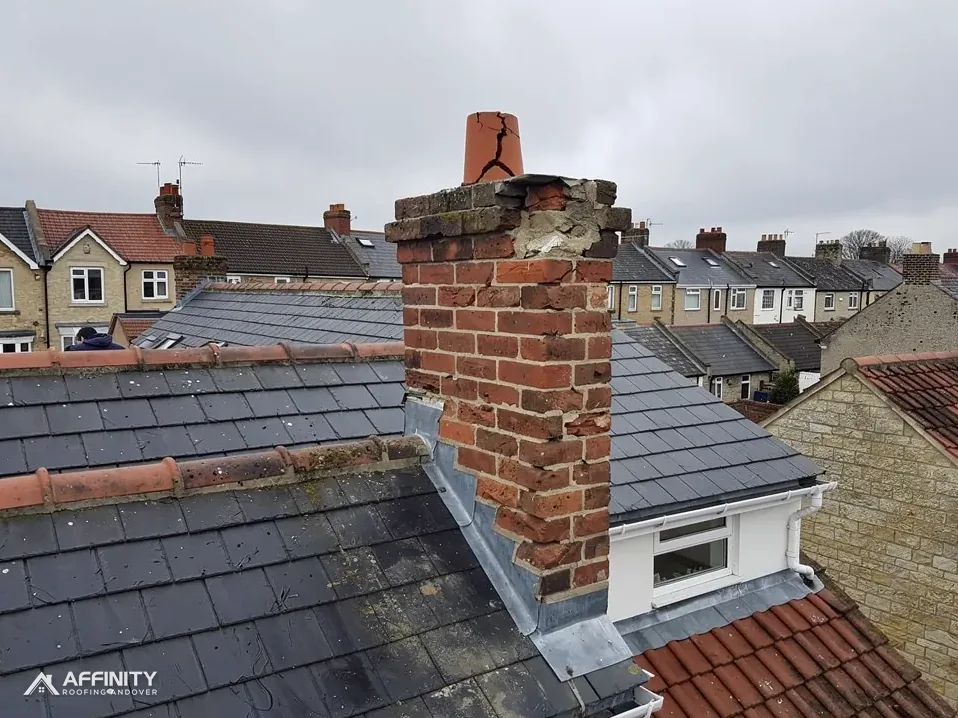
The usual faults are easy to describe. Lead that has split along a fold, because the sheet was cut too large or tightly pinned, lets water through. A back gutter laid with too little fall holds a puddle, which freezes and strains the metal. The upstand against the stack can come loose where old pointing has crumbled, so the flashing no longer sits tight in its slot.
Sealant is often smeared along the joint as a quick fix and then fails within a season. Our guide to why sealant is not a lead repair explains why the movement of the metal defeats it.
Staining on the ceiling or chimney breast below the stack is a common first sign, and it often appears only after heavy rain.
Lead code for a back gutter
Lead is graded by code, a number reflecting the thickness and weight of the sheet. Royston Lead's cast lead brochure sets out which codes suit which jobs, using five uses lettered A to E: soakers, flashings, pitched valley gutters, parapet or box gutters and tapered valley gutters, and dormers.
A back gutter behaves most like the gutter uses in that list. The brochure shows pitched valley gutters taking codes 4 to 8, while parapet, box and tapered valley gutters start at code 5. Code 5 is 2.24 mm thick and weighs 25.40 kg per square metre, against code 4 at 1.80 mm and 20.41 kg. Lead for roofs follows BS 6915, which AD C refers to.
A fitter choosing between codes is weighing the length of the gutter, its fall, the exposure and the cost. A thicker code costs more but copes better with the movement and the weight of standing water. Our answer on code 4 versus code 5 lead sets out the difference in more detail.
We name the code in the survey, so you know what is being fitted, and the photographs show the old lead as it came off.
Once the new lead is down, the tiles or slates beside the stack are checked and relaid, because a repair at one point can reveal weakness nearby.
Renewing the gutter and what it costs
Replacing a back gutter means lifting the tiles or slates beside and above the stack, stripping the old lead, checking the boards beneath and laying a new sheet with proper fall. The upstand is dressed against the brickwork and tucked into a fresh chase, then covered by a new flashing. The roof covering is relaid around it.
The condition of the deck counts. A leak that has run for years may have rotted the boards or battens beneath, and those are replaced before new lead goes down. We photograph the timber as it is uncovered, so you see what lies under the old lead.
MyJobQuote (Sep 2026) puts full chimney leadwork at a typical UK range of £350 to £920, with the figure depending on scaffold. The stack height, the size of the stack and the state of the brickwork move the total. The written price follows a survey. For wider work, the lead roofing page explains the whole service.
Where the chimney itself needs attention, our chimney repairs page covers pointing, flaunching and rebuilding.