Lead is the traditional answer wherever a roof meets a wall, a chimney or another roof. It bends to the shape of the joint, it does not rust and it can last for decades. But lead is not one product. It is sold in a range of thicknesses, each identified by a code number and a colour, and using the wrong one for a job is a common reason leadwork fails early.
The code is a number from 3 to 8 for the cast sheet we are describing here. A higher number means thicker, heavier lead, and thicker lead is used where the metal has to span a gap, carry water or put up with more movement. A lower number suits the places where it only needs to turn a corner and keep rain out.
This post sets out each code with its thickness, weight and colour, as given in one manufacturer's brochure, and explains which parts of the roof they usually serve: soakers, flashings, valleys and the lead around a bay window. It also says which British Standard governs lead work, because it is not the one you might expect.
What a lead code is
A lead code is a shorthand for the thickness of a sheet. It is stamped on the sheet and, for cast lead, marked by a colour, so a roofer can check that what is on the roof matches what was ordered. The same numbering runs across the industry, from Code 3 at the thin end to Code 8 at the thick end.
Each code has a thickness in millimetres and a weight per square metre. Weight is what you pay for, so the thicker codes cost more and need more care to handle. They are also stiffer, which affects how they are dressed into a joint.
The table below gives the figures from the Royston Lead cast-lead brochure. The codes are the industry's own, but these figures are one manufacturer's, so treat the table as a guide to how the codes are generally used, not a specification for your roof. The brochure's own list of uses is in the last column.
| Code | Thickness | Weight per m² | Colour | Brochure uses |
|---|---|---|---|---|
| 3 | 1.32 mm | 14.97 kg | Green | Soakers only |
| 4 | 1.80 mm | 20.41 kg | Blue | Soakers, flashings, pitched valley gutters, dormers |
| 5 | 2.24 mm | 25.40 kg | Red | Flashings, pitched valley gutters, parapet and box gutters, dormers |
| 6 | 2.65 mm | 30.05 kg | Black | Flashings, pitched valley gutters, parapet and box gutters, dormers |
| 7 | 3.15 mm | 35.72 kg | White | Pitched valley gutters, parapet and box gutters, dormers |
| 8 | 3.55 mm | 40.26 kg | Orange | Pitched valley gutters, parapet and box gutters, dormers |
Soakers and the lowest codes
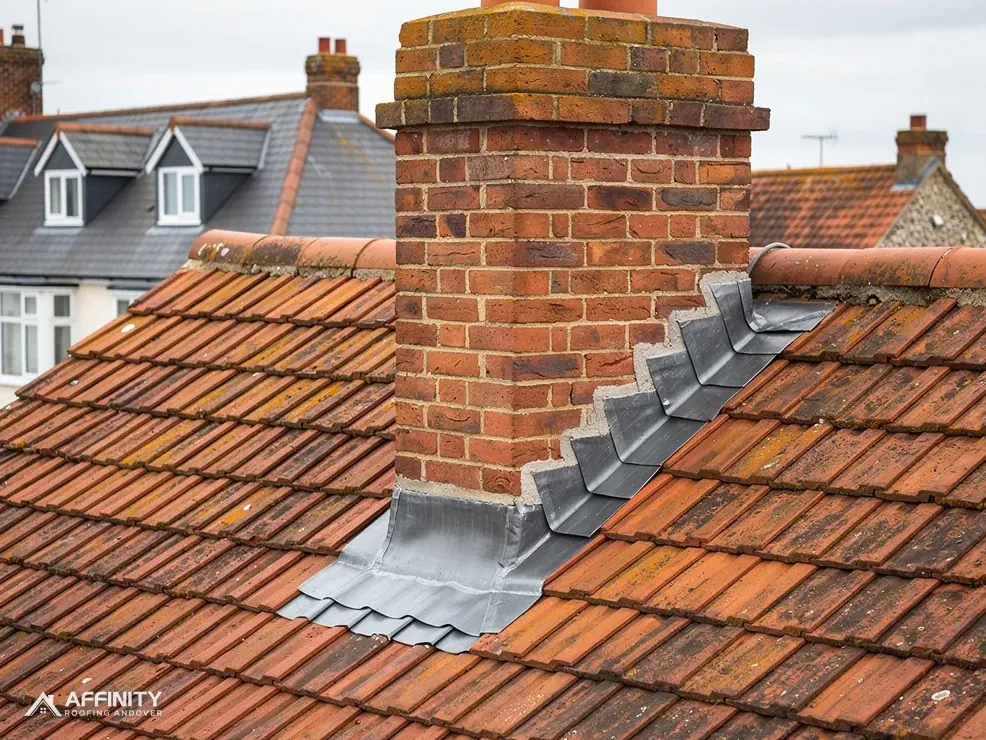
A soaker is an L-shaped offcut of lead tucked under a tile or slate where it meets a wall or chimney. It is dressed up the wall on one side and under the tile on the other, so water running down the wall is carried onto the roof surface and not into the joint. Each course of tiles gets its own soaker, interleaved with the tiles as they are laid.
The brochure lists Code 3 for soakers only, and Code 4 for soakers as well as other uses. That makes sense. A soaker is a small piece, held flat by the tile above it, and it does not need to be rigid or span any gap. What it needs is to bend neatly and sit tight.
The thinness has a consequence. Code 3 is the lightest lead on the list at under 15 kg per square metre, and the brochure lists it only for soakers, which sit protected under the tiles.
If your roof has soakers, you cannot see them. They are hidden beneath the tiles and the first sign of failure is usually damp on a wall or ceiling beside the chimney or the side of a dormer. They tend to be replaced when the roof covering is stripped, because the only way to reach them is to lift the tiles around them.
That is also the time to check them for splits, corrosion and slipped courses.
A roofer who proposes to replace a run of soakers should be able to say what code they will use and why.
Flashings and aprons: Codes 4 to 6
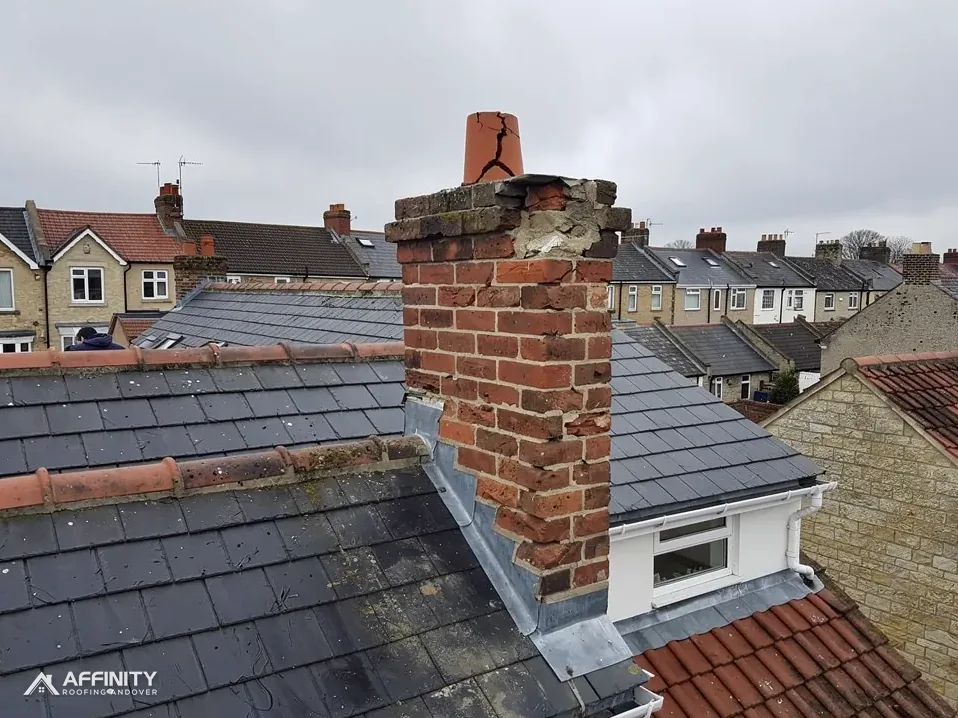
A flashing is a lead strip that seals where a roof meets a wall, a chimney or a rooflight. Its top edge is wedged into a raked-out joint in the masonry, and the rest is dressed down over the roof covering. An apron flashing is the part that lies across the front of a chimney or the bottom edge of a rooflight, covering the joint where the slope meets it.
Per the Royston brochure, flashings are made in Code 4, Code 5 and Code 6. The thicker you go, the stiffer the lead and the longer it tends to resist the cracking that comes from the metal expanding and contracting through the seasons. Long runs and exposed positions call for the heavier codes.
The lead must be fixed so it can move. It is held at the top by being wedged into the joint, usually with lead wedges and pointed in mortar, and it is left free at the bottom so it can slide a little. A flashing that is stuck down with sealant cannot move, and it splits. Our guide to why sealant is not a lead repair explains it.
MyJobQuote (Sep 2026) gives a typical UK range of £350 to £920 for a full set of chimney leadwork, with scaffold a big factor. The same guide says lead can last for over 80 years, a floor on its life rather than a promise. Ask your roofer to name the code on a quote, and why they have picked it.
A flashing that has gone missing for any reason is a cue to look at the whole detail.
Valleys, gutters and the heavier codes
A valley is the inside corner where two roof slopes meet and drain into each other. A lead-lined valley gutter is laid in the angle, with the tiles or slates edged over it, and it has to carry a lot of water from both slopes at once. That is why the heavier codes are used.
The Royston brochure lists Codes 4 to 8 for pitched valley gutters. In practice the lower end of that range suits a short, shallow valley, and the upper end suits a long valley on a large roof. The brochure also gives codes 5 to 8 for parapet and box gutters, which are the flat-bottomed lead channels behind a parapet wall or between two roofs, and for tapered valley gutters.
These gutters are wide and flat, so they hold more water and have to withstand more thermal movement. Thicker lead is used so it holds its shape, and the gutter is laid with proper falls and with joints built to allow movement, usually rolls or steps.
MyJobQuote (Sep 2026) prices replacing a whole valley at around £540 in its typical UK figure. Our guide to lead valley replacement explains what sets the price on a real roof: the length, the pitch, the access and what is found underneath.
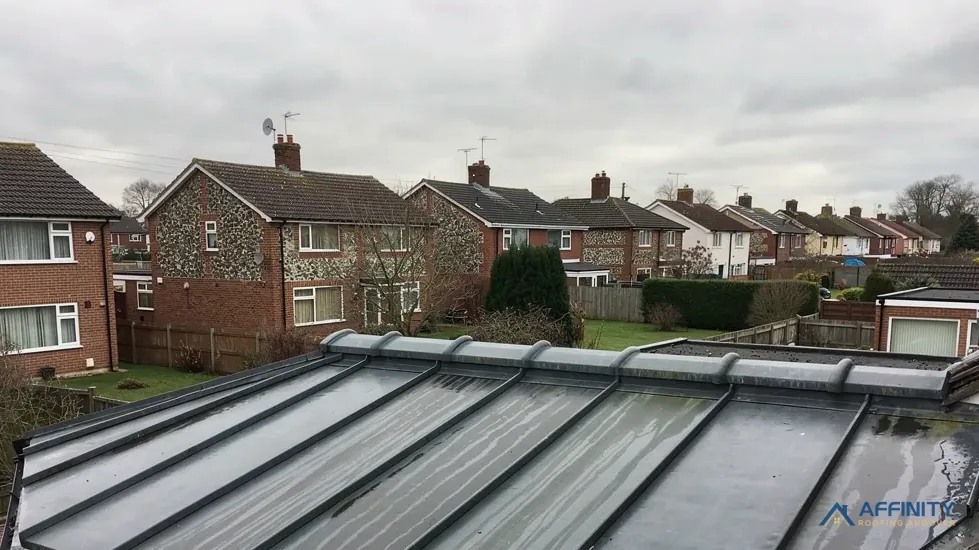
On a flat roof, HomeBuilding gives lead a life of 60 to 100 years, with supply-only cost around £170 per square metre. That figure is for the material, not a finished roof, and should not be multiplied into a total.
If a valley quote leaves out the lead code, ask for it. A plain answer is easy to give.
Where a roof has more than one valley, expect each to be assessed on its own length and flow.
Bays, dormers and awkward shapes
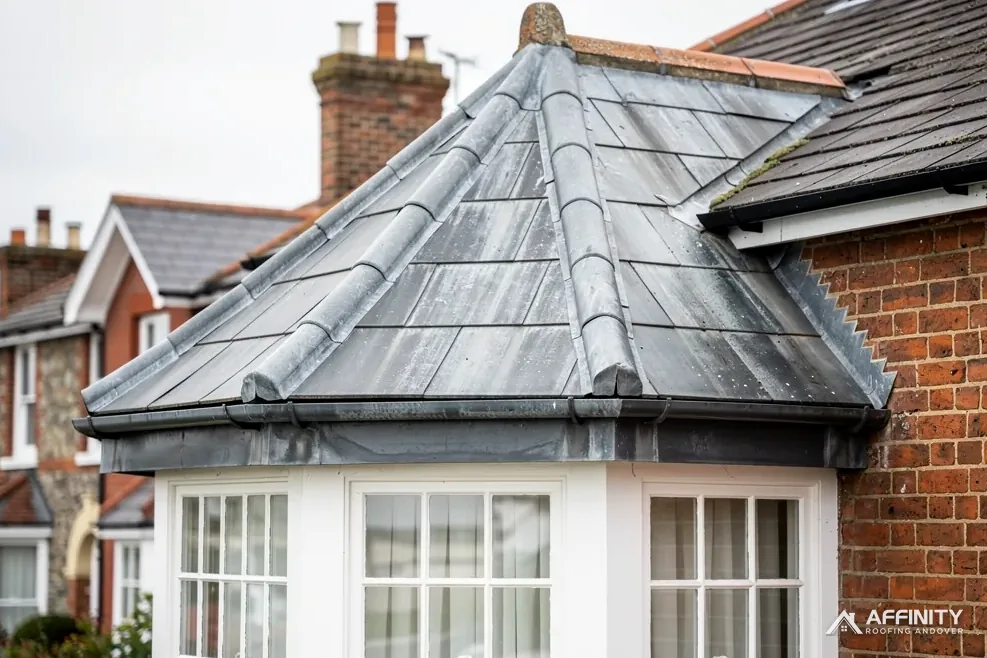
A bay window roof is one place lead is used on a house. It sits over the projecting window, usually with a small pitched or flat top, and it meets the main wall on one side and the tiles on the others. Every edge is a junction that needs lead, and every junction is a place water can get in.
The covering over a bay might be a flat lead roof, with rolls and drips, or a pitched roof of tiles with lead flashings and soakers around it. The brochure lists dormers among the uses for Codes 4 to 8, which covers the cheeks, the roof and the junctions to the main slope. A bay window's flat roof follows the same principle as a small flat roof: lead is laid in bays with joints built to move.
The things that fail here are familiar. Lead splits at corners where it was folded too sharply. Seams open as the metal moves. The lead can lift where it was not clipped. Water then runs under it, and the timber beneath rots.
Dormers need all of these skills together, and the cheeks (the side walls) are often clad in lead. Our guides to lead bay window roofs and the lead roofing service explain how we approach them.
If your bay or dormer is old, patination oil may have been applied to the lead to give it an even grey finish. That is a cosmetic treatment and says nothing about the lead's condition, so look at the seams and the corners.
On a listed house, traditional lead is often the expected material, and changes need listed building consent. Ask Test Valley Borough Council first.
Which standard applies, and what to ask
One frequent mistake is to say that lead roofs follow BS 6229. They do not. BS 6229:2025 is written for flexible waterproof membranes on flat roofs, up to a pitch of 10 degrees, per BSI. Membranes are all it covers. Lead is outside it.
Approved Document C, the Building Regulations guidance on moisture, points at paragraph 6.9 to BS 6915:2001 for lead. That is the document to look for, and a roofer who knows lead will know it. Ask which standard the work follows.
The Lead Sheet Association publishes its own manual, which is the trade's detailed reference for lead sheet work. Treat the codes in the table above as one maker's brochure and ask any roofer to confirm the code for your detail.
When you get a quote for lead work, these are the questions that matter.
- Which code is proposed for each part of the work, and why?
- How will the lead be fixed so that it can move?
- Will the old lead be removed and the substrate checked first?
- Is the lead cast or milled, and where does it come from?
- Does the price include scaffold, VAT and the repair of any damaged timber?
Our survey photographs the lead on your roof and the timber under it. If a repair will do, you hear that; if the lead has to be replaced, the photographs show why. Either way the price is one written total.