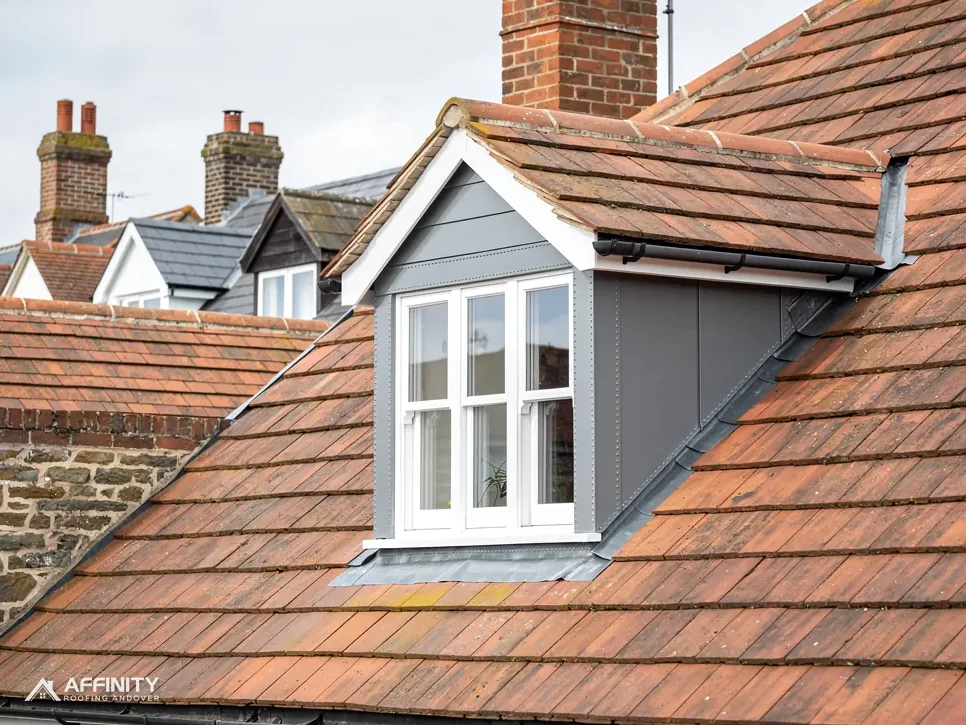
Flashing is the metal that closes the gap between a roof and anything rising through it or standing alongside it: a chimney stack, a party wall, the cheek of a dormer. When lead flashing fails, rain gets into the structure at that one gap, and the brown stain on a ceiling often shows up some way from the cause.
People understandably want a figure before anyone climbs onto the roof. Nobody can price a flashing from the ground, though. The cost turns on how many faces of the stack are involved, how heavy the lead needs to be, whether the old mortar joints will take new work and whether the job needs scaffolding. What can be offered is a published cost guide's typical UK range. It tells you what the market looks like in general, not what your roof will cost.
This guide gives the published figures for chimney leadwork and roof valleys, says what each one covers, and then goes through what moves a lead flashing price in practice around Andover and the Test Valley, so that a written quote reads sensibly when it arrives. Our lead roofing page shows the wider range of leadwork we handle.
The published range for chimney leadwork
MyJobQuote gives full chimney leadwork as between £350 and £920, with the scaffold the main swing (page last updated 22 September 2026). Read the spread as a nationwide guide to a whole job, not a rate per metre. It spans a lot of ground because a small single-flue stack on a low roof and a double stack on a three-storey house are not the same piece of work.
What full leadwork means on a chimney
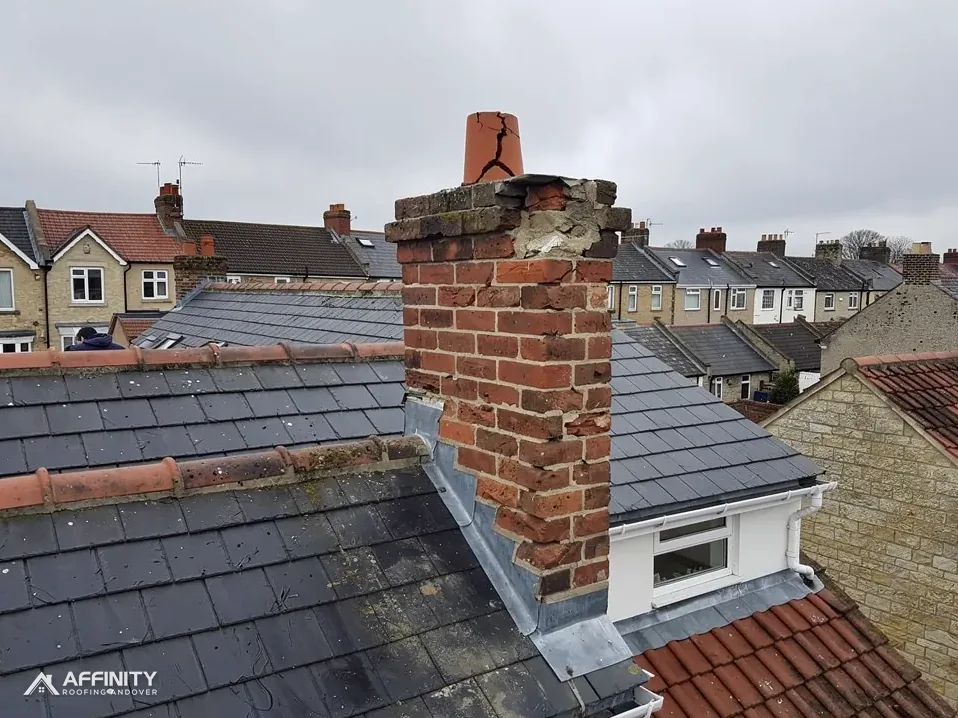
A stack is flashed on every face that meets the roof. The face on the downhill side takes an apron, one sheet of lead dressed over the tiles below the stack. The sides take step flashings, a run of stepped pieces that follows the roof slope up the brickwork. The uphill face takes a back gutter, a small lead channel that carries water round the stack. Every piece is tucked into a groove raked out of the brickwork, known as a chase, and held with lead wedges. Our guide to chimney lead flashing walks through each piece.
Where a range like this stops
A figure for leadwork is a figure for lead. Repointing the stack, rebuilding flaunching (the mortar crown that holds the pots), replacing perished brick and relaying tiles round the base all sit outside it. If the survey finds any of those, the written price covers them as part of the single total, and we explain why each is there when we send the photographs.
These are national guide figures, useful for setting expectations before a surveyor visits.
What moves a flashing price up or down
Most of the spread between £350 and £920 comes from a handful of things that show up on a survey.
Size and shape of the stack
A stack with four faces needs more lead than one built into a gable end, where one or two faces meet the roof. A broad stack carrying several pots also needs a wider back gutter. A stack straddling the ridge needs a flashing on both slopes, which roughly doubles the sheet involved.
Weight of the lead
Lead sheet comes in codes, each number standing for a thickness and a weight. Royston Lead's cast-lead brochure sets code 4 is 20.41 kg per square metre, code 5 at 25.40 kg and code 6 at 30.05 kg. Heavier codes cost more because they hold more metal. Which code suits a given piece depends on its job and its exposure, so we settle it on site.
Condition of the brickwork
Lead needs a firm chase to sit in. Where the mortar has gone to sand, or bricks have spalled (the face has flaked away), repointing or small brick repairs must come first. It is a common reason for a quote to land above the range for leadwork alone.
What the last repair left behind
Stripping a flashing that was wedged properly is quick. Stripping one that someone smeared with sealant is slow, because hardened sealant has to be cut and scraped from the brick by hand before a new chase can be formed. That labour appears in the price, and it is the main way a cheap patch ends up costing more later.
The roof valley figure
On valleys, MyJobQuote's average for a full replacement is around £540 (page dated 7 September 2026). That is a single average, so some jobs sit well under it and some far above.
What the job involves
Two slopes meeting at an inward angle form a valley, and a lead valley is a long trough of lead laid on timber boarding, with the covering on either slope cut back to a tidy edge. To replace it we lift the covering along both edges, strip the old lead and board, lay fresh boarding and new lead, and relay the covering. The length of the valley has the biggest effect on the price. Lead code and roof pitch come next. Our guide to lead valley replacement sets out how the stages run and what a failing valley looks like.
Why an average can mislead
A short valley between a main roof and a small porch is a quick afternoon. A long valley across a big hipped roof is several times the labour. The average blends the two, which is why we would never quote a valley from a headline number.
Tiles beside the valley
Old tiles at a valley edge are often brittle. Some crack as they are lifted. The survey notes which look weak, and replacements are matched where they can be found. If a house needs clay plain tiles or a particular slate, the matching is covered in the pitched and slate guides on this site.
More than one valley
A house with an L-shaped plan can have two valleys. Doing both in one visit saves setting up the access twice.
Scaffold and access: a large swing
MyJobQuote describes its chimney range as dependent on scaffolding, which matches what we see on site. A stack on the ridge of a two-storey house is not somewhere to work from a ladder for a flashing job, so a scaffold or access tower belongs in the plan.
When a scaffold needs a licence
Poles or boards that obstruct the road or pavement need a highways licence (Highways Act 1980 s169), and in Test Valley the issuing body is Hampshire County Council. Hampshire County Council wants the scaffold firm itself to make the application for the customer, charges £211.90 on application for the first two weeks and £72 for each further two-week period, and sets a lead time of ten clear working days between application and start. Its page adds that no licence is needed when the scaffold is on a private road. Other councils set their own fees in their own units, so Hampshire's numbers cannot be read across to a Wiltshire or West Berkshire address.
Sharing the scaffold
Chimney leadwork seldom travels alone. A stack that needs a new apron often wants repointing, new flaunching or a ridge tile reset as well, and one scaffold serves all of it. That is why we look at the whole stack at once, not a single flashing.
Low-level lead
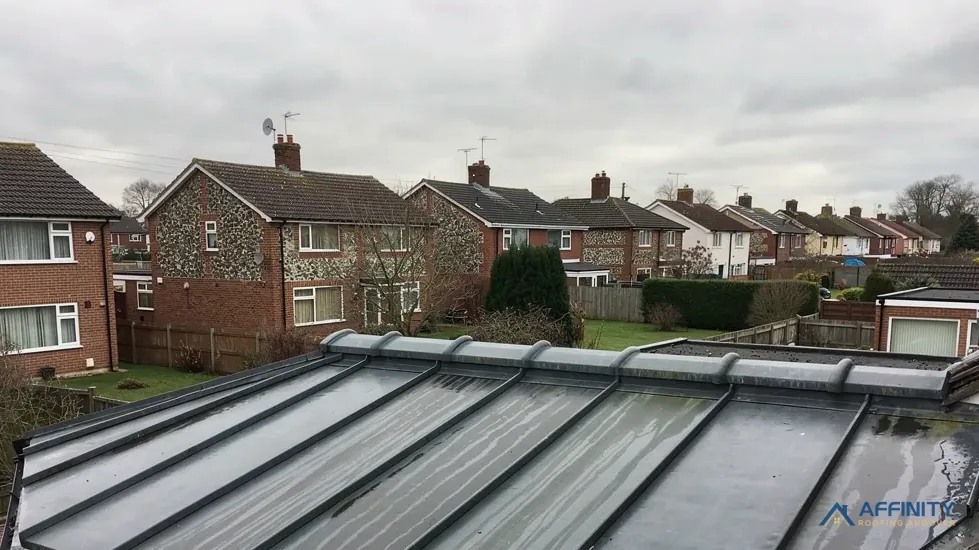
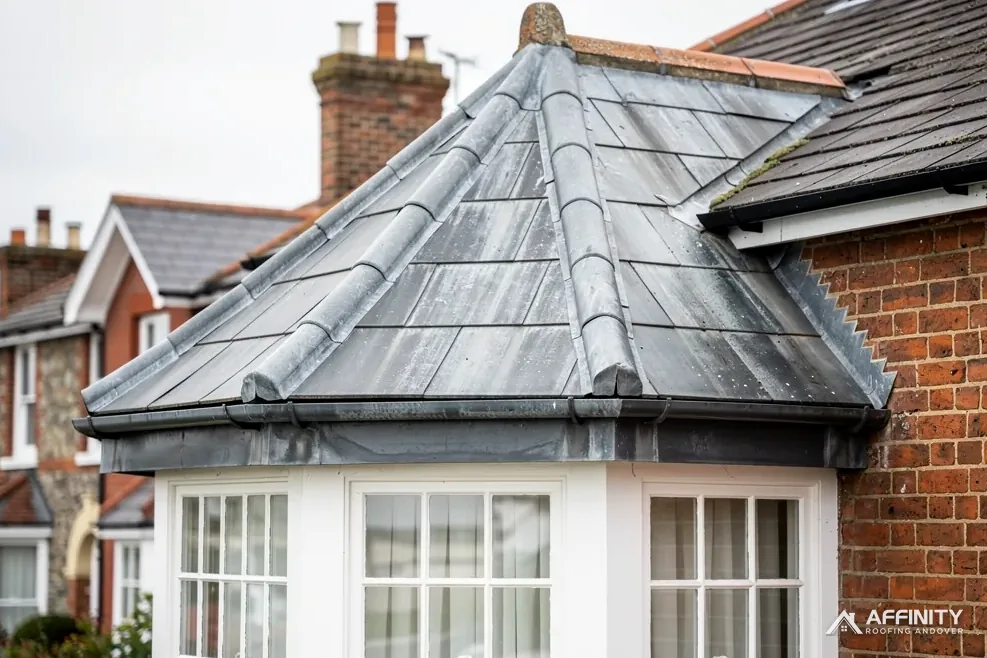
A flashing on the wall of a single-storey extension may be within reach of a low working platform. When no tower is needed the cost drops, and the quote reflects that. Roof windows, bay roofs and porch canopies fall into the same bracket, because the lead sits within reach of a platform and the access is simple.
Patch now or replace: the cost over time
When a flashing leaks, the lowest-cost move on the day is a bead of sealant. It seldom holds. Mastic along a lead joint stretches and shrinks with the weather, lets go of the brick and admits rain behind itself, and the next call-out is bigger than the first. Our guide to why sealant is not a lead repair sets out the mechanism in detail.
Spending once
In MyJobQuote's guide, lead flashing is credited with over 80 years of life. That is a floor, not a forecast. A flashing with a clean chase, firm wedges and the right code should outlast several roof coverings, so the outlay is spread across a very long life. Putting lead back in the same pattern is also the simplest route on a house in a conservation area.
When a repair is the right call
Where the lead is sound and has only lifted at one end, re-dressing it, which means shaping it back into the chase and re-wedging, may be enough. A repair is the better buy when the metal is good and the fixing has failed. Replacement is better when the lead is split, thin or already patched many times. The survey shows which of the two applies.
What happens to the old lead
Old lead has scrap value. Ask any roofer what becomes of what comes off the roof and expect the reply in writing.
Reading a quote for lead flashing
A useful quote tells you which parts of the roof are in the job, which lead code is going on and whether scaffold is in the total.
Check what the total includes
Ask whether the figure includes VAT and scaffolding. The standard VAT rate is 20% (GOV.UK), and one quote may include it while another leaves it out. Check too whether repointing and any tile work round the flashing sit inside the total. Ours is one total in writing, issued once the survey is done.
Ask for more than one
Citizens Advice advises collecting written quotes from three or more traders before choosing. What counts is the work described, since two quotes for one chimney can describe quite different jobs.
Beware the vague line
A quote that says only "lead work to chimney" does not tell you whether all four faces are covered. If it is unclear, ask what the surveyor found and which pieces will be replaced.
Keep the paperwork
Hold on to the written quote, the photographs from the survey and the final invoice. If the photographs show split lead or a crumbled chase, they also explain why the price is what it is, and they are useful to any later owner of the house.
If things go wrong
Section 49 of the Consumer Rights Act 2015 requires reasonable care and skill in any service. For advice on a dispute with a trader, the Citizens Advice consumer helpline is 0808 223 1133.