The short answer
Yes. Sheet lead is still used on UK roofs, mainly for flashings, valleys, gutters, soakers, dormer cheeks and flat roof details where a flexible, long-lasting metal is needed. Alternatives such as GRP, zinc and sealed membranes suit some jobs. On period homes and in conservation areas lead often remains the right material, because it matches what was there.
Where lead is used today
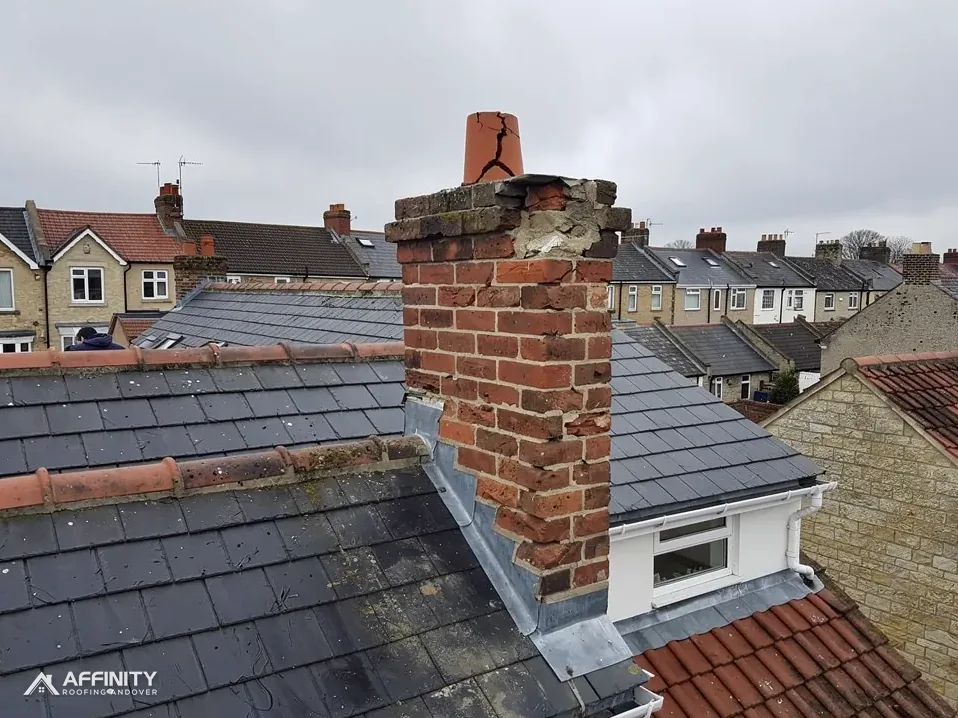
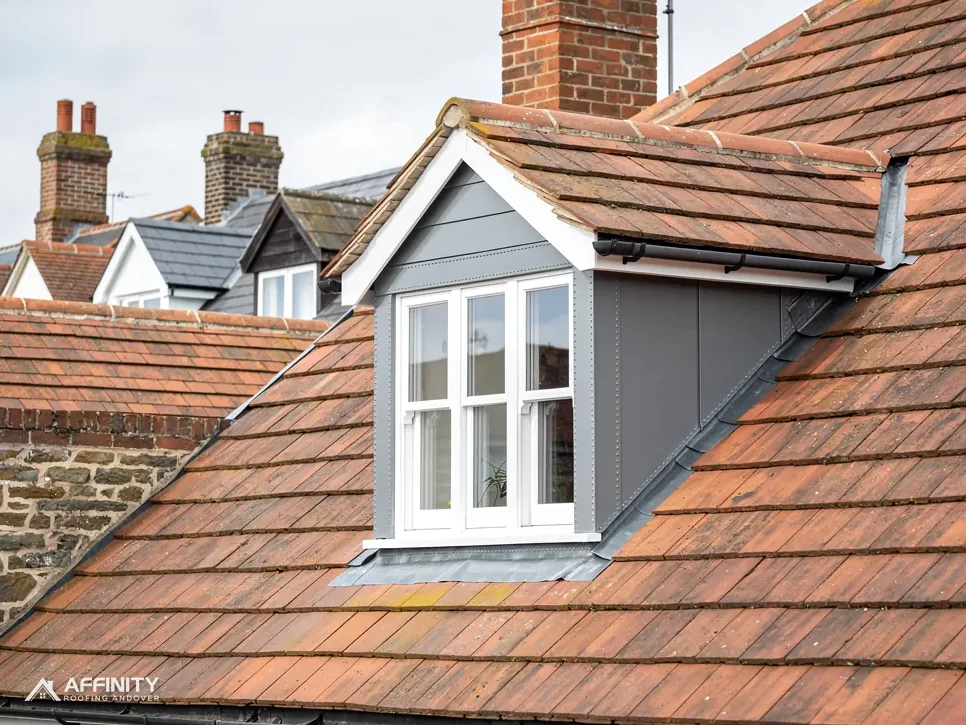
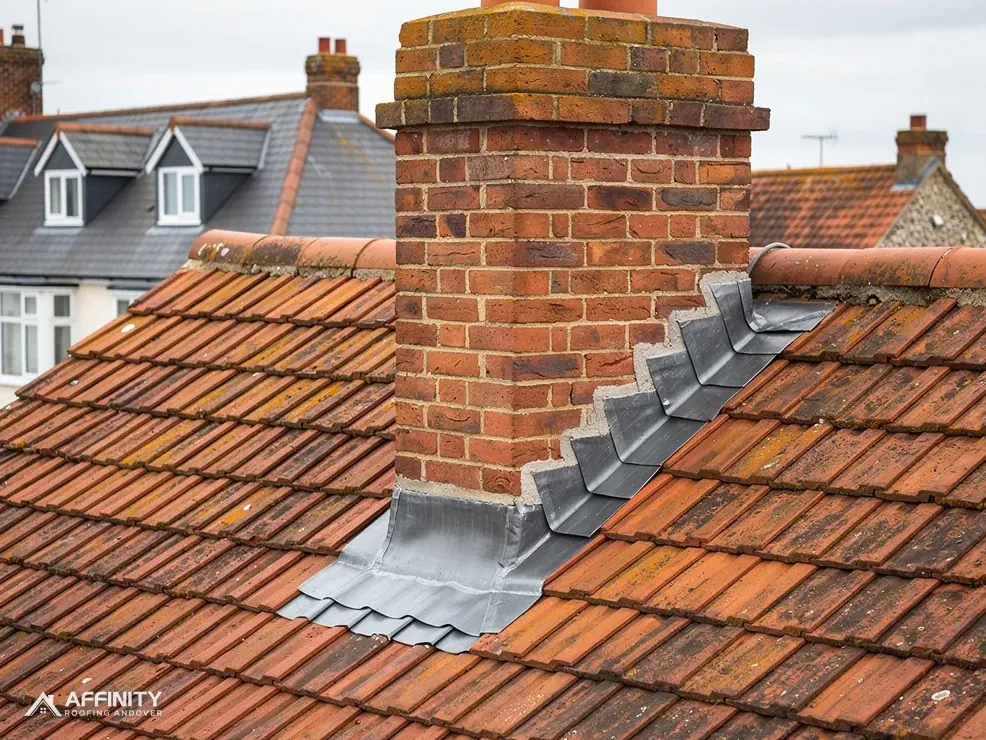
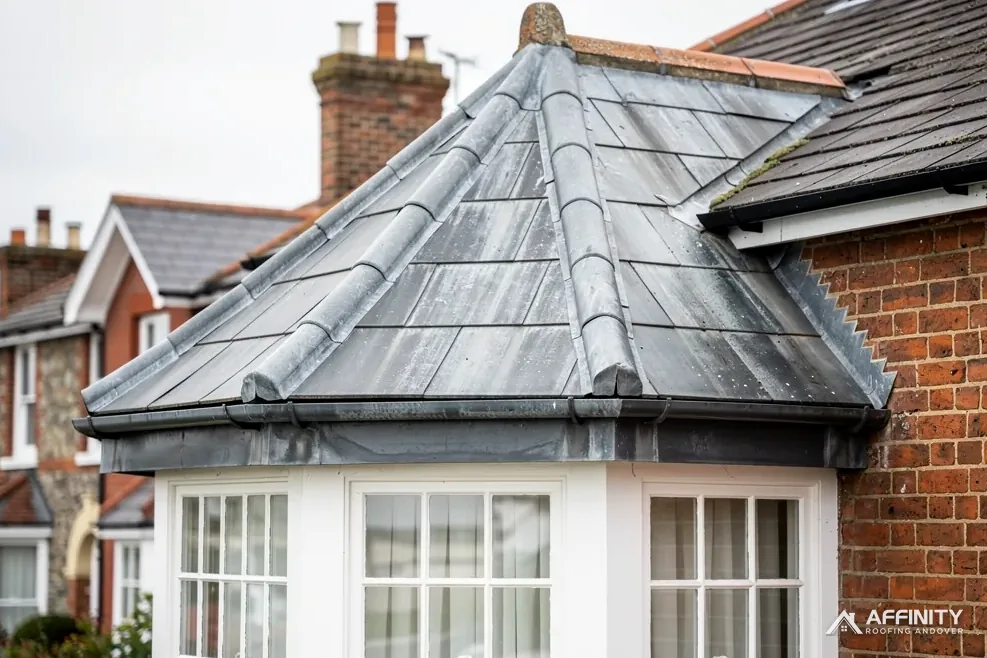
Lead is rarely the main covering of a pitched roof now. It earns its place at the joints and edges, where water has to be turned aside and the junction has to flex. That means flashings against walls and chimneys, soakers beneath tiles and slates, valleys and gutters, ridge details, dormer cheeks, porch canopies and some flat roofs.
Its character explains why. Lead can be worked tightly around awkward shapes, it is heavy enough to stay where it is put, it can be folded into rolls and drips that allow for movement, and it tolerates the movement that wrecks stiffer materials. It does not rust or rot, and it weathers to a stable grey.
Each lead code has its standard jobs in Royston's brochure, from soakers up through flashings and gutters to dormers. On lifespan, HomeBuilding gives flat lead roofs 60 to 100 years, while MyJobQuote says flashing can last for over 80 years. Both are typical ranges, never promises.
The lead roofing page describes the survey and renewal of leadwork across a whole roof, and why the detail matters more than the sheet.
The alternatives and how they compare
Other materials do some of lead's jobs. GRP makes joint-free valleys and flat roof areas. Zinc and copper are used on modern and decorative work, and the BRE environmental product declaration for VM Zinc states 100 years. Self-adhesive tapes and bitumen strips serve as quick flashings, and mortar fillets and sealants are sometimes used, though they struggle with movement.
Each has trade-offs. GRP has no scrap value and needs few joints, but its published life is much shorter than lead's. Self-adhesive flashing is easy to fit, yet it is a stop-gap and seldom suits a heritage roof. Our guide to lead flashing alternatives goes through the options one by one.
Metals such as zinc behave differently from lead in how they are formed and joined, so the detail needs a fitter who knows them. A material that is excellent in the right place can fail quickly in the wrong one, and mixing metals on one roof can cause corrosion where they touch, so the fitter should know what is already up there.
No alternative wins everywhere. Weigh the roof, the age and style of the building, how long you plan to stay and how accessible the work is. If you may sell soon, a neat repair that matches the existing leadwork is often enough. A survey with photographs lets you see the choices against your own roof.
Why period homes keep it
Older houses were built with lead. Their tiles and slates were laid with lead flashings and valleys, and their proportions, fixings and ageing were designed around it. A modern substitute can look wrong, weather differently or fit badly beside the original materials.
That counts most for listed buildings and in conservation areas. Listed building consent covers changes to a listed building's character, so swapping lead for another metal or plastic can need permission. In a conservation area, ask your council whether an Article 4 direction applies before changing roof materials.
Our answer on lead roofs in conservation areas explains the checks. The practical route is often to repair or renew in lead, to the same pattern as before, rather than invent a new detail.
Basingstoke and Deane shows how seriously a council can take it: in four of its town conservation areas its Article 4 advice wants the original slate and clay kept, with modern lookalikes unlikely to be accepted.
Where the building has no special status, the choice is freer, though lead still suits the age and style of many older homes. A tidy, well-dressed flashing also adds to the look of the roof from the street.
Choosing and what to ask
When you get a quote for leadwork, ask what code is being used, where it goes and how it will be fixed. Lead that is the right thickness and fixed so it can move gives its long life. Lead that is too thin, pinned tight or laid over a rotten deck will fail, whatever the metal.
Ask whether the existing leadwork can be kept. Often a flashing is sound and the fault lies in the pointing, and repointing is cheaper and keeps what is original. Where renewal is needed, a survey with photographs shows why, and we send you the pictures.
For scale, As a guide, MyJobQuote (Sep 2026) lists £350 to £920 as typical for full chimney leadwork, with scaffold making the difference, and around £540 for a full valley replacement. The written price follows a survey.
Theft worries some owners, and our guide to lead stolen from a roof covers what to do. Whatever material you choose, the quality of the fixing decides the result.