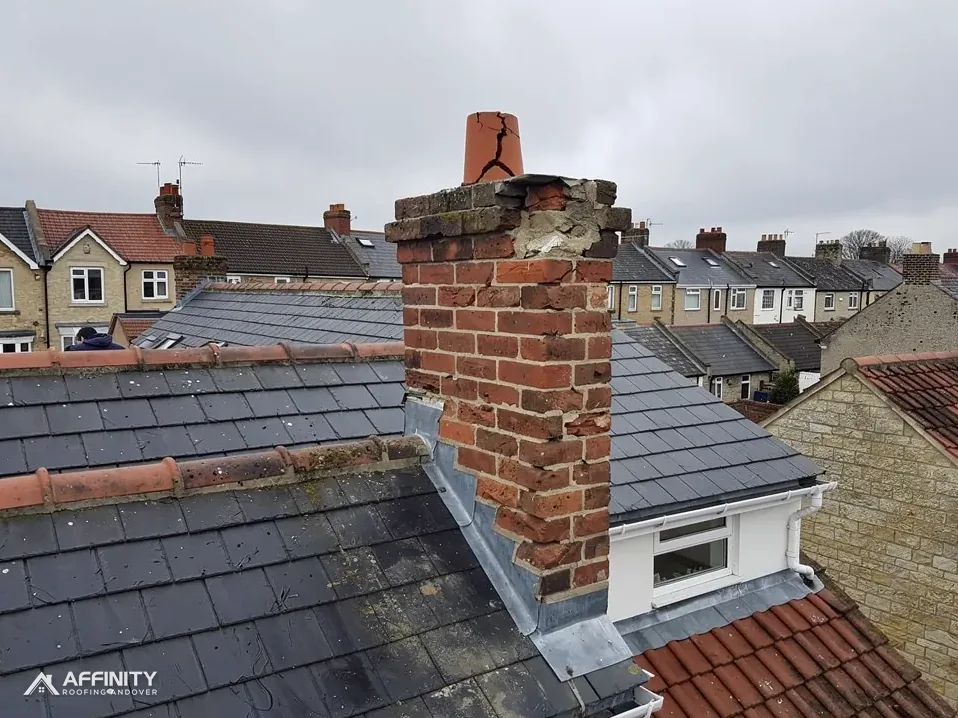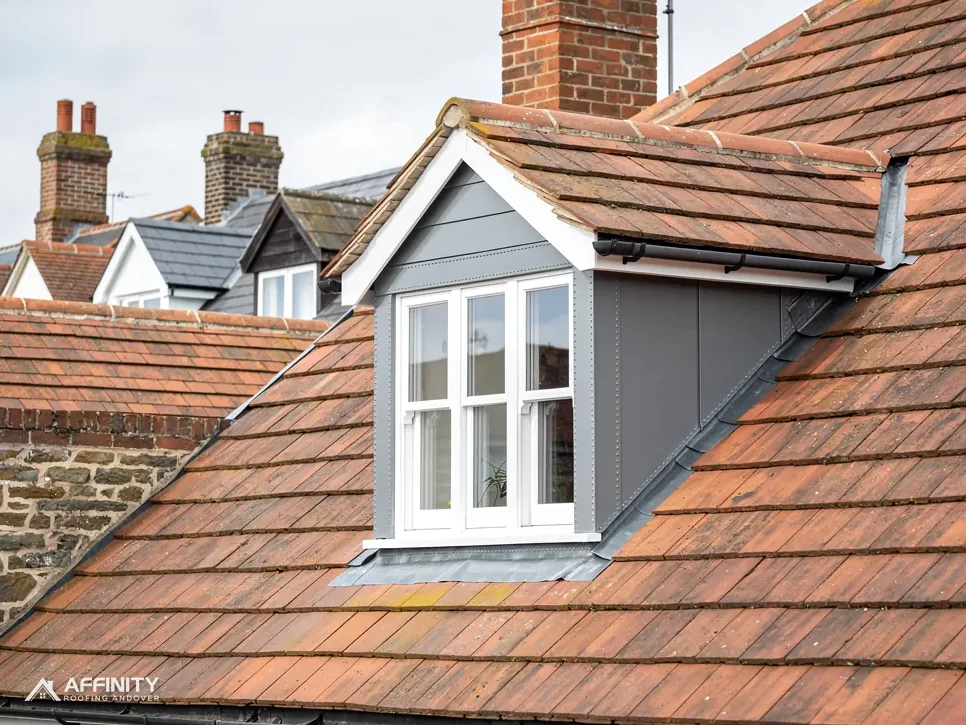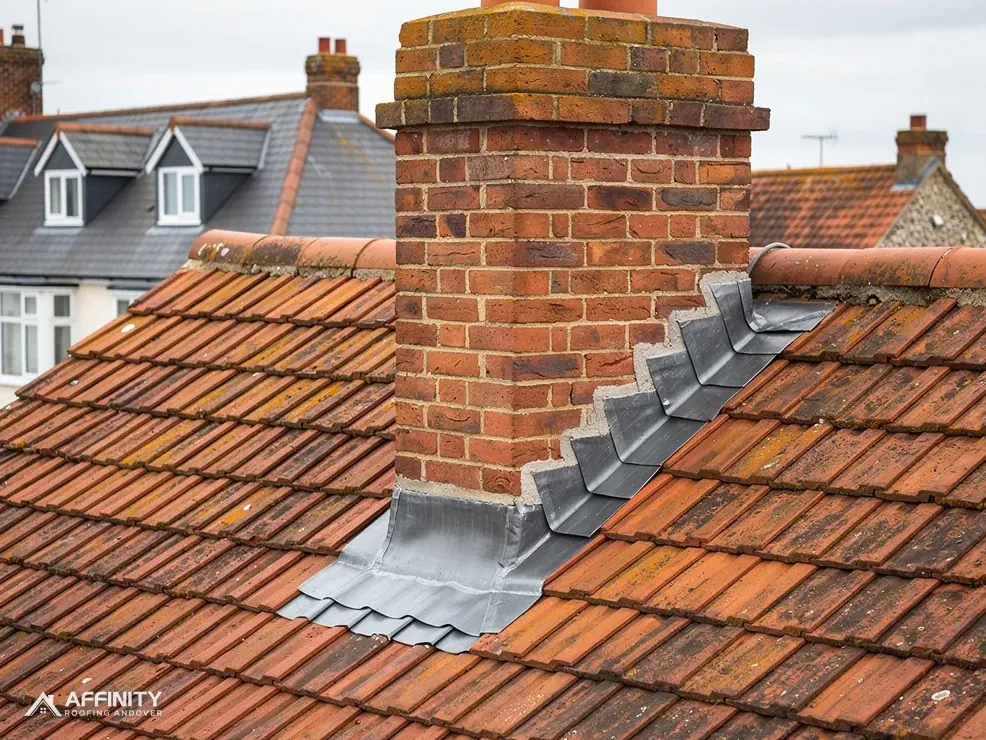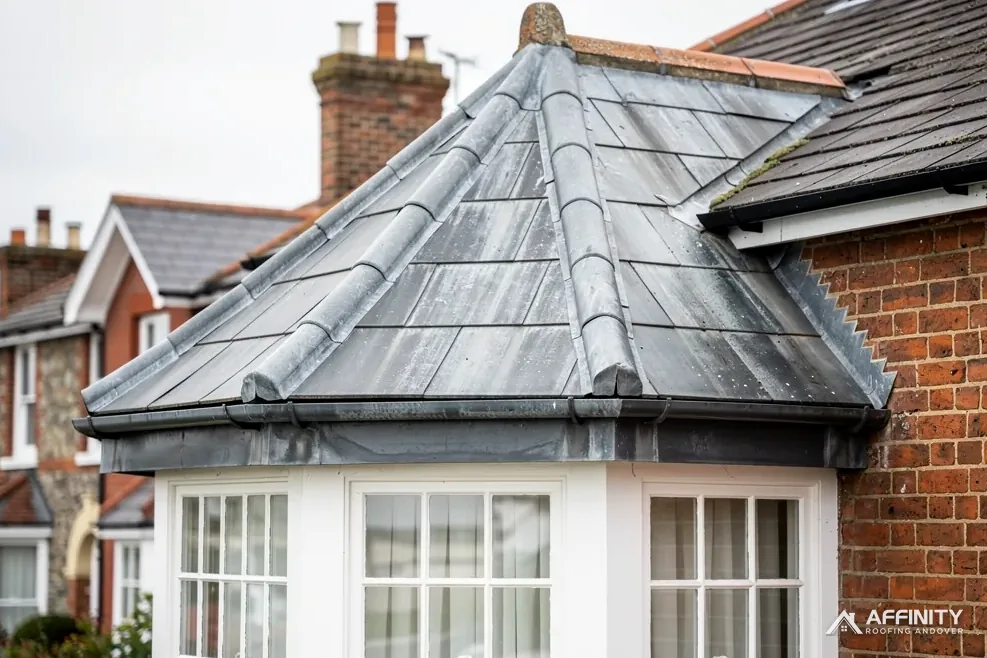
A new lead flashing looks smart on the day it is dressed into place: clean, silvery and soft-edged against the brickwork. Then the weather arrives. A few damp weeks later, white powder appears on the surface and streaks run down onto the stack, the tiles or the render below. Owners often assume the lead is faulty or that a cheap grade was used. In most cases it is neither. The staining is a normal response of fresh metal to damp air, and it is cosmetic.
Roofers who work with lead treat it with a patination oil, a thin coating wiped over the sheet that gives the surface a stable, even tone before the weather gets to it. The treatment is quick but time-sensitive, and it is much easier to do before the first rain than after.
This guide explains why new lead stains, what the oil does and where it stops, when it is applied, who should do it and how to deal with staining that has already appeared. It covers flashings, valleys and flat roofs, whether the lead is brand new or part of a repair on a Test Valley house.
Why bright lead turns white and streaky
Lead is a reactive metal. As soon as a bright surface meets air, it begins to form a thin surface layer, and in the presence of water and carbon dioxide that layer becomes a chalky carbonate. On lead that has weathered gradually, the result is an even grey patina that is stable and protective. On new lead that is wetted unevenly, the surface turns blotchy: patches of white powder, patches of clean metal, and stains where rain has carried the powder away.
Where the stains go
Rain washes the white deposit off the lead and down the roof. It leaves streaks on the brickwork under a chimney flashing, on the tiles below an apron and on the face of a wall beneath a lead cover. The marks can look alarming, but they are a surface film and do not eat into the brick. They are also hard to shift once they dry.
Is it a defect?
It is not a defect, and it does not mean the lead has failed. A flashing in a heavier code such as code 5 stains in the same way as one in code 4. Royston Lead's brochure lists the codes by thickness, from 1.32 mm for code 3 to 3.55 mm for code 8, and the staining does not depend on which is used. What changes is how well the surface was prepared and how soon after fitting it rains.
Our lead roofing page lists the parts of a roof that carry lead, and every one of them can show this effect while the metal is new.
What patination oil does
Patination oil is a thin oil, sold specifically for lead, that is applied to the surface of new sheet. It does not paint the lead or seal the roof. Its job is to slow and even out the chemical change on the surface, so that the lead weathers to a uniform grey in place of a patchwork of white.
What it protects
The oil protects the look of the lead, and the brick and tile beneath it, during the period when fresh metal is most prone to staining. A treated flashing tends to go dull grey evenly and to shed far less white powder onto surfaces below. Where the colour of a new chimney or a visible roof matters, as it can in a conservation area, treating the lead is a sensible step.
What it does not do
It does not make a poor flashing waterproof, it does not replace correct dressing into the brickwork, and it does not extend the metal's life. Lead flashing can last over 80 years in MyJobQuote's guide, with or without the oil. A flashing that is going to fail because the chase is crumbling will fail regardless of what has been wiped over the surface.
Check the data sheet
Different oils come with their own instructions for coverage, drying and how soon the roof can be rained on. The manufacturer's data sheet sets the method, and the job should follow it exactly.
When to apply it
Timing decides whether the oil does any good. The aim is to coat clean, dry, newly fitted lead before it has been rained on or has started to stain.
Straight after fitting
The ideal moment is at the end of the dressing, once the lead is in place and the roofer has finished handling it. Handling leaves finger marks and dust, and these show up through a weathered patina, so the surface is wiped clean first. The oil is then applied in a thin, even coat across all the visible lead, including the edges that will sit proud of the brick.
Choosing the weather
The oil goes on a dry surface and needs time to settle before rain. Applying it just before a downpour wastes the effort. A roofer who is working through a changeable week will normally leave the final coat until the forecast clears, and will protect the finished lead from a shower with a sheet if one threatens.
If the lead is already blotchy
Staining that has already appeared can often be tackled, though it is harder than prevention. The surface is cleaned back, the white deposit is removed with the cleaning method the oil's maker recommends, and then the metal is treated. Brick and tile marks below are dealt with separately, and some may need time to fade or a gentle clean.
Older lead
Lead that has weathered over many years does not need the oil. It has already formed its patina, and applying it is a waste. The exception is a new section spliced into an old roof, where a bright patch beside grey lead looks odd until it catches up. Treating only the new piece, and letting the rest alone, evens things out faster.
Who should apply it, and how
Patination is a roofer's job, done as the last stage of a leadwork repair. It is not a task to leave for the householder or to do from a ladder, because the surfaces that matter, such as the top of a chimney apron or a valley, are the hardest to reach.
Handling the product
The oil is a chemical, and lead is a toxic metal. The product's safety data sheet explains what to wear, how to dispose of rags and how to keep the product off surfaces it is not meant for, and a roofer working with lead should follow it. Avoid contact with skin, keep it away from water drains where you can, and never leave oily rags on the roof.
What the survey covers
When we price a new flashing or valley, we note whether the lead will sit in a place where staining would be visible, such as the front of the house, a light-coloured brick or a pale roof. We tell you whether the oil is worthwhile, and if it is, the one written price already covers it.
Cleaning up
The finished job should leave no oil spilt on tiles or brick. A wipe-on method, using a cloth or small brush, controls where it goes. Spraying is less precise on a windy roof and is avoided close to neighbouring surfaces.
Asking your roofer
If you are having lead fitted, ask whether the lead will be patinated and when. A good answer names the product and the day it will be applied.
Dealing with white marks on brick and tiles
If white streaks have already run onto the brickwork, don't reach for a wire brush or a pressure washer. Both can damage the face of old brick and mortar, and the second of these can force water into places it should not go.
Start gently
Begin by letting rain do its work. In many cases the streaks fade over several months as the lead settles and the weather washes the deposit away. If they persist and the colour matters to you, ask a roofer or a masonry cleaner to try a small test patch with a mild method, away from the most visible part of the wall.
Tiles and slates
Clay and concrete tiles can mark where lead runs over them, and natural slate shows white powder more clearly than most coverings. Marley does not recommend high-powered jet washes for roof coverings, and a soft brush used by hand is gentler still. Hand cleaning with a soft brush is safer. Our guide to cleaning a slate roof sets out the method for slate.
Prevention next time
If you are having a second flashing fitted, ask for the oil on it from the start. A new valley or a replaced apron next to older lead can look odd for a while, because the new metal is bright against grey. Treating it at the time speeds up the match.
The long-term picture is a grey roof detail that blends in, which is what lead is supposed to do.
What it costs and how it fits the job
Patination oil is a small part of a lead job. What it adds depends on how much lead is on show, how many visits are needed to apply it and which product is used. When we include it, it is part of the one total in the written price.
Wider cost context
MyJobQuote gives full chimney leadwork as between £350 and £920, with the scaffold affecting where a job falls (22 September 2026), and a full valley replacement at around £540 (7 September 2026). Those are typical UK figures for the leadwork itself. Our guide to lead flashing cost explains what moves them.
Is it worth paying for?
Where the lead is out of sight, at the back of a house or on a roof that nobody sees, the stains may not matter. Where the flashing is on the front of a house, over pale brick or on a street where appearance counts, the treatment pays for itself in avoided cleaning. In a conservation area, an even grey patina also keeps the roof looking as the planning authority expects.
Checking the permissions
Replacing lead like for like is unlikely to change the external appearance, but on a house inside a conservation area, ask Test Valley Borough Council whether an Article 4 direction applies. A listed house adds listed building consent for work that touches its character.
Next steps
Mention the oil on the survey and we will say where it matters on your roof.