The short answer
A leaking joint is fixed by cleaning it, then either resealing it or replacing the union, which is the clip-on connector that links two lengths. If the seal is fine but the joint still weeps, the run has usually moved or sagged, so the brackets are adjusted and the gutter rehung at the right fall. Sealant over a dirty or loose joint is a short-term patch only.
Why joints leak in the first place
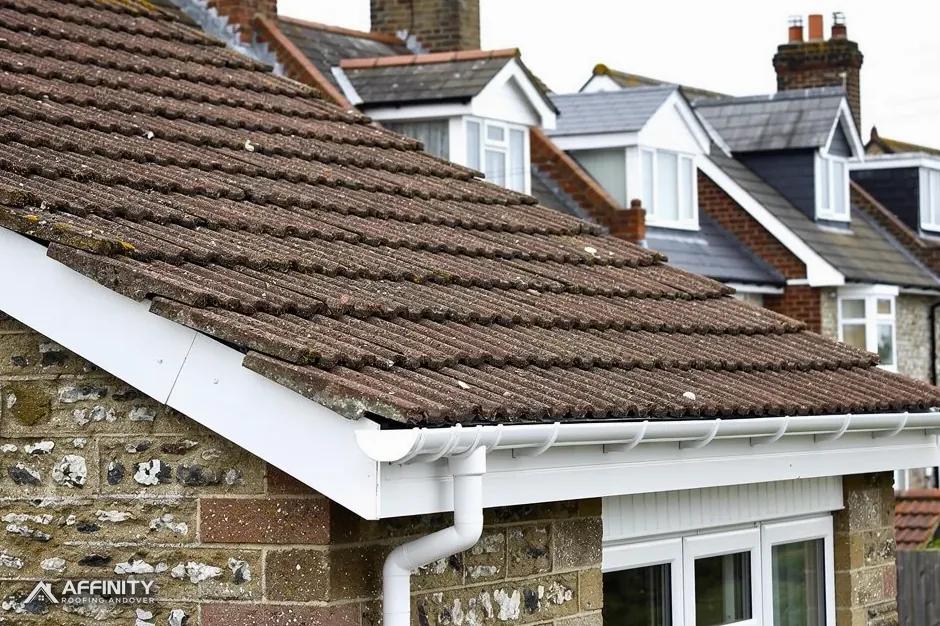
A gutter run is made of lengths joined by unions. In plastic systems, each union holds a rubber seal that grips the ends of both lengths, and the gutter is clipped in. In older metal systems, the lengths overlap and are bolted or jointed with putty or sealant. Both kinds depend on a clean, tight fit that stays dry.
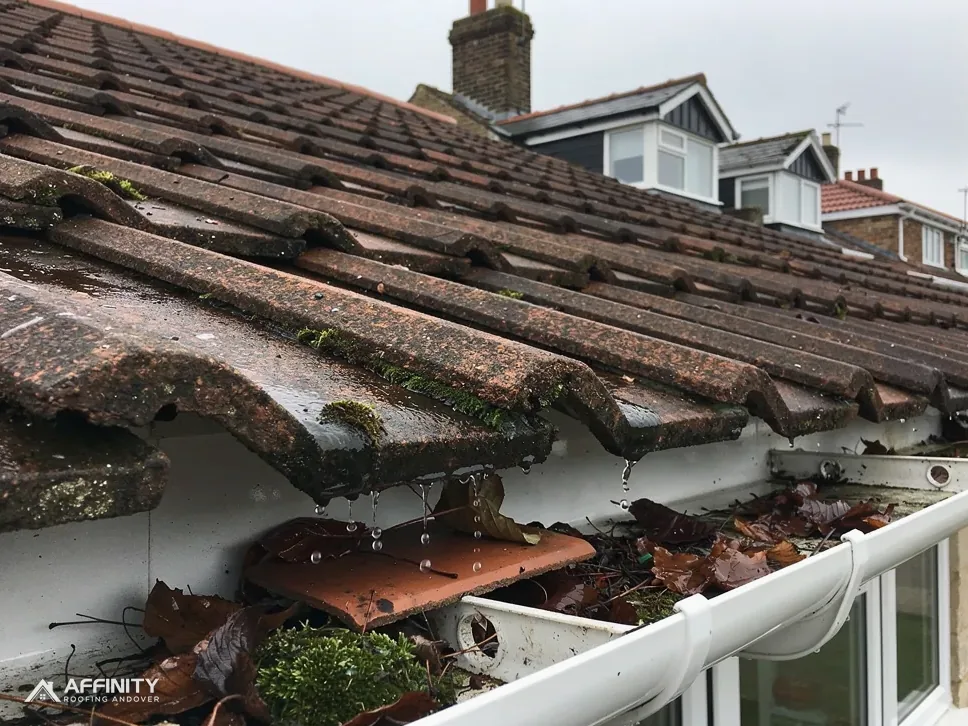
Those joints leak for three common reasons. The first is age: rubber hardens, sealant cracks and metal fixings corrode. The second is dirt, because grit and silt collecting at the joint stop the seal from sitting properly, and water works around it. The third is movement. Plastic expands in sun and contracts in cold, and a gutter pushed hard into its union with no room to move will pull out in winter and weep.
A sagging run or a loose bracket alters the angle at the joint. Water collects at the low spot, the seal sits submerged for long periods, and it fails sooner. In those cases, the leak is only the symptom, and the cause is in the fixings. A tell-tale is a drip from the same place every time it rains, usually with a darker patch on the board beneath. Check that spot first when you look.
Seals and sealant
The simplest repair is to clean the joint thoroughly and seal it again. Where the union has a rubber seal, a fitter lifts the gutter out of the union, wipes out the grit, checks the seal for splits and refits it, sometimes with a fresh seal. Some joints are made watertight with a compatible gutter sealant, applied to clean, dry surfaces.
The condition of the surfaces matters more than the product. Sealant on top of a dirty or wet joint peels away within weeks. A good repair removes the old material, cleans and dries the parts, and then refits them so the seal is compressed correctly.
A lick of silicone smeared along the outside of a leaking joint is not a repair. It hides the drip for a short while, then fails, and the joint carries on leaking behind it. Our guide to gutter cleaning explains how the debris that causes this is removed.
If the leak persists after resealing, the fault lies elsewhere, usually in the support or the fall.
Replacement unions and sections
When the union itself is cracked, brittle or distorted, a new one is the answer. A new union of the same make and profile clips on in minutes, and the gutter sits into a fresh seal. Mixing makes is risky, since profiles that look alike can differ by a few millimetres and leak straight away. Bring a photo of the old union, or a spare, when you buy parts.
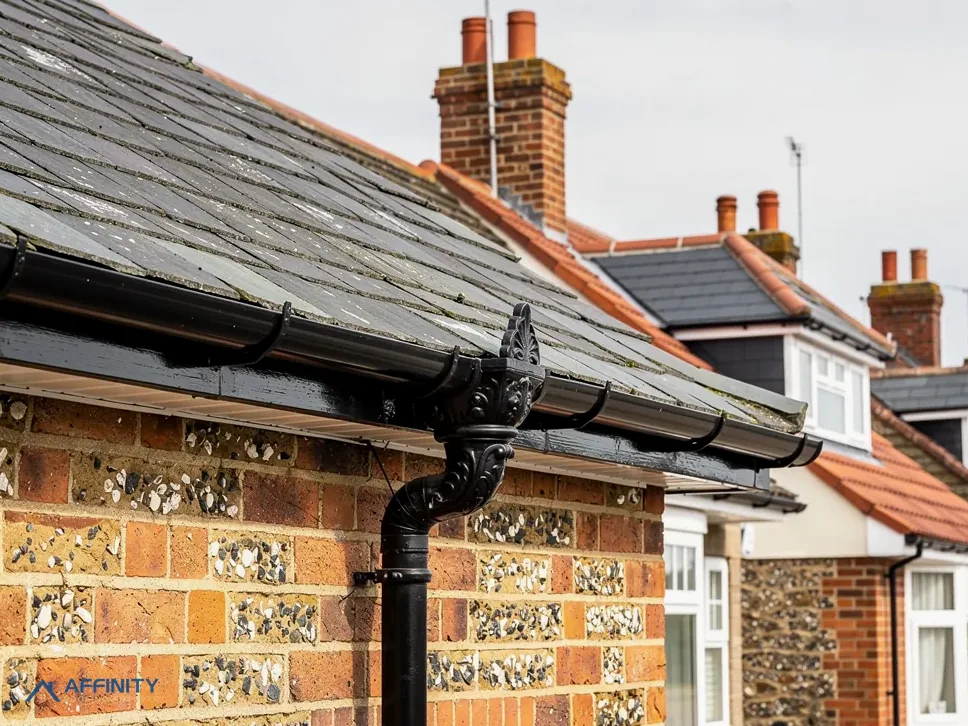
Where the gutter is old and the maker's parts are no longer sold, the options widen. A damaged length can be taken out and matched with a modern equivalent and an adaptor, or the whole run can be renewed so everything matches. Our guide to gutter profiles helps you work out which shape you have.
Cast iron and concrete runs are jointed differently. Cast iron uses bolted flanges with a seal, and those can be remade with new bolts and sealing strip, while concrete joints may need specialist repair. A leak in those systems calls for someone who has handled them before.
If several joints on one run are leaking, replacing the run is often the sounder choice than renewing each joint in turn, because the seals tend to age together.
Cost, access and re-fixing the run
A single joint repair is a small job, and the cost is mostly the access: a ladder at ground level, a tower on a second storey. Cost guides do not publish a price for one joint, but Which? (Nov 2025) reports £75 to £350, ex VAT, for a typical UK gutter clear-out, a useful guide to the scale of a small visit. The written price follows a survey.
If the joint leaks again after a repair, the run has probably moved. Fixing that means resetting the brackets so the gutter falls gently towards the outlet, and replacing any bracket that has bent or pulled out of the board. Our answer on gutter fall shows how small the correct slope is.
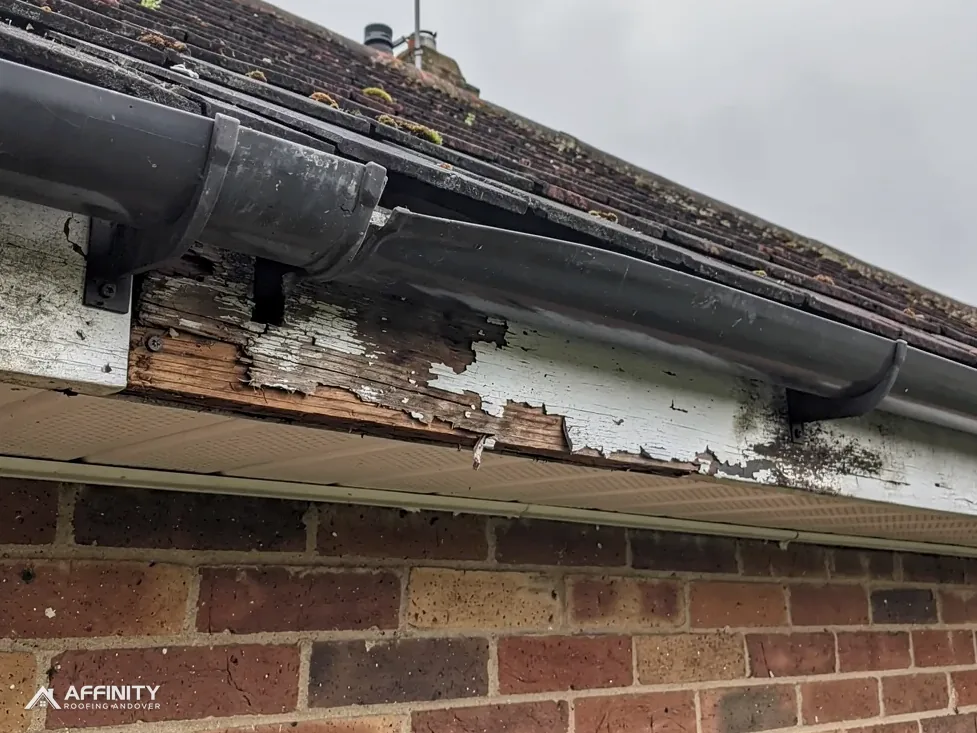
Look at the fascia behind the leak too. Constant dripping can soften the board, and a repair that stops the water but leaves a rotten board will not last.
The guttering, soffits and fascias page explains the survey, in which we photograph the joint, the bracket and the board behind it so you see what we find.