The short answer
Gutters sag because their support has failed. The brackets may have bent, loosened or snapped, the fascia board they screw into may have gone soft, or the run has too few brackets for the weight it carries. A full gutter is heavy, and ice and debris add more. The repair is to fix the cause and rehang the run at a gentle, even fall.
Brackets and the fascia behind them
Every gutter hangs from brackets, and every bracket relies on the board it is fixed to. When a gutter sags, the first question is whether the bracket has failed or the fixing behind it has. Plastic brackets crack and snap with age and sun. Metal brackets bend under load or rust through. Screws pull out when the timber behind has gone soft.
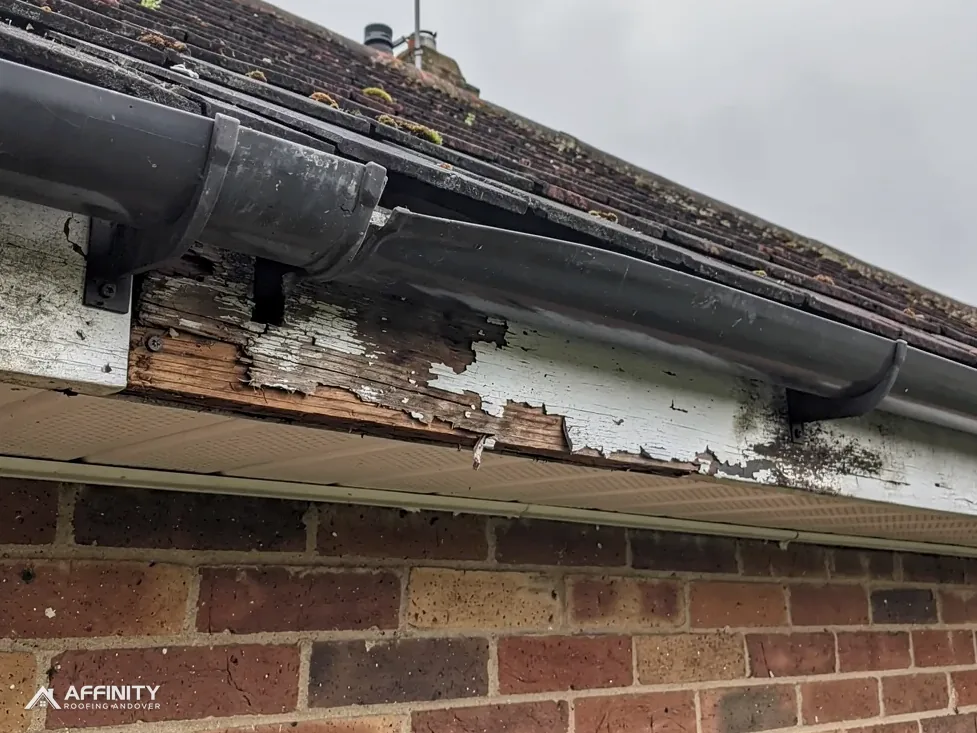
Check the fascia first. A board that has been wet for years, from a leaking joint or an overflowing run, softens and splits, and screws then hold nothing. You can sometimes see it: peeling paint, dark patches, boards that bow or crumble when pressed. We test the wood with a screwdriver and photograph the result.
Where only a few brackets have failed, replacing them with the same type, into sound timber, restores the line. Where the board is rotten, new brackets into old wood will not last, and the board must be mended or renewed before the gutter goes back. Our answer on the difference between a fascia and a soffit explains the roofline parts.
Spacing counts as well, as our answer on gutter bracket spacing explains.
Weight, ice and loss of fall
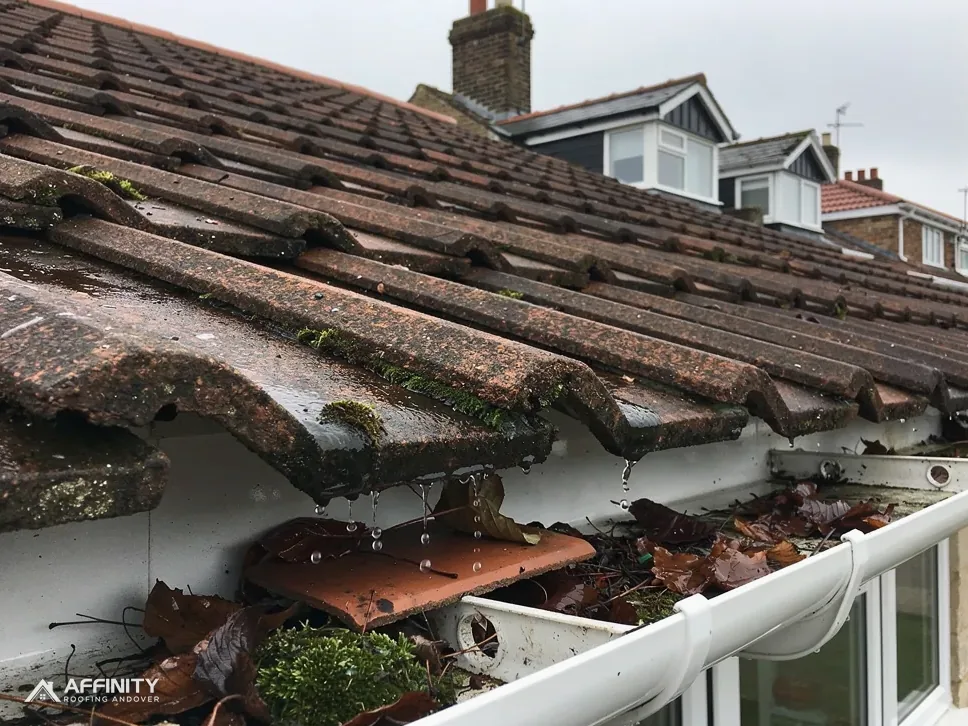
A gutter that holds water carries a surprising load. Water is heavy, and a full run can weigh far more than the empty channel, so brackets that were fine for a clear gutter are stressed by a blocked one. Wet leaves and silt add to it, and in winter ice expands inside the channel and pushes it out of shape.
That is why neglected gutters sag first. Regular clearing keeps the weight down, and our guide to gutter cleaning explains the job. A gutter that has been left full for seasons has often bent its brackets before any rot appears.
Sagging also destroys the fall. A gutter needs a slight slope towards the outlet. Brett Martin gives 1 mm of fall for every 600 mm of run. Once a section dips, water stops draining and sits in the low point, which adds more weight and sags it further. This is a downward spiral that gets worse with each wet winter.
Ladders cause damage too. Leaning a ladder against a plastic gutter can bend it, and the dent shows later as a sag.
Overhanging branches that drop heavy loads, or a fall of snow from the roof above, can do the same in a single event.
Spotting it early
Stand back across the road on a dry day and look along the gutter. The line should look straight and even. Dips, bows and gaps between the gutter and the board are all early signs. After rain, look for standing water in the channel and for drips from the joints along the run.
At closer range, watch for a gutter that tilts outwards at the top, which means the brackets have rotated, or a gap behind the gutter where the board shows. If a bracket is hanging free or missing, the gutter is relying on its neighbours, and they will soon follow.
Check the ground below for splashes on the wall, mossy patches where water drips and stained paving. These show where the water goes when the gutter cannot hold it.
The sooner the sag is caught, the smaller the repair. Photograph the dip from the same spot each season, and you will see whether it is growing. A single bent bracket is a modest job, done in a short visit. A run that has held water for years has often stained the board, loosened the unions and begun to rot the rafter ends, as our guide to rotten rafter feet describes.
The repair
The repair starts by working out why the gutter sags. At the survey we sight along the run, check every bracket and test the board behind it, then photograph what we find. You see the same pictures, so the plan is clear before any work starts.
For a local fault, the fitter unclips the affected length, replaces failed brackets, refixes into sound timber and resets the gutter to a steady fall. A new bracket between existing ones can take up a dip. Where the fascia is soft, it is cut back, a new section is fitted or the whole board is replaced, and the gutter then goes back.
When the run is old, cracked or mismatched, replacing the whole gutter may be better than patching it, since a new run with the right brackets starts fresh. The written price is one total for the job, access included: a tower or scaffold is needed above ground floor level.
The guttering, soffits and fascias page explains the survey.