The short answer
Sometimes. A new covering can go over the old one if the existing layers are well bonded, the deck is sound and dry, and no moisture is trapped between them. If the old roof is wet, blistered or soft underfoot, laying over it buries the problem. An overlay is still a new waterproof layer, so the Building Regulations apply to it, including the insulation question.
The deck decides
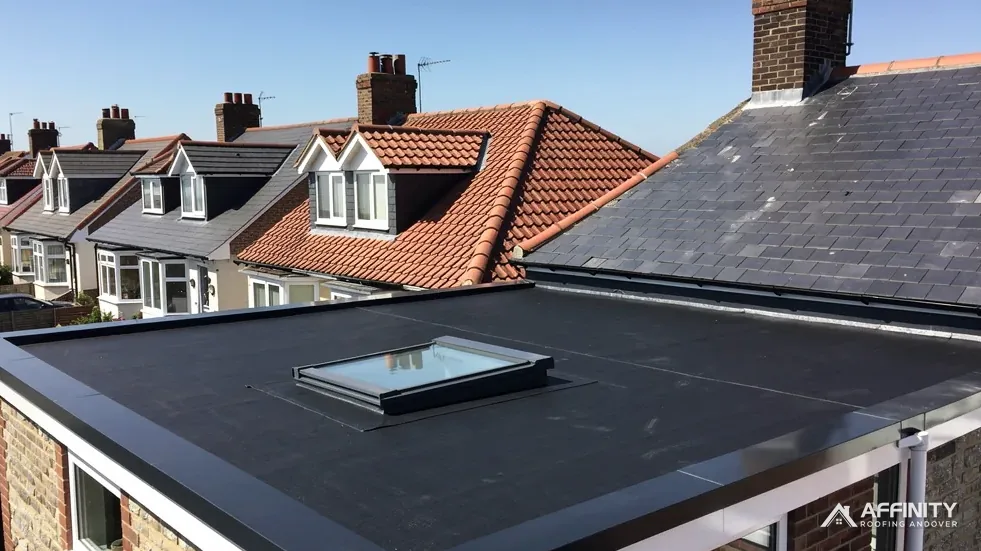
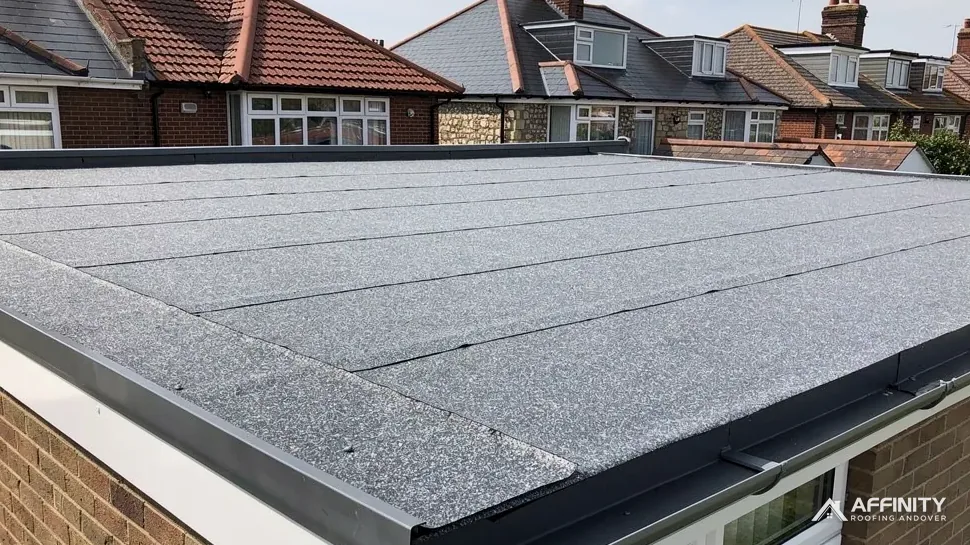
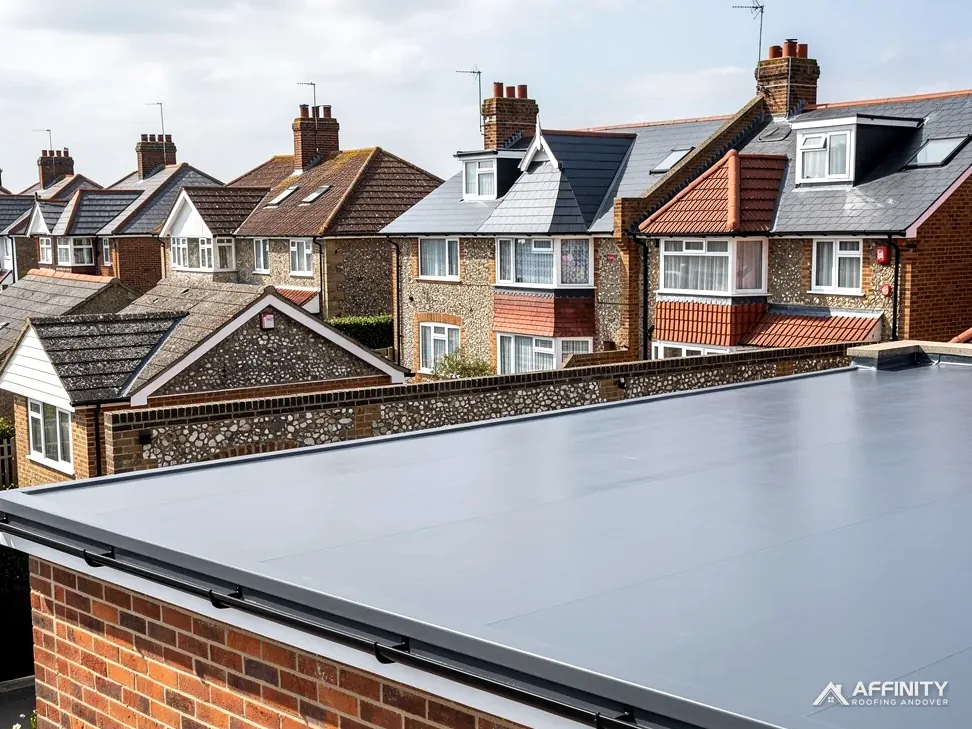
An overlay means laying a new waterproof covering directly over the existing one instead of stripping to the deck. The saving is real: no old felt to lift and tip, less mess, and a shorter time with the roof open.
The condition of what is underneath is everything. Whatever is already on the deck turns into the base for the new covering, so it must be well stuck down, reasonably flat and free from damage. The deck beneath it must be firm, with no soft spots, no rot and no movement.
We check this by walking the roof where it is safe, tapping and probing the surface, and looking for blisters, lifted laps and spongy areas. Indoors, we check the ceiling and, where it can be seen, the underside of the deck. Moisture readings show whether the build-up is dry.
An overlay also depends on the type of covering. A new membrane has to be compatible with the old one. Some adhesives attack some materials, and a roof with several layers of felt may already be heavy, with little to be gained from adding another. Our felt flat roof lifespan answer shows when felt is near the end.
Trapped moisture
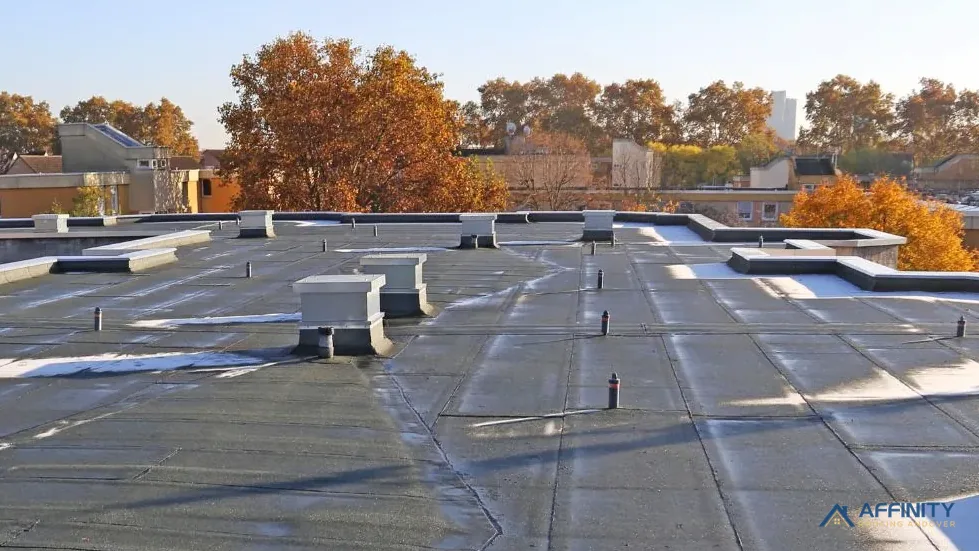
The chief danger of an overlay is sealing water in. If the old roof has been leaking, the felt, insulation and deck may be wet. A new covering on top stops it drying out. The moisture warms in sun, forms vapour, and lifts blisters in the new membrane, as our answer on flat roof blistering describes.
The timber suffers too. Boards that stay wet under a sealed roof rot slowly, and the first sign may be a sag or a soft patch, long after the work. By then the fix is a deck replacement under a new roof, an expensive way to learn the lesson.
Moisture can also come from inside. Without a vapour control layer, warm damp air from the rooms rises into the build-up. BSI lists BS 5250:2021 as current for moisture in buildings, and Approved Document C wants roofs not to be adversely affected by interstitial condensation. Our condensation under a flat roof answer explains.
For these reasons, a roof that has leaked for some time is not a candidate for an overlay. We would rather strip it, dry it and inspect the deck. A roof that is sound, dry and young may be.
Building Regulations still apply
Laying a new covering over the old is not a way round the rules. Under the Planning Portal's test, an application is not usually required where less than 25 per cent of the building envelope and less than 50 per cent of the roof are touched. A flat roof on a small extension may sit within that, a larger one may not, so ask your building control body or a registered building control approver.
Two further points apply. Extra weight is the first: a covering 15 per cent or more heavier needs Building Regulations approval, and the Planning Portal suggests a structural check. Extra layers of felt add to the load on an old deck.
The second is Part L. Approved Document L counts replacing a flat roof membrane as renovation, and the regulations exclude a new layer laid solely as a repair, so ask your building control body how an overlay is treated. Where the existing roof is worse than 0.35, the guidance expects it to be improved to 0.16, unless that is not feasible or does not pay back within 15 years.
Our flat roof insulation answer explains the build-up, and an overlay is often a poor fit for adding insulation, because boards go under the membrane.
Choosing between an overlay and a full strip
The survey leads to a straightforward comparison. An overlay suits a roof that is dry, sound, flat and not heavily layered, where insulation is not being added. A strip suits a roof that is wet, blistered, sagging or already carrying several layers, and any roof where a warm deck build-up is wanted.
Planning is a smaller matter. Class C permitted development usually covers putting a new covering on a house roof, but flats do not have those rights, and listed buildings and conservation areas carry extra controls. Your local planning authority can confirm.
Costs differ. MyJobQuote (October 2026) shows a flat roof replacement at £1,500 to £6,000 as a typical UK range. An overlay saves the strip and the waste, but it should not be chosen only on price, because a failed overlay costs more than a sound strip.
The survey report sets out both routes, with photographs of what we found, and names the one we would choose and why. The flat roofing page describes the coverings, and the route you pick comes as one written total.