The short answer
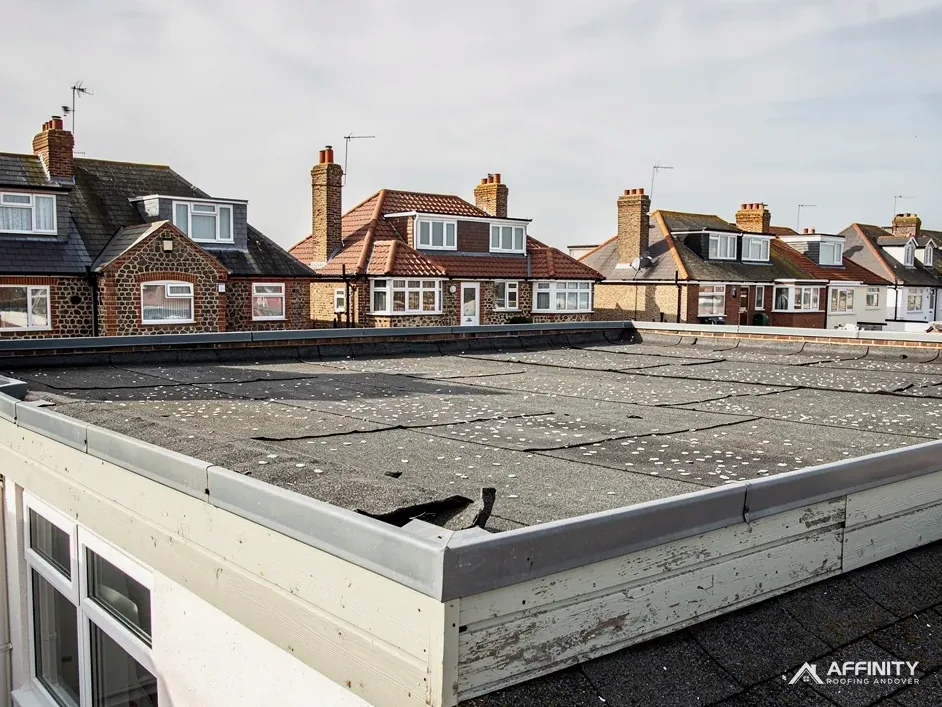
Blisters form when moisture or air trapped between the layers of a felt roof expands in the sun and pushes the surface up. Damp left in the deck during laying, a leak that has soaked the build-up, or poor adhesion are the usual causes. An isolated blister can be cut open, dried and sealed. Blisters across the roof usually mean the layers are wet and a re-cover is the sound answer.
What a blister actually is
A felt roof is built from layers of bitumen sheet, bonded to one another and to the deck. A blister is a place where the bond has failed and a pocket has opened. It may hold air, water vapour or liquid water.
On a hot day the contents expand. Warm air takes up more room and moisture turns to vapour, so the pocket swells and the surface rises. In the evening it cools and may settle, only to grow again the next day. Over seasons the repeated movement can crack the felt over the blister and let water in.
Where does the moisture come from? One source is the deck itself: if a roof was laid over damp timber or in wet weather, moisture is sealed in from the start. A second is a leak elsewhere that has soaked the layers beneath and then spread sideways. A third is vapour from the rooms below rising into the roof, especially where no vapour control layer exists, as our answer on condensation under a flat roof explains. BS 5250:2021 is the current BSI standard for managing moisture in buildings.
Poor adhesion is the fourth cause, where the felt was never properly bonded to what is beneath.
Trapped moisture, and why it matters
Air alone is a minor problem. Water is the real concern, because it rots timber. A deck that stays damp under a sealed felt covering has no way to dry out, and plywood or boards will soften over time.
That is why we do not judge a blister by its size. A small blister over a wet patch of deck is worse than a large one filled with warm air. Moisture readings and a look at the underside of the deck, where the roof design allows it, tell the difference.
The pattern of blisters is a clue. A few scattered ones are often local, caused by a single wet spot or a patch of poor adhesion. A crop of blisters across a whole slope suggests the layers have taken on water or that the deck was damp when the roof was laid.
Felt has a typical life of 10 to 15 years according to HomeBuilding, and 10 to 20 years according to Less. If the roof is already in that range, blisters are consistent with age. Our answer on how long a felt flat roof lasts sets out the ranges.
When a blister can be cut out
A lone blister on a roof that is otherwise in good order can be repaired. The repair is done in dry conditions. The blister is cut open with a cross or a circle, and the felt is peeled back to expose the layers below. Any water is allowed to dry out, and the deck is checked for softness.
If the deck and underlying felt are sound, the layers are bonded back down with bitumen or adhesive. A patch of new felt is then laid over the cut area, extending well beyond its edges, and sealed. The patch should be neat and flat, and bonded fully around its perimeter.
The risk with this repair is moisture left behind. If the area is not dry when sealed, the water simply sits there and the blister returns. For that reason a repair done in cold, damp weather is a stopgap.
Cutting is not suitable when the deck is wet, the felt beneath is crumbling, or the blisters are many. Cutting a dozen and patching each is a lot of work for a roof that is likely to carry on failing. At that point the photographs go to you with the choice set out, and the replacement is priced in writing.
Mend it or renew it
Three questions settle it. How many blisters are there? How old is the felt? And what is the deck like when one is opened?
A few blisters on a young roof with a dry deck are a repair. Many blisters on an ageing roof, or a damp deck under any of them, point to replacement, and to checking the deck first. If the deck is rotten, our answer on rotten flat roof decking explains what follows.
Replacing a roof is also the moment to deal with the cause. A vapour control layer stops room moisture rising, and a warm deck build-up keeps the structure on the warm side. Replacing the waterproof membrane counts as renovation under Approved Document L, so insulation is part of the conversation.
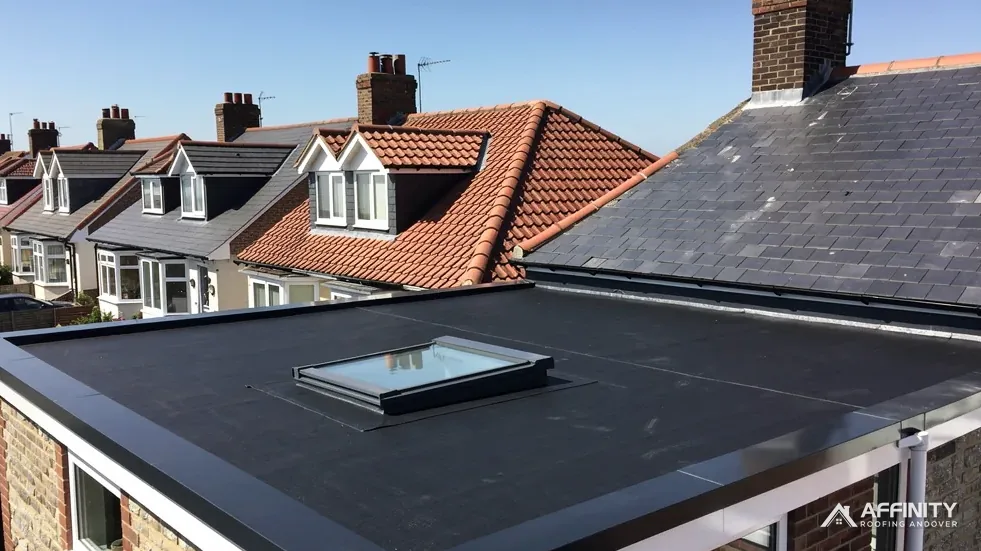
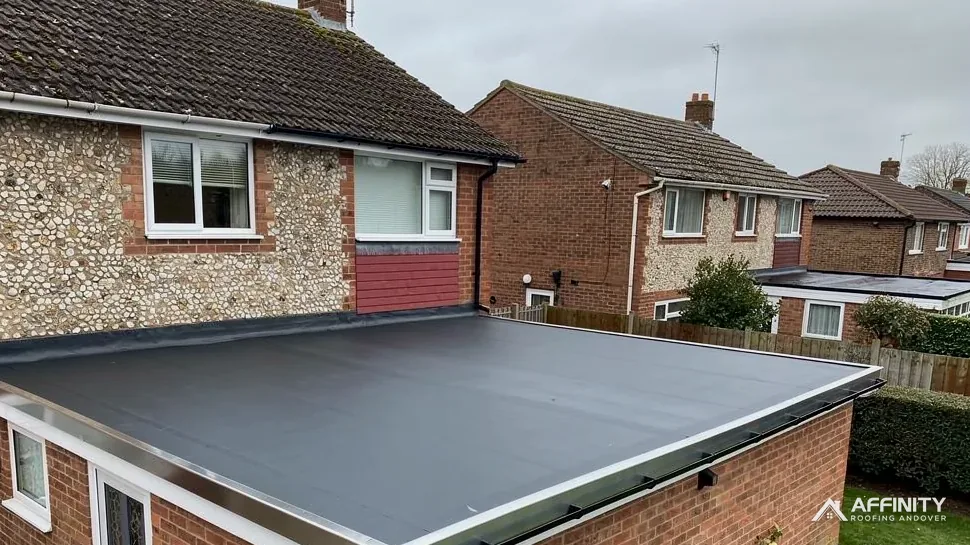
New coverings are not immune to blisters if they are laid on damp timber, which is why the deck is dried or replaced first, not covered over. The flat roofing page shows the options.
Which? puts new PVC or EPDM roofing with new boards at £1,950 to £4,000 excluding VAT, from its November 2025 survey of traders. Treat that as context for your own quote, not a substitute for it.