The short answer
Damp air rising from the rooms below can meet a cold surface inside the roof and turn to water. On a cold deck roof, with insulation between the joists and an air gap above, ventilation has to carry that moisture away. On a warm deck, the insulation sits above the structure and keeps the deck warm. A vapour control layer and good airflow stop water collecting in either case.
Where the water comes from
Every household makes moisture: cooking, bathing, washing, even breathing. That moisture travels as vapour into the ceiling void and up into the roof. If it reaches a surface cold enough, it condenses, much as steam beads on a cold window.
In a flat roof that surface is usually the underside of the deck, or the cold face of the insulation. The Building Regulations deal with this directly. Approved Document C, paragraph 6.2, wants roofs to keep rain out and to be built so that their strength and insulating performance are not undermined by moisture condensing within their layers. Interstitial just means inside the layers of the roof.
That wording explains why a dry-looking roof can still drip. Nothing has leaked through the membrane. Water has formed inside the build-up, soaked the deck or the insulation, and dripped down.
The signs are damp patches that appear in cold weather, black mould on the ceiling, drips with no rain, and timbers that smell musty when the hatch is opened. A leak, by contrast, tends to follow rainfall closely, and it is worth telling the two apart before spending money on a new membrane.
Cold deck and warm deck
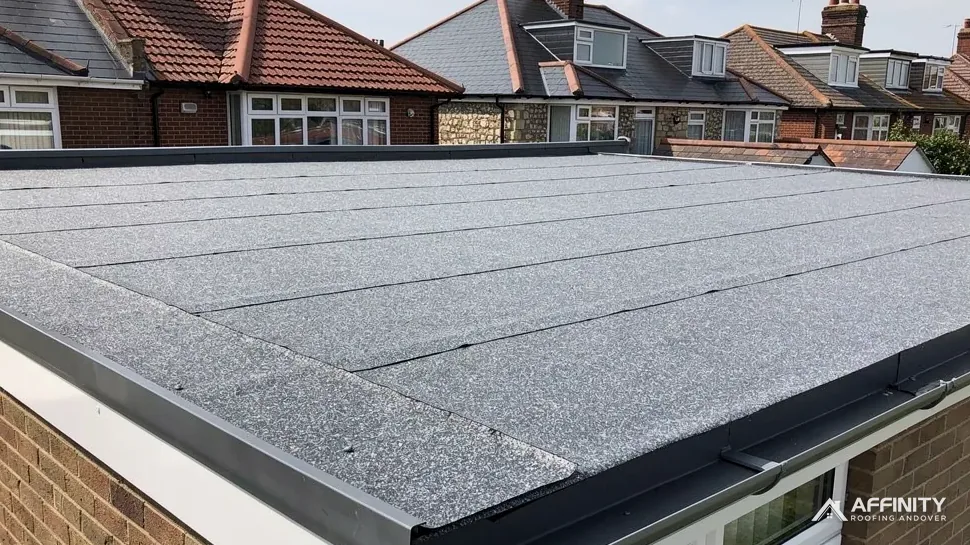
The two main flat roof build-ups handle moisture in opposite ways, and the answer to your damp ceiling depends on which one you have.
A cold deck roof keeps its insulation between or below the joists, with an air space between the insulation and the deck. The deck stays cold, so that space must be ventilated to carry vapour away. Paragraph 6.11 of Approved Document C names ventilation as the way a cold deck meets the condensation requirement, while the same paragraph concedes that a tiny roof, like a porch canopy, may not always need it.
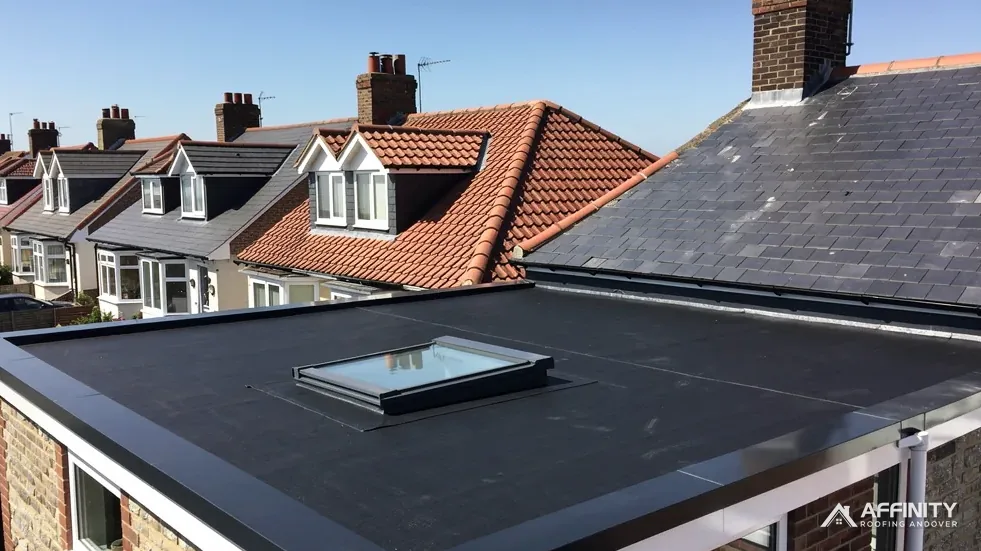
A warm deck puts the insulation over the structure and beneath the waterproof covering. The timber then sits on the warm side, so condensation is much less likely to form on it and a ventilated void is not wanted. A third type, the inverted roof, puts the insulation above the membrane.
The trouble starts when a cold deck is covered with a new layer of insulation, or its air gap is blocked, and the moisture has nowhere to go. A survey checks which type you have before anyone suggests a fix.
Vapour control and ventilation
A vapour control layer is a membrane on the room side of the insulation. Its job is to stop room moisture getting into the roof in the first place. If it has gaps, or was never fitted, vapour passes straight through and meets the cold layers above.
Common faults include a layer torn when downlights were fitted, laps that were not sealed, and loft hatches or pipe penetrations that leak warm air. The same document asks for hatches into a roof space to be sealed against draughts, and the principle holds for any opening into a void.
Ventilation is the second defence on a cold deck. The standard on moisture in buildings is BS 5250:2021, which BSI lists as current. The airflow has to run through every joist space, not just one near the edge, and a blocked vent or a joist space packed with insulation breaks the path.
Fixing it is a design question, not just a repair. Adding more insulation without thinking through the moisture path can make a damp roof worse. If your roof is being recovered, our flat roof insulation answer shows how the build-up is chosen.
What we check and what it leads to
A survey starts inside. We look at the ceiling for staining and mould, check whether the damp follows the weather or the heating, and open the hatch or a small inspection point if the construction allows.
On the roof, we check the covering and outlets to rule out a leak, then look at upstands and the edges where vents sit. Moisture readings on the deck, taken where it is safe, show whether it is wet through or only surface damp. Sodden insulation or a rotted deck changes the job from a ventilation fix to a re-roof, as our answer on rotten flat roof decking explains.
The outcome falls into three kinds. Some roofs need only the airflow restored and a seal at the ceiling. Some need the vapour layer repaired from below. Others need the roof rebuilt as a warm deck, which suits a roof coming to the end of its life anyway.
Replacing a flat roof membrane counts as renovation under Approved Document L, so the insulation question arrives with the new covering. Your flat roofing options are laid out from the survey photographs, with one written price for whichever route you choose.