The short answer
Published guides give felt flat roofs a typical life of 10 to 15 years (HomeBuilding) or 10 to 20 years (Less). Those are ranges, never promises. Strong sun, standing water and poor detailing can shorten them, and careful laying and maintenance can stretch them. Blisters, splits, bare patches and water stains below the ceiling are the usual signs that the end is near.
The typical range, and who says what
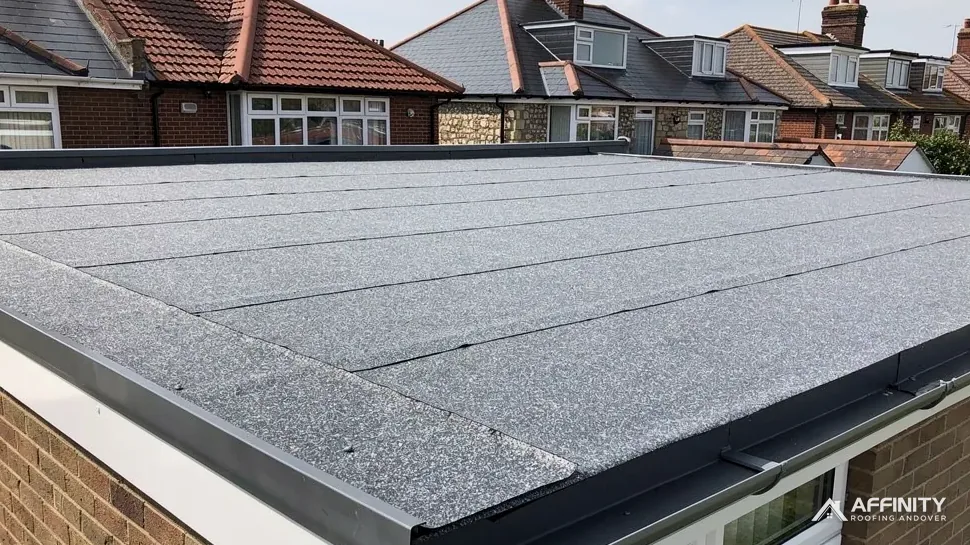
Felt, often laid by torch-on methods, is bitumen-based sheet laid in layers over a deck. It is the traditional covering for garages, porches and small extensions,
HomeBuilding gives felt a typical life of 10 to 15 years. Less gives 10 to 20 years. The two sources overlap and differ at the top end, which is a reminder that these are typical figures from published guides, not a measure of any single roof.
A lifespan figure is also different from a warranty. A manufacturer or installer may stand behind the work for a set period, but that is a separate promise and says little about when the covering will start to fail.
The cost side is relevant. Which? lists a new felt roof on a single garage of 6 m by 3 m at £1,400 to £3,500, excluding VAT, from traders it surveyed in November 2025. HomeBuilding's supply-only price for felt is £65 per square metre (September 2025). Both are national figures and neither is a price for your roof. Our GRP roof lifespan and EPDM lifespan answers compare the alternatives.
What shortens a felt roof
Sun is the main ageing force. Bitumen softens and oxidises under sustained heat and ultraviolet light, which dries the surface and makes it brittle. A roof with no protective chippings or reflective coat takes the full dose, and a south-facing roof takes the most.
Standing water is the second. Ponding, the puddles that sit on a roof for days after rain, adds weight, keeps the surface wet and speeds up the breakdown of the felt. Falls that are too shallow, or sagging decks, make ponding worse. The roof's design fall matters here, which our answer on the minimum fall on a flat roof explains.
Movement is the third. Felt that is fixed to a deck which flexes, or that bridges a joint without a break, will split at the weak point. Poorly laid laps and unsealed edges let wind and water under the sheet.
Foot traffic and debris play their part as well. Rotting leaves keep the felt damp, and regular visits to clear gutters or retrieve a ball can scuff the surface. Good laying slows all of this, and neglect speeds it up.
Signs the roof is near the end
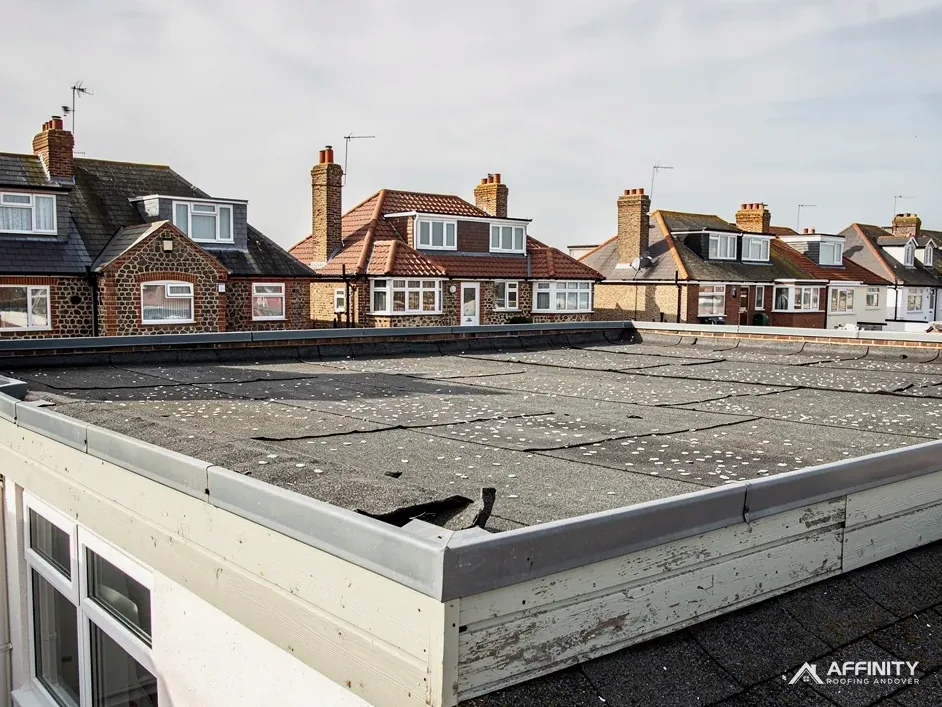
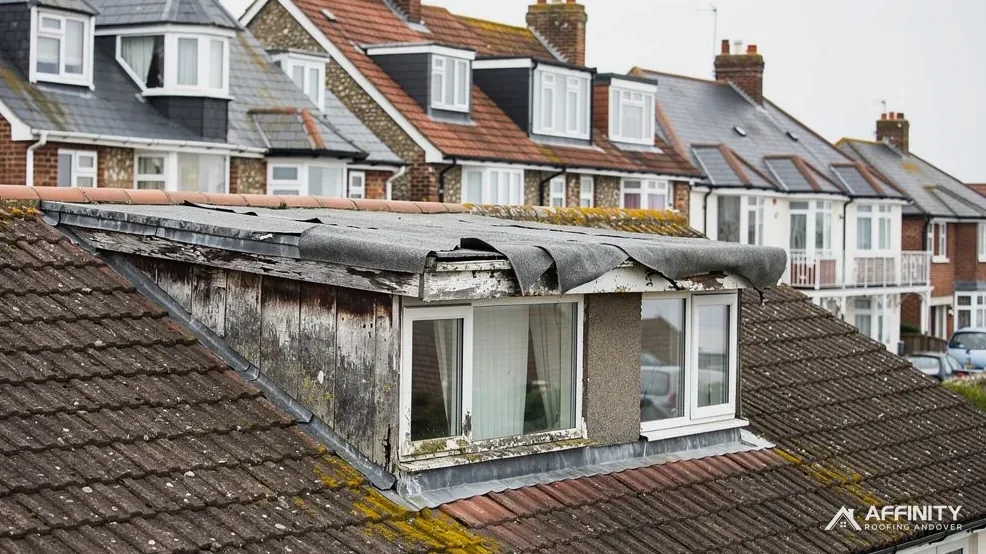
Look for a pattern, not a single flaw. Blisters, which are bubbles under the surface, show trapped moisture or air. Splits, especially along laps and at the edge, show the felt has dried out and moved. Bare patches where the top surface has worn away expose the layer below.
Edges are worth checking. Felt that has lifted at the perimeter, or that no longer wraps neatly at the upstands, is open to water. Cracks at the corners show strain.
Inside, a brown stain on the ceiling that returns after repair means the covering is failing faster than it is being mended. A musty smell in a room under the roof is another sign.
One small split can be repaired. Several, together with blistering across the area, means the roof is behaving like one near the end of the range, and spending on repairs starts to look like money lost. A survey helps you decide where the line falls.
Our answer on flat roof blistering covers the bubbles in more detail, and the flat roofing page shows what replacement can look like.
Getting the most from the years you have
Simple upkeep helps a felt roof reach the upper end of its range. Clear leaves and debris so water drains freely, and keep outlets open. Look at the roof after storms and at least once a year. Small splits and lifted laps caught early are cheap to repair, and neglected ones become leaks.
Avoid walking on felt more than you must. A dry roof is firmer underfoot than one in cold weather, when bitumen turns brittle, but it is still scuffed by boots and ladders. Use boards if you have to cross it.
When replacement does come, the choice is wider than another layer of felt. EPDM and GRP are the main alternatives, and HomeBuilding lists their typical lives as 25 to 30 years each, while Less gives 30 to 50 years for EPDM and 25 to 40 years for GRP.
The roof you have is the starting point. A survey will show how the deck is, what the covering looks like, and whether insulation should be added when the roof is renewed. You then get one written price for the replacement you choose.