The short answer
It may be. The HSE's guidance is to presume asbestos where a building dates from before 2000, new or refurbished then, and plenty of older garages carry corrugated cement sheets. HSE also says asbestos cement roofs are always fragile, which rules out walking on one. Do not drill, scrub or break the sheets. A sample sent to a laboratory shows what the material is.
Clues you can read from the ground
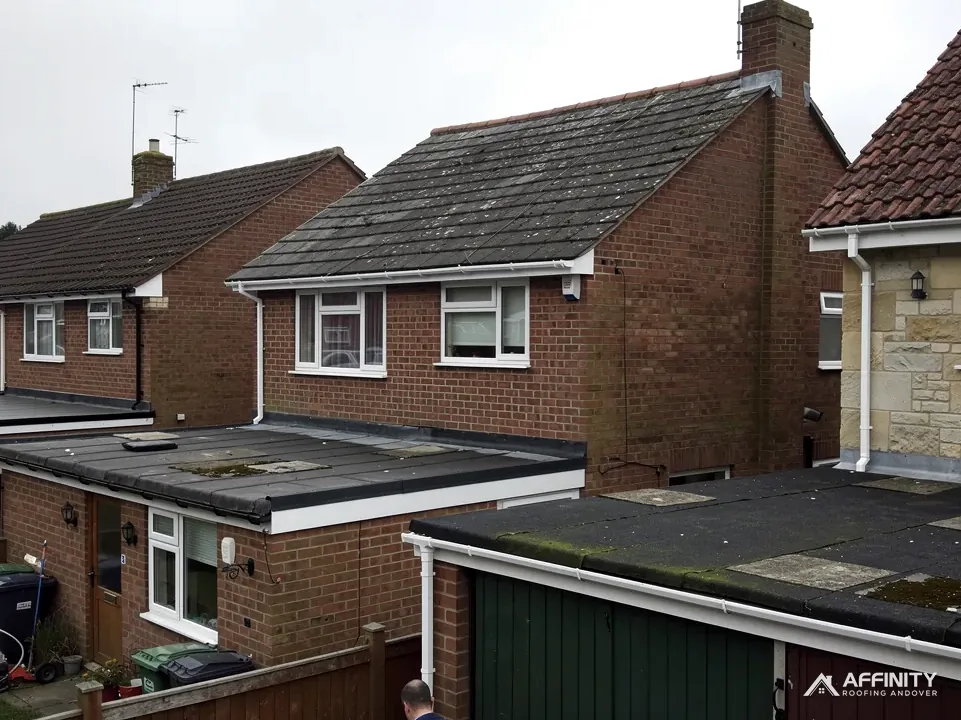
Asbestos cement was made by pressing cement and asbestos fibre into rigid sheets. On garages the result is usually big corrugated panels, grey, weathered and often furred with moss. The look is only a hint. HSE's guidance admits that telling asbestos products from lookalikes is hard, so colour and profile settle nothing.
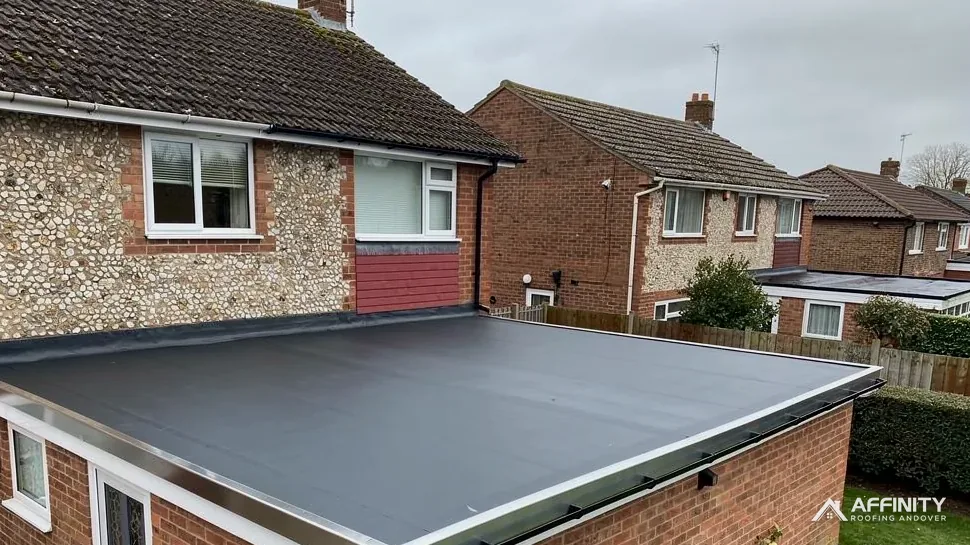
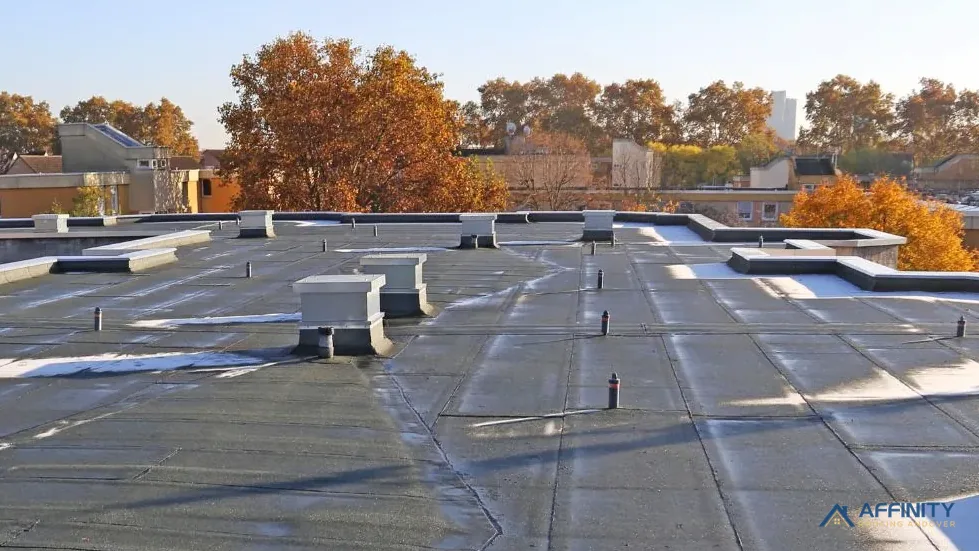
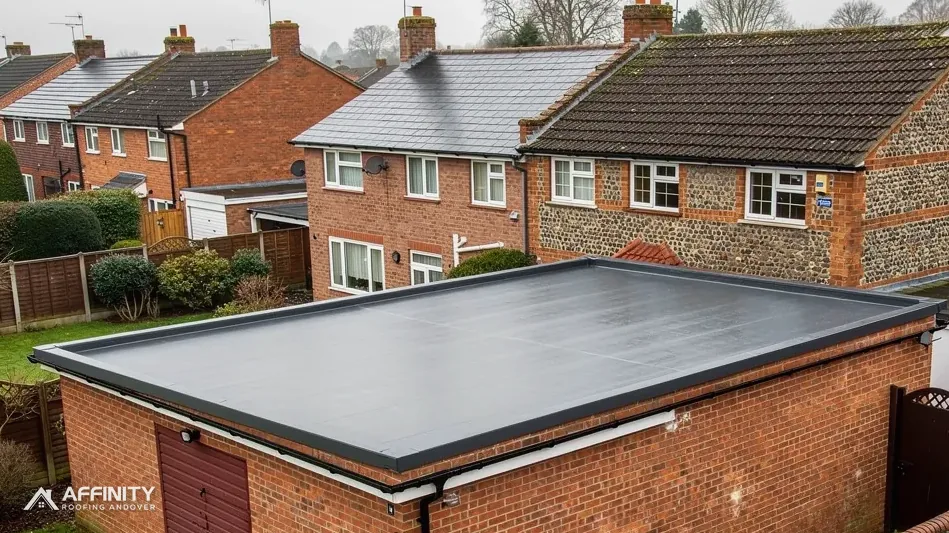
Age is the stronger clue. The HSE cut-off is the year 2000, and a garage with a sheet roof from the 1960s or 1970s sits well inside it. A garage A garage with a recently laid felt, EPDM or GRP covering is different, though the deck, the soffits and the boards beneath may belong to the original build.
Look, but do not touch. A stamped batch mark or a paper trail from the original build can help, yet the absence of either proves nothing.
Please leave the roof as it is until the material is known. Drilling, scrubbing, jet-washing and standing on it all risk damage, and weathered sheet can give way under a person.
Why nobody should step onto it
A fragile roof is one that may not carry a person. HSE puts cement roofs in that category without exception, and age makes it worse: old sheets turn brittle, and moss hides the fixings and the weak spots from anyone looking down from a ladder.
So the first question about a suspect garage is how to reach the roof, ahead of what it is made of. Whoever works up there needs boards or a platform that spread their weight, plus edge protection. That is a trade responsibility and not a thing to improvise on a Saturday.
The same caution covers small jobs. Clearing a gutter, patching a panel or fitting an aerial on a cement roof are not casual tasks, even when no sheet looks damaged.
If you are unsure, a photograph is enough to start the conversation. Take it from your garden or a bedroom window and send it with the approximate age of the garage. That tells us whether the roof sounds like one to sample, and whether a walk on the roof is out of the question. The flat roofing page covers the choices once the material is known.
Removal rules that apply
Lifting cement sheets off whole, without breaking them, is classed by HSE as non-licensed work. Its description takes in cement products such as roof sheeting, provided each piece is handled and taken off carefully, and it extends to weathered cement that is not otherwise badly damaged.
The class changes when sheets are broken. If sheets are going to be broken up, the job turns into notifiable non-licensed work, and the enforcing authority must be told first. Records of the work are kept for 40 years.
A second material needs watching. Asbestos insulating board (AIB) turns up in external soffits and boards, and HSE treats AIB work as licensable once it is more than a short job. For that reason, boards and soffits on an old garage are checked at the start, and no one assumes they are harmless.
What this means in practice is simple. The sample result decides the route, and the route decides who does the work. If a licensed specialist is required, that specialist is brought in. A garage that proves clear can go straight to the replacement stage, with overlay or strip-and-replace compared on cost and condition.
Waste, cost and the order of work
Asbestos waste is kept apart from everything else. HSE's advice is to double-wrap it and label it, and it moves on a consignment note with a registered carrier. An open skip is out, although HSE does allow lockable or sealed ones, and so is the general bin. The household exemption from consignment notes excludes asbestos waste, so check with your council before taking any to a recycling centre.
As rough context, MyJobQuote (October 2026) shows around £325 for an asbestos survey, around £2,750 for removing an asbestos roof, and £750 to £3,500 for a garage roof, with an average of £1,500. They describe separate jobs, and none of them is a quote for your garage.
Your price turns on the roof area, the way in, whether the sheets lift whole, the volume of waste and what goes on in their place. A new flat roof in felt, EPDM or GRP is the usual replacement.
The order of work is survey and sample first, a plan for safe removal second, the new roof third, with the written price for everything fixed after the survey.