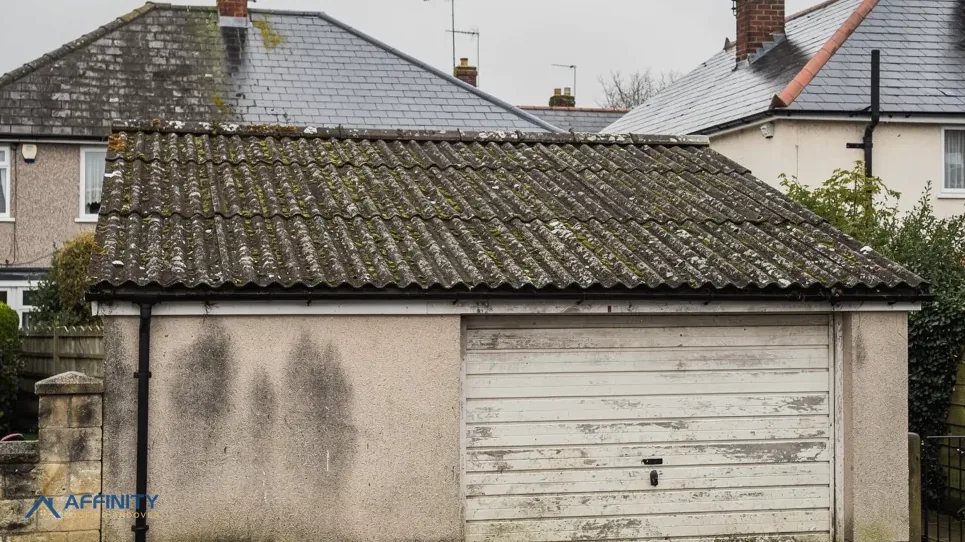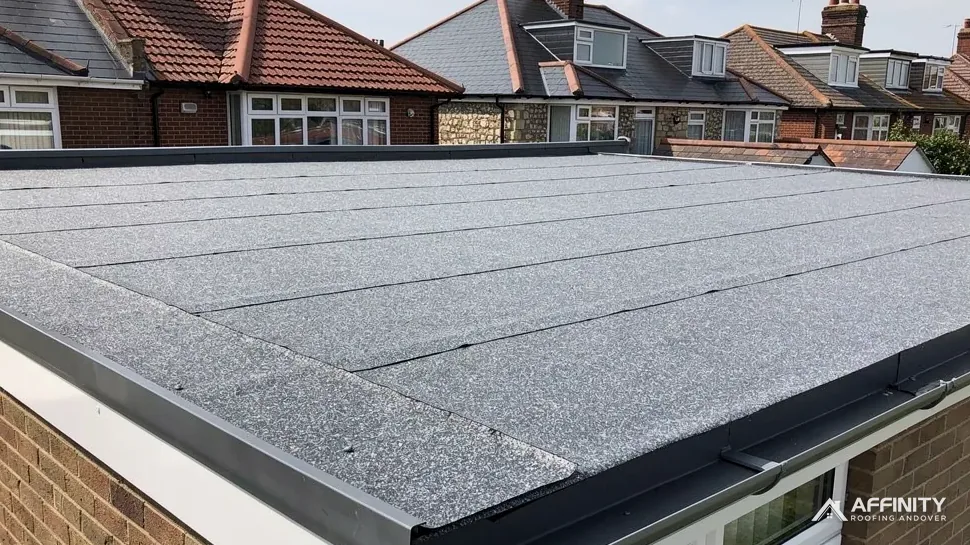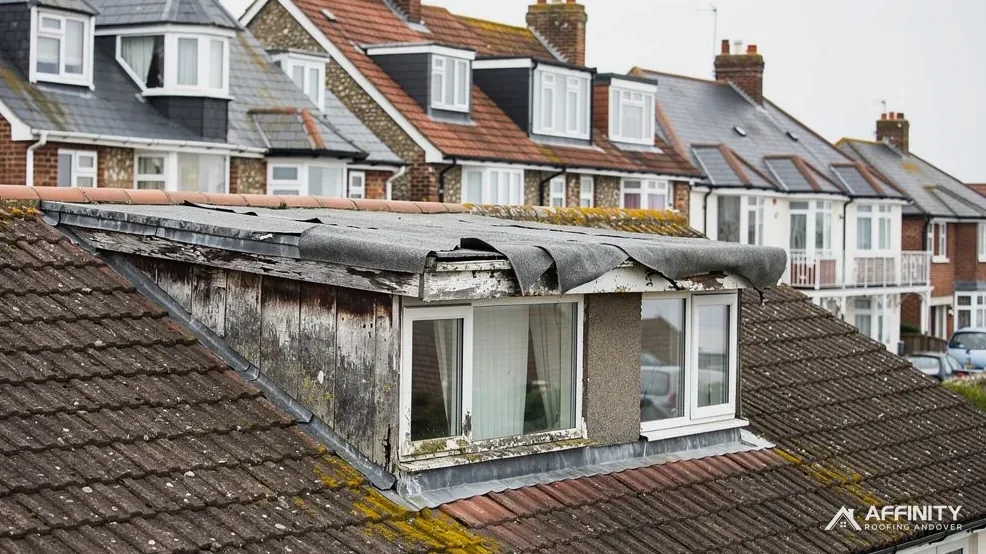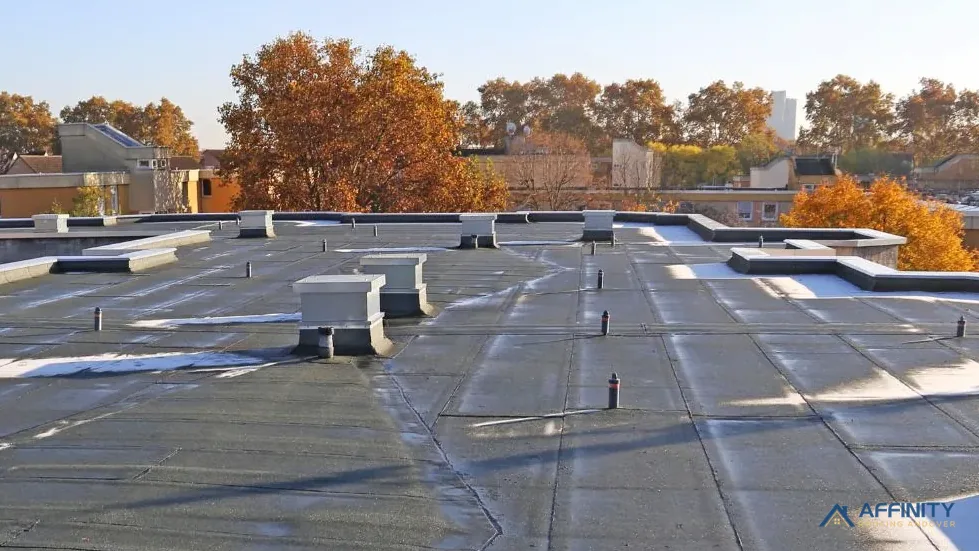
If you have a flat roof over a garage, a porch or a ground-floor extension anywhere around Andover, there is a fair chance it is covered with torch-on felt. The name describes how it is fitted. Rolls of bitumen-based sheet are unrolled across the deck, and a gas torch heats the underside of each roll so that the bitumen melts and bonds to the layer beneath.
It has been used for decades because it is quick to lay, easy to repair and sits at the lower end of the price range for a flat roof covering. It is also the covering with the shortest published lifespan, and the one that needs the most care at the edges, where a flame meets timber.
This guide explains how a torch-on roof is built up, what the cap sheet does, how long the covering is expected to last, what the material costs, where the weak points are and how a roofer should work safely near wood. If you are comparing felt with rubber or fibreglass, our flat roofing hub covers the alternatives.
How torch-on felt is built up
A good felt roof is a system of layers, not a single sheet. Each does a different job, and the quality of the whole depends on how well they are bonded to one another.
The deck and the vapour layer
The deck, the boards or sheet material that carry the roof, goes down first. On a warm roof, where insulation sits above the deck, a vapour control layer goes down first, to stop warm moist air from the house reaching the cold side of the insulation. On a cold roof, where insulation is below the deck and the space is ventilated, the felt goes straight on to the boards.
The underlayer
A first layer of felt, often called the base layer or underlayer, is bonded or nailed to the deck, or to the insulation above it. It gives a clean, even surface for the next layer and a second line of defence if the top layer is damaged.
The cap sheet
The cap sheet is the top layer, the one that meets the weather. It is thicker than the underlayer and usually has a coating of fine mineral chips, in grey, green or another colour. The chips shield the bitumen from sunlight and give the roof a little grip. The cap sheet is torched to the underlayer with the laps, the overlaps between rolls, staggered so that no seam in one layer sits directly over a seam in the next.
A well-laid roof is checked seam by seam. Gaps in the bond show up later as splits.
Why felt remains popular
Felt is not fashionable, but plenty of small roofs still use it, and for good reasons.
The price of the material
HomeBuilding's supply-only table (Sep 2025) lists felt at £65 per m2, against £105 for EPDM, £110 for GRP and £170 for lead. That is the cost of the roll alone, before labour, deck work, trims or scaffold, and no finished roof is priced at that rate. It does explain why felt is a common choice when the budget is tight.
Whole-roof costs
Re-covering a 6m by 3m single garage in new felt came out at £1,400 to £3,500 in the Which? survey of its approved tradespeople, ex VAT (Nov 2025). Single-ply materials, or any job needing new boards, ran from £1,950 to £4,000. Our guide to the cost of a new flat roof sets out the other guides and what moves the figure.
Repairability
Felt is easy to patch. A new section can be torched over a split, a failed corner or a lifted lap, and the repair bonds to the old felt if the old surface is clean and dry. That makes it forgiving on roofs that are accessible and simple, and a small repair does not mean stripping the whole roof. It is also familiar to every roofer, so help is rarely hard to find.
Shape and finish
Felt follows plain rectangles and simple upstands well. It looks less neat at curves and awkward junctions than a liquid system, and it will not give the seam-free finish that a fibreglass roof gives. That trade can be worth it for the price.
How long felt is expected to last
Felt has the shortest published life of the common flat roof coverings, and anyone choosing it should know the number before they choose.
The published ranges
HomeBuilding gives felt a typical life of 10 to 15 years (Sep 2025). Less gives 10 to 20 years (Oct 2026). These are typical ranges for a roof that is laid well on a sound deck, not a promise, and a warranty period from a manufacturer is not a lifespan. For comparison, HomeBuilding gives EPDM and GRP 25 to 30 years each, and Less gives 30 to 50 and 25 to 40.
What shortens it
Standing water that never clears, a deck that moves, laps that were poorly bonded, no protection against sun, and foot traffic on a surface that is not meant to be walked on. A roof laid in cold, damp conditions may have a weaker bond than one laid in settled weather.
Signs it is wearing out
The mineral chips come away and collect in the gutter, leaving a bare, shiny surface. The cap sheet becomes brittle, cracks across the grain and curls at the edges. Blisters appear. Our answer on felt flat roof lifespan goes further into what to look for, and the guide to the general warning signs of a failing flat roof lists the rest.
A roof around 15 years old that has started to split in several places is cheaper to replace than to keep patching.
Where torch-on felt goes wrong
Felt failures tend to begin at the details, not across the middle of the roof.
Laps and seams
The laps are where the bond is only as good as the heat and pressure applied on the day. If the bitumen was not melted evenly, or the surface was dusty or damp, the seam can open later. Opening starts as a thin line that lets water slip underneath.
Upstands and edges
At a wall, the felt turns upward to form an upstand. This is where the covering is most stressed, because it has to bend sharply and is held against a wall that moves slightly. Flashing, sealing and a good drip detail at the edge are what keep water out. Poor edges can cause leaks on felt roofs.
Movement in the deck
Timber boards swell and shrink. The felt can stretch a little, but it cracks along board joints in time. This is why the quality of the deck and the fixing of the boards matters as much as the felt on top.
Ponding and blistering
Pools of water speed up wear and let moisture into any flaw, and a dip of a few millimetres is enough to start one. Blisters form where moisture trapped in the layers expands in the sun. Our answer on flat roof blistering explains how to tell a harmless bubble from a faulty one. A repair that does not address the cause of either will not last, so it pays to find out why the water is lingering or the moisture is trapped before anything is stuck down.
Working safely with a flame near timber
Torching felt is a hot job on a combustible structure, and the fire risk is the reason the method has the reputation it does. A competent roofer controls that risk at every stage.
Why the risk is real
The torch flame is hot enough to ignite dry timber, and heat travels. A roof deck, a fascia board, a soffit and the timber rafters inside the eaves can all smoulder unseen, long after the roofer has gone. Fires from torch-on work have happened in the past, and the sensible response is care rather than panic.
How the work should be done
The flame is kept away from timber edges and trims, and heat-resistant barriers are used where the felt turns up to a wall or runs close to wood. The torch is used only on the felt, not near the fascia or inside the eaves. Fire extinguishers and water are kept within reach on the roof. For awkward junctions near timber, many roofers use a cold-applied or mechanically fixed detail instead of a flame.
After the work
A prudent roofer stays on the site, or checks it again, after the torch is put away, to catch smouldering in places they cannot see. You are entitled to ask how this will be done. A roofer who cannot answer plainly is one to avoid.
Where an alternative suits better, such as a single-ply membrane near an old wooden eave, the survey will recommend it, and the photos will show why.
Insulation, falls and the rules
A felt roof is not only a waterproof layer. Replacing one brings in questions about warmth and drainage.
Insulation under Part L
Approved Document L (England) names replacing the waterproof membrane of a flat roof as a form of renovation. For a renovated roof, Table 4.3 sets a U-value target of 0.16 W/(m2K), with paragraph 4.13 allowing less where the full upgrade is not feasible or would not repay itself within 15 years. In practice that means insulation goes in when the felt is renewed. Where it can sit depends on whether the roof is warm or cold.
The fall
A felt roof still needs a slope. The code of practice, BS 6229:2025, expects the finished roof to fall at 1:80 or steeper, while IKO advises designing for 1:40. Felt on a roof that ponds ages quickly.
Building control and planning
On the Planning Portal's test, a re-roof normally needs no Building Regulations application when less than 25 per cent of the building envelope and less than 50 per cent of the roof is affected. A whole garage roof may go over that, so check with your building control body. Re-covering is not normally a planning matter for a house, though flats and some designated areas differ, so check with the council's planning team.
What we do
We survey, test the deck, explain what we find and give one written total, including scaffold where it is needed. The site is left clear and the old felt is taken away.