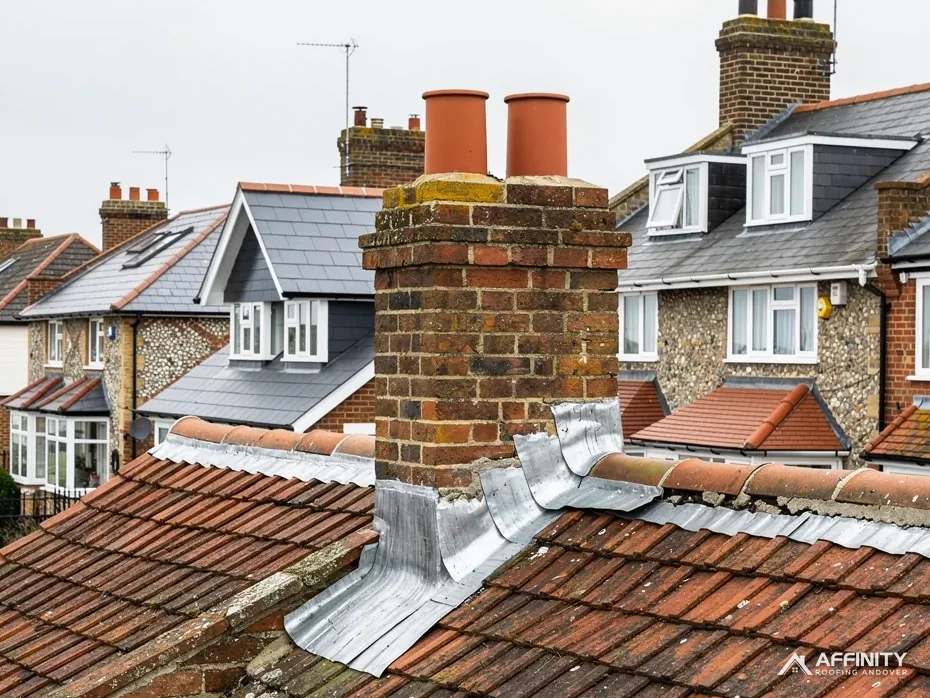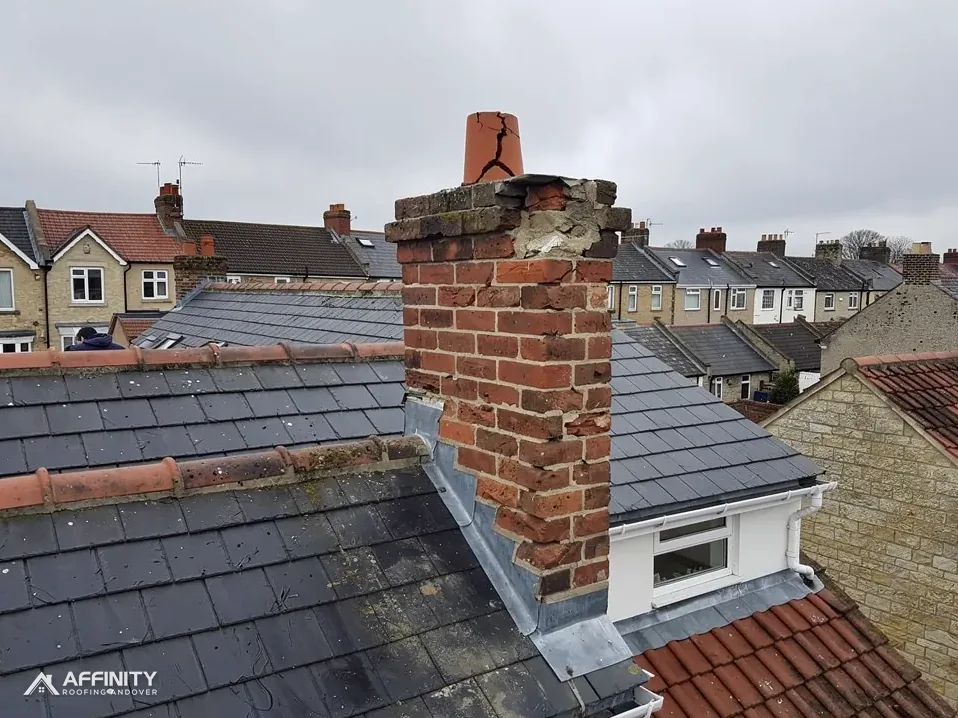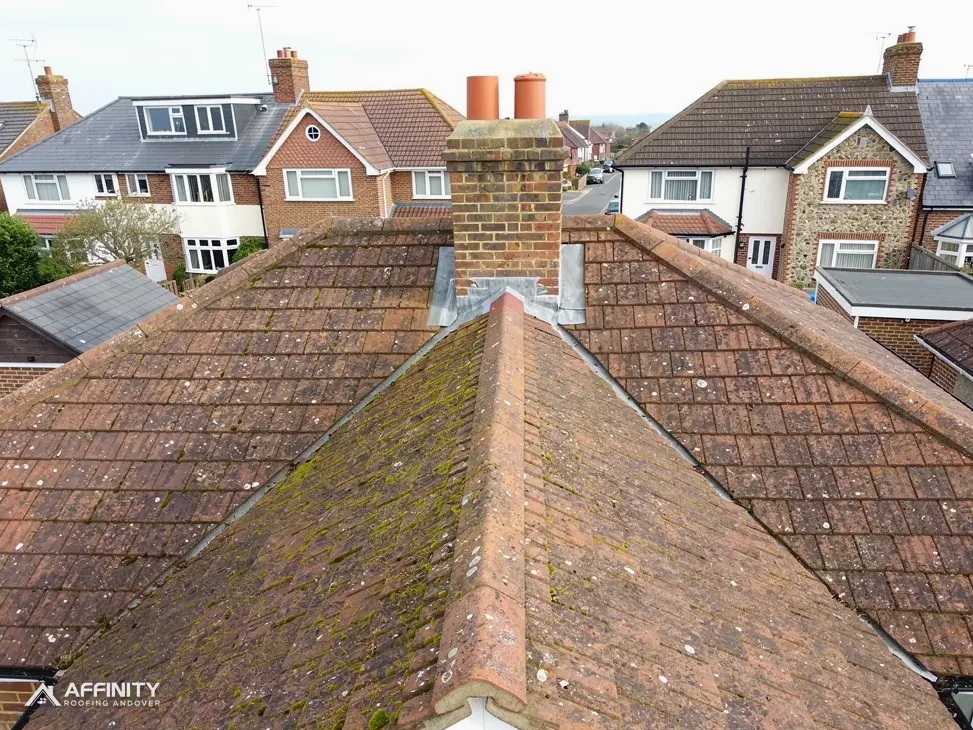
Mortar is the sacrificial part of a brick wall. It is meant to be softer than the bricks, to take the weather first and to wear away so that the bricks do not. When it has worn back far enough, water gets into the joints and the stack starts to fail. Repointing, which means raking out the worn mortar and packing in new, puts that protection back.
On a modern house, with hard bricks and cement mortar, the choice is simple. On an older house, it is not. Old bricks are often softer, fired at lower temperatures, and they behave differently from modern ones. Put a hard cement mortar in joints between soft bricks and the stronger material holds while the softer one wears. The faces of the bricks flake away, and the repair does the harm it was meant to prevent.
This guide explains the difference between lime and cement mortar, how to match the colour and profile of old joints, what changes on a period house or in a conservation area, and how the work is done. It belongs with our wider chimney repairs advice.
What repointing does, and when a stack needs it
The joints in a chimney stack are among the most exposed in any wall. The stack stands clear of the roof, with weather on every face, and has no overhang to shelter it. Rain, frost and wind work the joints year after year, and the mortar slowly erodes.
Signs from the ground
Look at the stack with binoculars. Joints that are recessed far behind the face of the brick, mortar that is crumbly or sandy, gaps where mortar has gone altogether, and loose bricks are all signs. Grains of sand in the gutter below, or on the roof, mean the mortar is breaking down.
Signs inside
Damp on the chimney breast, and patches that darken in wet weather, can point to water coming through open joints in the stack. Other causes exist, such as the flashing or the flaunching, so a survey decides.
What repointing is not
It is not a cure for bricks that have lost their faces, for a leaning stack or for a failed flashing. Repointing sound brickwork preserves it. Where the brick itself has failed, the answer is a rebuild, and our guide to when a chimney needs rebuilding explains how to tell.
A good roofer will look at the whole stack, not only the joints, and photograph each fault so you can see it. Ask for the photographs to be dated, and keep them with the house papers.
Lime and cement mortar compared
The two materials behave differently, and the difference matters most on old brick.
Cement mortar
Cement mortar is hard, strong and sets quickly. It suits modern, hard-fired brick and engineering brick, where the bricks are as strong as the mortar. It is stiff, which means it does not move with the wall, and it is relatively impermeable, so moisture tends to leave through the brick instead.
Lime mortar
Lime mortar is softer and more flexible. It takes up small movements without cracking, and it allows moisture to pass through it, so damp leaves a wall through the joints rather than through the face of the brick. It sets more slowly, and needs the right conditions to cure.
The principle
The mortar should be no stronger than the bricks. If the joints are harder than the brick, the brick becomes the sacrificial part and the wall loses its faces. On a period stack, with soft handmade brick, lime is usually the sounder choice. On a stack built of hard modern brick, cement, or a mix with lime, can be right.
Mixed mortars
Many modern repairs use a mix of lime, sand and a little cement, chosen to suit the brick. A roofer should be able to say what mix they propose and why. If the answer is simply whatever is in the van, ask more questions.
Roofers differ in their experience of lime, so ask whether the firm has used it on a stack like yours, and ask for pictures of a finished stack that has weathered for a year or two.
Matching the colour, sand and joint profile
A repointed stack should look as if it has always been there. A bright, uniform new joint around old, weathered brick jars when seen from the road, and on a period house it can spoil the character of the whole front.
Colour and sand
The colour of mortar comes largely from the sand. Sharp builders' sand, soft sand and sands of different colours give different results. A roofer who matches the old mortar will look at the colour of the surviving joints and choose a sand to suit. The new mortar will look paler at first and weathers towards the old.
Joint profile
The shape of the joint matters as much as the colour. A flush joint is level with the brick face. A struck or weather-struck joint is angled to shed water. A recessed joint sits back from the face. Older work often has a profile of its own, and repointing should follow what was there. Photographs taken before the work show the original.
No ribbon pointing
Pointing that stands proud of the brick, in a raised band, is called ribbon pointing. It looks heavy and holds water on its upper edge. It is a poor finish for any stack.
A trial area
On a prominent period stack, ask for a small trial area to be done first, and look at it when it has dried. That lets you agree colour and profile before the whole stack is done.
If you cannot get a match, say so before the work starts.
Period homes, conservation areas and the council
On an older house the choice of mortar is not only a question of what lasts. It also affects the appearance of a building that may be controlled.
Permitted development does not cover chimneys
Class C, which allows alterations to a house roof, excludes chimneys. Repointing is repair and does not change the appearance, so it is not usually development. A change to the brick, the height or the style of a stack is judged separately.
Listed buildings
On a listed house, listed building consent covers alterations to the building's character. A matching mortar may be treated as repair, but ask the council first, because a harder or differently coloured mix can change how the building reads. Our guide to listed building roof repairs sets out the route.
Conservation areas and Article 4
In a conservation area, ask the council whether an Article 4 direction applies to your street. An Article 4 direction withdraws specified permitted development rights across a defined area. In Basingstoke, the directions in four town conservation areas ask for original roofing materials to be kept, with modern substitutes unlikely to be accepted. For Andover addresses, ask Test Valley Borough Council.
The council decides
Where a North Wessex Downs National Landscape applies, the partnership is advisory only, and the council remains the planning authority.
Photographs of the existing joints, and a note of the mortar proposed, make a conversation with the council easier.
How repointing is done
Good repointing is slow, careful work, and it is mostly preparation.
Raking out
The old mortar is raked out to a sound depth, by hand or with a suitable tool, taking care not to chip the brick edges. Cutting too shallow leaves new mortar sitting on a weak bed, and cutting with a power tool carelessly can damage soft brick. Dust is brushed out and the joints are dampened.
Filling and finishing
The new mortar is pressed in firmly in layers, and finished to the chosen profile. Timing matters, because mortar is tooled when it has stiffened enough to hold its shape. The face of the brick is kept clean as the work goes on.
Curing
Fresh mortar needs mild, damp conditions to cure properly. Lime mortar in particular should be kept from hard frost and from drying too fast in strong sun. A roofer who waits for the right weather is protecting your work, even if it means the scaffold stands a little longer.
The stack top
The pointing is only as sound as the crown above it. The flaunching and the pots get checked on the same visit; chimney flaunching has its own guide.
Access and wildlife
The work needs a scaffold or tower, because it takes time and the roofer needs both hands. Birds nest in stacks. Section 1 of the Wildlife and Countryside Act 1981 catches anyone who intentionally destroys a nest that is in use, so an occupied stack is left until the young have flown.
When repointing is enough, and what it costs
Repointing is the right answer when the bricks are sound and the mortar is the failing part. It is not enough when the brick is spalling across large areas, when the stack is leaning, or when the flashing is the real source of a leak.
A sensible order
A survey should look first at the structure, then at the brick, then at the joints, the flaunching and the flashings. If the structure and brick are sound, repointing and a new flaunching often put a tired stack right. If they are not, the roofer should say so plainly and explain why.
What sets the price
Price follows the stack: its height, how many faces and flues it has, how much old mortar must come out, the mix chosen and how it is reached. A tall stack takes longer, and scaffold time adds to the price. Lime work needs more care and more time than a plain cement job. A written total follows the survey.
One total price
The written total should name how much of the stack is repointed, which mortar is used, whether the flaunching is included and who pays for scaffold. A quote that does not name the mortar leaves the key choice unmade.
Keep a record
Take photographs of the stack before, during and after, and keep them with your house papers. They show the original joint profile, what was done and the weather at the time.
If a stack looks crumbly, a survey will say what it needs.