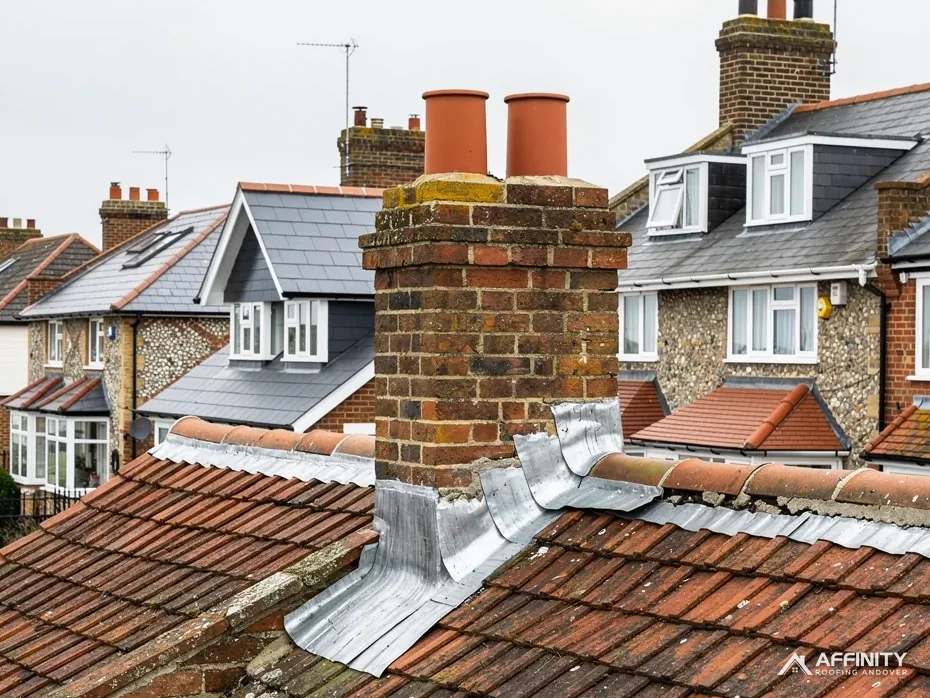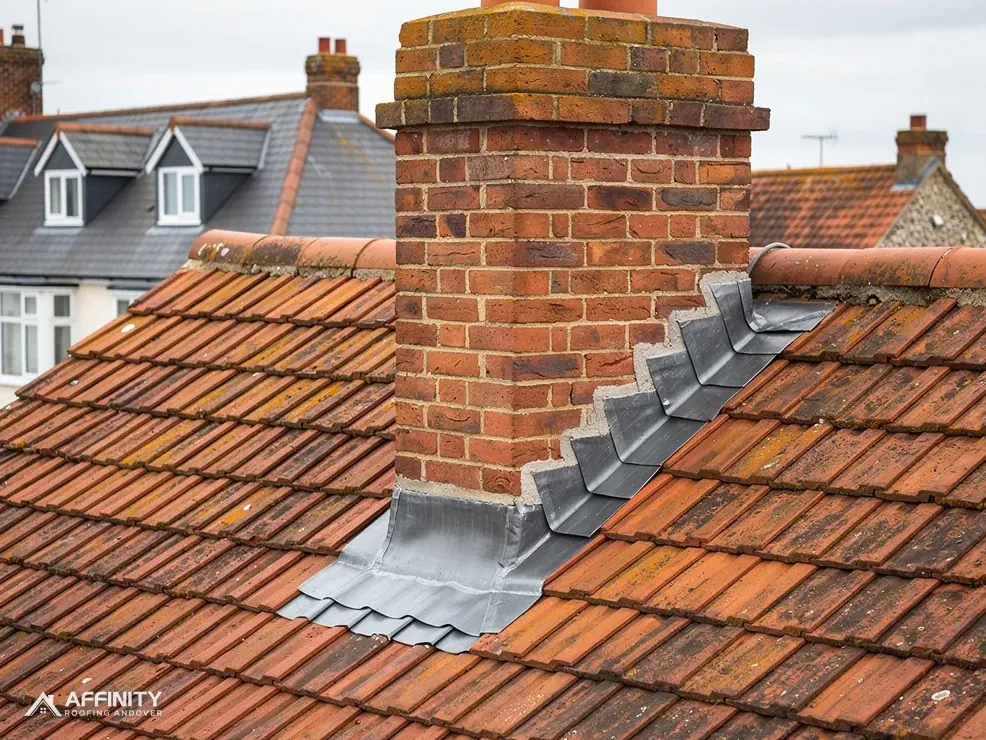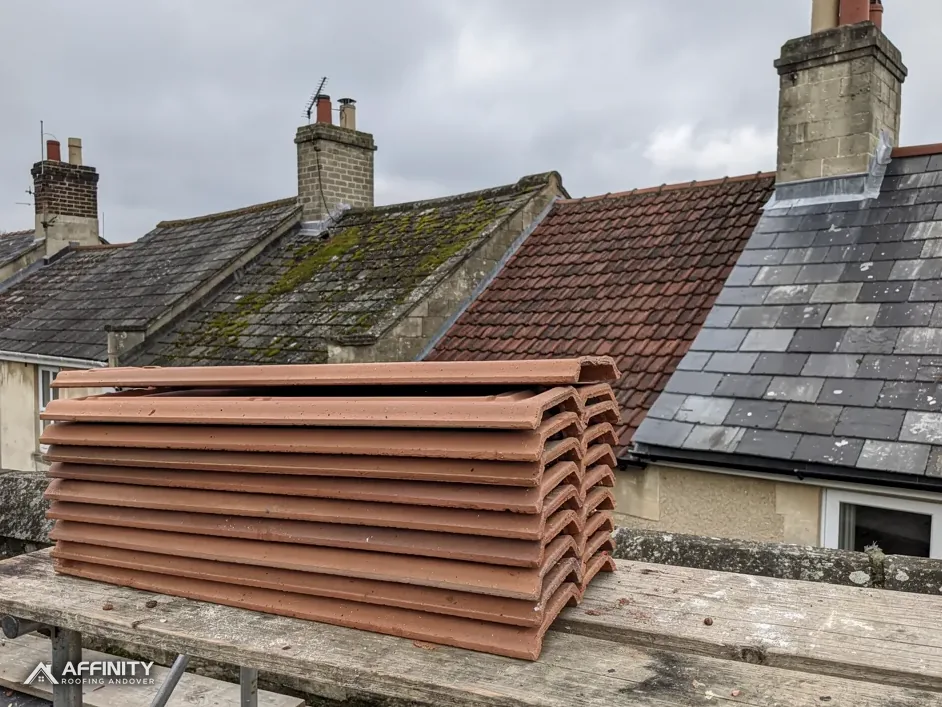
The chimney pot is the clay or concrete tube that stands on top of the stack and carries each flue a little higher into the air. Pots come in many shapes: plain round ones, tall tapered ones, crowns and castellated tops, some of them centuries old. They are decorative, but they are working parts as well. They lift the flue above the stack and keep the smoke clear.
They are also very exposed. A pot stands higher than anything else on the house, so it takes the full force of wind, rain and frost. Over decades it cracks, flakes and works loose. A pot that fails can drop pieces onto the roof or into the garden, and a pot that falls is a danger to anyone below.
This guide describes the signs that a pot is failing, how a replacement is bedded, the difference between a pot, a cowl and a cap, and what sets the price. It belongs with our wider chimney repairs advice, and often goes hand in hand with a new flaunching.
What a chimney pot does
The pot extends the flue above the top of the brickwork. That raises the outlet clear of the stack, and the flue lining beneath is protected from the worst of the weather by the pot above it. The pot is set in mortar on the stack head, and that bed is the flaunching, which slopes away to shed rain.
Clay and concrete
Traditional pots are fired clay, often terracotta or buff, and the colour and finish suit older brickwork. Concrete pots are cheaper and plainer. Both can crack, but clay pots, especially those that have soaked up water, are vulnerable to frost. Water in the pot freezes, expands, and splits the wall of the tube.
One pot per flue
A stack usually carries one pot for each flue, so a stack serving four fireplaces may have four pots. Some pots are in use, some belong to blocked fireplaces. It is worth finding out which, because a pot over a disused flue may be capped, while one over a working flue must stay open.
Why the shape matters
The style of a pot is part of how a house looks, and on a period property replacing a plain pot with something quite different changes the street scene. In a conservation area or on a listed home, ask the council before changing the pattern, before work starts.
Where a pot stands above a flue that serves an appliance, it must keep the flue clear. Nobody should alter it without advice.
Signs of a cracked or loose pot
Pots are high up and easy to ignore, but they show their condition if you look. A pair of binoculars on a clear day is enough. Never climb to check.
Cracks and flaking
Look for vertical cracks running up the side of the tube, for pieces that have spalled off, and for a rough, flaking surface where the glaze or skin has gone. A crack that runs round the pot near its base is worse, because the pot may be about to part.
Leaning and movement
A pot that is not upright has lost its bed. Compare it with its neighbours, and with the line of the stack. If the pot tilts or sits proud of the mortar, the flaunching has failed or the pot has shifted.
Fallen pieces and debris
Broken clay on a roof slope, in a gutter or on the lawn is a clear sign. If pieces are falling, the pot is failing and the area beneath is unsafe. Keep children and pets away and arrange a survey.
Signs inside
A cracked pot lets rain into the flue, and the damp comes down as stains on the chimney breast. A smell of damp soot in wet weather, or soot falling into the fireplace, also points to a problem above. A stain does not always mean a bad pot, because other causes exist, but the top of the stack is the first place to check.
See the guide to chimney flaunching as well, because a cracked pot and a failed bed often appear together.
How a replacement pot is fitted
Replacing a pot is a short job in itself, but it needs care and the right access. A roofer works from a scaffold or access tower and takes the pot out of its bed, with the old flaunching around it.
Step by step
First the roofer checks the flue and the top course of brick under the pot, because a failing pot often sits on weakened mortar. The old pot and its bedding are removed and the stack top is cleaned back to a sound surface. Debris is kept out of the flue, which is covered during the work.
The new pot is set on a fresh bed of mortar, upright and in line, and checked for level from more than one side. New flaunching is then formed around the base, sloping away to shed water, with a neat edge at the brickwork. The mortar is left to cure in suitable weather.
Matching the old pot
On an older house, the pot should look right. A roofer can often find a match from a merchant, or reclaimed one from a salvage supplier. Size, shape, colour and height all count, and a pot that is a different height from its neighbours looks odd from the street.
Several pots at once
If one pot has failed, others on the stack are probably of the same age and may be close behind. Replacing them in one visit while the scaffold is up is usually the sensible course. It avoids a second set of access costs and a second round of disturbance.
After the work, ask for photographs of the finished stack top from several angles, so you have a record of the pots and the flaunching.
Cowls: what they are and when they help
A cowl is a cover that fits over or into the top of a pot. It is different from a cap, which seals a disused flue, and different from the pot itself.
What a cowl is for
A cowl can keep rain and birds out of a flue, reduce downdraught, and in some designs help the flue draw. There are fixed cowls, with a hood or a mesh, and rotating ones that turn with the wind. Metal and clay versions are made, and the right one depends on the flue and what it serves.
Working flues and disused ones
On a flue that serves an appliance, a cowl must allow the products of combustion to escape, and it should be chosen with that in mind. On a disused flue, the aim is to keep out rain and birds while letting air move through, which is the job of a vented cap. Our guide to chimney capping and ventilation sets out the difference, and our answer on the chimney cowl goes into the details.
When a cowl is a warning sign
A cowl fitted to hide a defect is a poor remedy. If a pot is cracked, the right answer is a new pot, not a cover over the crack. Ask a roofer why a cowl is proposed, and what problem it is meant to solve.
Birds
Birds nest in chimneys. A mesh cowl keeps them out, but fitting one when a nest is in use is a problem, since section 1 of the Wildlife and Countryside Act 1981 catches anyone who intentionally harms a nest that is occupied. Wait until the birds have gone.
Bedding, flaunching and the stack below
A new pot stands or falls with its bed. If the flaunching is cracked or the top courses of brick are loose, the new pot will fail for the same reason as the old one.
What to check below the pot
The top few courses of brick should be firm. The joints should be sound, the brickwork should not be spalled, and the stack should be upright. If the top of the stack has weakened, it may need rebuilding to a few courses down before the pot is bedded. That is better done now than after the new pot has been set.
Pointing and mortar
Where joints near the top are open, they are repointed. The choice of mortar matters on older stacks, and a softer, lime-based mix often suits old brick better than a hard cement one.
Flashing at the base
Where the stack meets the roof, lead flashings seal the joint. If they have lifted or split, the stack leaks below the pot however good the top is. A survey should look at the whole stack, from pot to roof, and photographs should show each part.
One visit, one set of costs
It is more economical to deal with the pots, the flaunching, the pointing and the flashings in one visit, while the scaffold is in place. A roofer who repairs the pot alone and walks away may leave the next failure only a winter or two off.
Ask the roofer to list what was found at each level, so you can see what was done and what was left.
Access, birds and what sets the price
Pot replacement is quick work at the top of an awkward place, and the price reflects the access as much as the pot.
Scaffold and safety
The stack tops the building, and the work needs a proper platform. A scaffold or tower is the norm. Scaffold on the highway is a matter for the highway authority under section 169 of the Highways Act 1980, and our guide to preparing your home for roof work explains who applies. Standing wholly on your own land, it needs no consent.
What sets the price
The number of pots, their type and whether a match has to be found, the height of the house, the state of the stack beneath, and whether a cowl or cap is added all play a part. A plain concrete pot is a different item from a handmade clay pot in a period style. Extras found at survey, such as loose brickwork, add to the visit.
One total price
Ask for one written total that says whether VAT and scaffold are in it. A price that quotes the pot alone, with no mention of access, leaves a large cost unsaid.
After the work
Check the finished stack from the garden: the pots upright, the flaunching sloped and tidy, no mortar smears on the brick, and nothing left on the roof or in the gutters. Keep the photographs with your house papers.
If you notice a cracked pot, send us a photo and your address. A survey with pictures of the stack top tells you what needs doing and what can wait.